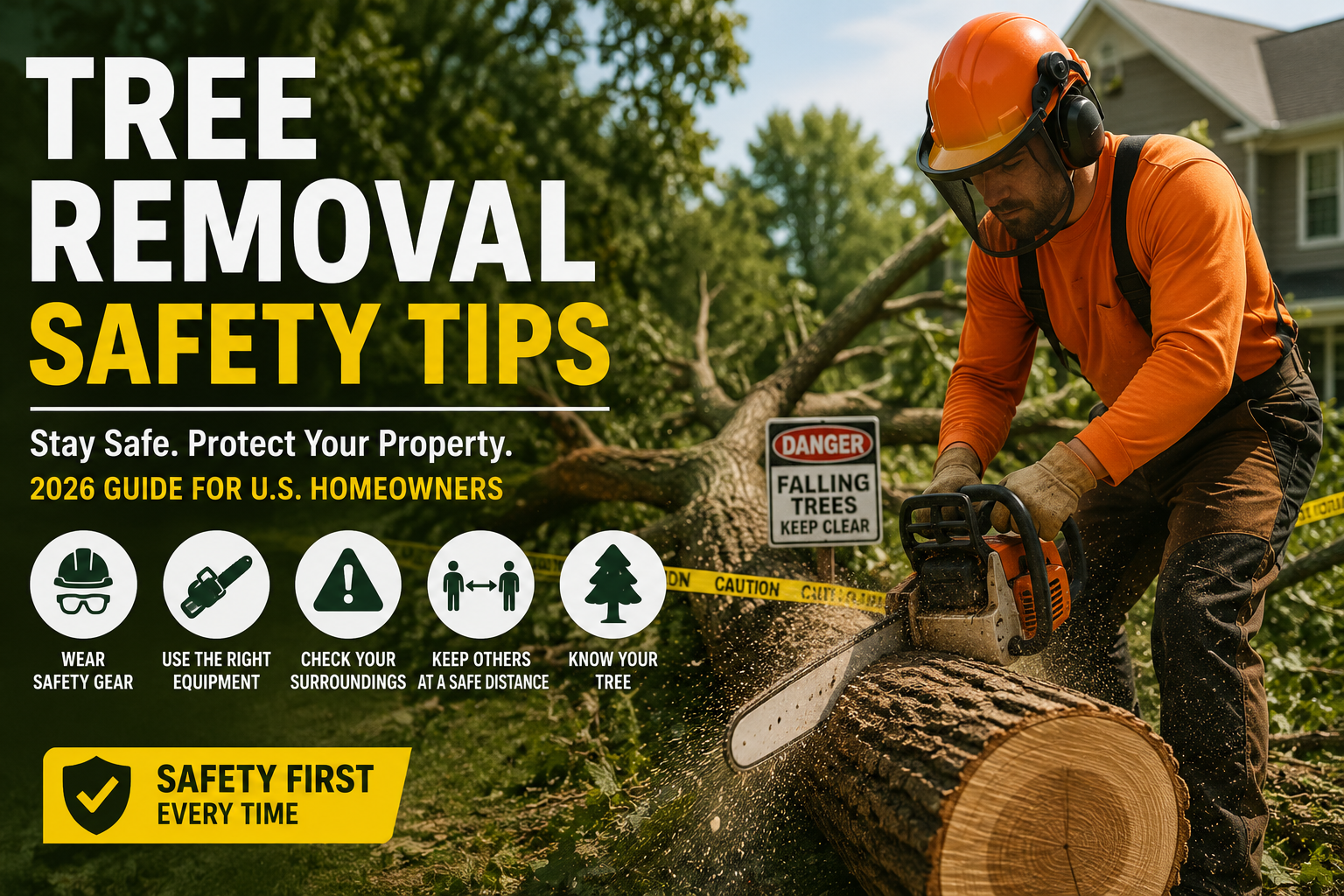
Tree Removal Safety Tips
Trees improve the beauty, shade, and value of any property. However, when a tree becomes diseased, damaged, or unstable, removing it safely becomes essential. Following the right Tree Removal Safety Tips can prevent injuries, protect your home, and reduce costly damage.
Whether you’re dealing with a dead tree after a storm or planning a landscaping project, understanding safe removal practices is critical. This 2026 guide is designed specifically for U.S. homeowners and explains everything you need to know before cutting down a tree.
Why Tree Removal Safety Matters
Tree removal is one of the most dangerous outdoor tasks. Falling branches, unstable trunks, power lines, and chainsaw accidents can all lead to severe injuries or property damage.
Following proper Tree Removal Safety Tips helps you:
- Prevent accidents and injuries
- Protect nearby buildings and vehicles
- Avoid electrical hazards
- Reduce property damage
- Complete projects safely and efficiently
Inspect the Tree Before Removal
The first step in safe tree removal is a complete inspection.
Look for:
- Dead or hanging branches
- Large cracks in the trunk
- Leaning trees
- Hollow sections
- Signs of disease or decay
- Nearby power lines
One of the most important Tree Removal Safety Tips is never assuming a tree will fall in the direction you expect.
Wear Proper Safety Equipment
Personal protective equipment (PPE) is essential.
Always wear:
- Safety helmet
- Eye protection
- Hearing protection
- Chainsaw-resistant gloves
- Cut-resistant chaps
- Steel-toe boots
- Long sleeves and durable pants
These Tree Removal Safety Tips significantly reduce the risk of injury.
Keep a Safe Work Area
Before cutting begins:
- Remove vehicles from the area.
- Keep children and pets indoors.
- Clear obstacles from escape routes.
- Mark a safety perimeter.
Professional arborists often keep people at least twice the tree’s height away from the work zone.
Following these Tree Removal Safety Tips keeps everyone protected.
Never Remove Trees Near Power Lines
Electricity is one of the biggest hazards during tree removal.
If branches touch or are close to utility lines:
- Do not climb the tree.
- Do not use ladders.
- Do not attempt DIY removal.
- Contact your local utility company.
- Hire a licensed tree removal company.
Ignoring this important Tree Removal Safety Tips guideline could be life-threatening.
Plan the Tree’s Falling Direction
Before making the first cut:
- Check the natural lean.
- Evaluate wind direction.
- Look for nearby structures.
- Identify escape routes.
- Remove obstacles from the landing zone.
Proper planning is one of the smartest Tree Removal Safety Tips homeowners can follow.
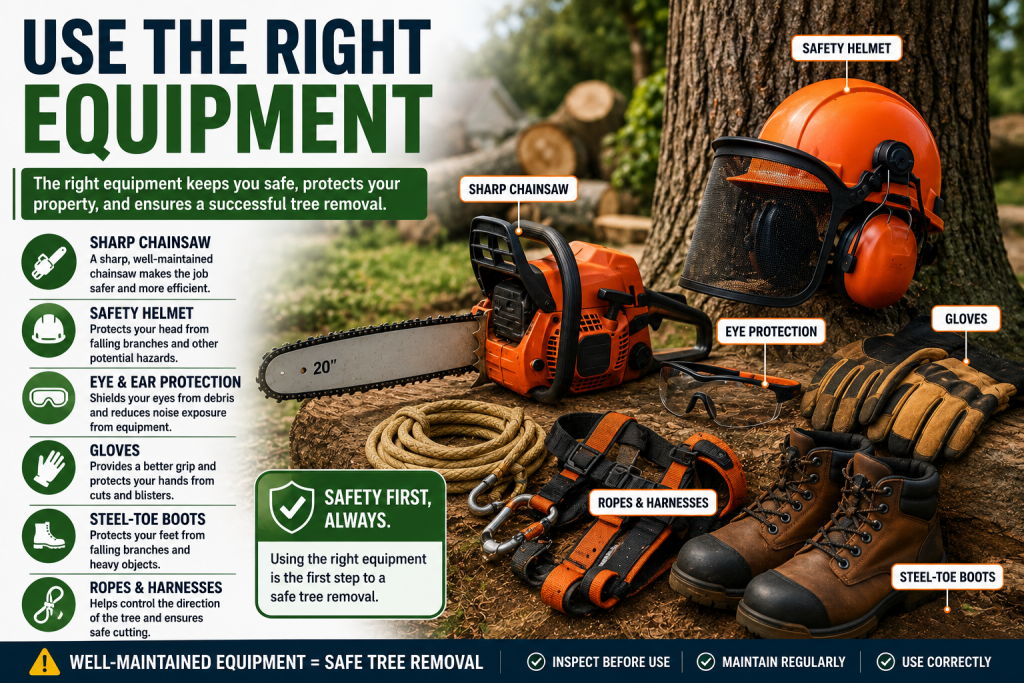
Use the Right Equipment
Never use damaged tools.
Recommended equipment includes:
- Sharp chainsaw
- Felling wedges
- Safety ropes
- Helmet
- First-aid kit
- Fuel stored safely
Using proper equipment is a fundamental part of effective Tree Removal Safety Tips.
Avoid Working Alone
Tree removal should never be a one-person job.
Always have someone nearby who can:
- Watch for hazards
- Call emergency services if needed
- Assist with equipment
- Monitor the tree’s movement
One of the best Tree Removal Safety Tips is ensuring another adult is present throughout the project.
Watch the Weather
Weather affects tree stability.
Avoid removing trees during:
- Strong winds
- Heavy rain
- Thunderstorms
- Snow or ice
- Poor visibility
Good weather makes following Tree Removal Safety Tips much easier and safer.
Know When to Hire Professionals
Some trees should always be handled by certified experts.
Hire professionals if:
- The tree is over 30 feet tall.
- It leans toward your home.
- It is storm-damaged.
- It has split trunks.
- It is close to power lines.
- Heavy equipment is required.
Professional crews have training, insurance, and specialized equipment that make tree removal much safer.
Common Mistakes to Avoid
Many homeowners make avoidable mistakes.
Do not:
- Stand directly behind the tree
- Cut without an escape route
- Ignore tree lean
- Work with dull chainsaws
- Remove trees during storms
- Climb trees with chainsaws
- Leave broken limbs hanging
Avoiding these mistakes is one of the most valuable Tree Removal Safety Tips for beginners.
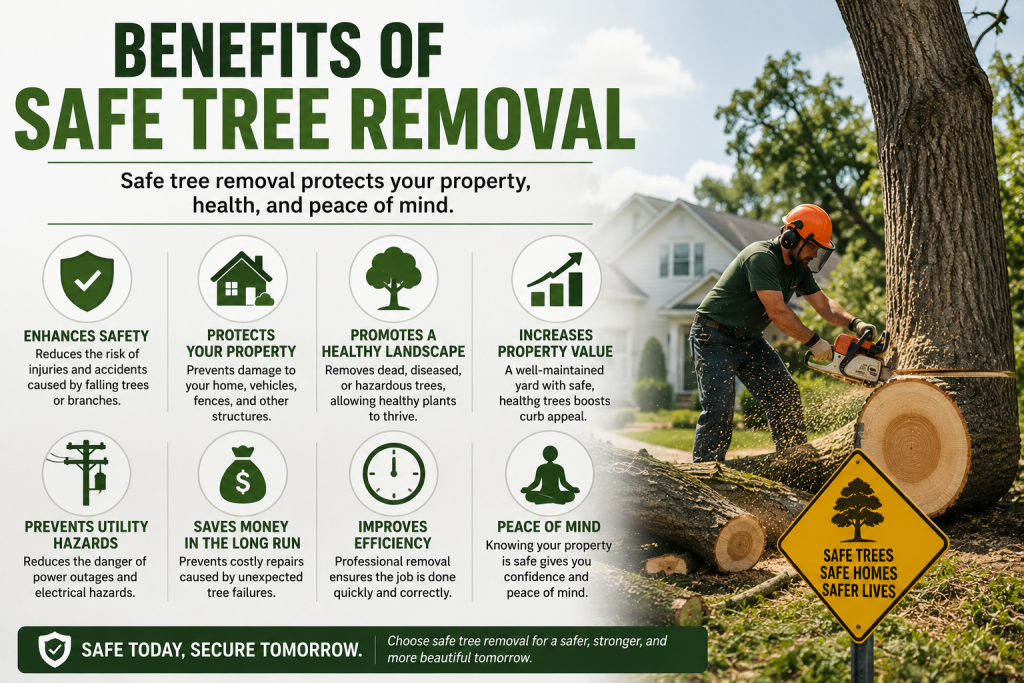
Benefits of Safe Tree Removal
Following proper safety practices provides several advantages.
Benefits include:
- Safer working conditions
- Lower injury risk
- Reduced property damage
- Better control of tree direction
- Faster cleanup
- Protection of nearby landscaping
- Peace of mind
These Tree Removal Safety Tips help homeowners complete projects with greater confidence.
Final Thoughts
Tree removal may appear straightforward, but it carries significant risks. Every year, thousands of Americans suffer injuries during unsafe tree removal attempts. By following these proven Tree Removal Safety Tips, inspecting trees carefully, wearing protective gear, using the proper equipment, and recognizing when to call professionals, you can greatly reduce those risks.
If you’re unsure about any part of the job, hiring an experienced tree removal service is often the safest and most cost-effective decision. In 2026, safety should always come before saving time or money.
Frequently Asked Questions (FAQs)
1. What are the most important Tree Removal Safety Tips?
Inspect the tree, wear protective gear, use proper equipment, keep people away, plan the fall direction, and never work near power lines without professional assistance.
2. Can I remove a large tree myself?
Small trees may be manageable, but large, leaning, damaged, or diseased trees should be removed by licensed professionals.
3. Is tree removal dangerous?
Yes. Tree removal involves chainsaws, heavy branches, falling trunks, and electrical hazards, making it one of the most hazardous outdoor tasks.
4. What safety equipment is required?
A helmet, eye and hearing protection, chainsaw chaps, gloves, steel-toe boots, and sturdy clothing are essential.
5. When should I hire a professional tree removal company?
Hire a professional if the tree is large, close to power lines or buildings, storm-damaged, or if you lack the experience or equipment to remove it safely.
Leave a Reply