Tag: Tree Removal Safety Tips

  • Storm Damage Tree Removal: Complete  Guide 2026

    Storm Damage Tree Removal: Complete Guide 2026

    Storm Damage Tree Removal for U.S. Homeowners 2026

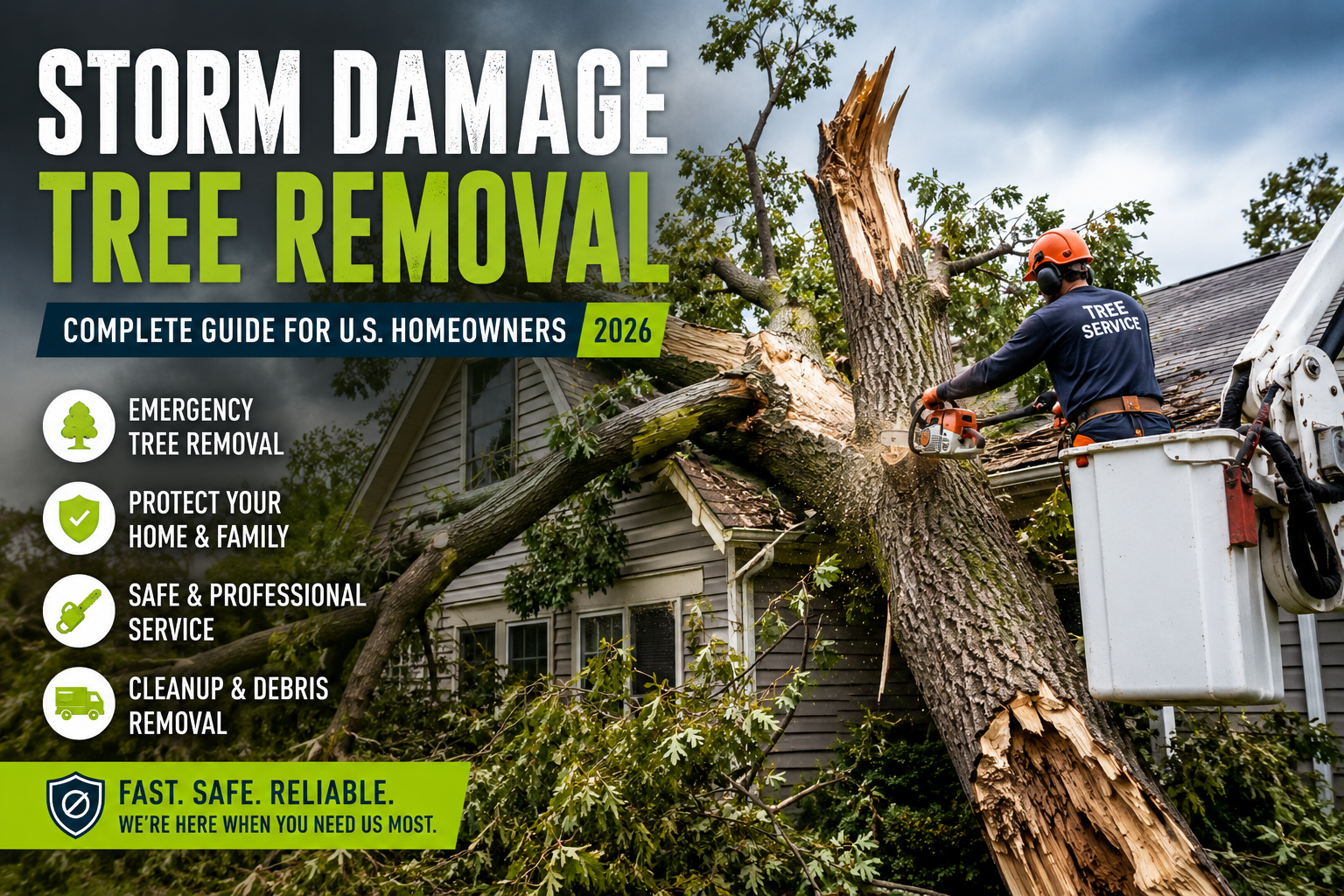
    Storms can turn a healthy-looking tree into a serious hazard in minutes. High winds, lightning, heavy rain, ice, and tornadoes can break limbs, split trunks, or uproot entire trees. When this happens, storm damage tree removal becomes an important step in protecting your home, family, vehicles, and property.

    What Is Storm Damage Tree Removal?

    Storm damage tree removal is the professional process of safely removing trees that have been damaged by severe weather. Unlike routine tree removal, storm-related work can involve unstable trunks, hanging branches, fallen trees, blocked driveways, and trees leaning toward buildings or power lines.
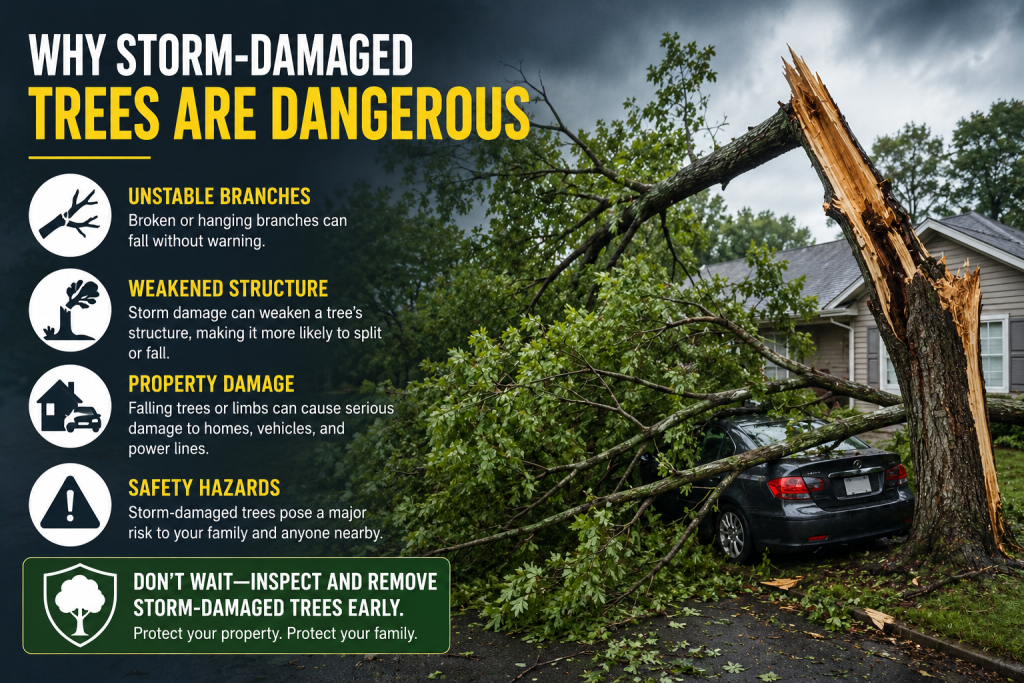
    A storm-damaged tree with broken branches near a residential property, illustrating the risks of unstable limbs, weakened tree structure, falling debris, and property damage.

    Why Storm-Damaged Trees Are Dangerous

    A damaged tree may look stable while remaining structurally weak. Large branches can fall without warning, and uprooted trees can shift or roll. Storm damage tree removal should be treated as urgent when a tree is resting on a home, blocking access, touching utility lines, or creating an immediate risk to people.

    Common signs that a tree needs professional attention include:

    • Split or cracked trunks
    • Large broken branches
    • Exposed or lifted roots
    • A tree leaning suddenly
    • Hanging limbs
    • Fallen trees blocking roads or driveways
    • Damage near roofs, fences, or utility lines

    When Should You Call a Tree Removal Professional?

    Homeowners should contact a qualified tree care professional as soon as it is safe to inspect the property. Storm damage tree removal may be necessary even when the tree has not completely fallen. A certified arborist or experienced tree service can assess structural damage and determine whether removal, pruning, or stabilization is appropriate.

    Never attempt to cut a storm-damaged tree yourself if it is under tension, leaning toward a structure, or close to power lines. These situations can be unpredictable and extremely dangerous.

    How the Storm Damage Tree Removal Process Works

    Professional storm damage tree removal generally begins with a safety assessment. The crew identifies hazards, checks the tree’s condition, and determines how it can be dismantled safely.

    The process may include:

    1. Inspecting the damaged tree and surrounding area
    2. Establishing a safe work zone
    3. Removing dangerous or hanging branches
    4. Cutting and lowering sections of the tree
    5. Removing the trunk and major debris
    6. Hauling away branches and wood
    7. Cleaning the affected area

    For severe storm damage tree removal, specialized equipment such as ropes, chainsaws, bucket trucks, or cranes may be required.

    How Much Does Storm Damage Tree Removal Cost in 2026?

    The cost of storm damage tree removal varies across the United States. Factors include tree size, location, accessibility, damage severity, equipment requirements, and whether the tree has fallen onto a structure.

    Simple debris removal may cost less than removing a large, unstable tree near a house. Emergency service, difficult access, crane work, and extensive cleanup can increase the total price.

    Before hiring a company, ask for a written estimate that clearly explains removal, cleanup, hauling, and any additional charges.

    Does Homeowners Insurance Cover Storm-Damaged Trees?

    Homeowners insurance may cover certain types of storm-related tree damage, but coverage depends on the policy and circumstances. Storm damage tree removal may be covered when a fallen tree damages a covered structure, such as a house or garage. Coverage for a tree that simply falls in an open yard can be different.

    Review your policy and contact your insurance provider before authorizing major work when circumstances allow. Take photographs of the damage and keep invoices and estimates for your records.

    How to Choose a Storm Tree Removal Company

    Look for a properly insured and experienced tree care company. Ask whether the crew has experience handling storm emergencies and whether the company provides written estimates.

    A reliable provider should explain the hazards, proposed removal method, cleanup process, and expected cost. Homeowners should also verify that the company is appropriately licensed or certified where required locally.
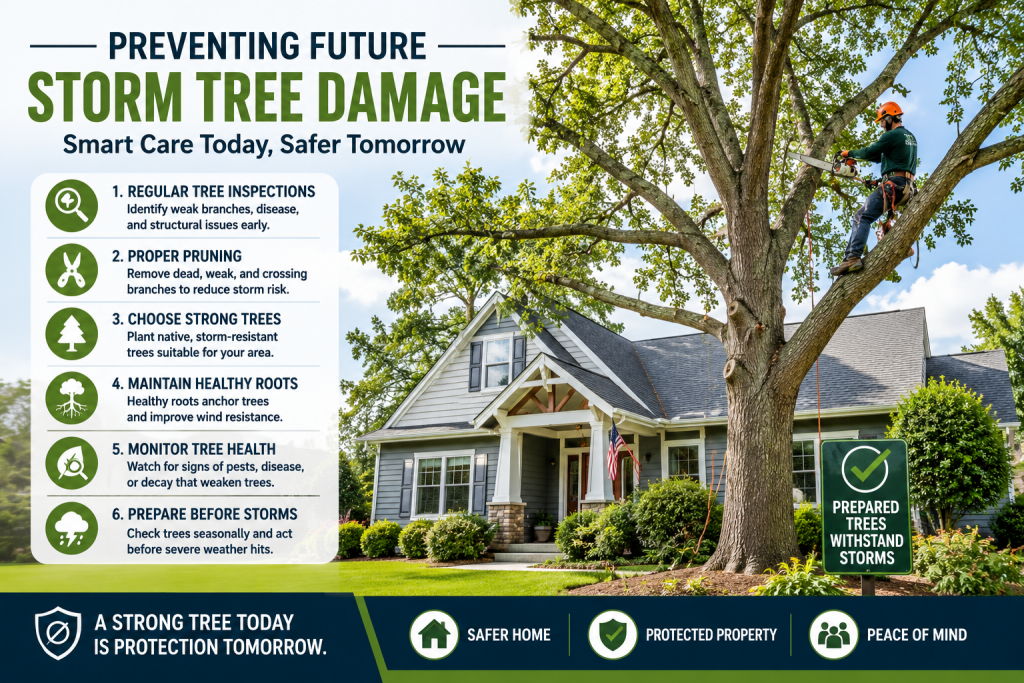
    Preventing future storm tree damage with professional tree care and pruning

    Preventing Future Storm Tree Damage

    Routine tree maintenance can reduce the risk of severe storm damage. Regular inspections, proper pruning, removal of dead branches, and attention to weak limbs can help identify problems before severe weather arrives.

    Homeowners should also monitor trees after major storms. A tree that survives one storm may develop structural problems that become dangerous during the next weather event.

    Final Thoughts

    Storm damage can create dangerous conditions quickly, but prompt professional action can reduce the risk to your property and family. Storm damage tree removal is often the safest solution when a tree is severely damaged, unstable, or threatening a structure.

    For U.S. homeowners, the best approach is to prioritize safety, stay away from damaged trees near power lines, document the damage, check insurance coverage, and hire qualified professionals for hazardous removal work. Acting quickly can help prevent additional property damage and make storm recovery easier.

    Frequently Asked Questions

    1. What is storm damage tree removal?

    Storm damage tree removal is the professional removal of trees that have been damaged, uprooted, split, or weakened by high winds, lightning, heavy rain, ice, or other severe weather. It helps protect homes, vehicles, utility lines, and people from further damage.

    2. How much does storm damage tree removal cost in 2026?

    The cost varies depending on the tree’s size, location, level of damage, accessibility, equipment needed, and cleanup requirements. Emergency removal and trees located near homes or power lines can cost more than straightforward tree removal.

    3. Does homeowners insurance cover storm-damaged tree removal?

    Homeowners insurance may cover tree removal when a fallen or damaged tree causes covered damage to a home or another insured structure. Coverage varies by policy, so homeowners should review their insurance policy and contact their insurance provider for specific details.

    4. Can I remove a storm-damaged tree myself?

    DIY removal can be extremely dangerous when a tree is leaning, split, uprooted, under tension, or located near power lines. It is safer to hire an experienced tree removal professional for hazardous storm-damaged trees.

    5. How soon should a storm-damaged tree be removed?

    A storm-damaged tree should be professionally inspected as soon as conditions are safe. Immediate attention is especially important when the tree is threatening a house.
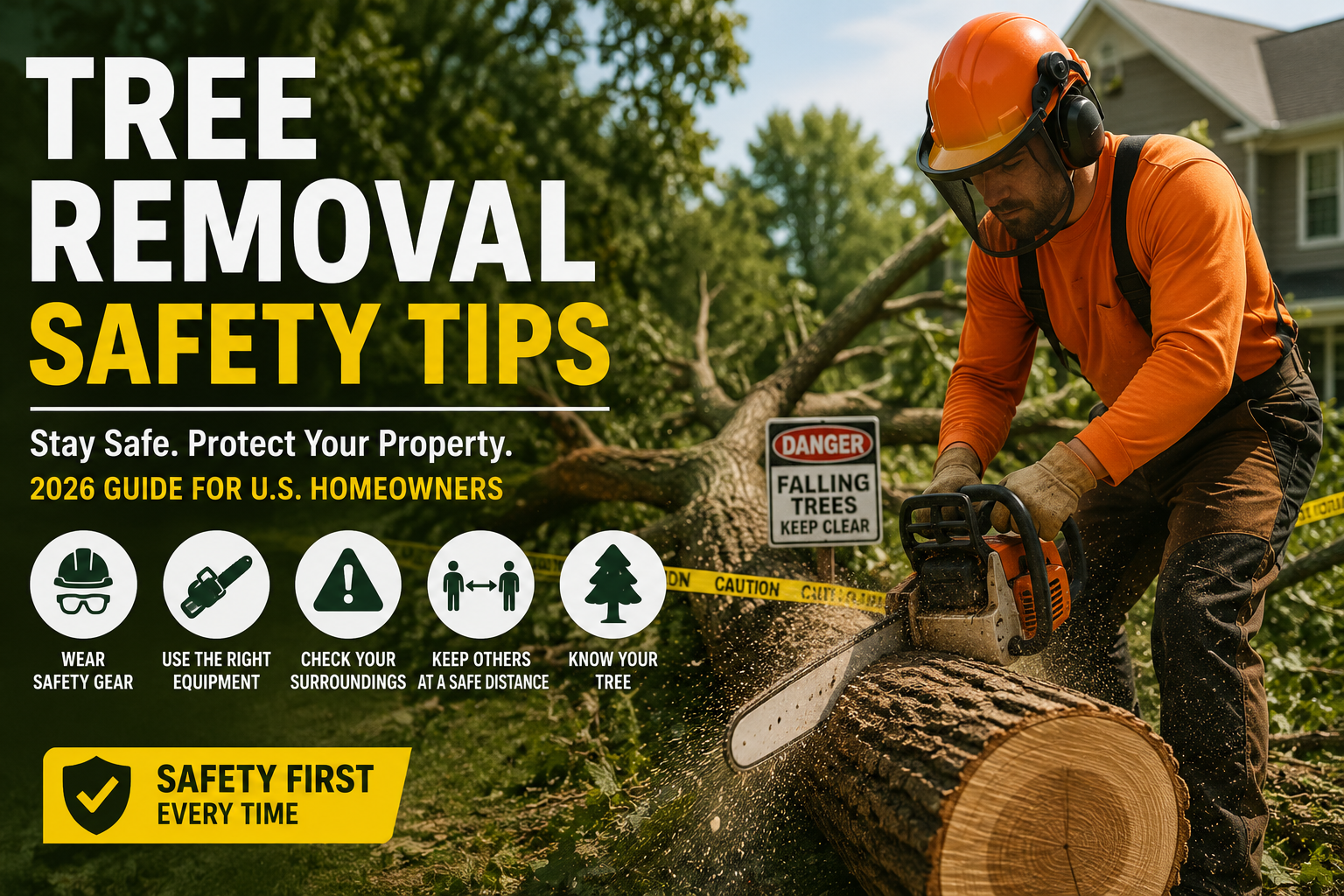
  • Tree Removal Safety Tips (2026 Guide for U.S. Homeowners)

    Tree Removal Safety Tips (2026 Guide for U.S. Homeowners)

    Tree Removal Safety Tips

    Trees improve the beauty, shade, and value of any property. However, when a tree becomes diseased, damaged, or unstable, removing it safely becomes essential. Following the right Tree Removal Safety Tips can prevent injuries, protect your home, and reduce costly damage.

    Whether you’re dealing with a dead tree after a storm or planning a landscaping project, understanding safe removal practices is critical. This 2026 guide is designed specifically for U.S. homeowners and explains everything you need to know before cutting down a tree.


    Why Tree Removal Safety Matters

    Tree removal is one of the most dangerous outdoor tasks. Falling branches, unstable trunks, power lines, and chainsaw accidents can all lead to severe injuries or property damage.

    Following proper Tree Removal Safety Tips helps you:

    • Prevent accidents and injuries
    • Protect nearby buildings and vehicles
    • Avoid electrical hazards
    • Reduce property damage
    • Complete projects safely and efficiently

    Inspect the Tree Before Removal

    The first step in safe tree removal is a complete inspection.

    Look for:

    • Dead or hanging branches
    • Large cracks in the trunk
    • Leaning trees
    • Hollow sections
    • Signs of disease or decay
    • Nearby power lines

    One of the most important Tree Removal Safety Tips is never assuming a tree will fall in the direction you expect.


    Wear Proper Safety Equipment

    Personal protective equipment (PPE) is essential.

    Always wear:

    • Safety helmet
    • Eye protection
    • Hearing protection
    • Chainsaw-resistant gloves
    • Cut-resistant chaps
    • Steel-toe boots
    • Long sleeves and durable pants

    These Tree Removal Safety Tips significantly reduce the risk of injury.


    Keep a Safe Work Area

    Before cutting begins:

    • Remove vehicles from the area.
    • Keep children and pets indoors.
    • Clear obstacles from escape routes.
    • Mark a safety perimeter.

    Professional arborists often keep people at least twice the tree’s height away from the work zone.

    Following these Tree Removal Safety Tips keeps everyone protected.


    Never Remove Trees Near Power Lines

    Electricity is one of the biggest hazards during tree removal.

    If branches touch or are close to utility lines:

    • Do not climb the tree.
    • Do not use ladders.
    • Do not attempt DIY removal.
    • Contact your local utility company.
    • Hire a licensed tree removal company.

    Ignoring this important Tree Removal Safety Tips guideline could be life-threatening.


    Plan the Tree’s Falling Direction

    Before making the first cut:

    • Check the natural lean.
    • Evaluate wind direction.
    • Look for nearby structures.
    • Identify escape routes.
    • Remove obstacles from the landing zone.

    Proper planning is one of the smartest Tree Removal Safety Tips homeowners can follow.


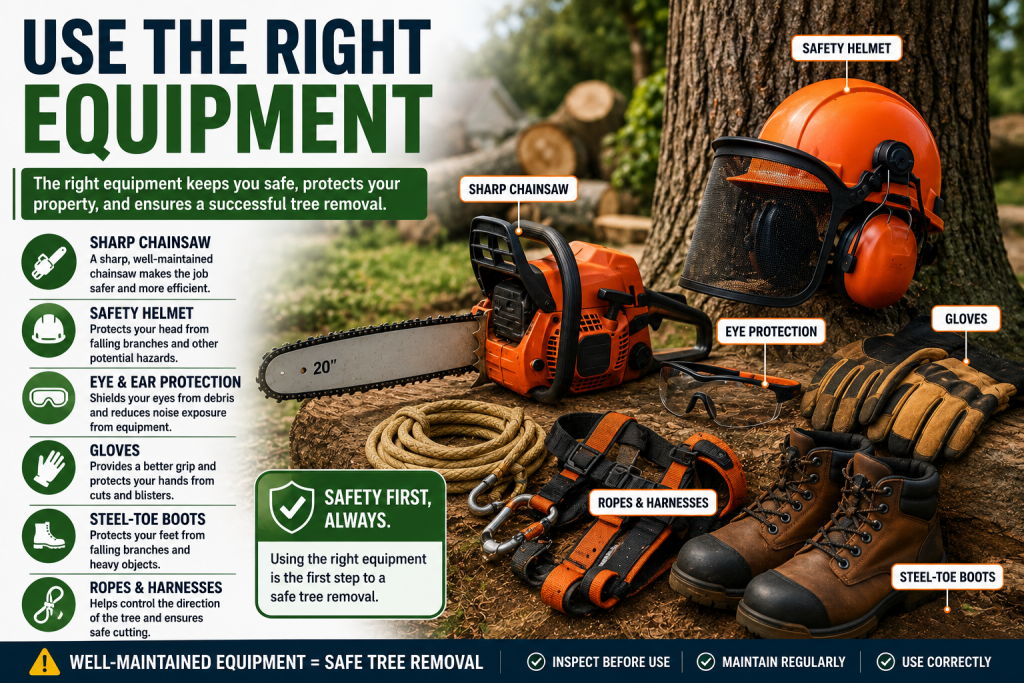
    Essential tree removal equipment including chainsaw, helmet, gloves, eye protection, ropes, and steel-toe boots.

    Use the Right Equipment

    Never use damaged tools.

    Recommended equipment includes:

    • Sharp chainsaw
    • Felling wedges
    • Safety ropes
    • Helmet
    • First-aid kit
    • Fuel stored safely

    Using proper equipment is a fundamental part of effective Tree Removal Safety Tips.


    Avoid Working Alone

    Tree removal should never be a one-person job.

    Always have someone nearby who can:

    • Watch for hazards
    • Call emergency services if needed
    • Assist with equipment
    • Monitor the tree’s movement

    One of the best Tree Removal Safety Tips is ensuring another adult is present throughout the project.


    Watch the Weather

    Weather affects tree stability.

    Avoid removing trees during:

    • Strong winds
    • Heavy rain
    • Thunderstorms
    • Snow or ice
    • Poor visibility

    Good weather makes following Tree Removal Safety Tips much easier and safer.


    Know When to Hire Professionals

    Some trees should always be handled by certified experts.

    Hire professionals if:

    • The tree is over 30 feet tall.
    • It leans toward your home.
    • It is storm-damaged.
    • It has split trunks.
    • It is close to power lines.
    • Heavy equipment is required.

    Professional crews have training, insurance, and specialized equipment that make tree removal much safer.


    Common Mistakes to Avoid

    Many homeowners make avoidable mistakes.

    Do not:

    • Stand directly behind the tree
    • Cut without an escape route
    • Ignore tree lean
    • Work with dull chainsaws
    • Remove trees during storms
    • Climb trees with chainsaws
    • Leave broken limbs hanging

    Avoiding these mistakes is one of the most valuable Tree Removal Safety Tips for beginners.


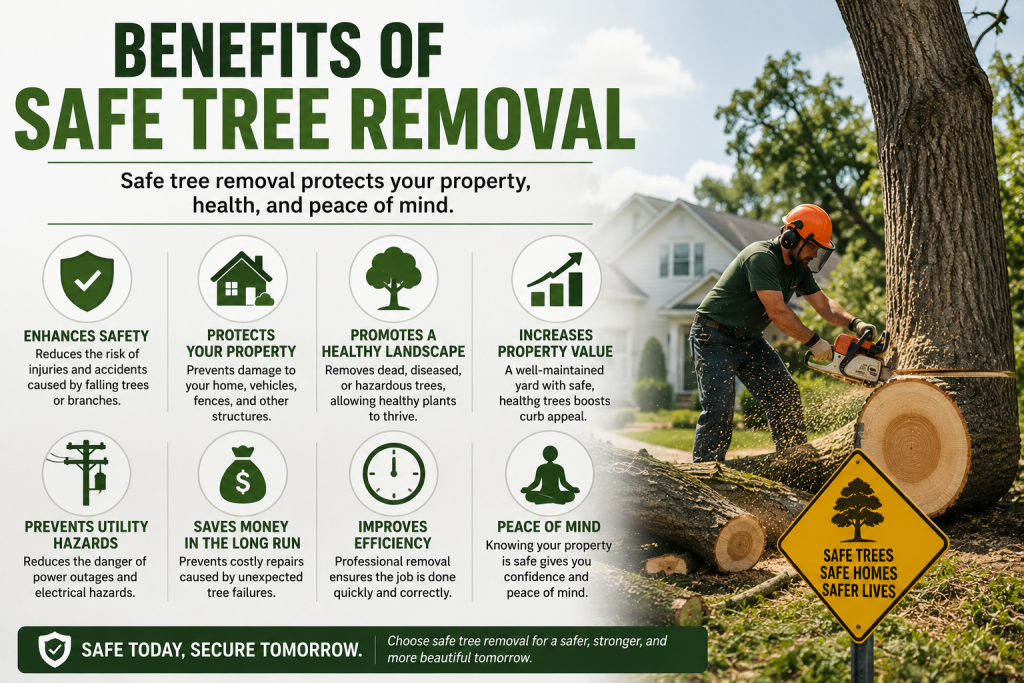
    Infographic showing the benefits of safe tree removal, including improved safety, property protection, healthy landscaping, and peace of mind.

    Benefits of Safe Tree Removal

    Following proper safety practices provides several advantages.

    Benefits include:

    • Safer working conditions
    • Lower injury risk
    • Reduced property damage
    • Better control of tree direction
    • Faster cleanup
    • Protection of nearby landscaping
    • Peace of mind

    These Tree Removal Safety Tips help homeowners complete projects with greater confidence.


    Final Thoughts

    Tree removal may appear straightforward, but it carries significant risks. Every year, thousands of Americans suffer injuries during unsafe tree removal attempts. By following these proven Tree Removal Safety Tips, inspecting trees carefully, wearing protective gear, using the proper equipment, and recognizing when to call professionals, you can greatly reduce those risks.

    If you’re unsure about any part of the job, hiring an experienced tree removal service is often the safest and most cost-effective decision. In 2026, safety should always come before saving time or money.


    Frequently Asked Questions (FAQs)

    1. What are the most important Tree Removal Safety Tips?

    Inspect the tree, wear protective gear, use proper equipment, keep people away, plan the fall direction, and never work near power lines without professional assistance.

    2. Can I remove a large tree myself?

    Small trees may be manageable, but large, leaning, damaged, or diseased trees should be removed by licensed professionals.

    3. Is tree removal dangerous?

    Yes. Tree removal involves chainsaws, heavy branches, falling trunks, and electrical hazards, making it one of the most hazardous outdoor tasks.

    4. What safety equipment is required?

    A helmet, eye and hearing protection, chainsaw chaps, gloves, steel-toe boots, and sturdy clothing are essential.

    5. When should I hire a professional tree removal company?

    Hire a professional if the tree is large, close to power lines or buildings, storm-damaged, or if you lack the experience or equipment to remove it safely.