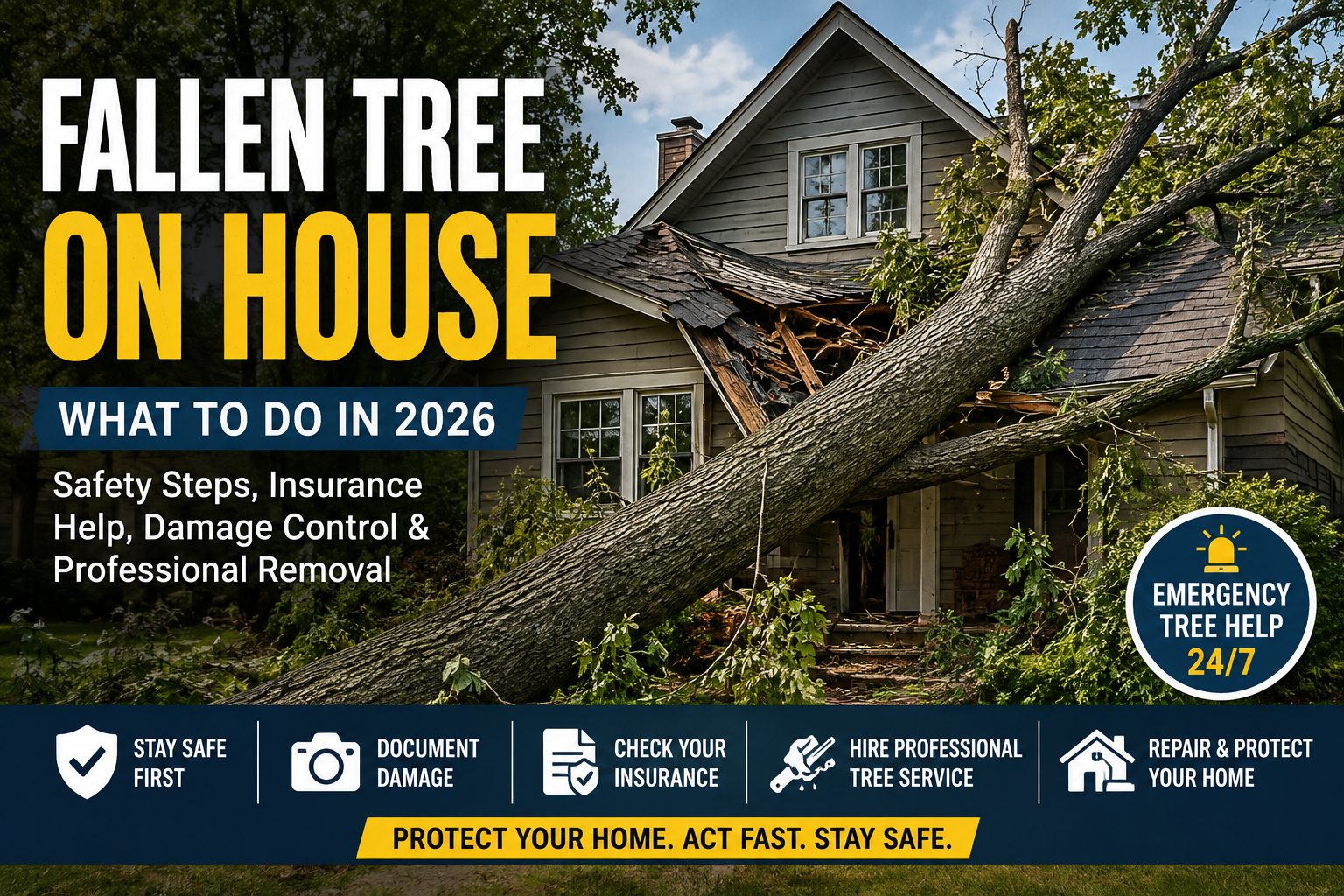
Fallen Tree on House: What to Do After a Tree Falls on Your Home in 2026
A Fallen Tree on House can turn a normal day into a serious home emergency. Severe thunderstorms, hurricanes, tornadoes, high winds, heavy snow, and weakened trees can cause major property damage across the United States. If a tree falls on your home, knowing what to do next can protect your family, reduce additional damage, and make the insurance process easier.
This guide explains the important steps U.S. homeowners should take after a Fallen Tree on House, including emergency safety, damage assessment, insurance, professional removal, and prevention.
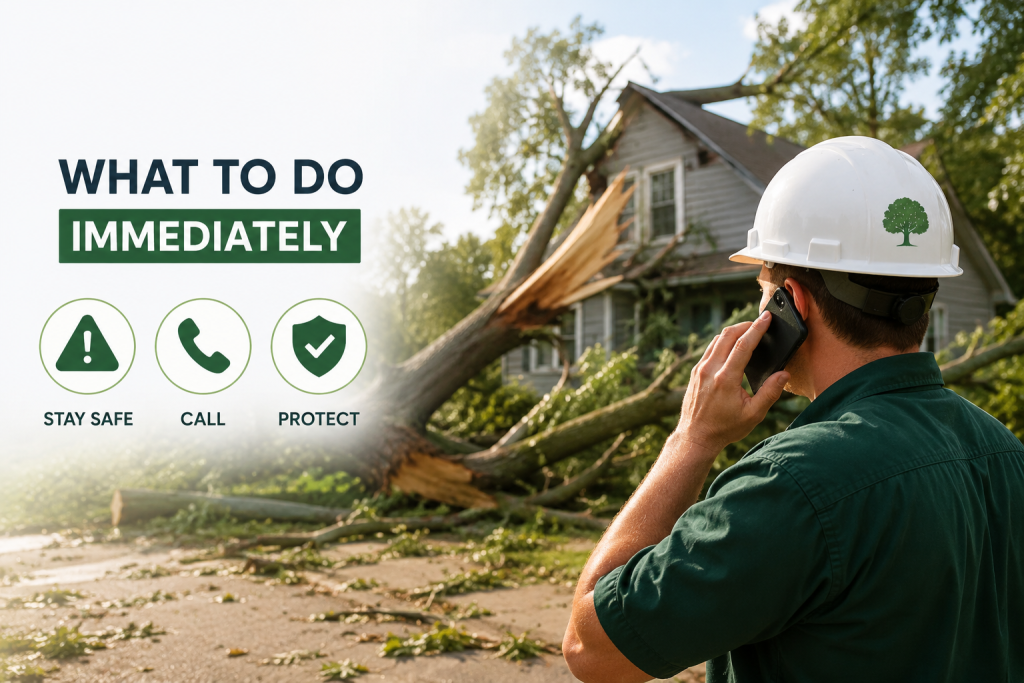
What to Do Immediately
Safety should always be your first priority after a Fallen Tree on House. Do not rush outside to inspect the damage if the tree is still moving, power lines are nearby, or parts of the structure appear unstable.
Move your family and pets to a safe location. Stay away from damaged areas, broken windows, sagging ceilings, and electrical wires.
If you see downed power lines, sparks, fire, a gas leak, serious injuries, or an immediate structural danger, contact emergency services and stay away from the affected area.
Never climb onto the tree or roof yourself. A large tree can remain under significant pressure even after it has fallen.
Check for Visible Damage
Once everyone is safe, look at the property from a secure location. A Fallen Tree on House can damage much more than the roof.
Common types of damage include:
- Broken shingles
- Damaged roof decking
- Cracked rafters
- Broken windows
- Damaged gutters
- Siding damage
- Ceiling damage
- Structural problems
- Damaged electrical systems
- Water intrusion
Some damage may not be visible immediately. For example, roof or structural damage can become worse after rain enters the home.
If you suspect structural damage, have a qualified contractor or building professional inspect the property before entering or making major repairs.
Document the Damage
Before cleanup begins, take photographs and videos whenever it is safe. A Fallen Tree on House should be thoroughly documented for insurance and repair purposes.
Take pictures of the entire property as well as close-up images of damaged areas. Photograph the tree, roof, broken windows, walls, branches, fences, vehicles, and other affected property.
Keep receipts for emergency services, temporary repairs, tree removal, tarps, boarding, and other expenses related to the incident.
Do not throw away damaged items unless necessary for safety. Your insurance company may need evidence of the loss.
Contact Your Homeowners Insurance Company
After a Fallen Tree on House, contact your homeowners insurance company as soon as reasonably possible. Coverage depends on your individual policy and the cause of the tree falling.
For example, damage caused by certain covered storms may be eligible for coverage. However, exclusions, deductibles, policy limits, and maintenance-related issues can affect a claim.
Ask your insurer:
- Is the property damage covered?
- Is emergency tree removal covered?
- What is my deductible?
- Are temporary repairs covered?
- Do I need an adjuster inspection?
- What documentation is required?
If a neighbor’s tree caused the damage, do not automatically assume the neighbor is responsible. Liability can depend on the circumstances and applicable state law.
Hire Professional Emergency Tree Removal
Removing a Fallen Tree on House can be extremely dangerous. A tree may be resting on the roof, tangled in electrical wires, supported by unstable branches, or putting pressure on damaged parts of the home.
Professional tree removal companies have specialized equipment and experience for handling dangerous trees.
Depending on the situation, professionals may use cranes, ropes, bucket trucks, chainsaws, and other specialized equipment to safely dismantle and remove the tree.
Homeowners should avoid attempting large-scale tree removal themselves. DIY removal can result in serious injuries, additional property damage, or contact with electrical lines.
Protect Your Home From Further Damage
After a Fallen Tree on House, temporary protection may be necessary to prevent additional damage.
If the roof has been opened, a qualified professional may install a temporary tarp. Broken windows can also be boarded up to keep rain and debris outside.
If water is entering the home, move furniture and valuable belongings away from the affected area when it is safe.
Do not climb onto a damaged roof or enter an unstable part of the house simply to protect belongings.
How Much Does Tree Removal Cost?
The cost of removing a Fallen Tree on House varies significantly. Factors can include tree size, location, accessibility, roof damage, electrical hazards, required equipment, and emergency service availability.
A small tree in an open yard may be relatively simple to remove, while a large mature tree resting on a roof can require specialized equipment and multiple workers.
Homeowners should obtain professional estimates when possible and ask whether cleanup, hauling, stump removal, and emergency services are included.
Can Insurance Pay for Tree Removal?
A Fallen Tree on House may involve both property-damage coverage and tree-removal coverage, depending on the homeowners policy.
Insurance policies can differ considerably, so homeowners should review their policy and speak directly with their insurance provider.
If the tree damaged the home during a covered event, repairs to the structure may be covered subject to the policy’s terms, limits, and deductible.
Prevent Future Tree Emergencies
Preventing another Fallen Tree on House starts with regular tree maintenance.
Homeowners should watch for:
- Dead or hanging branches
- Cracks in major limbs
- Leaning trunks
- Root damage
- Decay or cavities
- Weak branch connections
- Storm damage
- Signs of disease or pests
Professional tree inspections can identify hazards before they become emergencies. Regular pruning can also help reduce dangerous branches around roofs, driveways, power lines, and other structures.
Final Thoughts
A Fallen Tree on House requires a calm and organized response. Protect people first, stay away from electrical hazards, document the damage, contact your insurance company, and hire qualified professionals for dangerous tree removal.
For U.S. homeowners, preparing before severe weather can make a major difference. Regular inspections, proper pruning, and understanding your homeowners insurance can help reduce the risk of expensive property damage in 2026.
FAQs
What should I do first after a tree falls?
Get everyone to a safe location and check for immediate hazards.
Does homeowners insurance cover fallen trees?
Coverage depends on your policy and the cause of the tree damage.
Can I remove a fallen tree myself?
Large or unstable trees should be removed by trained professionals.
Can a fallen tree damage my roof?
Yes. It can damage shingles, framing, gutters, ceilings, and walls.
How can I prevent trees from falling?
Regular inspections, pruning, and professional tree maintenance can reduce risks.
Leave a Reply