Tag: Tree Damage

  • Insect Damage on Trees: Signs, Causes, and Treatment Guide for U.S. Homeowners in 2026

    Insect Damage on Trees: Signs, Causes, and Treatment Guide for U.S. Homeowners in 2026

    Insect Damage on Trees:

    Insect Damage on Trees is a common problem for homeowners across the United States. From boring beetles and caterpillars to aphids and scale insects, pests can weaken branches, damage leaves, and create conditions that make trees more vulnerable to disease. Learning how to identify early warning signs can help protect valuable landscape trees and avoid expensive removal.

    What Causes Insect Damage on Trees?

    Insect Damage on Trees can occur when pests feed on leaves, bark, wood, roots, or sap. Some insects chew foliage, while others pierce plant tissue and remove sap. Wood-boring insects are especially concerning because their larvae can tunnel beneath bark and into the wood, interfering with the tree’s ability to transport water and nutrients.

    Trees under drought stress, poor soil conditions, root damage, or physical injury may be more vulnerable to serious pest problems. Healthy trees are not immune, but good watering, proper pruning, mulching, and soil care can improve their natural defenses.
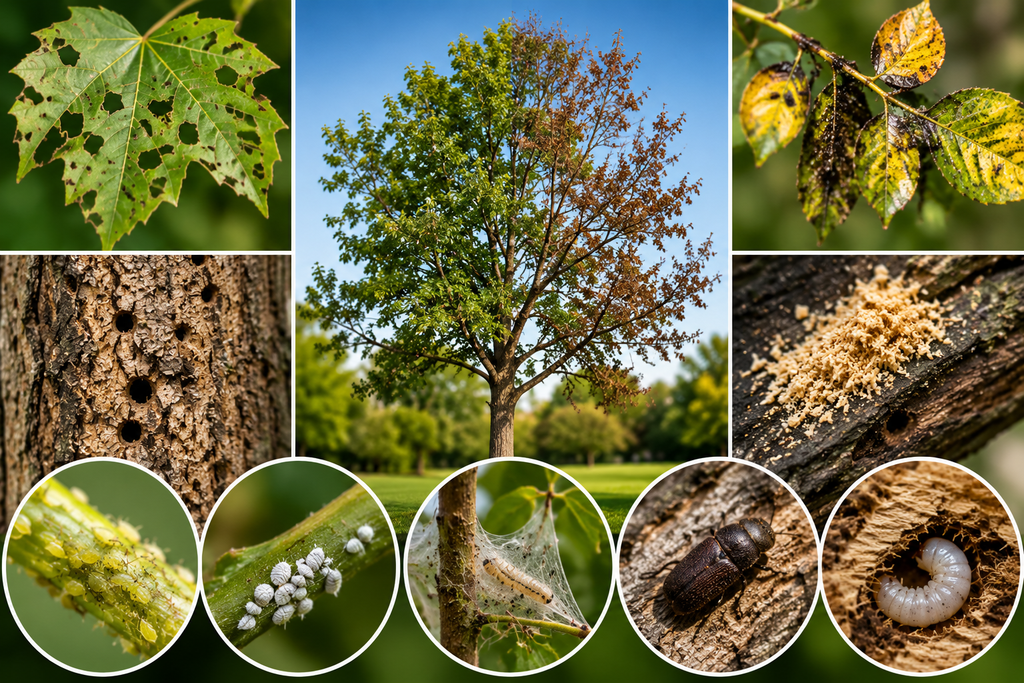
    Common signs of insect damage on trees including chewed leaves, bark holes, sawdust-like frass, webbing, aphids, beetles, and wood-boring larvae.

    Common Signs of Insect Damage

    Homeowners should regularly inspect trees for unusual changes. Common signs include:

    • Small holes in bark or branches
    • Sawdust-like material around the trunk or branch joints
    • Curling, yellowing, or prematurely dropping leaves
    • Sticky honeydew on leaves, sidewalks, or vehicles
    • Webbing, egg masses, or visible insects
    • Cracked, loose, or peeling bark
    • Dead twigs and thinning branches

    Insect Damage on Trees may also appear as irregular leaf holes, skeletonized leaves, or discolored patches. If symptoms spread quickly or large branches begin dying, a professional tree inspection is recommended.

    Common Tree Pests in the United States

    Different regions of the U.S. have different pest populations. Common threats include emerald ash borer, Asian longhorned beetle, bark beetles, gypsy moths, aphids, scale insects, and various caterpillars. Some pests attack specific tree species, so identifying both the insect and host tree is important before treatment.

    Emerald ash borer, for example, attacks ash trees and can cause canopy decline and branch dieback. Bark beetles can become especially problematic when trees are stressed by drought or other environmental conditions. Local extension services and certified arborists can help homeowners identify regional pests.

    How to Treat Insect Damage on Trees

    The best treatment depends on the insect, tree species, season, and severity of the infestation. Start by identifying the pest instead of applying a random insecticide. Some infestations can be managed by pruning affected branches, improving irrigation, removing heavily infested plant material, or encouraging beneficial insects.

    Insect Damage on Trees may require professional treatment when pests are attacking the trunk, major limbs, or vascular system. A qualified arborist can inspect the tree, determine whether the infestation is active, and recommend an appropriate treatment plan. Chemical treatments should always be used according to the product label and applicable local requirements.

    How to Prevent Future Pest Problems

    Prevention is one of the most effective ways to reduce Insect Damage on Trees. Water trees deeply during dry periods, apply mulch around the root zone without piling it against the trunk, and avoid unnecessary trunk or root injuries. Prune dead or hazardous branches using proper techniques, and monitor trees throughout the growing season.

    Avoid moving firewood long distances because some destructive insects can spread through transported wood. Buying properly sourced firewood and following state or local firewood regulations can help reduce pest movement.

    When to Call a Tree Professional

    Minor insect activity does not always mean a tree is in immediate danger. However, homeowners should seek professional help when they notice extensive canopy loss, multiple dead branches, bark splitting, repeated pest infestations, or signs of wood-boring insects.

    Insect Damage on Trees can become more serious when the underlying cause is ignored. A certified arborist can evaluate tree health, identify contributing stress factors, and explain practical treatment options.
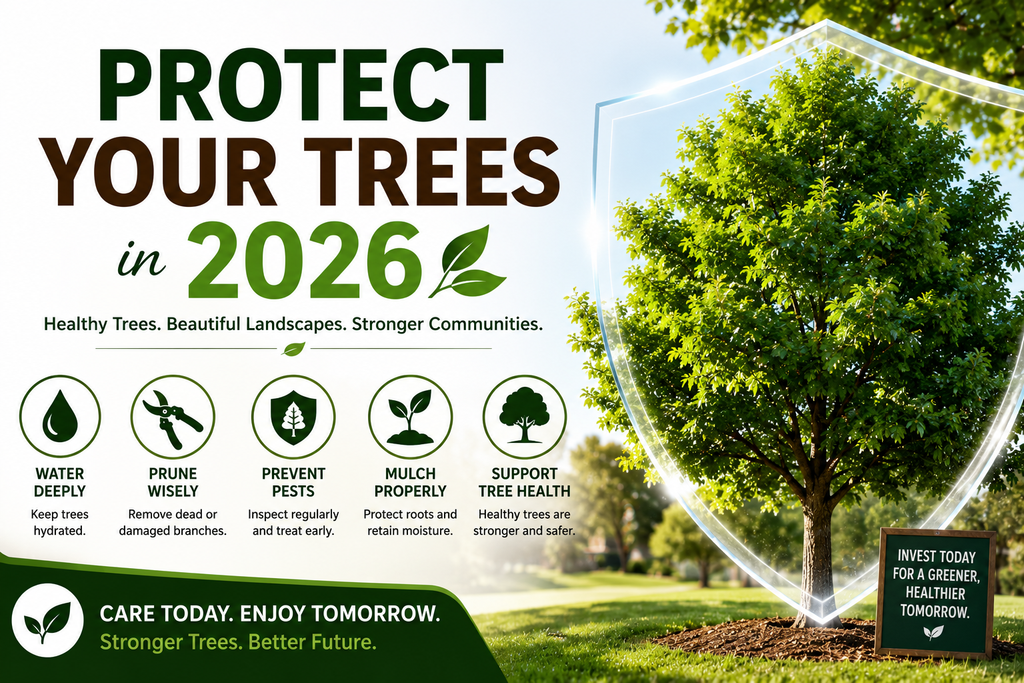
    Protect your trees in 2026 with proper watering, pruning, pest prevention, mulching, and healthy tree care practices.

    Protect Your Trees in 2026

    Early detection is the key to managing Insect Damage on Trees. Walk around your property regularly, inspect trunks and branches, look closely at leaves, and pay attention to sudden changes in tree health. With proper watering, thoughtful pruning, good soil care, and timely pest management, U.S. homeowners can help keep their trees strong and attractive throughout the year.

    For persistent infestations or valuable mature trees, professional evaluation is often the safest choice. Taking action early can protect your landscape, reduce future costs, and help preserve healthy trees for years to come.

    Final Thoughts

    Insect Damage on Trees should never be ignored, especially when you notice holes in the bark, dying branches, damaged leaves, or visible insects. Early identification can prevent a small pest problem from becoming a serious threat to the entire tree. U.S. homeowners can protect their trees by providing proper watering, maintaining healthy soil, pruning correctly, and regularly checking for signs of infestation.

    If the damage is spreading or involves major branches or the trunk, consider having the tree evaluated by a qualified arborist. Taking action early in 2026 can help protect your landscape, reduce costly tree problems, and keep your trees healthy for years to come.
  • Fallen Tree on House: Complete Guide US Homeowners (2026)

    Fallen Tree on House: Complete Guide US Homeowners (2026)

    Fallen Tree on House: What to Do After a Tree Falls on Your Home in 2026

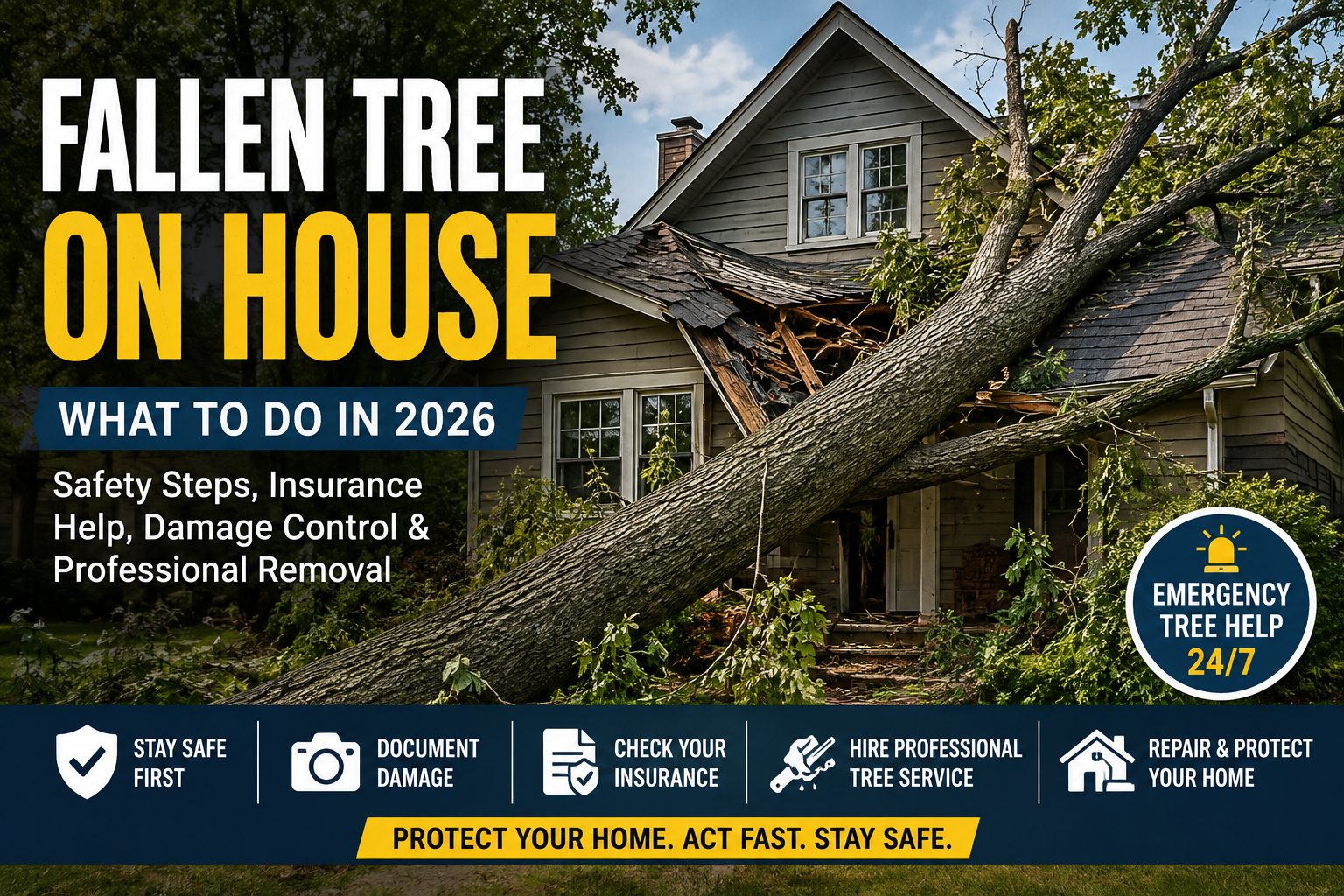
    A Fallen Tree on House can turn a normal day into a serious home emergency. Severe thunderstorms, hurricanes, tornadoes, high winds, heavy snow, and weakened trees can cause major property damage across the United States. If a tree falls on your home, knowing what to do next can protect your family, reduce additional damage, and make the insurance process easier.

    This guide explains the important steps U.S. homeowners should take after a Fallen Tree on House, including emergency safety, damage assessment, insurance, professional removal, and prevention.

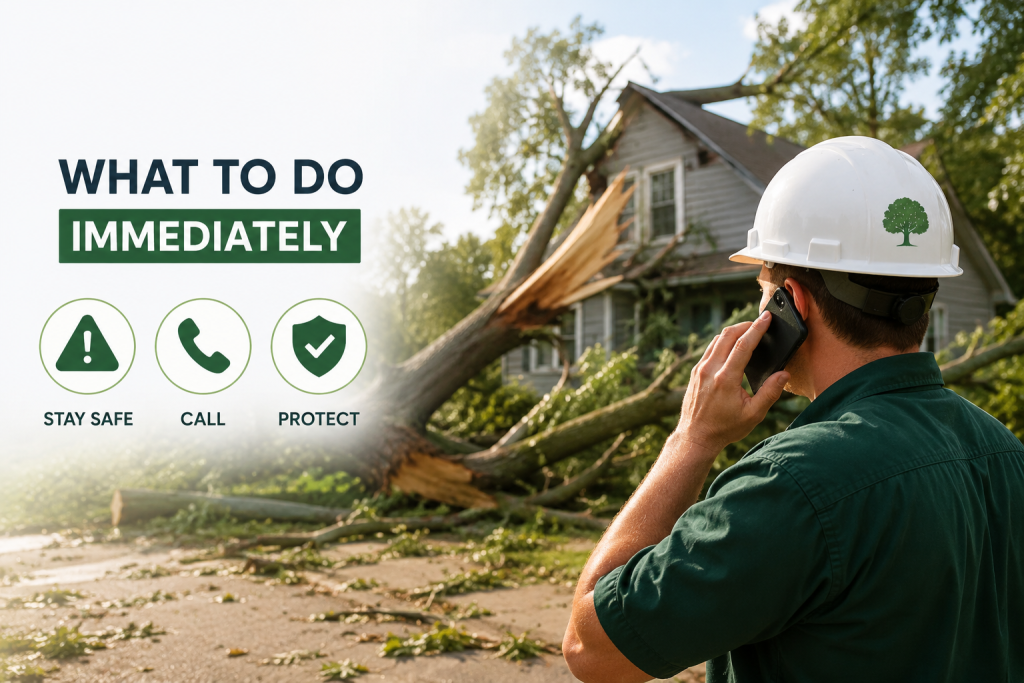
    What to Do Immediately

    Safety should always be your first priority after a Fallen Tree on House. Do not rush outside to inspect the damage if the tree is still moving, power lines are nearby, or parts of the structure appear unstable.

    Move your family and pets to a safe location. Stay away from damaged areas, broken windows, sagging ceilings, and electrical wires.

    If you see downed power lines, sparks, fire, a gas leak, serious injuries, or an immediate structural danger, contact emergency services and stay away from the affected area.

    Never climb onto the tree or roof yourself. A large tree can remain under significant pressure even after it has fallen.

    Professional tree removal expert speaking on the phone while inspecting a large tree that has fallen onto a residential home after a severe storm, highlighting the immediate safety steps homeowners should take, including staying safe, calling emergency tree removal services, and protecting the property from further damage.

    Check for Visible Damage

    Once everyone is safe, look at the property from a secure location. A Fallen Tree on House can damage much more than the roof.

    Common types of damage include:

    • Broken shingles
    • Damaged roof decking
    • Cracked rafters
    • Broken windows
    • Damaged gutters
    • Siding damage
    • Ceiling damage
    • Structural problems
    • Damaged electrical systems
    • Water intrusion

    Some damage may not be visible immediately. For example, roof or structural damage can become worse after rain enters the home.

    If you suspect structural damage, have a qualified contractor or building professional inspect the property before entering or making major repairs.

    Document the Damage

    Before cleanup begins, take photographs and videos whenever it is safe. A Fallen Tree on House should be thoroughly documented for insurance and repair purposes.

    Take pictures of the entire property as well as close-up images of damaged areas. Photograph the tree, roof, broken windows, walls, branches, fences, vehicles, and other affected property.

    Keep receipts for emergency services, temporary repairs, tree removal, tarps, boarding, and other expenses related to the incident.

    Do not throw away damaged items unless necessary for safety. Your insurance company may need evidence of the loss.

    Contact Your Homeowners Insurance Company

    After a Fallen Tree on House, contact your homeowners insurance company as soon as reasonably possible. Coverage depends on your individual policy and the cause of the tree falling.

    For example, damage caused by certain covered storms may be eligible for coverage. However, exclusions, deductibles, policy limits, and maintenance-related issues can affect a claim.

    Ask your insurer:

    • Is the property damage covered?
    • Is emergency tree removal covered?
    • What is my deductible?
    • Are temporary repairs covered?
    • Do I need an adjuster inspection?
    • What documentation is required?

    If a neighbor’s tree caused the damage, do not automatically assume the neighbor is responsible. Liability can depend on the circumstances and applicable state law.

    Hire Professional Emergency Tree Removal

    Removing a Fallen Tree on House can be extremely dangerous. A tree may be resting on the roof, tangled in electrical wires, supported by unstable branches, or putting pressure on damaged parts of the home.

    Professional tree removal companies have specialized equipment and experience for handling dangerous trees.

    Depending on the situation, professionals may use cranes, ropes, bucket trucks, chainsaws, and other specialized equipment to safely dismantle and remove the tree.

    Homeowners should avoid attempting large-scale tree removal themselves. DIY removal can result in serious injuries, additional property damage, or contact with electrical lines.

    Protect Your Home From Further Damage

    After a Fallen Tree on House, temporary protection may be necessary to prevent additional damage.

    If the roof has been opened, a qualified professional may install a temporary tarp. Broken windows can also be boarded up to keep rain and debris outside.

    If water is entering the home, move furniture and valuable belongings away from the affected area when it is safe.

    Do not climb onto a damaged roof or enter an unstable part of the house simply to protect belongings.

    How Much Does Tree Removal Cost?

    The cost of removing a Fallen Tree on House varies significantly. Factors can include tree size, location, accessibility, roof damage, electrical hazards, required equipment, and emergency service availability.

    A small tree in an open yard may be relatively simple to remove, while a large mature tree resting on a roof can require specialized equipment and multiple workers.

    Homeowners should obtain professional estimates when possible and ask whether cleanup, hauling, stump removal, and emergency services are included.

    Can Insurance Pay for Tree Removal?

    A Fallen Tree on House may involve both property-damage coverage and tree-removal coverage, depending on the homeowners policy.

    Insurance policies can differ considerably, so homeowners should review their policy and speak directly with their insurance provider.

    If the tree damaged the home during a covered event, repairs to the structure may be covered subject to the policy’s terms, limits, and deductible.

    Professional arborist performing preventive tree pruning in a well-maintained residential yard to reduce future tree emergencies, improve tree health, and protect homes from storm-related branch and tree failure.

    Prevent Future Tree Emergencies

    Preventing another Fallen Tree on House starts with regular tree maintenance.

    Homeowners should watch for:

    • Dead or hanging branches
    • Cracks in major limbs
    • Leaning trunks
    • Root damage
    • Decay or cavities
    • Weak branch connections
    • Storm damage
    • Signs of disease or pests

    Professional tree inspections can identify hazards before they become emergencies. Regular pruning can also help reduce dangerous branches around roofs, driveways, power lines, and other structures.

    Final Thoughts

    A Fallen Tree on House requires a calm and organized response. Protect people first, stay away from electrical hazards, document the damage, contact your insurance company, and hire qualified professionals for dangerous tree removal.

    For U.S. homeowners, preparing before severe weather can make a major difference. Regular inspections, proper pruning, and understanding your homeowners insurance can help reduce the risk of expensive property damage in 2026.

    FAQs

    What should I do first after a tree falls?

    Get everyone to a safe location and check for immediate hazards.

    Does homeowners insurance cover fallen trees?

    Coverage depends on your policy and the cause of the tree damage.

    Can I remove a fallen tree myself?

    Large or unstable trees should be removed by trained professionals.

    Can a fallen tree damage my roof?

    Yes. It can damage shingles, framing, gutters, ceilings, and walls.

    How can I prevent trees from falling?

    Regular inspections, pruning, and professional tree maintenance can reduce risks.