Author: Jasmindoll130@gmail.com

  • Stump Grinding Cost in 2026:Best Guide For Homeowners

    Stump Grinding Cost in 2026:Best Guide For Homeowners

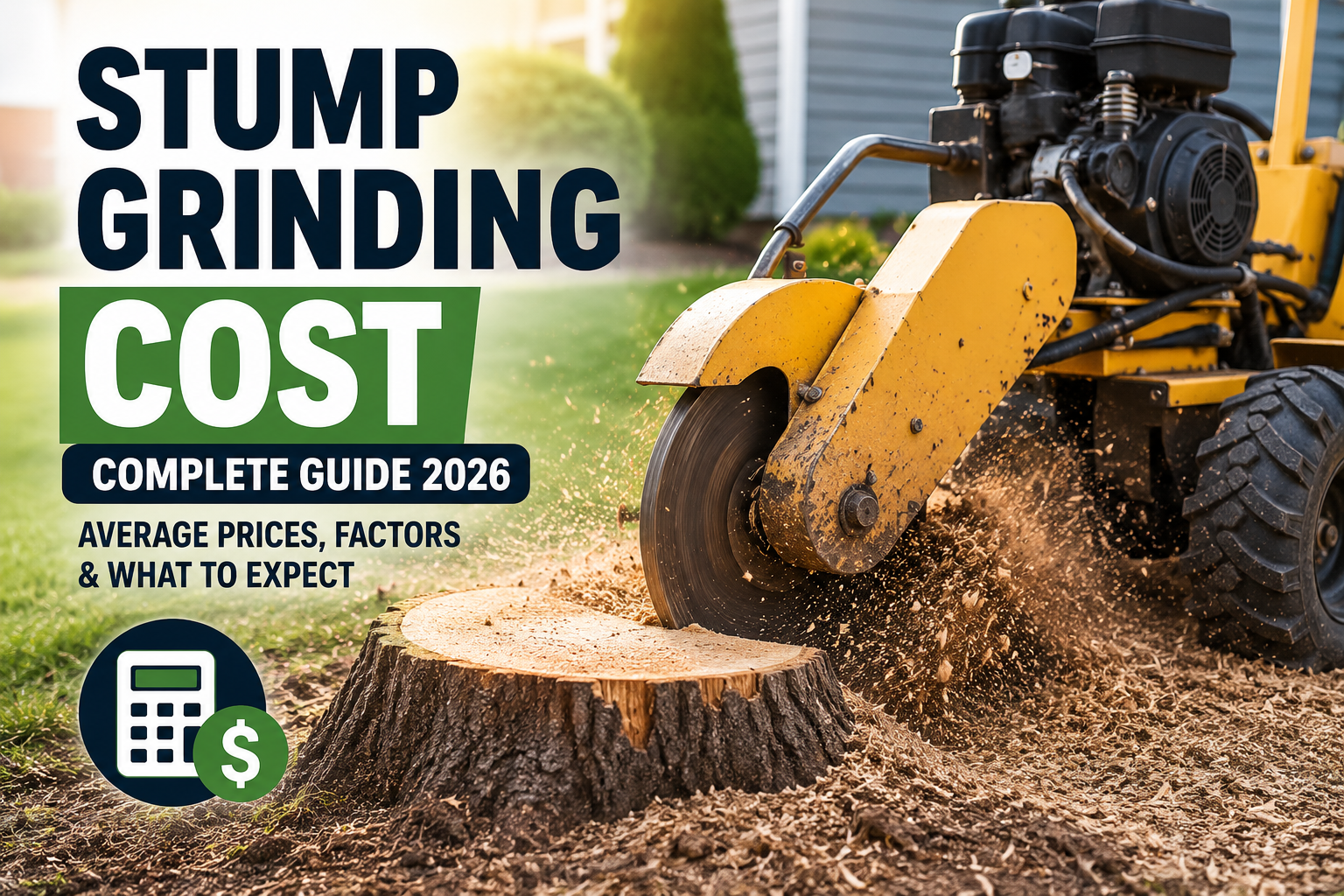
    Stump Grinding Cost in 2026: Average Prices, Factors & What to Expect

    If you have an old tree stump sitting in your yard, you may be wondering about the stump grinding cost in 2026. Stump grinding is one of the most common and affordable ways to remove an unwanted tree stump without excavating the entire root system.

    For most U.S. homeowners, stump grinding cost typically ranges from about $100 to $400 per stump, although larger stumps, difficult access, multiple stumps, and regional labor rates can increase the final price. Understanding what affects the price can help you budget for the job and compare estimates from local professionals.

    What Is Stump Grinding?

    Stump grinding involves using a specialized machine called a stump grinder to cut a tree stump below ground level. The machine uses a rotating cutting wheel to break the stump into small wood chips.

    Unlike complete stump removal, grinding usually does not require digging out the entire root system. This makes it faster, less disruptive, and often less expensive.

    After grinding, homeowners can typically cover the remaining area with soil, grass, mulch, or another landscaping material.
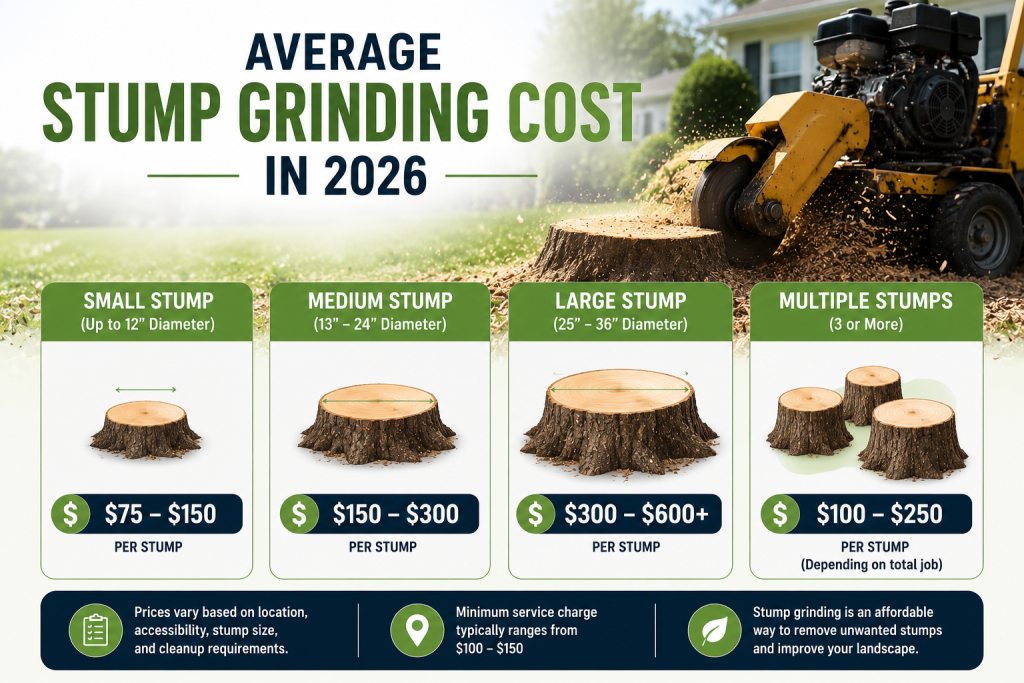
    Informative infographic showing typical stump grinding cost ranges in 2026 for small, medium, large, and multiple tree stumps, along with key factors that can affect the final price.

    Average Stump Grinding Cost in 2026

    The average stump grinding cost in the United States depends heavily on the stump’s size and location.

    Typical price ranges include:

    • Small stump: $75–$150
    • Medium stump: $150–$300
    • Large stump: $300–$600+
    • Multiple stumps: Often $100–$250 per stump, depending on the total job
    • Minimum service charge: Approximately $100–$150 in some areas

    These are general estimates rather than guaranteed prices. Local tree service companies may charge differently based on labor costs, equipment, travel distance, and the difficulty of the project.

    Factors That Affect Stump Grinding Cost

    Several factors can influence your final stump grinding cost.

    1. Stump Size

    The diameter of the stump is one of the biggest pricing factors. A small stump can usually be ground quickly, while a large stump requires more machine time and may produce significantly more debris.

    Some companies calculate prices based on stump diameter, while others provide a flat project price.

    2. Number of Stumps

    Grinding several stumps at once may reduce the average price per stump. If a tree removal project left multiple stumps throughout your property, ask the contractor whether they offer a package price.

    3. Accessibility

    A stump located in an open front yard is usually easier to grind than one behind a fence, beside a house, or in a narrow backyard.

    Limited access may require smaller equipment, additional labor, or more time, increasing the overall stump grinding cost.

    4. Stump Location

    Stumps near buildings, sidewalks, driveways, utility lines, fences, or landscaping can require additional care. Professionals may need to work more slowly to avoid damaging nearby structures.

    5. Root Flare and Surface Roots

    Some stumps have large exposed roots extending across the surrounding ground. If you want these roots ground down as well, the additional work can increase the price.

    6. Cleanup and Debris Removal

    Stump grinding produces a substantial amount of wood chips. Some companies include basic cleanup in their estimate, while others charge extra to remove the debris.

    Always ask whether the quoted price includes cleanup, hauling, and filling the hole with soil.

    Stump Grinding vs. Stump Removal

    Stump grinding and stump removal are not exactly the same service.

    Stump grinding removes the visible stump and usually grinds it several inches below the soil surface. The major roots remain underground and gradually decay.

    Stump removal involves digging out the stump and a significant portion of its root system. This process can require heavy equipment and create a larger hole in the landscape.

    For many homeowners, grinding is the more practical option because it is generally faster, less invasive, and more affordable.

    How to Save Money on Stump Grinding

    If you’re trying to reduce your stump grinding cost, consider these tips:

    • Get estimates from at least three local tree service companies.
    • Ask about discounts for grinding multiple stumps.
    • Schedule the work along with tree removal when possible.
    • Confirm whether cleanup and debris removal are included.
    • Make sure the contractor knows the approximate stump diameter before providing an estimate.
    • Clear furniture, toys, vehicles, and other obstacles from the work area.

    Avoid choosing a contractor based solely on the lowest price. Proper equipment, insurance, experience, and safe work practices are important when hiring a tree service professional.

    Is Stump Grinding Worth the Cost?

    For most homeowners, stump grinding can be worth the investment. An unwanted stump can interfere with mowing, attract insects, take up valuable yard space, and make landscaping more difficult.

    Grinding the stump can improve the appearance of your property and create usable space for grass, plants, mulch, or other landscaping projects.

    If the stump is close to a structure or underground utilities, professional service is especially important because improper grinding can cause property damage or create safety problems.

    Final Thoughts

    Understanding stump grinding cost can help U.S. homeowners make informed decisions about removing unwanted tree stumps. In 2026, a typical residential stump grinding project may cost around $100 to $400, but the actual price depends on stump size, accessibility, location, number of stumps, and cleanup requirements.

    Before hiring a tree service, compare several written estimates and confirm exactly what is included. A professional stump grinding service can remove an unsightly obstacle quickly while helping you reclaim valuable yard space.
  • Complete Guide to Stump Grinding In 2026

    Complete Guide to Stump Grinding In 2026

    Complete Guide to Stump Grinding: What Homeowners Need to Know in 2026

    Tree removal does not always mean the job is completely finished. After a tree is cut down, the remaining stump can become an eyesore, attract pests, interfere with landscaping, and create a tripping hazard. Stump grinding is one of the most practical ways for U.S. homeowners to deal with these unwanted tree remnants.

    This complete guide to stump grinding explains how the process works, its benefits, costs, safety considerations, and what homeowners should expect in 2026.

    What Is Stump Grinding?

    Stump grinding is the process of mechanically reducing a tree stump into small wood chips using a specialized machine called a stump grinder. Instead of removing the entire root system, the grinder cuts the visible stump several inches below ground level.

    The resulting wood chips can usually be removed or used as mulch, while the remaining area can be filled with soil and prepared for new grass, plants, or other landscaping.

    Unlike traditional stump removal, stump grinding is generally less invasive because it does not require digging out the entire root ball.

    Why Should You Grind a Tree Stump?

    Leaving an old stump in your yard can cause several problems. One of the biggest benefits of stump grinding is that it improves both the appearance and usability of your property.

    Common reasons homeowners choose stump grinding include:

    • Improved curb appeal: An old stump can make an otherwise attractive yard look unfinished.
    • Better lawn maintenance: Stumps can interfere with mowing and other landscaping equipment.
    • Reduced safety risks: A low or hidden stump can become a tripping hazard.
    • Pest prevention: Decaying wood can attract insects and other unwanted pests.
    • More usable space: Removing the visible stump creates room for grass, flower beds, or other landscaping.
    • Easier future maintenance: A cleared area is simpler to maintain than a yard containing multiple tree stumps.
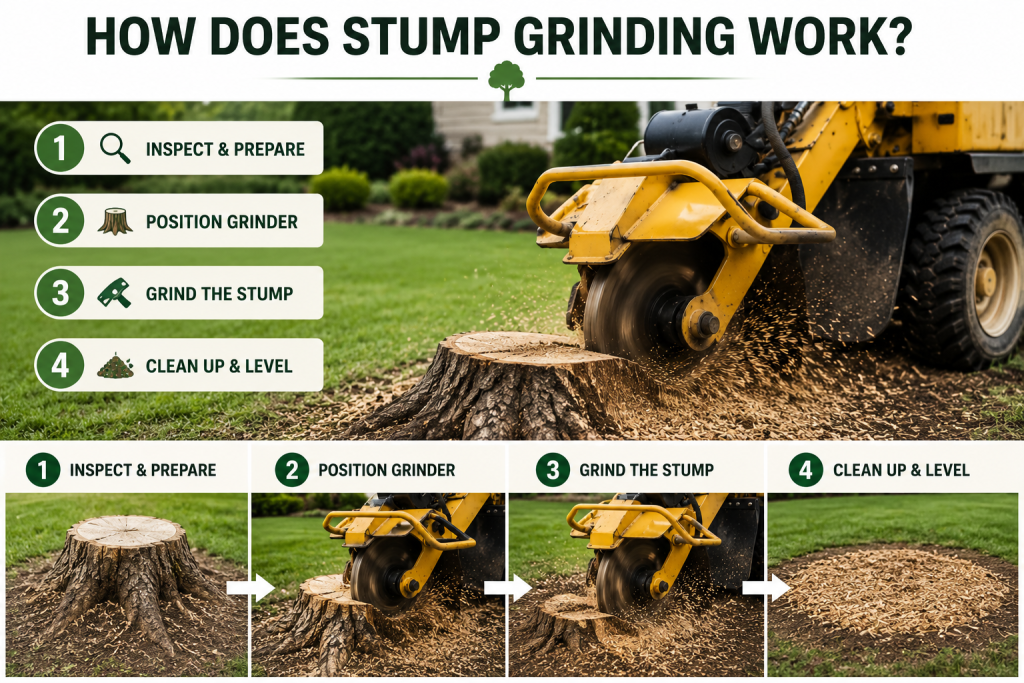
    Stump grinding process showing a grinder removing a tree stump in a residential yard

    How Does Stump Grinding Work?

    Professional stump grinding usually involves several steps.

    1. Inspecting the Stump

    Before starting, the technician evaluates the stump, surrounding property, accessibility, and potential underground hazards.

    2. Preparing the Work Area

    The area around the stump is cleared of furniture, decorations, rocks, toys, and other objects. Professionals may also establish a safety zone to protect people and property from flying wood chips.

    3. Positioning the Grinder

    The stump grinder is carefully positioned over or next to the stump. Different machines are available depending on stump size and site accessibility.

    4. Grinding the Stump

    A rotating cutting wheel gradually chips away at the wood. The operator moves the grinder across the stump until the main portion has been reduced below ground level.

    5. Cleaning the Area

    After grinding, the wood chips can be raked away or used to fill the resulting depression.

    6. Restoring the Ground

    Topsoil can be added to level the area. Homeowners can then plant grass, install landscaping, or use the space for another purpose.

    How Much Does Stump Grinding Cost in 2026?

    The cost of stump grinding varies considerably across the United States. A small, easily accessible stump may cost relatively little, while a large stump with extensive roots or difficult access can cost substantially more.

    Factors that influence stump grinding prices include:

    • Stump diameter
    • Number of stumps
    • Tree species and wood hardness
    • Root spread
    • Stump location
    • Accessibility for equipment
    • Required grinding depth
    • Cleanup and disposal
    • Local labor rates

    For an accurate price, homeowners should request a quote based on an inspection rather than relying solely on an online average.

    Stump Grinding vs. Stump Removal

    Although these terms are sometimes used interchangeably, they describe different processes.

    Stump grinding removes the visible stump by grinding it into wood chips while leaving most of the root system underground.

    Stump removal involves digging out the stump and a significant portion of its roots. This can require more labor, excavation, and equipment.

    For many residential landscaping projects, stump grinding is a convenient option because it typically causes less disruption to the surrounding yard.

    However, complete stump removal may make more sense when homeowners need to build, install hardscaping, or plant in a location where the remaining root system could interfere.

    Can You Grind a Stump Yourself?

    Homeowners can rent stump-grinding equipment in some areas, but using a commercial grinder requires caution. These machines contain powerful cutting wheels that can cause serious injuries if operated incorrectly.

    DIY stump grinding may also create problems if the operator does not identify underground utilities, sprinkler systems, buried cables, or other obstacles.

    For large stumps, difficult locations, or properties with potential underground hazards, hiring an experienced professional is generally the safer choice.

    What Happens After Stump Grinding?

    After stump grinding, you will usually have a shallow hole containing wood chips and some remaining roots. The area can be leveled with suitable soil.

    Keep in mind that wood chips and remaining roots may gradually decompose, causing the soil to settle. Homeowners may need to add additional soil later before establishing a lawn or planting new vegetation.

    If you plan to plant another tree in the same location, ask a local arborist or landscaping professional whether the site is suitable.

    Professional stump grinding service with safety equipment and a stump grinder in a residential yard

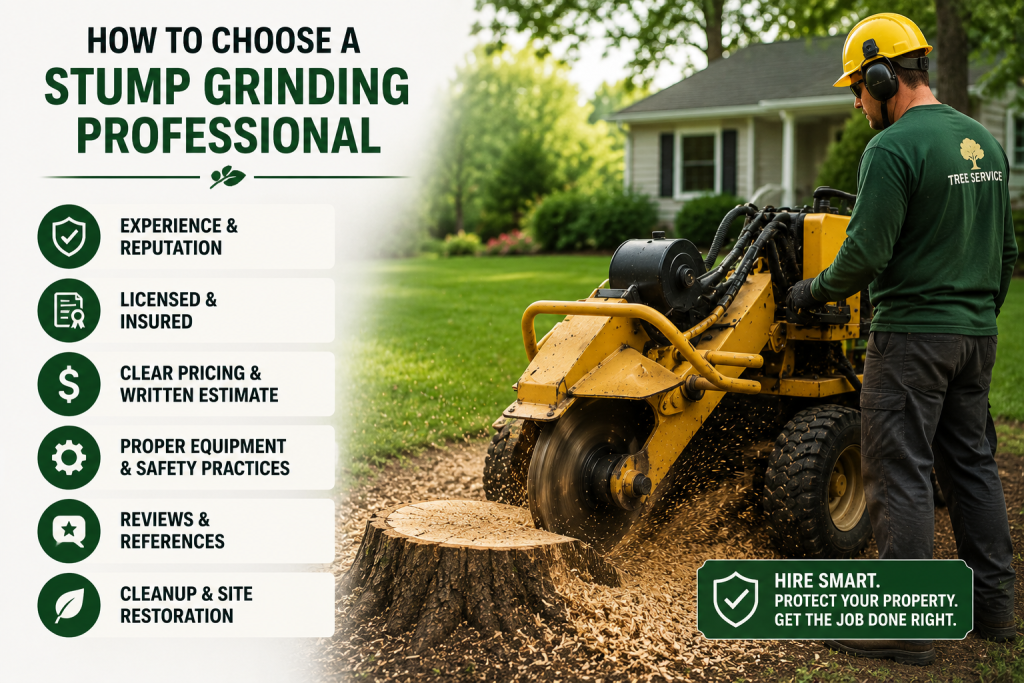
    How to Choose a Stump Grinding Professional

    When hiring a professional, look beyond the lowest price. Ask about:

    • Experience with residential stump grinding
    • Insurance coverage
    • Equipment and safety practices
    • Cleanup and debris removal
    • Grinding depth
    • Written estimates
    • References or reviews
    • Any additional charges

    A reputable contractor should clearly explain what is included in the quoted price.

    Final Thoughts

    Stump grinding is an efficient way to improve the appearance, safety, and usability of a property after tree removal. By reducing the stump below ground level, homeowners can reclaim valuable yard space without the extensive excavation often associated with complete stump removal.

    Whether you have one small stump or several large stumps, understanding the process and pricing factors can help you make an informed decision. In 2026, homeowners should compare qualified local professionals, request detailed estimates, and make sure the work area is handled safely.

  • Tree Trimming Before Storm Season (2026 Guide for U.S. Homeowners)

    Tree Trimming Before Storm Season (2026 Guide for U.S. Homeowners)

    Tree Trimming Before Storm Season: Why It Matters in 2026

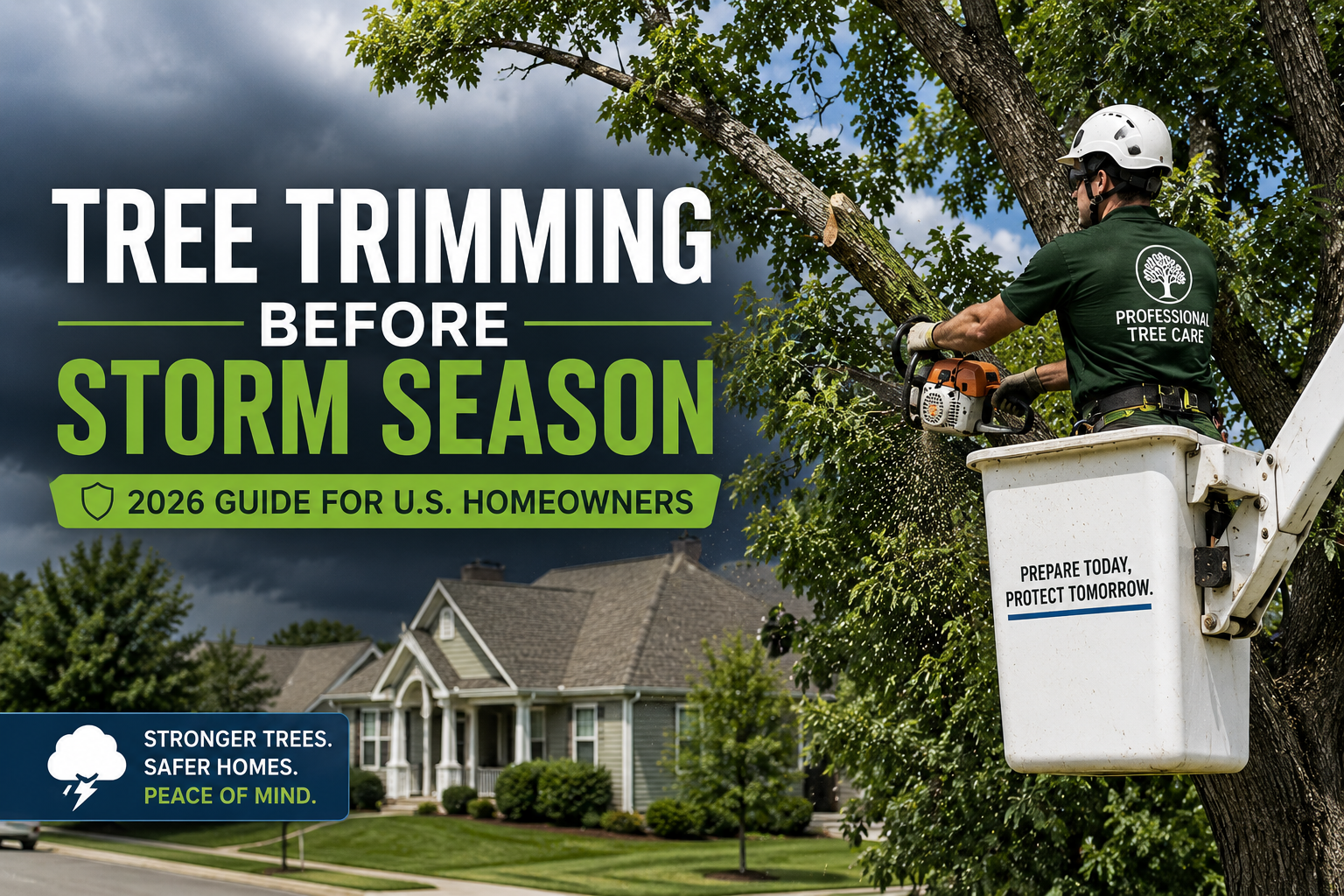
    Tree Trimming Before Storm Season is one of the smartest ways to protect your home, family, and landscape from severe weather. Every year, strong winds, heavy rain, thunderstorms, hurricanes, and tornadoes cause thousands of trees and branches to fall across the United States.

    Proper tree trimming reduces the risk of broken limbs, roof damage, power outages, and personal injuries. Whether you live in Texas, Florida, Georgia, or any storm-prone state, preparing your trees before severe weather arrives can save you thousands of dollars in repair costs.

    This 2026 guide explains why Tree Trimming Before Storm Season should be part of every homeowner’s maintenance plan.


    Why Tree Trimming Before Storm Season Is Important

    Trees naturally develop weak, dead, or overgrown branches over time. During storms, these branches become dangerous because strong winds can easily snap them.

    Professional tree trimming helps by:

    • Removing dead or damaged limbs
    • Reducing wind resistance
    • Improving tree stability
    • Preventing branches from hitting your home
    • Protecting vehicles and outdoor structures
    • Lowering the chance of power line interference

    Healthy trees are much more likely to survive severe weather than neglected ones.


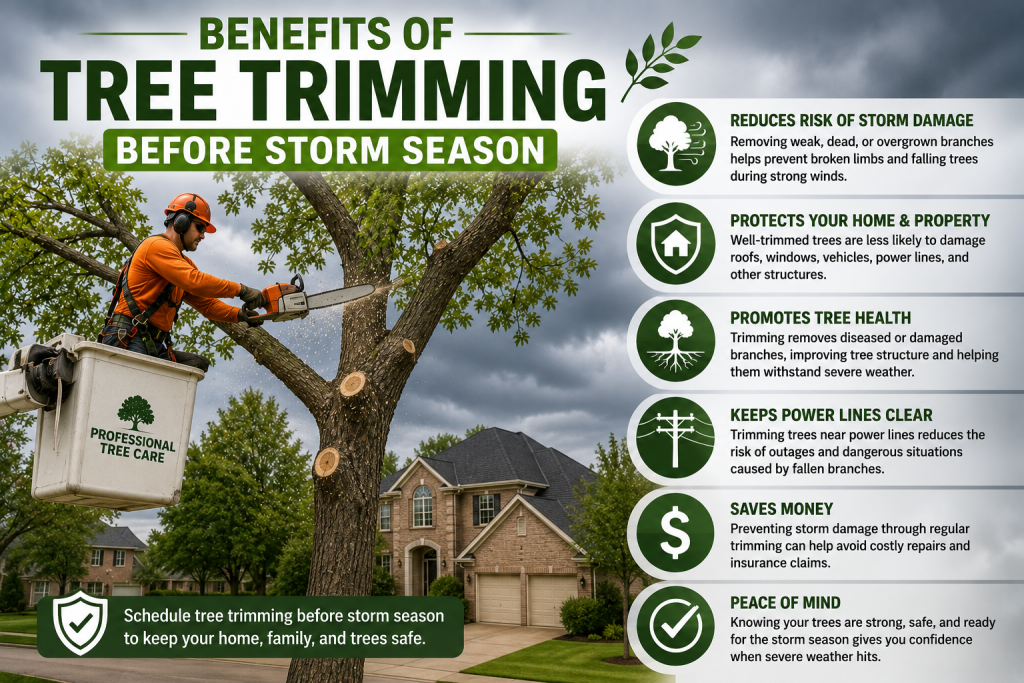
    Professional arborist trimming a tree before storm season to reduce storm damage, protect property, and improve tree health

    Benefits of Tree Trimming Before Storm Season

    1. Protects Your Home

    Large branches hanging over your roof can cause expensive damage during storms. Trimming these branches reduces the risk of broken shingles, damaged gutters, and structural problems.

    2. Improves Tree Health

    Removing diseased and dying branches allows trees to focus energy on healthy growth. This also reduces the spread of decay.

    3. Reduces Safety Hazards

    Weak limbs can fall without warning during high winds. Regular trimming helps keep your family, neighbors, and visitors safe.

    4. Prevents Property Damage

    Tree limbs often damage fences, sheds, patios, swimming pools, and vehicles during storms. Preventive trimming minimizes these risks.

    5. Increases Tree Lifespan

    Healthy maintenance keeps trees structurally strong and extends their life for many years.


    When Should You Trim Trees Before Storm Season?

    Timing depends on your region, but most arborists recommend trimming several weeks before severe weather begins.

    General guidelines include:

    • Spring: Prepare for summer thunderstorms.
    • Early Summer: Ideal before hurricane season.
    • Late Winter: Great for structural pruning on many tree species.
    • Before Local Storm Seasons: Schedule inspections annually.

    Avoid waiting until a storm warning has already been issued. Professional tree companies become extremely busy during emergency situations.


    Signs Your Trees Need Trimming

    Watch for these warning signs:

    • Dead branches
    • Broken limbs
    • Branches touching your roof
    • Limbs growing over driveways
    • Cracked or split branches
    • Trees leaning excessively
    • Thick canopies blocking airflow
    • Branches growing near power lines

    If you notice any of these issues, schedule trimming before storm season arrives.


    Trees That Often Need Storm Preparation

    Some trees are more vulnerable during storms because of their size or branch structure.

    Examples include:

    • Oak trees
    • Pine trees
    • Maple trees
    • Ash trees
    • Bradford Pear trees
    • Large ornamental trees

    Mature trees with heavy canopies benefit the most from professional trimming.


    Professional Tree Trimming vs DIY

    Many homeowners consider trimming trees themselves. While small branches can often be handled safely, large trees require professional equipment and expertise.

    Professional tree services offer:

    • Proper pruning techniques
    • Safety equipment
    • Climbing experience
    • Liability insurance
    • Safe debris removal

    DIY trimming without proper knowledge can damage trees and increase future storm risks.


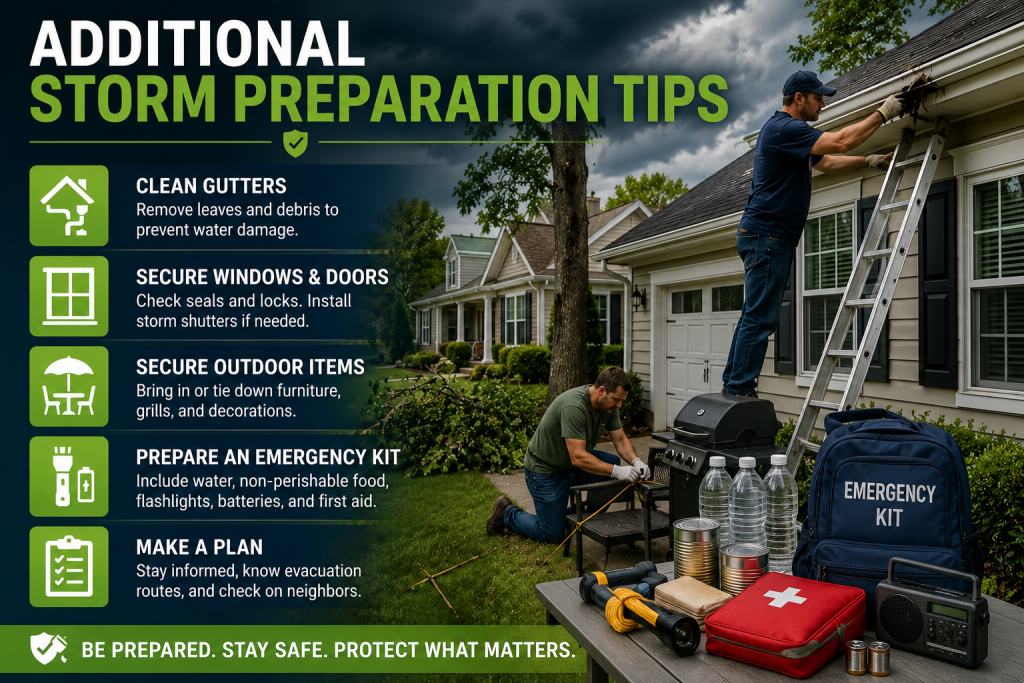
    Additional storm preparation tips for U.S. homeowners, including cleaning gutters, securing outdoor items, preparing an emergency kit, and protecting the home before severe weather.

    Additional Storm Preparation Tips

    Tree trimming works best when combined with other preventive measures.

    Consider these additional steps:

    • Inspect trees every year.
    • Remove dead trees immediately.
    • Secure loose outdoor furniture.
    • Check tree roots for signs of decay.
    • Keep gutters clean.
    • Monitor leaning trees after heavy rainfall.

    A complete property inspection helps reduce storm-related damage.


    Why Hire a Certified Tree Service?

    Certified tree professionals understand how different tree species respond to trimming.

    They know how to:

    • Maintain proper tree balance
    • Avoid over-pruning
    • Improve structural strength
    • Identify disease or decay
    • Recommend tree removal when necessary

    Hiring experienced professionals often saves homeowners money by preventing costly repairs later.


    Conclusion

    Tree Trimming Before Storm Season is one of the most effective ways to protect your home, landscape, and loved ones from severe weather. Preventive maintenance improves tree health, reduces safety hazards, and lowers the risk of expensive storm damage.

    As storm seasons continue to bring unpredictable weather across the United States in 2026, scheduling professional tree trimming early is a smart investment. Healthy, properly maintained trees are stronger, safer, and far better prepared to withstand high winds and heavy rain.

    If your property has overgrown or damaged trees, don’t wait until the next storm warning—plan your tree trimming before storm season begins.


    Frequently Asked Questions (FAQs)

    1. Why is tree trimming before storm season important?

    It removes weak branches that could fall during high winds, helping protect your home and property.

    2. When is the best time to trim trees before storms?

    Late winter, spring, or several weeks before your area’s storm season is generally ideal.

    3. Can tree trimming prevent storm damage?

    While no method guarantees complete protection, proper trimming significantly reduces the risk of falling branches and tree failure.

    4. Should I trim trees myself?

    Small branches may be manageable, but large trees should be trimmed by professionals for safety and proper tree care.

    5. How often should trees be trimmed?

    Most mature trees benefit from trimming every 3–5 years, while fast-growing trees may require more frequent maintenance.

  • Dead Branch Removal Guide: Homeowner Guide (2026)

    Dead Branch Removal Guide: Homeowner Guide (2026)

    Dead Branch Removal Guide: How to Safely Remove Dead Tree Branches in 2026

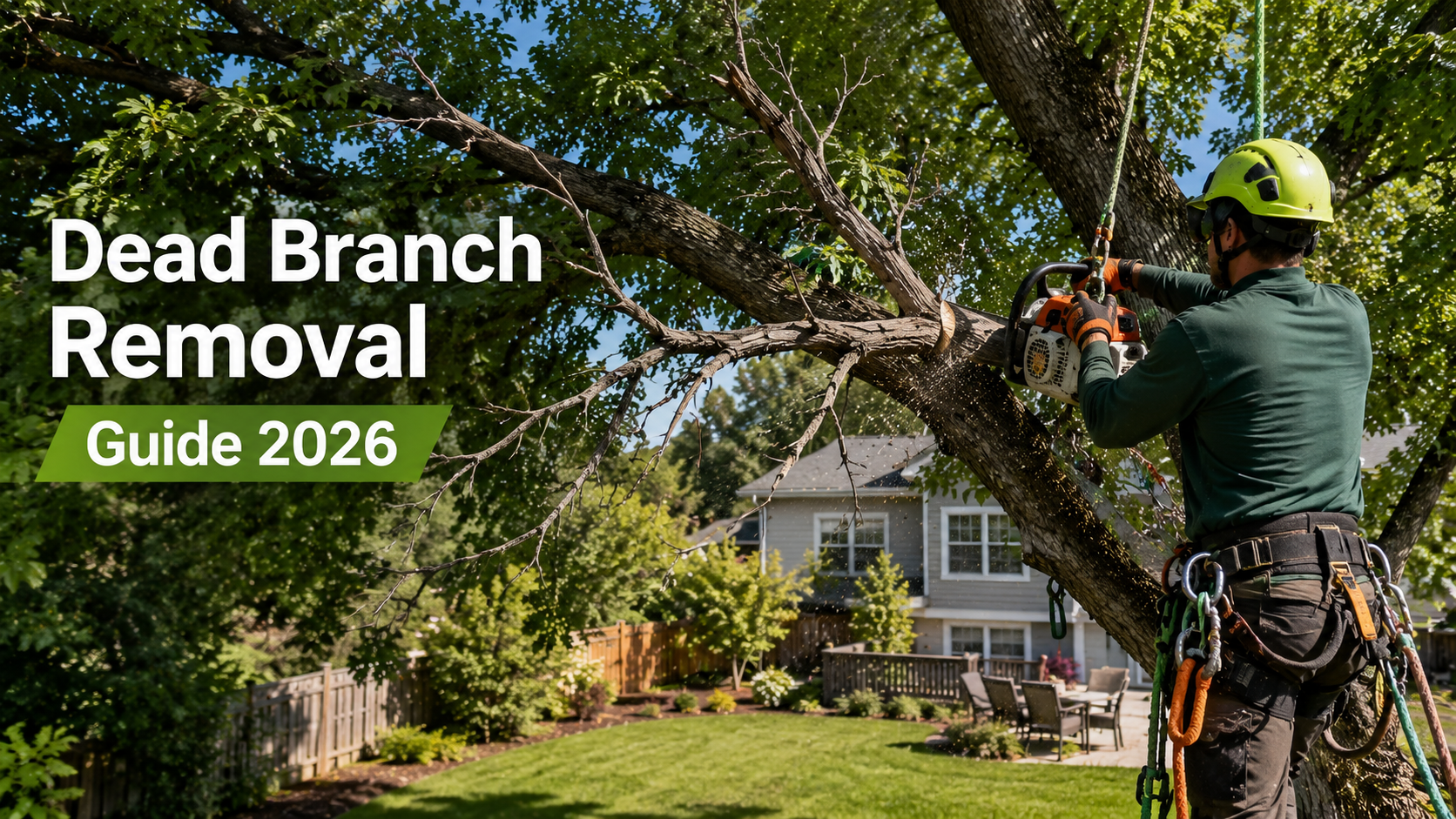
    Dead branches are a common problem for homeowners across the United States. Whether you have a mature oak in your Texas backyard or a maple tree in a northern state, damaged and dead limbs can become a safety risk if they are ignored. Learning how to identify and handle them is an important part of responsible tree care.

    This Dead Branch Removal Guide explains how to identify dead branches, why removing them matters, when to call a professional, and how homeowners can protect their property. In 2026, with severe storms and unpredictable weather affecting many parts of the US, regular tree inspections are more important than ever.

    What Is a Dead Tree Branch?

    A dead branch is a limb that no longer receives water and nutrients from the tree. Unlike healthy branches, dead limbs may have no leaves, brittle bark, or visible signs of decay. Some dead branches remain attached to the tree for years, while others can fall unexpectedly during strong winds, heavy rain, ice, or storms.

    A proper Dead Branch Removal Guide should always emphasize that dead branches are not simply an appearance problem. They can become hazardous when they are located above roofs, driveways, sidewalks, patios, or areas where people spend time.

    How to Identify Dead Branches

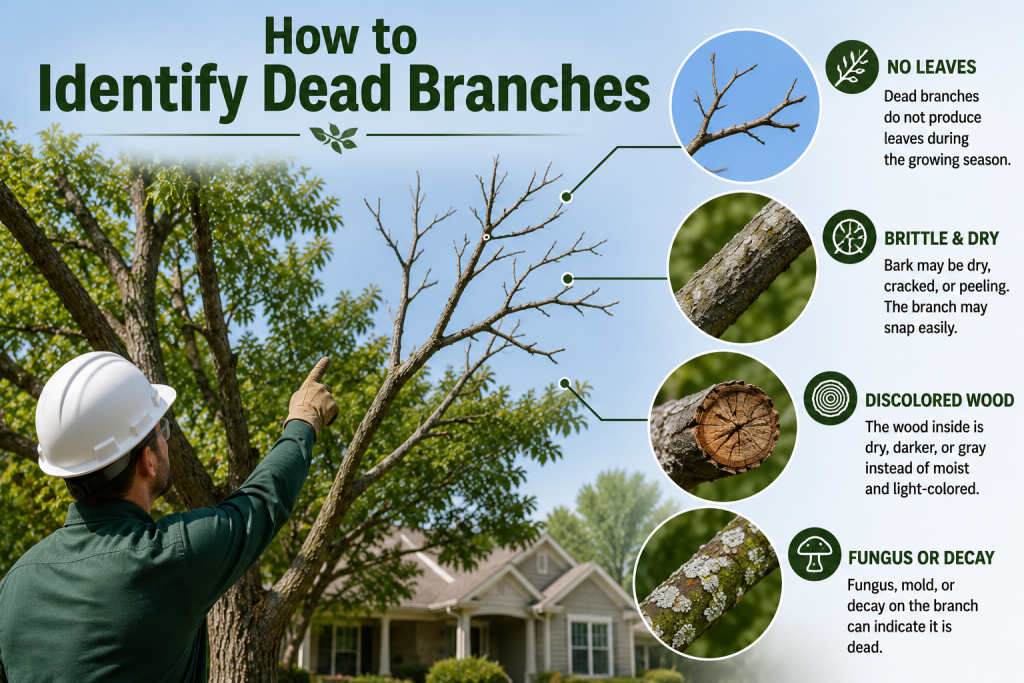
    Before removing anything, homeowners should learn how to recognize potentially dead limbs. Signs may include:

    • No leaves during the growing season
    • Brittle or dry-looking wood
    • Cracked or peeling bark
    • Visible decay or fungal growth
    • Broken branches
    • Hollow sections
    • Branches that snap easily
    • A noticeable lack of buds or new growth

    However, identifying dead wood is not always simple. Some trees naturally lose branches, and certain limbs may appear unhealthy while still being alive. This is why a professional inspection can be helpful when you are unsure.

    Following a reliable Dead Branch Removal Guide can help you recognize obvious hazards, but homeowners should avoid making assumptions about complicated or high branches.

    Why Dead Branch Removal Is Important

    One of the main reasons to follow a Dead Branch Removal Guide is safety. Dead limbs can become weak over time and may fall without warning. A falling branch can damage a roof, vehicle, fence, power line, or outdoor structure.

    Dead branches can also create additional problems for the tree. Removing certain dead or damaged limbs may improve the tree’s appearance and reduce potential hazards. However, improper cutting can damage living tissue and create opportunities for decay or disease.

    For this reason, dead branch removal should be approached carefully rather than treated as a simple DIY landscaping project.

    When Should Dead Branches Be Removed?

    Dead branches should generally be addressed when they create a potential hazard or when they are large enough to cause property damage if they fall. Small branches that are easy to reach may sometimes be handled by experienced homeowners using appropriate tools.

    However, large branches, high branches, and limbs near power lines should be evaluated by a qualified professional.

    The best time for routine tree maintenance depends on the tree species and local climate. In many areas, dormant seasons can be suitable for certain types of pruning. Nevertheless, hazardous dead or broken branches should not be left in place simply because it is the wrong season.

    A good Dead Branch Removal Guide should always prioritize safety over convenience.

    Can You Remove Dead Branches Yourself?

    Some small, low-hanging dead branches can potentially be removed by homeowners. Before starting, make sure you understand proper pruning techniques and use clean, sharp equipment.

    Never attempt to remove a large branch that is under tension, hanging over a structure, or located near electrical wires. Do not climb a tree with inadequate safety equipment.

    If you are unsure about the condition of a branch, hiring a professional tree service is usually the safer option. A qualified arborist can determine whether a branch is truly dead and recommend the appropriate course of action.

    How to Safely Remove Small Dead Branches

    For homeowners handling small, accessible branches, a basic Dead Branch Removal Guide includes several safety considerations.

    First, inspect the branch carefully and check for signs of movement or instability. Make sure there are no people, pets, vehicles, or valuable objects underneath.

    Use appropriate pruning tools and avoid cutting into the branch collar, which is the natural area where the branch connects to the trunk or larger limb. Proper pruning cuts can help the tree recover more effectively.

    Never use a ladder in an unsafe position or attempt to reach branches that are beyond your comfortable working height.

    When to Hire a Professional Arborist

    Professional help is recommended when dead branches are large, high, unstable, or located near power lines. Trees that have been damaged by storms may also present hidden dangers.

    A professional tree care company can inspect the tree, identify hazardous limbs, and use specialized equipment to remove branches safely. This is especially important for mature trees near homes and other structures.

    If you live in an area frequently affected by hurricanes, tornadoes, ice storms, or severe thunderstorms, regular professional inspections can be a valuable part of your property maintenance plan.

    Common Dead Branch Removal Mistakes

    One common mistake discussed in any Dead Branch Removal Guide is cutting branches incorrectly. Poor pruning cuts can injure healthy parts of the tree and increase the risk of future problems.

    Another mistake is removing too many branches at once. Trees need their living branches and leaves for energy production, so excessive pruning can stress the tree.

    Homeowners should also avoid topping Dead Branch Removal Guide trees or making unnecessary cuts simply to change the tree’s shape. Professional pruning focuses on tree health, structure, and safety.

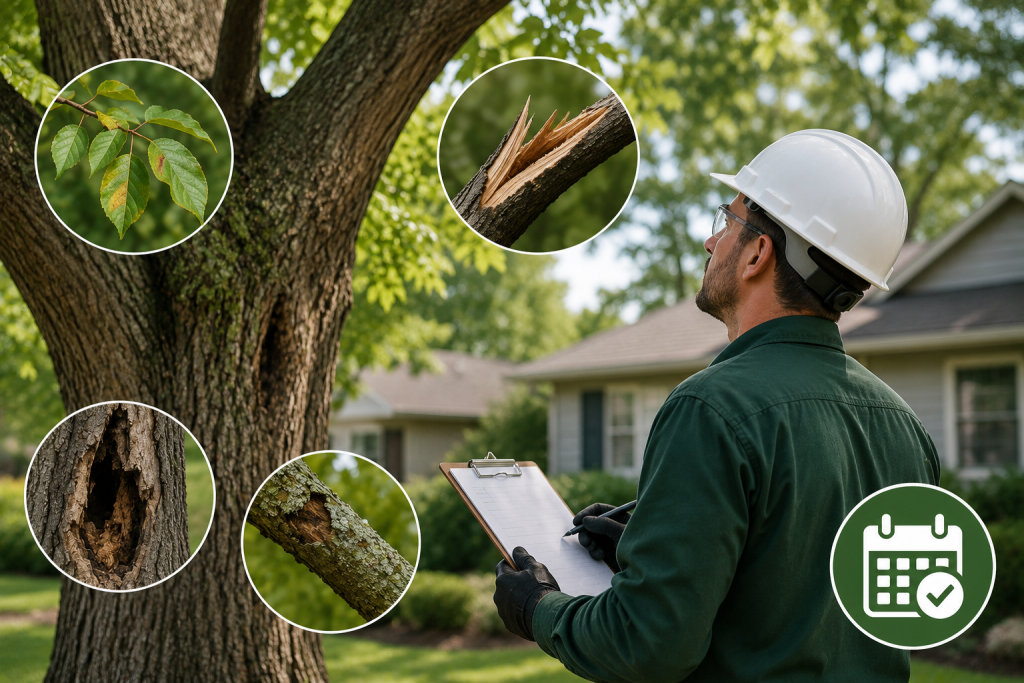
    Professional arborist inspecting a mature tree for damaged branches, leaf problems, trunk decay, and tree health issues

    How Often Should You Inspect Your Trees?

    There is no universal schedule for every tree, but homeowners should regularly look for dead, broken, or damaged limbs. Trees should also be inspected after major storms or extreme weather.

    A professional tree Dead Branch Removal Guide inspection can be particularly useful for older or large trees. Early identification of hazardous branches may help prevent emergency situations and expensive property damage.

    Using this Dead Branch Removal Guide as part of your regular home maintenance routine can help you notice potential problems before they become serious.

    Final Thoughts

    Dead branches can pose serious risks to homeowners, especially when they are located near homes, vehicles, walkways, or power lines. The best approach is to inspect trees regularly, identify obvious hazards, and remove unsafe branches using proper techniques.

    This Dead Branch Removal Guide provides general information for US homeowners, but every tree and situation is different. When a branch is large, high, unstable, or difficult to access, hiring a qualified tree professional is the safest choice.

    By making dead branch inspection part of your 2026 Dead Branch Removal Guide property maintenance routine, you can help protect your home, improve your landscape, and support the long-term health and safety of your trees.

    Frequently Asked Questions (FAQs)

    Can dead branches fall on their own?

    Yes. Dead branches become increasingly brittle and can fall during strong winds, heavy rain, snow, ice, or storms. Even calm weather can sometimes cause weakened limbs to drop.

    Can I remove dead branches myself?

    Small, low branches may be manageable for some homeowners. However, large, high, unstable branches or limbs near electrical wires should be left to trained professionals Dead Branch Removal Guide .

    When is the best time to remove dead branches?

    The ideal timing depends on the tree species and local climate. Hazardous or broken branches should generally be addressed promptly rather than waiting for a particular season.

    How can I prevent dead branches from becoming a safety hazard?

    Regular tree inspections, proper pruning, and timely removal of hazardous limbs can help reduce risks. Following this Dead Branch Removal Guide can help homeowners recognize potential problems early.

    How much does dead branch removal cost?

    The price varies depending on branch size, tree height, location, equipment requirements, and cleanup. Small jobs may cost less, while large or hazardous branches can require specialized equipment and professional crews.

  • Cost of Tree Trimming in Dallas: 2026 Homeowner’s Guide

    Cost of Tree Trimming in Dallas: 2026 Homeowner’s Guide

    Cost of Tree Trimming in Dallas

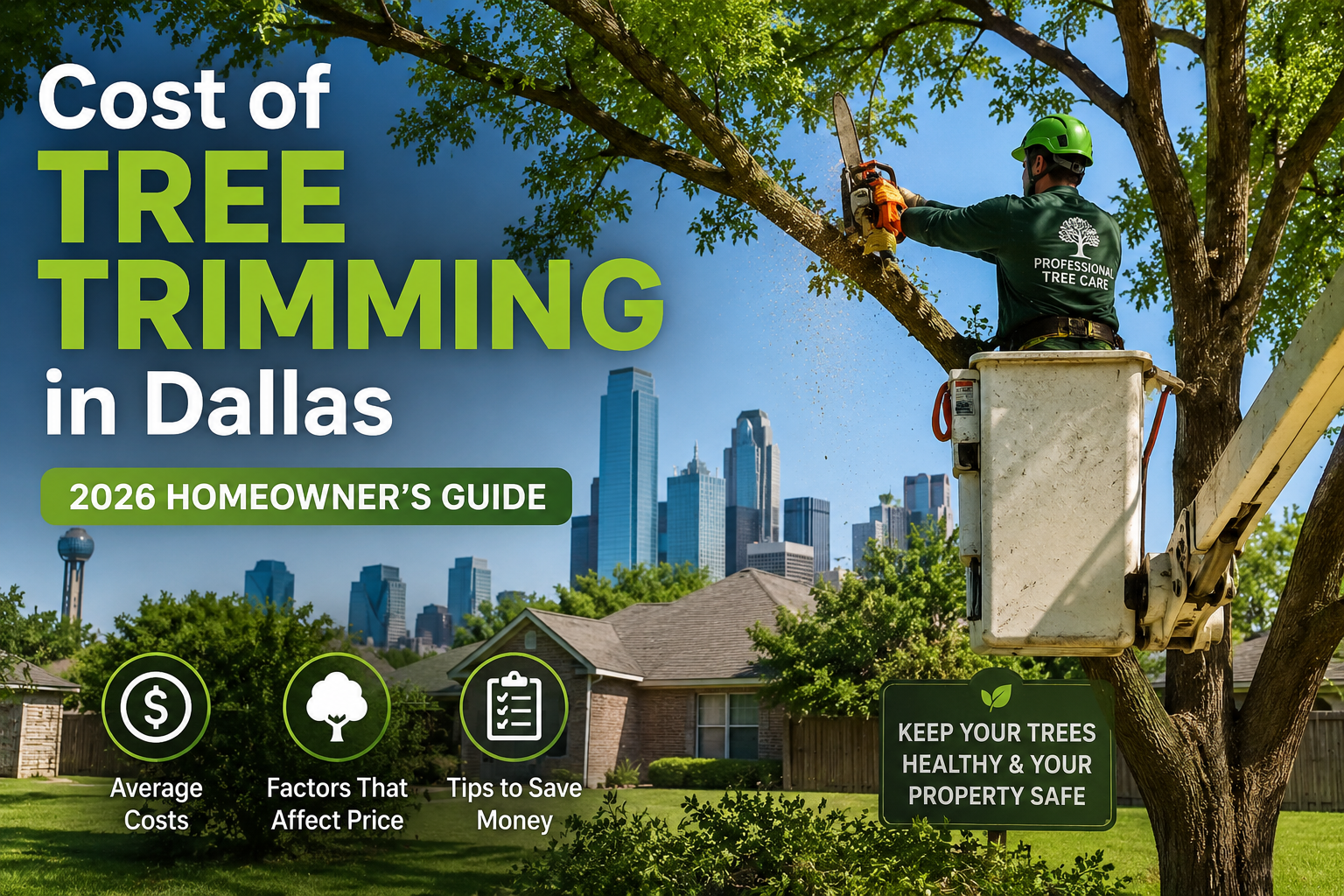
    If you own a home in Dallas, keeping your trees properly trimmed is an important part of maintaining your property. Healthy, well-maintained trees can improve curb appeal, provide shade, and reduce the risk of falling branches during severe weather. But before hiring a professional, many homeowners want to know the Cost of Tree Trimming in Dallas and what factors can affect the final price.

    In 2026, the average tree trimming project in Dallas can cost anywhere from $200 to $1,500 or more, depending on the tree’s size, condition, location, and the amount of work required. Smaller trees are usually less expensive to trim, while large, mature trees near homes, power lines, or other structures may require specialized equipment and experienced professionals.

    Average Cost of Tree Trimming in Dallas in 2026

    The Cost of Tree Trimming in Dallas varies significantly from one property to another. A basic trimming job for a small tree may cost around $100 to $300, while medium-sized trees can cost approximately $300 to $700. Large or difficult-to-access trees may cost $700 to $1,500 or more.

    These are general estimates rather than fixed prices. A tree service company will usually consider the tree’s size, species, health, accessibility, and the type of pruning needed before providing a quote.

    For homeowners comparing the Cost of Tree Trimming in Dallas, getting multiple estimates from reputable local tree service companies can help you understand the fair market price for your specific project.

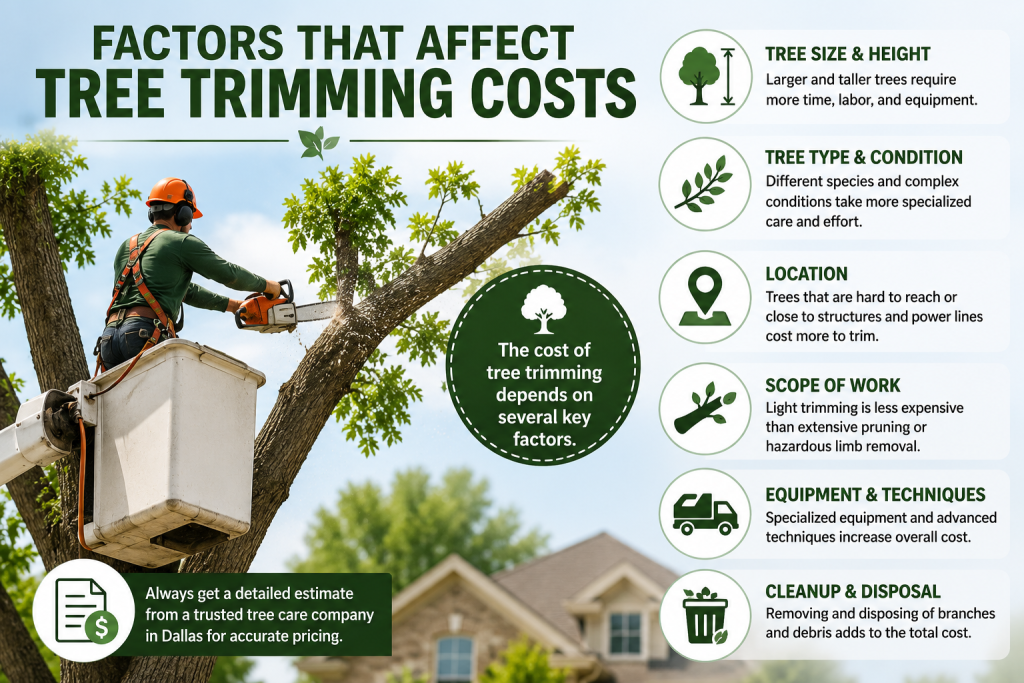
    Factors that affect tree trimming costs including tree size, condition, location, equipment, work scope, and cleanup

    Factors That Affect Tree Trimming Costs

    Several factors can influence the Cost of Tree Trimming in Dallas. Understanding these factors can help homeowners plan their budgets and avoid unexpected expenses.

    Tree Size and Height

    The size and height of a tree are among the biggest factors affecting price. Small ornamental trees are generally easier and safer to trim. Large mature trees require more workers, equipment, and time, which increases the overall Cost of Tree Trimming in Dallas.

    Tree Location

    Trees growing close to houses, garages, fences, driveways, or power lines can be more expensive to trim. Professionals may need additional safety equipment and careful rigging techniques to prevent damage to nearby structures.

    Tree Condition

    A healthy tree may require routine maintenance, but damaged, diseased, or dead trees can require additional work. Weak branches and unstable limbs can create safety hazards, potentially increasing the Cost of Tree Trimming in Dallas.

    Amount of Pruning Required

    Light maintenance trimming is usually less expensive than extensive pruning. If a tree has overgrown branches, dead limbs, or branches interfering with your roof, professional tree specialists may need to spend more time completing the job.

    Debris Removal

    Some tree trimming estimates include cleanup and debris removal, while others charge separately. Always ask whether hauling away branches and leaves is included when comparing the Cost of Tree Trimming in Dallas.

    Why Professional Tree Trimming Is Worth the Cost

    Although some homeowners try to save money by trimming trees themselves, professional service can be a better choice for large or complicated trees. Proper pruning helps remove dead or dangerous branches while supporting healthier growth.

    Professional tree trimming may also reduce the risk of branches falling during Dallas storms and high winds. In addition, regular maintenance can help protect roofs, vehicles, fences, and other property from overgrown or unstable branches.

    For homeowners concerned about the Cost of Tree Trimming in Dallas, it is important to consider the potential cost of ignoring tree maintenance. A damaged tree can eventually create expensive problems if branches fall on property or require emergency removal.

    When Should You Trim Trees in Dallas?

    The best time to trim a tree depends on its species, health, and purpose. In many cases, late winter or early spring can be a good time for structural pruning because trees may have less active growth.

    However, dead, broken, or hazardous branches should be addressed as soon as possible, regardless of the season. Dallas weather can bring strong winds and severe storms, making tree safety especially important.

    Scheduling routine maintenance before a tree becomes overgrown or hazardous can also help homeowners manage the Cost of Tree Trimming in Dallas more effectively.

    How to Save Money on Tree Trimming

    There are several ways homeowners can potentially reduce the Cost of Tree Trimming in Dallas without sacrificing quality.

    First, schedule regular maintenance instead of waiting until a tree becomes dangerous or severely overgrown. Second, compare estimates from several qualified companies. Third, ask about package pricing if you have multiple trees that need maintenance.

    You should also confirm that the company provides a detailed written estimate. The quote should explain labor, equipment, cleanup, debris removal, and any additional services.

    Avoid choosing a company based only on the lowest price. Extremely cheap estimates may not include important services or may come from inexperienced providers.

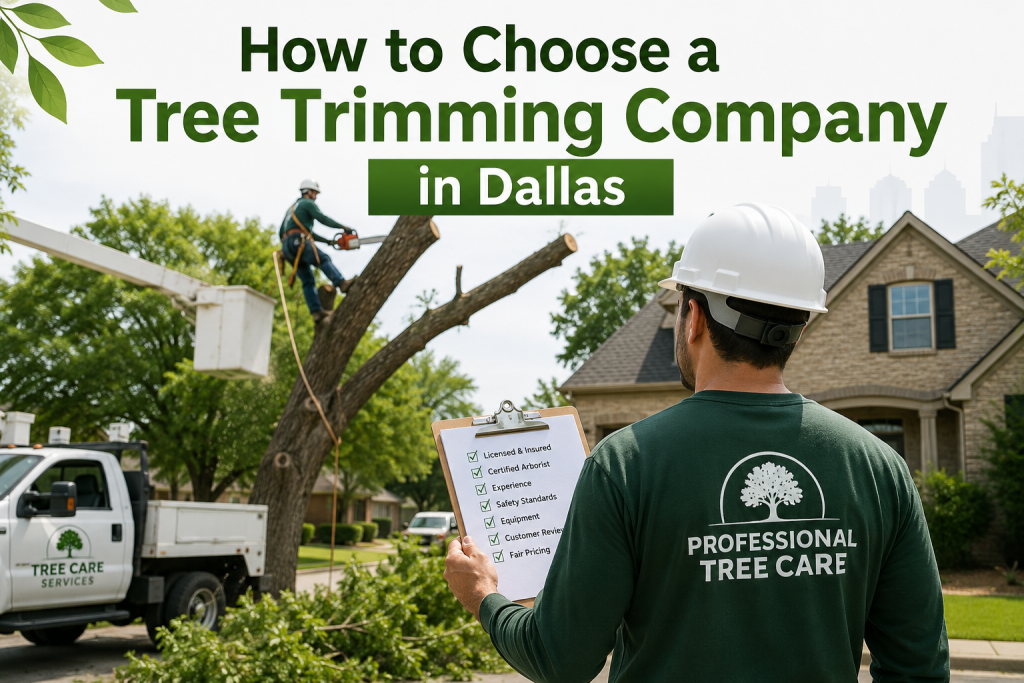
    How to choose a tree trimming company in Dallas with professional tree care services and safety checklist

    How to Choose a Tree Trimming Company in Dallas

    When evaluating the Cost of Tree Trimming in Dallas, homeowners should also consider the company’s experience and reputation. Look for a professional tree service with positive customer reviews, proper insurance, and trained workers.

    Ask the company about its approach to pruning and whether the estimate includes cleanup. For large trees or complicated jobs, you may also want to ask whether an experienced arborist will assess the tree.

    A reliable professional should explain what work is necessary and provide a transparent estimate before starting the job.

    Final Thoughts

    The Cost of Tree Trimming in Dallas in 2026 can range from a few hundred dollars for smaller trees to more than $1,500 for large, complex projects. Tree size, location, condition, pruning requirements, and debris removal can all affect the final price.

    The best way to determine the Cost of Tree Trimming in Dallas for your property is to request detailed estimates from reputable local professionals. Regular maintenance can help protect your trees, improve your property’s appearance, and reduce potential safety risks.

    If you are planning tree maintenance in 2026, investing in professional care can be a smart way to protect both your landscape and your home.

  • DIY Tree Trimming Mistakes: 2026 Guide for U.S. Homeowners

    DIY Tree Trimming Mistakes: 2026 Guide for U.S. Homeowners

    DIY Tree Trimming Mistakes Every U.S. Homeowner Should Avoid

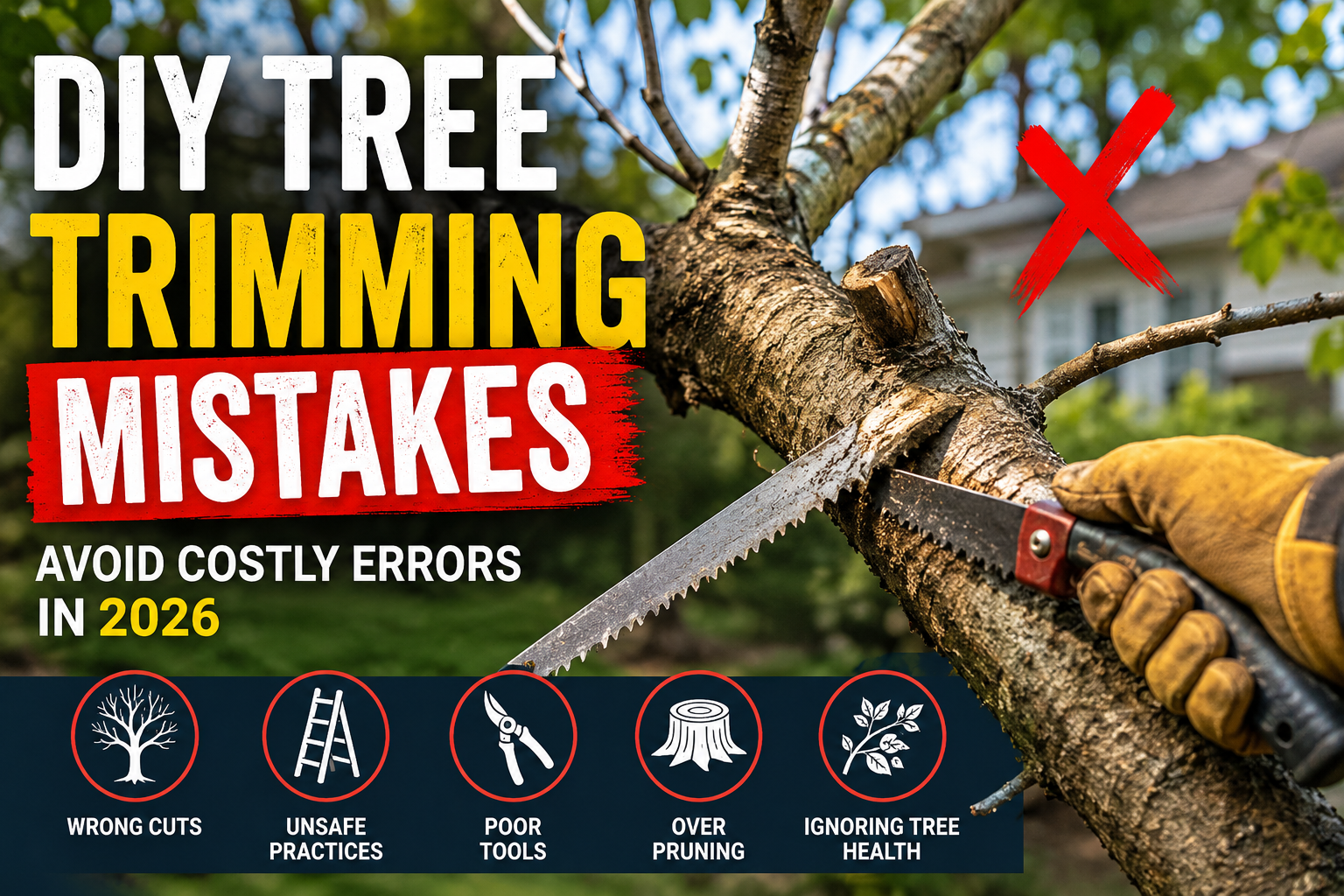
    Tree trimming can improve the appearance, safety, and structure of your landscape, but it is not as simple as cutting off unwanted branches. Many homeowners attempt to handle small pruning jobs themselves, only to make DIY Tree Trimming Mistakes that can weaken trees, encourage disease, or create expensive problems later.

    Understanding DIY Tree Trimming Mistakes is especially important for U.S. homeowners because tree species, weather, and pruning requirements vary from state to state. Whether you live in Texas, Florida, California, or another part of the country, learning basic pruning principles can help you protect your trees and property in 2026.

    1. Cutting Too Much at Once

    One of the most common DIY Tree Trimming Mistakes is removing too many branches during a single pruning session. Homeowners sometimes believe that cutting more branches will produce faster results, but excessive pruning can put significant stress on a tree.

    A tree needs its leaves to produce energy through photosynthesis. Removing too much of the canopy can reduce this energy production and leave the tree vulnerable to environmental stress.

    2. Topping the Tree

    Tree topping is another serious mistake. It involves cutting major branches back to stubs, often to reduce the tree’s height. This practice can create weak new growth and increase the risk of branch failure.

    Among the worst DIY Tree Trimming Mistakes, topping can permanently damage a tree’s natural structure. The new shoots that develop after topping may grow rapidly but are often poorly attached.

    Instead of topping, homeowners should use proper reduction pruning when appropriate.

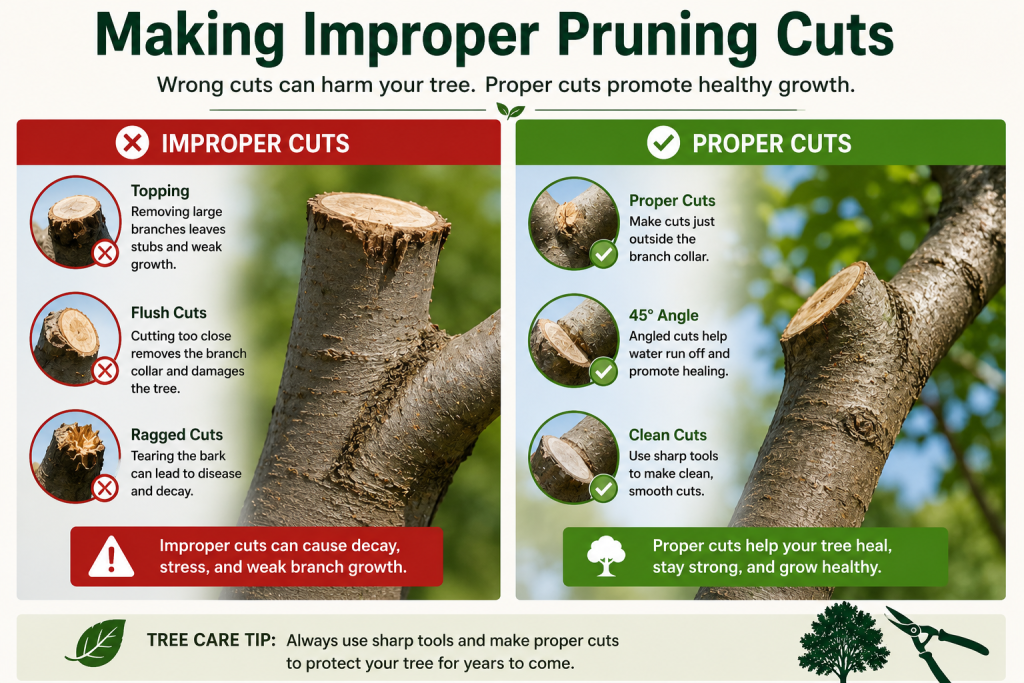
    Making improper pruning cuts that can damage tree health and cause decay

    3. Making Improper Pruning Cuts

    Incorrect cuts are among the most overlooked DIY Tree Trimming Mistakes. Cutting too close to the trunk can damage the branch collar, while leaving large stubs can slow healing and encourage decay.

    When removing a branch, the goal is generally to make a proper cut just outside the branch collar without damaging the trunk. Larger limbs may require a three-cut method to prevent the bark from tearing.

    4. Ignoring Tree Health

    Another common problem is making DIY Tree Trimming Mistakes without first checking the tree’s overall condition. A tree showing signs of disease, decay, pest activity, or severe structural weakness may require more than basic pruning.

    Before trimming, inspect the trunk, major branches, and canopy. Look for cavities, cracks, dead limbs, fungal growth, unusual leaf discoloration, and signs of insect damage.

    5. Trimming at the Wrong Time

    Timing is another area where homeowners make DIY Tree Trimming Mistakes. The ideal pruning season depends on the tree species, climate, and reason for trimming.

    For example, some trees benefit from dormant-season pruning, while flowering trees may be best pruned after blooming. In regions affected by specific tree diseases, seasonal pruning restrictions may also apply.

    Before starting a project, research the recommended pruning period for your tree and local area. This is particularly important for homeowners in states such as Texas.

    6. Using Dull or Dirty Tools

    Using poorly maintained equipment is one of the easiest DIY Tree Trimming Mistakes to prevent. Dull tools can create rough cuts that are difficult for trees to seal properly.

    Dirty pruning equipment can also contribute to the spread of pathogens between trees. Before beginning work, make sure your tools are sharp, clean, and appropriate for the branch size.

    7. Ignoring Power Lines and Safety Risks

    Some DIY Tree Trimming Mistakes can put homeowners in serious danger. Never attempt to cut branches that are touching or growing near electrical lines.

    Ladders, chainsaws, and large branches create additional risks. A falling limb can damage a roof, vehicle, fence, or person.

    If the tree is tall, located near a structure, or close to utility lines, hiring a trained professional is usually the safest choice.

    8. Removing the Wrong Branches

    Another frequent mistake is removing healthy structural branches while leaving dead or hazardous limbs behind. These DIY Tree Trimming Mistakes can make the tree less stable rather than improving it.

    Start by identifying branches that are dead, broken, diseased, crossing, or rubbing against one another. Avoid removing healthy major limbs unless there is a clear reason.

    9. Failing to Clean Up and Monitor the Tree

    After trimming, some homeowners simply walk away. However, avoiding cleanup and follow-up inspections can lead to additional problems.

    One of the less obvious DIY Tree Trimming Mistakes is failing to monitor fresh cuts and the surrounding tree afterward. Watch for unusual discoloration, decay, insect activity, or signs of disease.

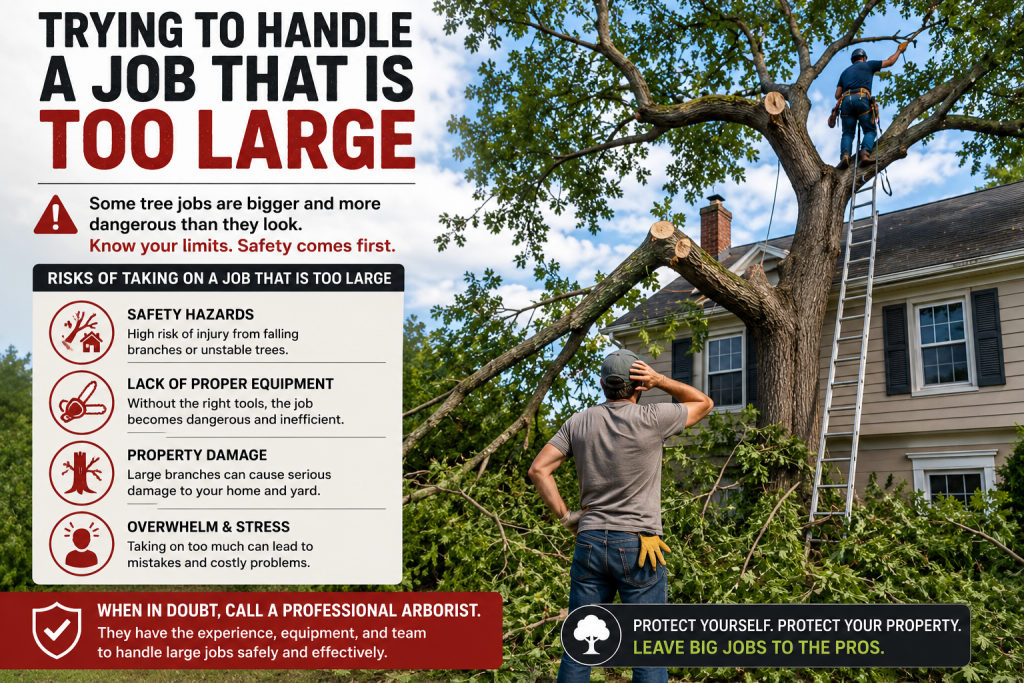
    Trying to handle a tree trimming job that is too large without professional equipment or expertise

    10. Trying to Handle a Job That Is Too Large

    Perhaps the biggest mistake is assuming every tree can be safely trimmed without professional help. Large trees require specialized equipment, knowledge, and experience.

    If your project involves significant DIY Tree Trimming Mistakes, a professional arborist may be able to identify problems before they become expensive. Consider hiring an expert when branches are large, the tree is unstable, the work requires climbing, or the tree is near power lines.

    Final Thoughts

    Avoiding DIY Tree Trimming Mistakes is essential for homeowners who want healthy, attractive, and structurally sound trees. The most common problems include excessive pruning, topping, improper cuts, poor timing, dirty tools, and unsafe work near power lines.

    By learning proper pruning techniques and knowing when to call a professional, you can make smarter tree-care decisions in 2026. Remember that every tree is different, so when in doubt, getting advice from a qualified arborist is often the safest investment.

    FAQs

    Is DIY tree trimming safe?

    Small pruning jobs may be manageable for homeowners when branches are low and easy to reach.

    What is the biggest tree trimming mistake?

    Topping is one of the most damaging practices because it can weaken tree structure and encourage poorly attached regrowth.

    How much of a tree can I trim?

    Avoid removing excessive amounts of live canopy at once. The appropriate amount depends on the tree’s species, age, health, and condition.

    Should I trim trees near power lines myself?

    No. Trees near electrical lines require professional attention because of the serious risk of electrical injury or death.

    When should I hire an arborist?

    Hire a qualified arborist for large trees, major structural problems, storm-damaged trees, suspected disease, or pruning near buildings and utility lines.

  • How Often Should Trees Be Trim? Complete 2026 Tree Care Guide

    How Often Should Trees Be Trim? Complete 2026 Tree Care Guide

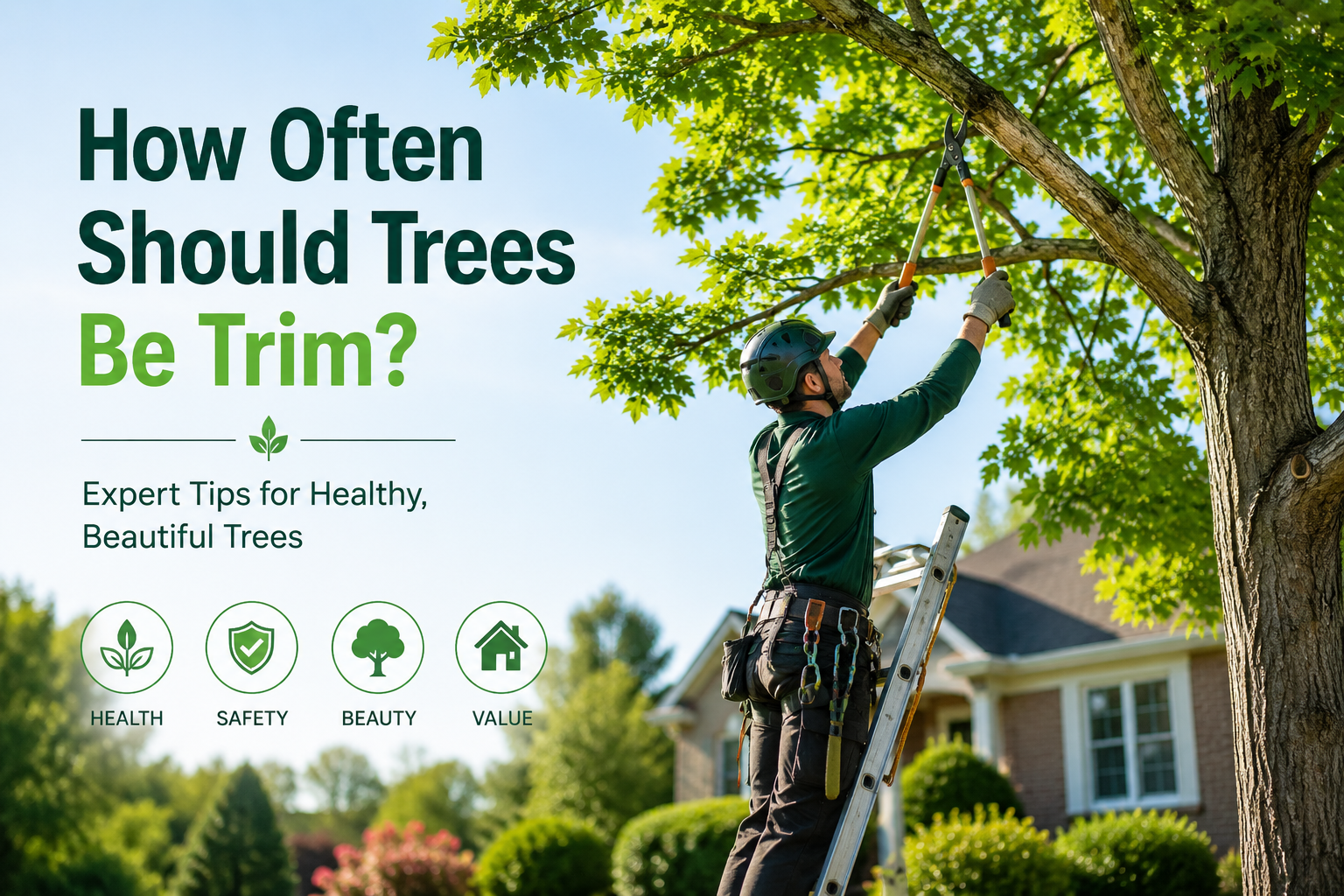
    How Often Should Trees Be Trim?

    Trees are an important part of any American landscape. They provide shade, improve curb appeal, support wildlife, and can even increase the beauty and value of a property. However, trees need proper maintenance to stay healthy and safe. One of the most common questions homeowners ask is, How Often Should Trees Be Trim to encourage healthy growth without causing unnecessary stress?

    The answer depends on several factors, including the tree’s species, age, health, growth rate, location, and purpose. There is no universal schedule that works for every tree. In general, young trees often need structural pruning every few years, while mature trees may only require maintenance trimming every three to five years.

    How Often Should Trees Be Trim?

    For most homeowners, How Often Should Trees Be Trim depends primarily on the condition and type of tree. Young trees may benefit from trimming every two to three years to develop strong branch structure. Mature shade trees commonly require attention every three to five years, although some healthy trees may go longer between major pruning sessions.

    Fast-growing trees, trees located near buildings, and trees growing close to utility lines may require more frequent attention. Fruit trees are another exception because annual pruning can support fruit production and maintain a productive structure.

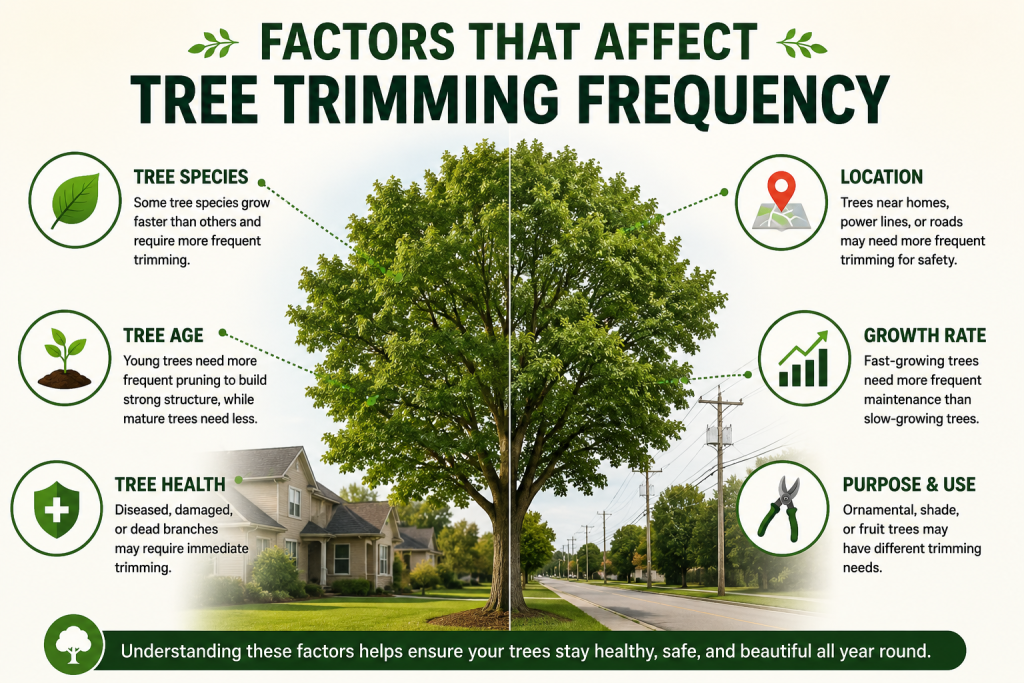
    An informative tree care graphic showing the main factors that influence tree trimming frequency, including species, age, health, location, growth rate, and purpose.

    Factors That Affect Tree Trimming Frequency

    When deciding How Often Should Trees Be Trim, consider these important factors:

    Tree species: Different species grow at different rates. Fast-growing trees generally need more frequent maintenance than slow-growing varieties.

    Tree age: Young trees benefit from formative pruning that establishes strong branch architecture. Mature trees typically need less frequent structural work.

    Tree health: Dead, broken, diseased, or hazardous branches should be addressed when they are discovered rather than waiting for a routine schedule.

    Location: Trees near homes, driveways, sidewalks, fences, or power lines may require more frequent trimming to maintain safe clearance.

    Growth rate: Rapid new growth can quickly create clearance or structural problems, requiring additional maintenance.

    How Often Should Young Trees Be Trimmed?

    If you are wondering How Often Should Trees Be Trim when they are young, the answer is usually every two to three years, depending on growth and structure. Early pruning is important because it can help establish a strong framework before branches become large and difficult to remove.

    Young trees should be inspected for crossing branches, competing leaders, weak attachments, and branches growing toward the center of the canopy. Correcting these problems early can reduce the need for major cuts later in the tree’s life.

    How Often Should Mature Trees Be Trimmed?

    For homeowners asking How Often Should Trees Be Trim on mature shade trees, a three-to-five-year maintenance cycle is a reasonable general guideline. However, mature trees should still be inspected regularly for hazards.

    A healthy mature tree may not need extensive pruning every year. Instead, trimming should focus on removing dead or damaged branches, correcting structural problems, improving clearance, and reducing potential hazards. The goal is to make necessary cuts without removing healthy branches unnecessarily.

    How Often Should Fruit Trees Be Trimmed?

    The answer to How Often Should Trees Be Trim changes when discussing fruit trees. Many fruit trees benefit from annual pruning, often during their dormant season, to maintain structure, improve sunlight penetration, and support fruit production.

    The exact timing depends on the fruit tree species and local climate. Homeowners should research the specific requirements of their tree before pruning because flowering and fruiting habits can influence the ideal schedule.

    Signs Your Trees Need Trimming

    Instead of relying only on the calendar to determine How Often Should Trees Be Trim, look for visible warning signs. These may include:

    • Dead or broken branches
    • Branches rubbing against each other
    • Overgrown limbs touching your roof
    • Branches blocking driveways or sidewalks
    • Dense growth that reduces airflow
    • Weak or poorly attached branches
    • Storm damage
    • Diseased or decaying limbs

    Hazardous or damaged branches may require prompt attention rather than waiting for the next scheduled trimming appointment.

    Best Time of Year to Trim Trees

    For many trees, How Often Should Trees Be Trim should be considered alongside when trimming takes place. Late winter or the dormant season is often recommended for routine pruning because the tree is not actively growing, and its branch structure is easier to see.

    However, timing varies by species and region. Certain trees have specific pruning requirements, and oak trees, for example, may have disease-related timing considerations in some areas. Homeowners should check local recommendations before pruning.

    Common Tree Trimming Mistakes

    Knowing How Often Should Trees Be Trim is important, but proper technique matters just as much. One of the biggest mistakes is over-pruning. Removing too many live branches can stress a tree and reduce its ability to produce food.

    Another serious mistake is tree topping, which involves cutting major branches back to stubs. The International Society of Arboriculture warns that topping can create long-term structural problems, increase risk, and damage the tree’s natural form.

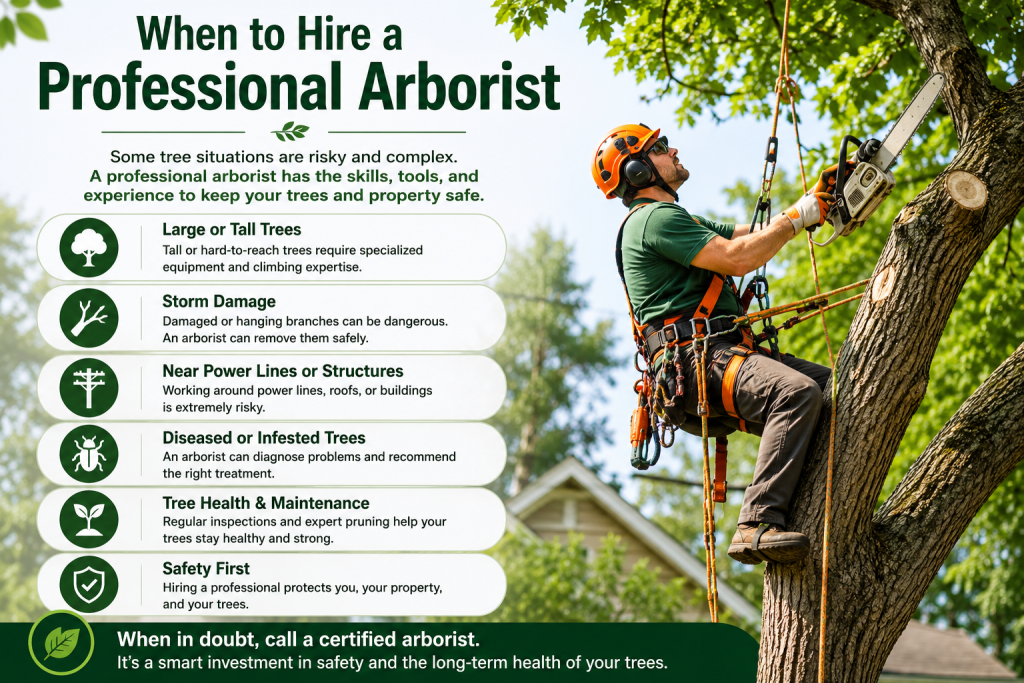
    A professional arborist safely works on a large tree using specialized equipment, demonstrating when expert tree care is recommended for tall, damaged, diseased, or difficult-to-reach trees.

    When to Hire a Professional Arborist

    If you’re still asking How Often Should Trees Be Trim, consider having your trees evaluated by a qualified professional. An experienced arborist can assess the species, age, health, structure, and location of your trees before recommending a maintenance schedule.

    Professional help is especially important for large trees, trees near power lines, storm-damaged trees, or branches that require climbing or specialized equipment. Tree work can be dangerous, and improper pruning can create permanent damage.

    Frequently Asked Questions

    Can trees be trimmed every year?

    Not necessarily. How Often Should Trees Be Trim varies by species and condition. Many mature trees do not need annual trimming, while fruit trees or rapidly growing trees may require more frequent maintenance.

    Is it better to trim trees in winter?

    For many species, late winter or the dormant season is a good time for routine pruning. However, the best timing depends on the specific tree species and local conditions.

    Should dead branches be removed immediately?

    Dead or broken branches can create safety risks and should generally be addressed when identified rather than waiting for a regular trimming schedule.

    Can trimming too often hurt a tree?

    Yes. Excessive or improper trimming can remove too much healthy foliage, weaken the tree, and create opportunities for pests and disease. How Often Should Trees Be Trim should always be determined by the tree’s actual needs rather than an unnecessarily frequent schedule.

    Final Thoughts

    So, How Often Should Trees Be Trim? For many young trees, every two to three years is a useful general guideline, while mature shade trees may need maintenance every three to five years. Fruit trees often require annual pruning, and trees with damaged or hazardous branches may need immediate attention.

    The best approach is to inspect your trees regularly and trim only when there is a clear purpose. By considering tree species, age, health, location, and growth rate, homeowners can create a practical maintenance plan that supports healthy growth and long-term safety. When large or hazardous trees are involved, working with a qualified arborist is the safest choice.

  • Best Time to Trim Oak Trees in Texas: 2026 Guide

    Best Time to Trim Oak Trees in Texas: 2026 Guide

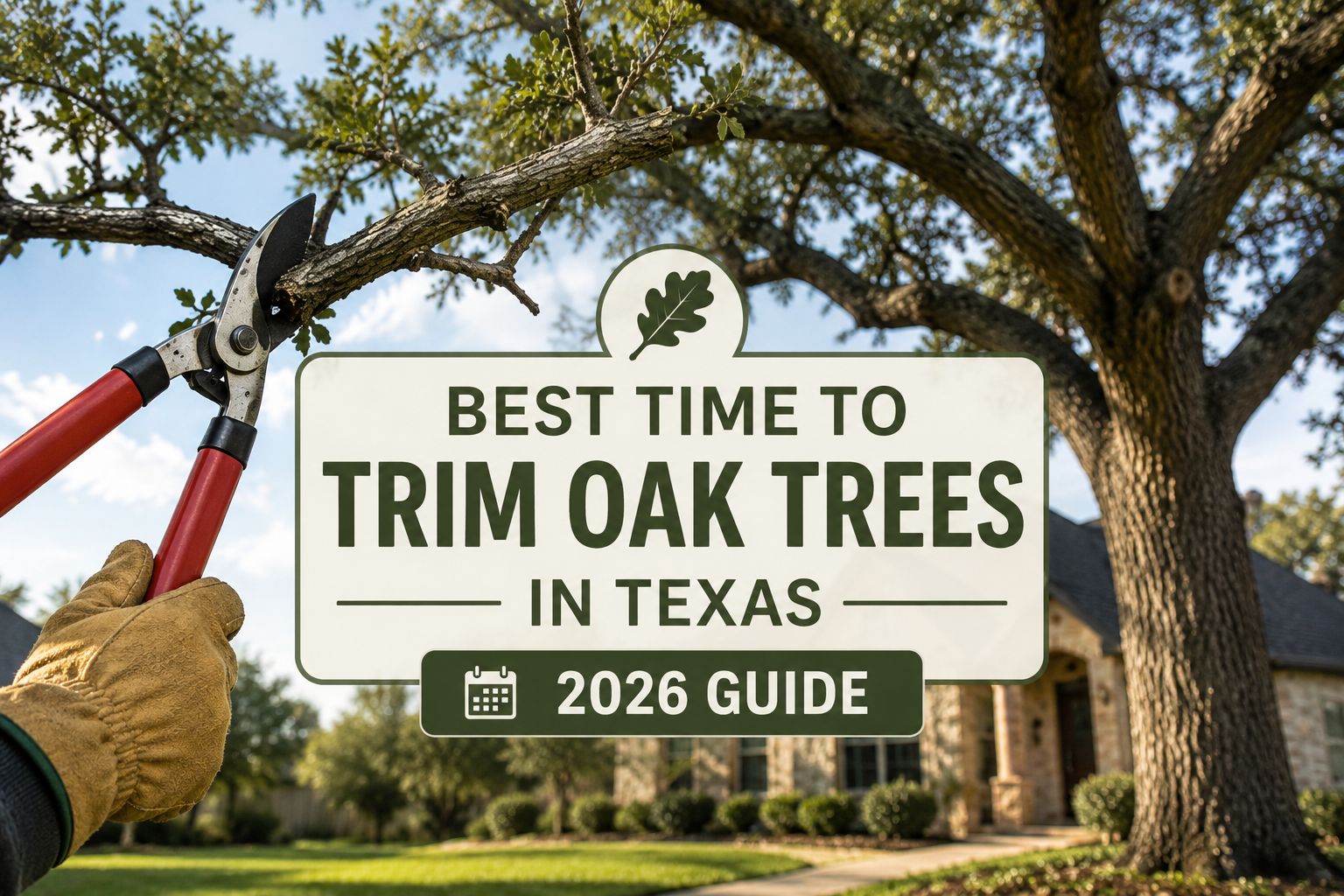
    Best Time to Trim Oak Trees in Texas

    es are valued for their beauty, shade, wildlife habitat, and contribution to property appeal. However, pruning them at the wrong time can cause unnecessary stress and increase the risk of disease. For homeowners, understanding the Best Time to Trim Oak Trees in Texas is an essential part of responsible tree maintenance.

    The Best Time to Trim Oak Trees in Texas is generally during the cooler winter months. During this period, many trees are dormant, and insect activity associated with oak wilt transmission is typically lower. Texas A&M Forest Service recommends avoiding unnecessary pruning and wounds from February through June because sap-feeding beetles can spread oak wilt fungus to fresh wounds.

    Why Winter Is Usually the Best Time

    For most routine pruning, the Best Time to Trim Oak Trees in Texas is winter. Cooler temperatures make outdoor tree work easier, while dormant trees experience less active growth. Winter pruning also allows homeowners to correct structural problems before spring and summer storms arrive.

    The Best Time to Trim Oak Trees in Texas is ideal for removing dead, broken, or hazardous branches. It can also improve branch structure and provide clearance around roofs, driveways, sidewalks, and utility areas. However, every pruning cut should have a clear purpose. Removing too much healthy canopy can stress an oak and reduce its ability to produce food.

    The Best Time to Trim Oak Trees in Texas may vary slightly depending on your location. North, Central, and South Texas experience different weather conditions, so homeowners should consider local temperatures, recent drought, and tree health before scheduling major work.

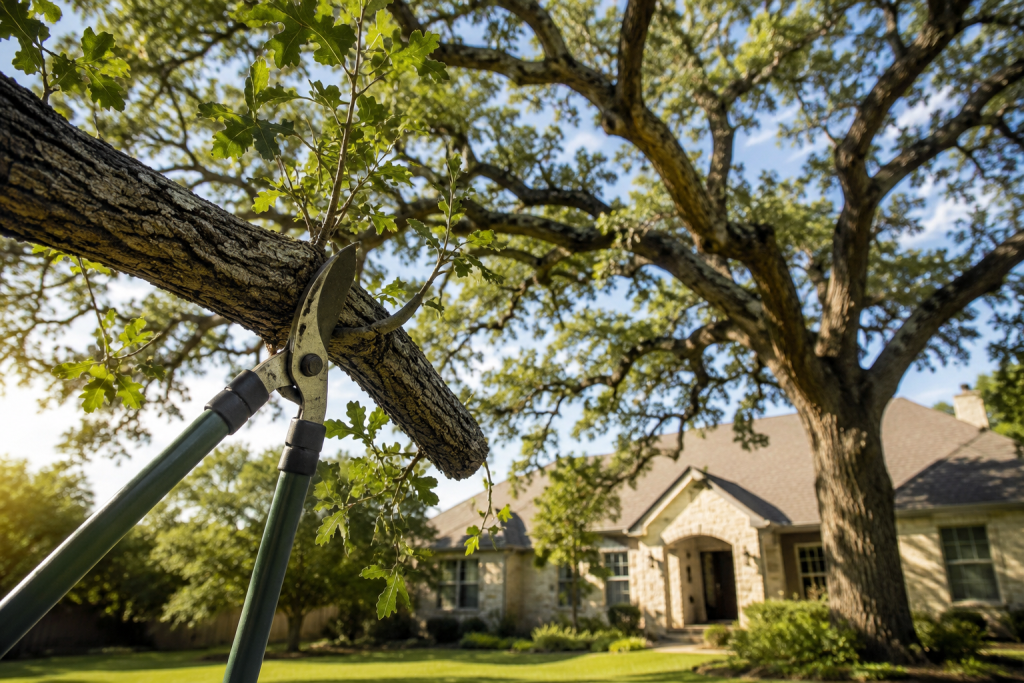
    A professional tree care scene showing an oak tree being trimmed in a Texas residential yard, representing the best time to trim oak trees in Texas in 2026.

    Why Avoid Pruning From February Through June?

    One important reason the Best Time to Trim Oak Trees in Texas matters is oak wilt prevention. Oak wilt is a serious fungal disease that can kill susceptible oak trees and spread through interconnected roots or insect activity.

    Texas A&M Forest Service recommends avoiding unnecessary oak pruning from February through June whenever possible. During this period, sap-feeding beetles may visit fresh wounds and potentially carry oak wilt fungus from infected trees to healthy oaks.

    Therefore, the Best Time to Trim Oak Trees in Texas is especially important in areas where oak wilt is present. If an oak tree is accidentally damaged during the higher-risk period, homeowners should promptly protect the fresh wound with an appropriate tree wound dressing, following current local recommendations.

    Regional Pruning Considerations

    In North Texas, the Best Time to Trim Oak Trees in Texas is generally winter, before the higher-risk spring period begins. Dallas-Fort Worth homeowners should also consider storm damage, drought stress, and freeze damage when planning pruning.

    In Central Texas, the Best Time to Trim Oak Trees in Texas requires particular attention because oak wilt is a significant concern in parts of the region. Avoid unnecessary cuts during the recommended risk period and seek professional advice if disease is suspected.

    In South Texas, warmer temperatures can influence tree activity and pruning conditions. For this reason, the Best Time to Trim Oak Trees in Texas should be determined by local weather, tree condition, and disease risk.

    How to Trim Oak Trees Safely

    Knowing the Best Time to Trim Oak Trees in Texas is only one part of successful pruning. The technique used for each cut is equally important.

    Begin by identifying dead, damaged, crossing, or hazardousbranches. Avoid removing excessive amounts of healthy canopy at once. A qualified arborist can determine which limbs should be removed and how much pruning the tree can safely tolerate.

    The Best Time to Trim Oak Trees in Texas should always be combined with proper pruning techniques. Cuts should generally be made just outside the branch collar, avoiding unnecessary injury to the trunk. Large branches should be removed carefully because falling limbs can seriously injure people or damage homes.

    Never attempt complicated pruning near electrical lines. Utility work should be performed by trained professionals who understand the required safety procedures.

    When Should You Hire an Arborist?

    If you are unsure about the Best Time to Trim Oak Trees in Texas, a certified arborist can inspect the tree and recommend an appropriate pruning plan. Professional assistance is especially valuable for mature trees, large branches, storm damage, suspected disease, or trees located near buildings and power lines.

    An arborist can evaluate tree structure, identify potential hazards, and recommend pruning that supports long-term health. Professional assessment is also important when homeowners notice symptoms that could indicate oak wilt.

    The Best Time to Trim Oak Trees in Texas is not simply about choosing a particular month. Tree condition, location, weather, pruning goals, and disease risk should all be considered before work begins.

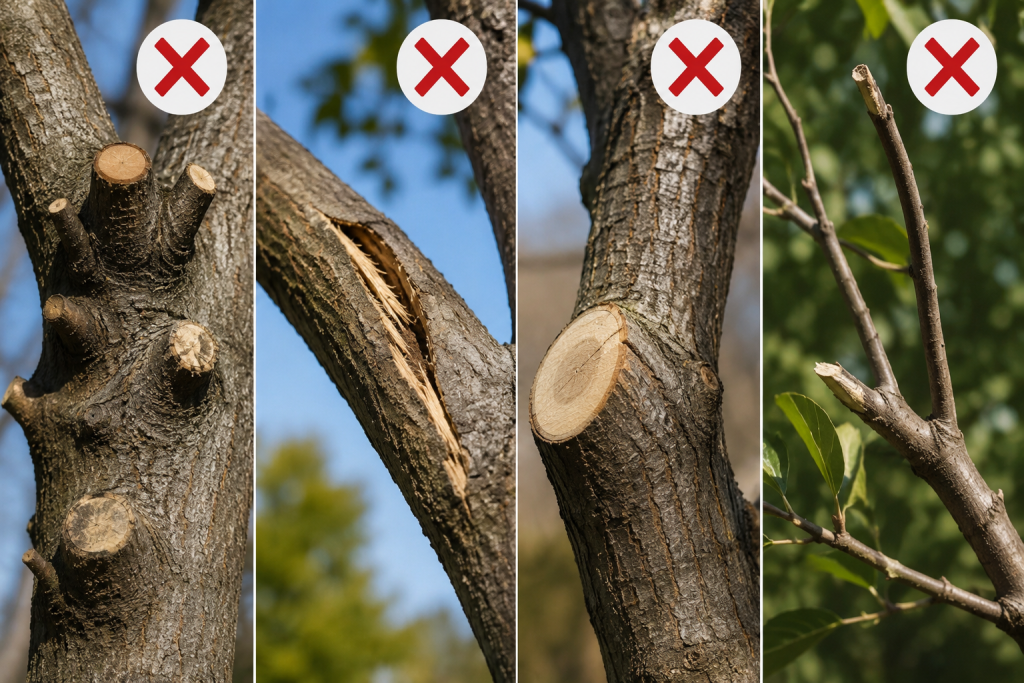
    A visual comparison showing common mistakes made when pruning tree branches, including improper cuts and poor pruning techniques.

    Common Pruning Mistakes

    A common mistake is pruning simply because a tree appears overgrown. The Best Time to Trim Oak Trees in Texas does not make excessive pruning safe. Removing too many branches can stress the tree and encourage weak regrowth.

    Another mistake is ignoring fresh wounds. If pruning or accidental damage occurs during a higher-risk period, prompt wound protection may help reduce exposure to oak wilt-carrying beetles.

    Homeowners should also avoid topping oak trees. Topping removes large sections of the canopy and may result in weak branches, decay, and long-term structural problems.

    Final Thoughts

    The Best Time to Trim Oak Trees in Texas is generally winter, especially for routine structural pruning and removing dead or damaged limbs. Homeowners should avoid unnecessary pruning from February through June, when oak wilt transmission risk may be higher.

    Ultimately, the Best Time to Trim Oak Trees in Texas depends on local conditions and the individual tree’s needs. By choosing an appropriate season, using correct pruning methods, and hiring professional help when necessary, Texas homeowners can protect valuable oak trees and maintain safer, healthier landscapes.

    FAQs

    What is the best month to trim oak trees in Texas?

    Winter is generally preferred for routine pruning, while unnecessary pruning should be avoided from February through June.

    Can I trim an oak tree in summer?

    Sometimes, but extreme heat, drought stress, and disease risk should be considered before pruning.

    Why is spring pruning risky for oak trees?

    Fresh wounds can provide an entry point for oak wilt, which may be spread by sap-feeding beetles.

    Should fresh oak pruning wounds be painted?

    Yes. Follow Texas A&M Forest Service recommendations and promptly protect fresh wounds when appropriate.

    How often should oak trees be trimmed?

    There is no universal schedule. Pruning should depend on the tree’s health, structure, age, and specific safety requirements.

  • Tree Pruning vs Tree Trimming: Complete Guide  (2026)

    Tree Pruning vs Tree Trimming: Complete Guide (2026)

    Tree Pruning vs Tree Trimming Professional Guide

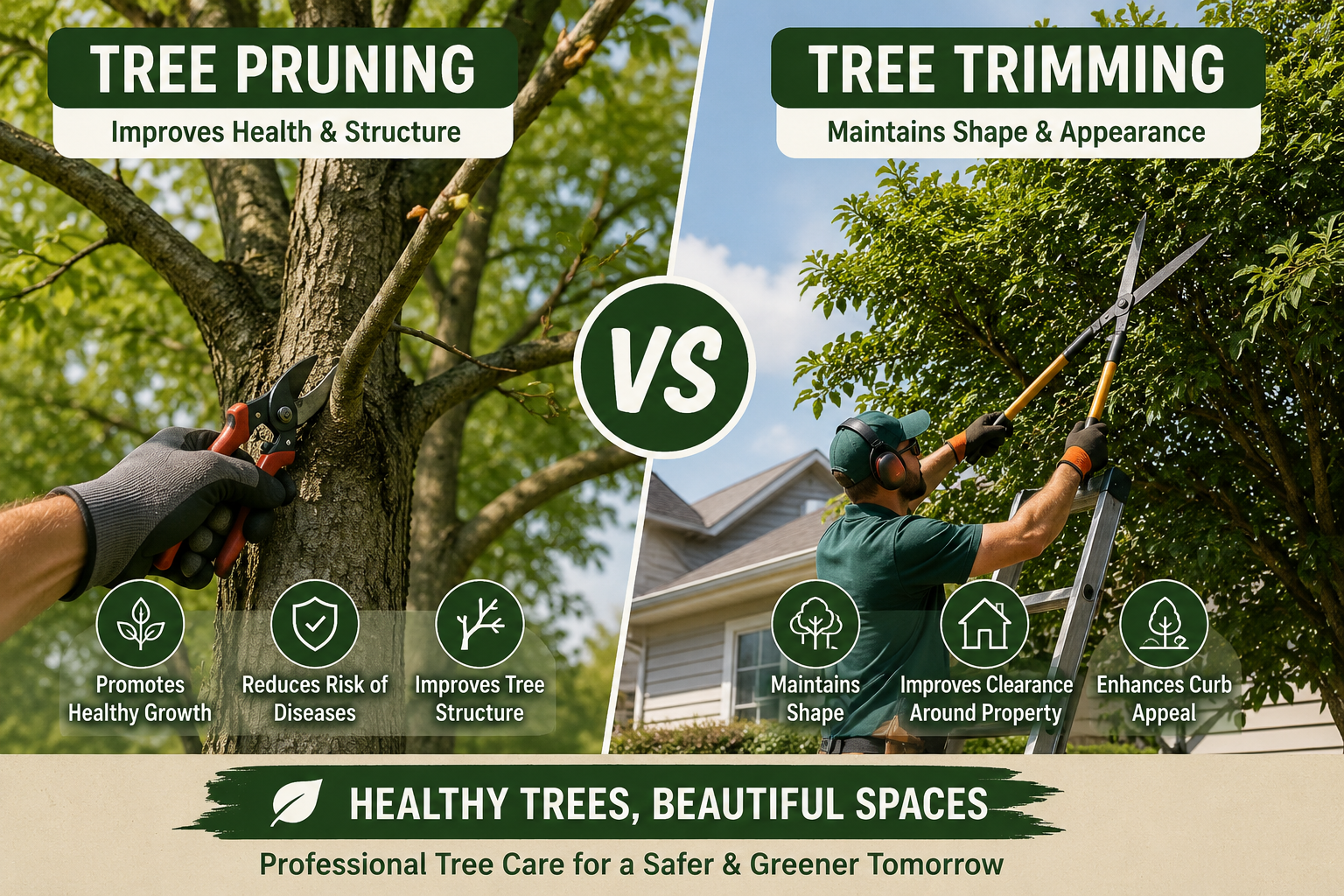
    For many homeowners, Tree Pruning vs Tree Trimming may sound like the same thing. Both involve removing branches from trees, but they serve different purposes. Understanding the difference can help you maintain healthier trees, improve your property’s appearance, and reduce potential safety risks.

    Whether you own a home in Texas, Florida, California, or another part of the United States, proper tree care is an important part of property maintenance. In this guide, we’ll explain Tree Pruning vs Tree Trimming, when each service is needed, and why professional tree care can make a difference.

    What Is Tree Pruning?

    Tree pruning is the process of selectively removing specific branches to improve a tree’s health, structure, and long-term growth. Pruning typically focuses on removing dead, diseased, damaged, or poorly positioned branches.

    Professional arborists may also prune trees to improve airflow through the canopy, reduce structural problems, and encourage healthy development.

    Common reasons for tree pruning include:

    • Removing dead or diseased branches
    • Improving tree structure
    • Removing crossing or rubbing branches
    • Reducing the risk of falling limbs
    • Improving airflow and sunlight penetration
    • Supporting healthy new growth

    When comparing Tree Pruning vs Tree Trimming, pruning is generally more focused on the tree’s health and structural condition rather than simply improving its appearance.

    What Is Tree Trimming?

    Tree trimming is usually performed to maintain a tree’s shape, appearance, and clearance around buildings or other structures. It can involve cutting back overgrown branches and managing excessive growth.

    Homeowners may need tree trimming when branches grow too close to:

    • Roofs
    • Power lines
    • Driveways
    • Fences
    • Windows
    • Buildings

    The main goal of trimming is often to control growth and maintain a neat appearance. However, improper trimming can damage a tree, especially when too many branches are removed at once.

    Understanding Tree Pruning vs Tree Trimming can help homeowners choose the right service for their property’s needs.

    Tree Pruning vs Tree Trimming: What Is the Difference?

    The simplest way to understand Tree Pruning vs Tree Trimming is to look at the primary goal of each service.

    Tree pruning focuses mainly on tree health, structure, and safety. It involves carefully selecting branches that should be removed to support the tree’s long-term condition.

    Tree trimming focuses more on controlling growth, maintaining appearance, and keeping branches away from structures or obstacles.

    Although the terms are sometimes used interchangeably by homeowners and tree service companies, the techniques and goals can be different.

    Benefits of Tree Pruning

    Proper pruning can provide several benefits for homeowners and their trees. One of the biggest tree pruning benefits is improved tree health.

    Removing dead, diseased, or damaged branches can help prevent certain problems from spreading. Strategic pruning can also improve the tree’s structure and reduce weak branch unions.

    Other benefits include:

    • Healthier tree growth
    • Better branch structure
    • Reduced safety hazards
    • Improved air circulation
    • Better sunlight penetration
    • Enhanced appearance

    When considering Tree Pruning vs Tree Trimming, homeowners should remember that pruning is often a long-term investment in the health and stability of a tree.

    Benefits of Tree Trimming for healthy trees, improved safety, better appearance, and property protection

    Benefits of Tree Trimming

    Regular trimming can help keep trees manageable and attractive. Overgrown branches can create problems when they interfere with buildings, sidewalks, driveways, or utility lines.

    The main tree trimming benefits include:

    • Maintaining a clean appearance
    • Controlling excessive growth
    • Improving clearance around structures
    • Reducing interference with walkways
    • Managing branches near roofs and buildings
    • Supporting overall property maintenance

    In the discussion of Tree Pruning vs Tree Trimming, trimming is often the better choice when the primary concern is controlling overgrowth or maintaining clearance.

    When Should You Prune or Trim Trees?

    The best time for tree care depends on the tree species, local climate, and reason for the work. In many parts of the US, late winter or early spring can be a suitable time for certain pruning tasks because trees may be dormant.

    However, emergency pruning may be necessary at any time if a tree has broken, hazardous, or storm-damaged branches.

    For homeowners comparing Tree Pruning vs Tree Trimming, it is important to consider the tree’s species and condition before scheduling work.

    Texas homeowners, for example, may have different tree-care needs than homeowners in northern states because of differences in heat, drought, storms, and growing seasons.

    Should You Hire a Professional?

    Tree work can be dangerous, particularly when branches are large, trees are tall, or power lines are nearby. Professional tree care companies have the equipment and experience needed to handle difficult jobs safely.

    A certified arborist can also evaluate the tree and recommend the appropriate service. This is especially helpful when you are unsure whether pruning or trimming is necessary.

    Choosing between Tree Pruning vs Tree Trimming should be based on the tree’s condition, your property’s needs, and your long-term goals.

    Avoid attempting major tree work yourself if the branches are large, the tree is unstable, or electrical lines are involved. Professional assistance can help protect both your property and your trees.

    Final Thoughts on Tree Pruning vs Tree Trimming

    Understanding Tree Pruning vs Tree Trimming is essential for effective tree maintenance. While pruning generally focuses on tree health and structural improvement, trimming is commonly used to control growth, improve appearance, and maintain clearance.

    The right service depends on your tree’s species, age, health, location, and specific needs. Regular inspections and professional tree care can help identify problems before they become expensive or dangerous.

    For US homeowners, investing in proper tree maintenance can improve curb appeal, support healthier trees, and help protect the property. If you are uncertain which service your tree needs, consult a qualified tree care professional or certified arborist for an evaluation.

    Frequently Asked Questions (FAQs)

    1. What is the main difference between tree pruning and tree trimming?

    The key difference in Tree Pruning vs Tree Trimming is the purpose. Pruning generally focuses on tree health and structure, while trimming is commonly used to control growth, improve appearance, and maintain clearance.

    2. Is tree pruning better than tree trimming?

    Neither service is automatically better. Tree Pruning vs Tree Trimming depends on your tree’s specific needs. A healthy tree with structural problems may need pruning, while an overgrown tree may need trimming.

    3. How often should trees be pruned?

    The frequency depends on the tree species, age, health, and location. Some trees may benefit from periodic pruning every few years, while others may require more frequent attention.

    4. Can I trim a tree myself?

    Small branches that are easy to reach may be manageable for some homeowners. However, large branches, tall trees, and trees near power lines should generally be handled by trained professionals.

    5. What happens if trees are trimmed incorrectly?

    Incorrect trimming can weaken a tree, create decay problems, encourage unwanted growth, or damage its natural structure. Professional tree care can help avoid these issues.

    6. When is the best time to prune trees?

    The ideal timing varies by tree species and location. In many areas, late winter or early spring may be suitable for certain pruning tasks, but storm damage and hazardous branches may require immediate attention.

    7. Does tree trimming improve tree health?

    Proper trimming can contribute to overall tree health when performed correctly. However, excessive or improper trimming may harm the tree, so it is important to use appropriate techniques.

  • Benefits of Regular Tree Trimming: 10 Reasons in 2026

    Benefits of Regular Tree Trimming: 10 Reasons in 2026

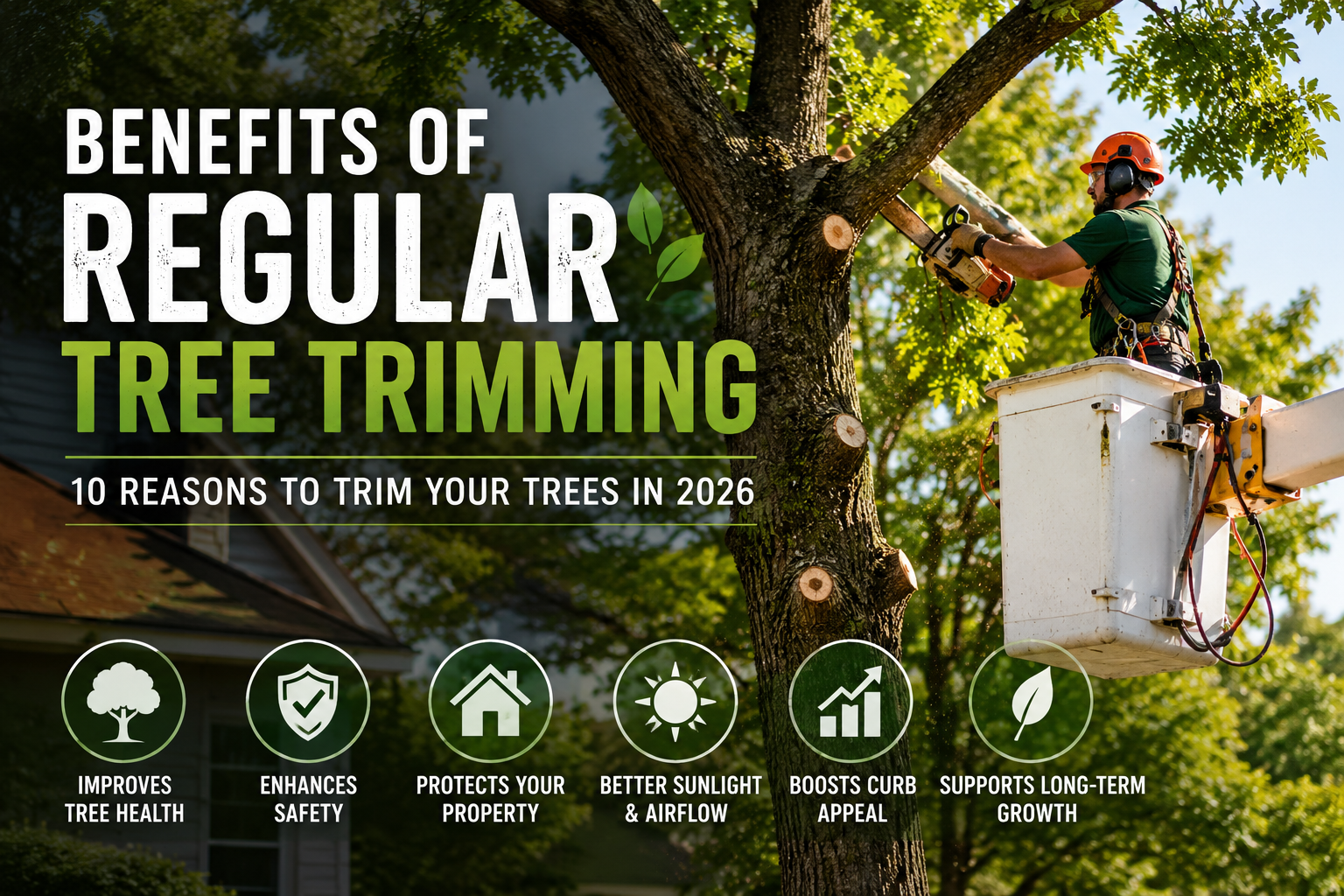
    Benefits of Regular Tree Trimming

    Trees are an important part of any American property. They provide shade, improve curb appeal, support local wildlife, and can even increase the overall beauty of your landscape. However, trees need proper care to remain healthy and safe. One of the most effective ways to maintain healthy trees is regular trimming.

    Understanding the Benefits of Regular Tree Trimming can help homeowners protect their property, improve tree health, and prevent costly problems. Whether you own a home in Texas, Florida, California, or another part of the United States, professional tree trimming should be an important part of your regular landscape maintenance routine.

    What Is Tree Trimming?

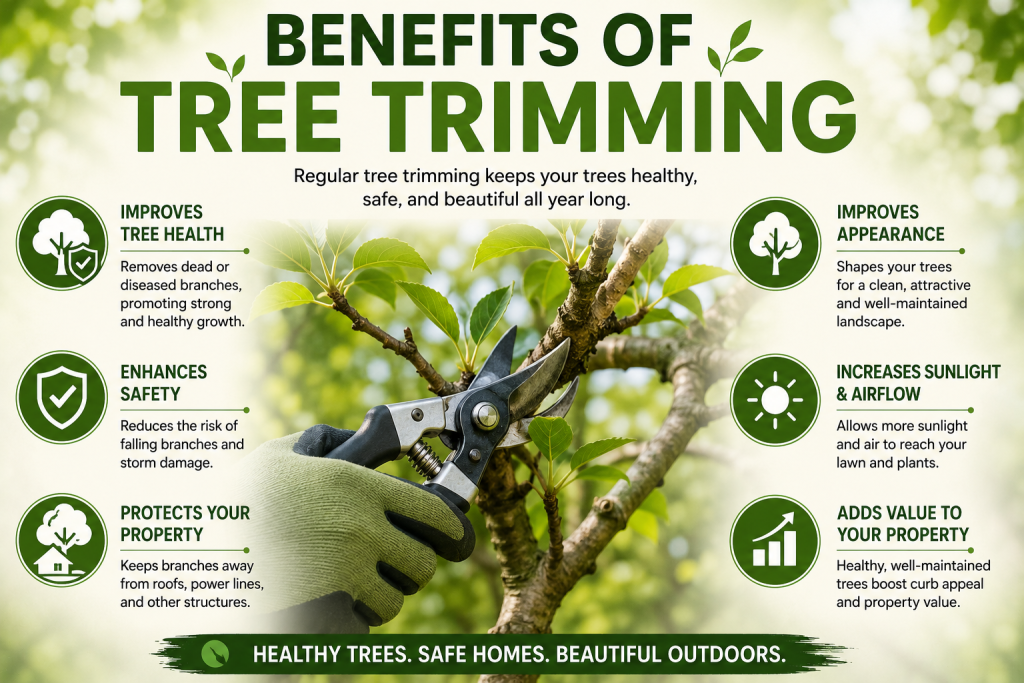
    Tree trimming is the process of carefully removing dead, damaged, diseased, or overgrown branches from a tree. Professional arborists use proper pruning techniques to improve the structure, appearance, and health of trees.

    Unlike simply cutting branches whenever they become inconvenient, professional tree trimming requires knowledge of tree species, growth patterns, seasonal conditions, and local safety concerns.

    For US homeowners, the Benefits of Regular Tree Trimming can vary depending on the tree species, climate, location, and condition of the property.

    1. Improves Overall Tree Health

    One of the biggest Benefits of Regular Tree Trimming is improved tree health. Dead and diseased branches can weaken a tree and may allow insects, fungi, or diseases to spread.

    Removing unhealthy branches helps the tree direct its energy toward healthy growth. Regular trimming can also improve air circulation and sunlight penetration throughout the canopy.

    A healthy tree is generally better prepared to handle environmental stress, including drought, extreme heat, strong winds, and severe weather.

    2. Reduces the Risk of Falling Branches

    Overgrown, weak, or damaged branches can become dangerous, especially during storms. Strong winds, heavy rain, ice, and snow can cause unstable branches to break and fall.

    Safety is one of the most important Benefits of Regular Tree Trimming for homeowners. Removing hazardous branches before they fail can reduce the risk of damage to roofs, vehicles, fences, power lines, and outdoor structures.

    If you notice large dead branches or branches hanging over your home, contact a qualified tree care professional for an inspection.

    3. Protects Your Home and Property

    Trees growing too close to buildings can create potential property problems. Branches may scrape against roofs, damage siding, block gutters, or interfere with windows.

    One of the practical Benefits of Regular Tree Trimming is maintaining safe clearance between trees and structures. Proper trimming can help keep branches away from your roof and other vulnerable parts of your property.

    Homeowners should also monitor trees growing near driveways, sidewalks, fences, and outdoor living spaces.

    4. Encourages Better Tree Growth

    Proper trimming can help shape a tree while encouraging stronger and more balanced growth. Removing poorly positioned branches can reduce overcrowding and allow healthy branches to develop.

    The Benefits of Regular Tree Trimming are especially noticeable when trimming is performed correctly and at the appropriate time of year.

    However, excessive trimming can damage a tree. Homeowners should avoid removing too much of the canopy at once and should consider hiring a certified arborist for larger or complicated trees.

    5. Improves Curb Appeal

    Well-maintained trees can make a property look cleaner, more attractive, and professionally cared for. Overgrown trees can make a landscape appear neglected, while properly shaped trees can complement your home’s exterior.

    Improved curb appeal is another valuable Benefits of Regular Tree Trimming, particularly for homeowners planning to sell their property.

    A healthy and attractive landscape can create a positive first impression for potential buyers and visitors.

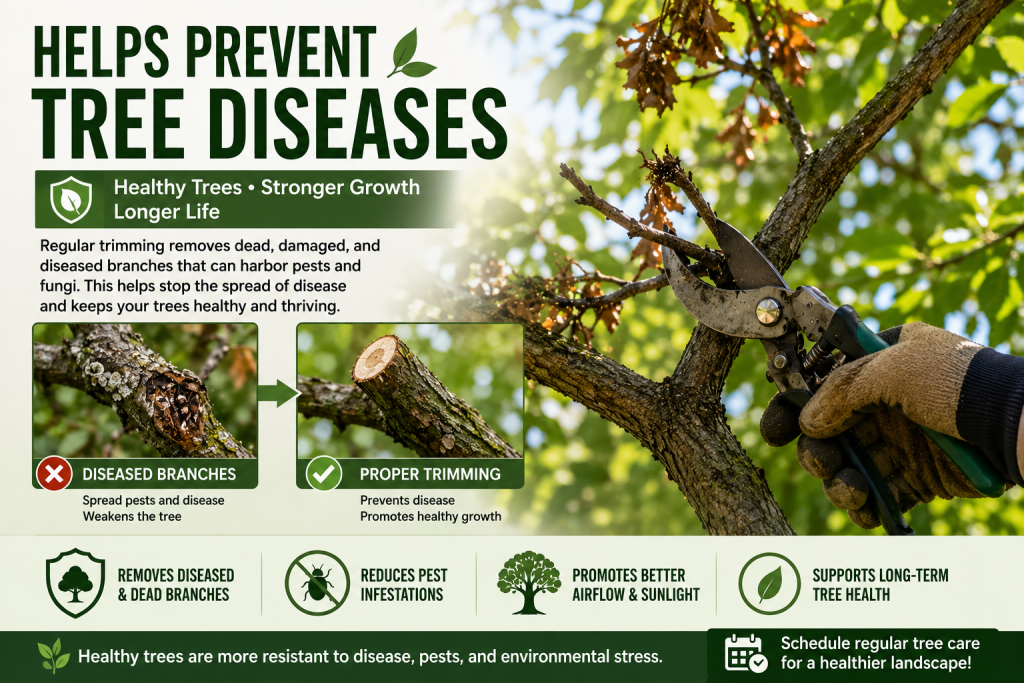
    An informative tree care image showing how proper trimming removes diseased and dead branches, reduces pest problems, improves airflow, and helps prevent the spread of tree diseases.

    6. Helps Prevent Tree Diseases

    Diseased branches can sometimes spread problems throughout a tree. Regular inspections and professional trimming may help identify and remove affected areas before the problem becomes more serious.

    This is one reason the Benefits of Regular Tree Trimming go beyond appearance. Tree trimming can be an important part of a broader tree health and disease management strategy.

    However, trimming alone cannot prevent every tree disease. Proper watering, soil care, pest management, and professional inspections may also be necessary.

    7. Improves Sunlight and Air Circulation

    Dense tree canopies can prevent sunlight and air from reaching the inner branches and surrounding landscape. Strategic trimming can open the canopy and improve airflow.

    Better sunlight exposure may also benefit grass, plants, and other landscaping beneath the tree.

    Among the many Benefits of Regular Tree Trimming, improved sunlight and air circulation can contribute to a healthier landscape and better overall tree structure.

    8. Keeps Trees Away From Power Lines

    Trees growing near utility lines require special attention. Branches that touch or grow toward power lines can create serious safety hazards and may cause service interruptions.

    One of the most important Benefits of Regular Tree Trimming is maintaining appropriate clearance around utility infrastructure.

    Never attempt to trim branches that are touching or close to electrical lines yourself. Contact your local utility company or a qualified professional who is trained to handle these situations safely.

    9. Supports Long-Term Property Value

    Healthy, mature trees can be an attractive feature for many US homeowners. However, neglected trees may become liabilities if they develop structural problems or pose safety risks.

    The Benefits of Regular Tree Trimming include helping maintain trees in better condition over the long term. Consistent tree care can protect your landscape investment and help preserve the visual appeal of your property.

    Regular maintenance is usually easier and less expensive than dealing with a major tree emergency caused by neglected branches.

    10. Helps Prepare Trees for Severe Weather

    Many areas of the United States experience severe weather, including thunderstorms, hurricanes, tornadoes, ice storms, and high winds.

    One of the key Benefits of Regular Tree Trimming is reducing weak or hazardous branches that could become problematic during extreme weather.

    While trimming cannot guarantee that a tree will survive a major storm, proper structural pruning may help reduce certain risks. A professional tree inspection can identify weak branch attachments, deadwood, and other potential hazards.

    How Often Should You Trim Your Trees?

    The ideal trimming schedule depends on the tree species, age, location, health, and growth rate. Many mature trees may only require professional trimming every few years, while young or fast-growing trees may need more frequent attention.

    Instead of following a one-size-fits-all schedule, homeowners should have their trees inspected regularly by a qualified tree care professional.

    In many cases, the Benefits of Regular Tree Trimming are greatest when trimming is performed proactively rather than waiting until a branch becomes dangerous.

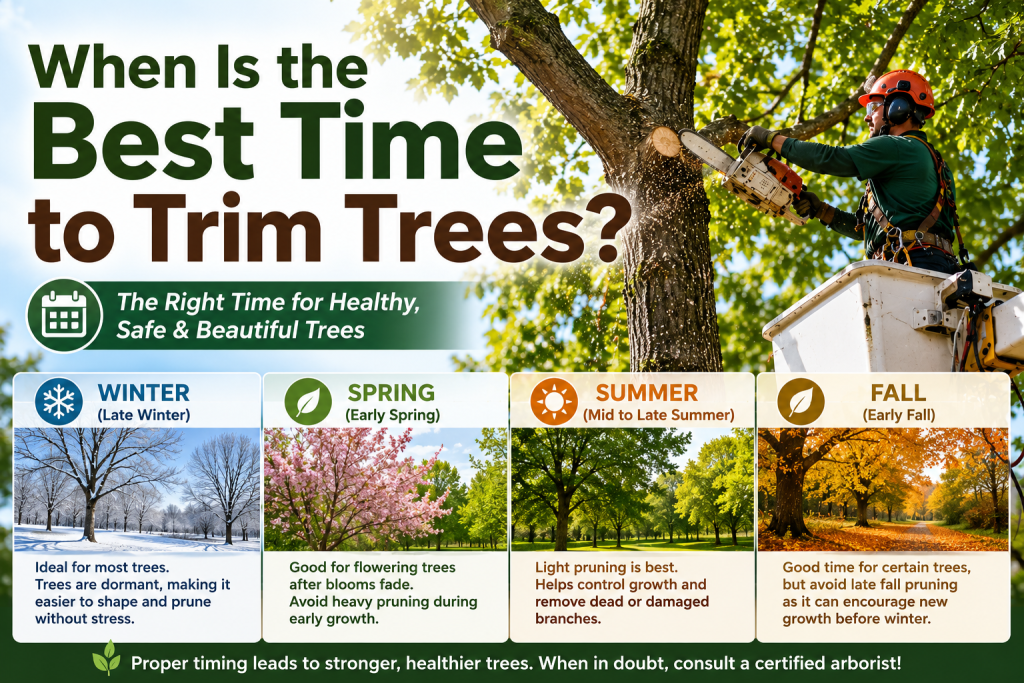
    An educational seasonal infographic showing when to trim trees during winter, spring, summer, and fall, with guidance for maintaining healthy and strong trees throughout the year.

    When Is the Best Time to Trim Trees?

    The best time for tree trimming depends on the species and your local climate. In many parts of the US, late winter or early spring can be a suitable time for certain types of pruning because trees are often dormant.

    However, dead, broken, or hazardous branches may need to be removed at any time of year.

    For homeowners in Texas and other regions with hot climates, professional advice is especially helpful because extreme heat and drought can affect tree health.

    Should You Hire a Professional Tree Trimming Service?

    For small branches that are safely reachable from the ground, basic pruning may be possible for experienced homeowners. However, large trees, high branches, trees near power lines, and hazardous situations should be handled by trained professionals.

    A professional tree care company can evaluate the tree, identify structural problems, and use appropriate equipment and techniques.

    Hiring a qualified professional is often the safest way to maximize the Benefits of Regular Tree Trimming while minimizing the risk of property damage or personal injury.

    Final Thoughts

    The Benefits of Regular Tree Trimming include healthier trees, improved safety, better curb appeal, stronger growth, and greater protection for your home and property. Regular tree care is an important part of responsible homeownership across the United States.

    For the best results in 2026, homeowners should avoid excessive DIY trimming and consider professional inspections for mature, large, or hazardous trees. With proper care and timely maintenance, your trees can remain healthy, attractive, and valuable parts of your landscape for many years.

    Frequently Asked Questions (FAQs)

    1. What are the main benefits of regular tree trimming?

    The main benefits include better tree health, improved safety, stronger growth, enhanced curb appeal, better air circulation, and reduced risk from dead or hazardous branches.

    2. How often should trees be trimmed?

    The frequency depends on the tree species, age, health, and location. Many mature trees may need professional trimming every few years, while younger trees may require more frequent maintenance.

    3. Can regular tree trimming prevent storm damage?

    Proper trimming can reduce some risks by removing dead, weak, or hazardous branches. However, no trimming method can completely prevent storm damage during extreme weather.

    4. Is tree trimming the same as tree pruning?

    The terms are often used interchangeably, but pruning generally focuses more on tree health and structure, while trimming may focus on removing overgrowth and maintaining appearance or clearance.5. Can I trim a large tree myself?

    It is generally safer to hire a professional for large trees, high branches, or trees located near buildings and power lines. DIY work in these situations can result in serious injuries or property damage.