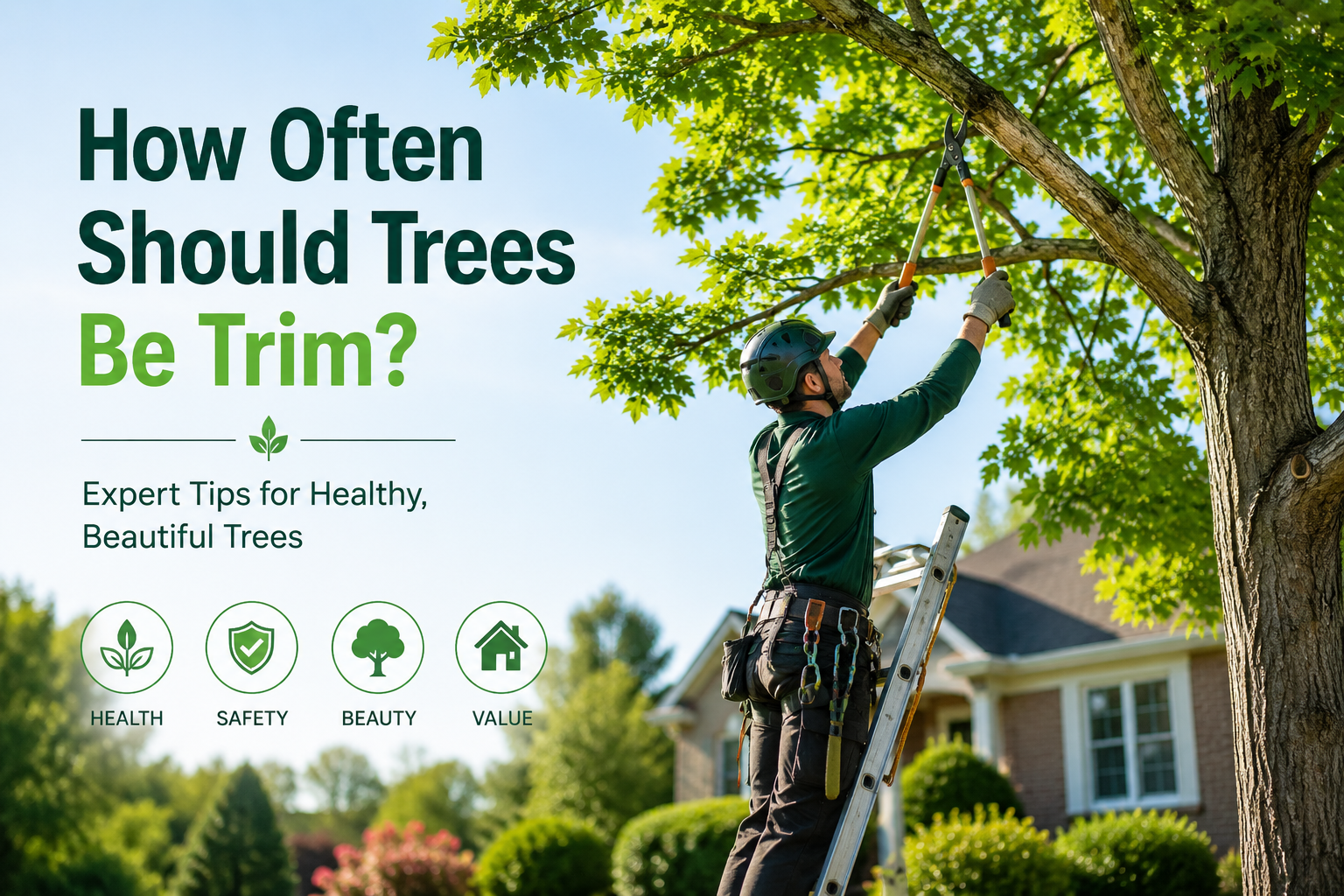
How Often Should Trees Be Trim?
Trees are an important part of any American landscape. They provide shade, improve curb appeal, support wildlife, and can even increase the beauty and value of a property. However, trees need proper maintenance to stay healthy and safe. One of the most common questions homeowners ask is, How Often Should Trees Be Trim to encourage healthy growth without causing unnecessary stress?
The answer depends on several factors, including the tree’s species, age, health, growth rate, location, and purpose. There is no universal schedule that works for every tree. In general, young trees often need structural pruning every few years, while mature trees may only require maintenance trimming every three to five years.
How Often Should Trees Be Trim?
For most homeowners, How Often Should Trees Be Trim depends primarily on the condition and type of tree. Young trees may benefit from trimming every two to three years to develop strong branch structure. Mature shade trees commonly require attention every three to five years, although some healthy trees may go longer between major pruning sessions.
Fast-growing trees, trees located near buildings, and trees growing close to utility lines may require more frequent attention. Fruit trees are another exception because annual pruning can support fruit production and maintain a productive structure.
Factors That Affect Tree Trimming Frequency
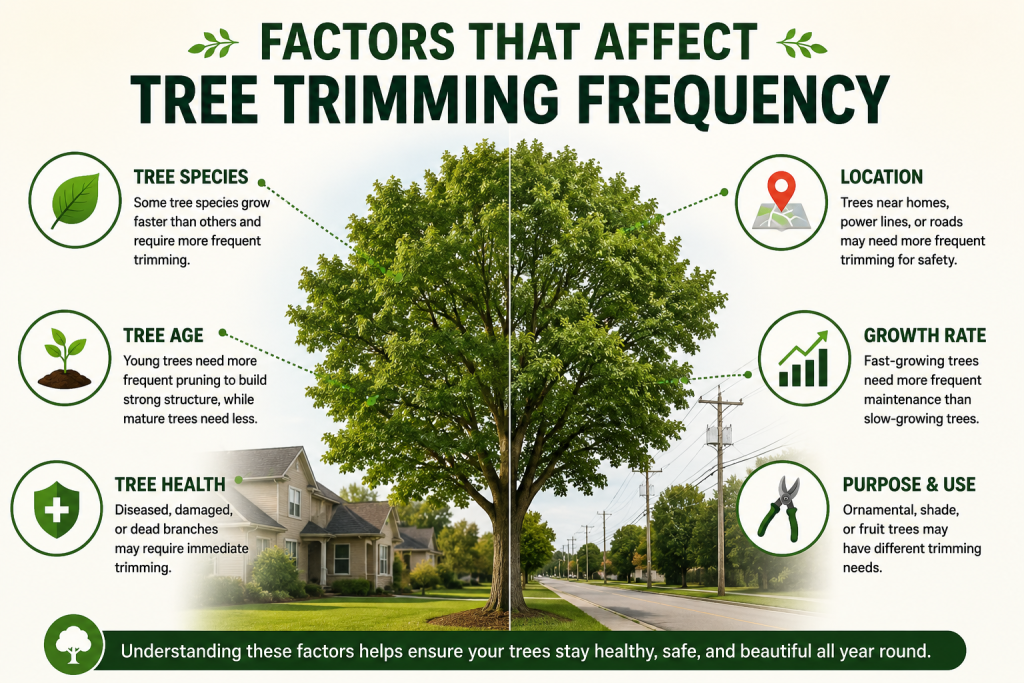
When deciding How Often Should Trees Be Trim, consider these important factors:
Tree species: Different species grow at different rates. Fast-growing trees generally need more frequent maintenance than slow-growing varieties.
Tree age: Young trees benefit from formative pruning that establishes strong branch architecture. Mature trees typically need less frequent structural work.
Tree health: Dead, broken, diseased, or hazardous branches should be addressed when they are discovered rather than waiting for a routine schedule.
Location: Trees near homes, driveways, sidewalks, fences, or power lines may require more frequent trimming to maintain safe clearance.
Growth rate: Rapid new growth can quickly create clearance or structural problems, requiring additional maintenance.
How Often Should Young Trees Be Trimmed?
If you are wondering How Often Should Trees Be Trim when they are young, the answer is usually every two to three years, depending on growth and structure. Early pruning is important because it can help establish a strong framework before branches become large and difficult to remove.
Young trees should be inspected for crossing branches, competing leaders, weak attachments, and branches growing toward the center of the canopy. Correcting these problems early can reduce the need for major cuts later in the tree’s life.
How Often Should Mature Trees Be Trimmed?
For homeowners asking How Often Should Trees Be Trim on mature shade trees, a three-to-five-year maintenance cycle is a reasonable general guideline. However, mature trees should still be inspected regularly for hazards.
A healthy mature tree may not need extensive pruning every year. Instead, trimming should focus on removing dead or damaged branches, correcting structural problems, improving clearance, and reducing potential hazards. The goal is to make necessary cuts without removing healthy branches unnecessarily.
How Often Should Fruit Trees Be Trimmed?
The answer to How Often Should Trees Be Trim changes when discussing fruit trees. Many fruit trees benefit from annual pruning, often during their dormant season, to maintain structure, improve sunlight penetration, and support fruit production.
The exact timing depends on the fruit tree species and local climate. Homeowners should research the specific requirements of their tree before pruning because flowering and fruiting habits can influence the ideal schedule.
Signs Your Trees Need Trimming
Instead of relying only on the calendar to determine How Often Should Trees Be Trim, look for visible warning signs. These may include:
- Dead or broken branches
- Branches rubbing against each other
- Overgrown limbs touching your roof
- Branches blocking driveways or sidewalks
- Dense growth that reduces airflow
- Weak or poorly attached branches
- Storm damage
- Diseased or decaying limbs
Hazardous or damaged branches may require prompt attention rather than waiting for the next scheduled trimming appointment.
Best Time of Year to Trim Trees
For many trees, How Often Should Trees Be Trim should be considered alongside when trimming takes place. Late winter or the dormant season is often recommended for routine pruning because the tree is not actively growing, and its branch structure is easier to see.
However, timing varies by species and region. Certain trees have specific pruning requirements, and oak trees, for example, may have disease-related timing considerations in some areas. Homeowners should check local recommendations before pruning.
Common Tree Trimming Mistakes
Knowing How Often Should Trees Be Trim is important, but proper technique matters just as much. One of the biggest mistakes is over-pruning. Removing too many live branches can stress a tree and reduce its ability to produce food.
Another serious mistake is tree topping, which involves cutting major branches back to stubs. The International Society of Arboriculture warns that topping can create long-term structural problems, increase risk, and damage the tree’s natural form.
When to Hire a Professional Arborist
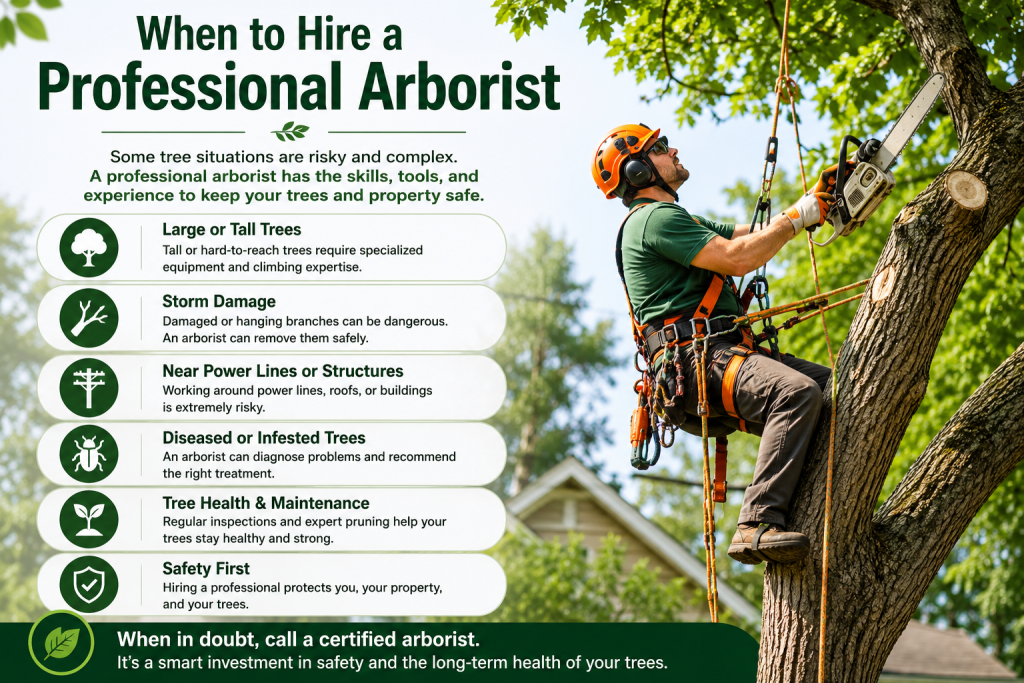
If you’re still asking How Often Should Trees Be Trim, consider having your trees evaluated by a qualified professional. An experienced arborist can assess the species, age, health, structure, and location of your trees before recommending a maintenance schedule.
Professional help is especially important for large trees, trees near power lines, storm-damaged trees, or branches that require climbing or specialized equipment. Tree work can be dangerous, and improper pruning can create permanent damage.
Frequently Asked Questions
Can trees be trimmed every year?
Not necessarily. How Often Should Trees Be Trim varies by species and condition. Many mature trees do not need annual trimming, while fruit trees or rapidly growing trees may require more frequent maintenance.
Is it better to trim trees in winter?
For many species, late winter or the dormant season is a good time for routine pruning. However, the best timing depends on the specific tree species and local conditions.
Should dead branches be removed immediately?
Dead or broken branches can create safety risks and should generally be addressed when identified rather than waiting for a regular trimming schedule.
Can trimming too often hurt a tree?
Yes. Excessive or improper trimming can remove too much healthy foliage, weaken the tree, and create opportunities for pests and disease. How Often Should Trees Be Trim should always be determined by the tree’s actual needs rather than an unnecessarily frequent schedule.
Final Thoughts
So, How Often Should Trees Be Trim? For many young trees, every two to three years is a useful general guideline, while mature shade trees may need maintenance every three to five years. Fruit trees often require annual pruning, and trees with damaged or hazardous branches may need immediate attention.
The best approach is to inspect your trees regularly and trim only when there is a clear purpose. By considering tree species, age, health, location, and growth rate, homeowners can create a practical maintenance plan that supports healthy growth and long-term safety. When large or hazardous trees are involved, working with a qualified arborist is the safest choice.
Leave a Reply