Tree Pruning vs Tree Trimming Professional Guide
For many homeowners, Tree Pruning vs Tree Trimming may sound like the same thing. Both involve removing branches from trees, but they serve different purposes. Understanding the difference can help you maintain healthier trees, improve your property’s appearance, and reduce potential safety risks.
Whether you own a home in Texas, Florida, California, or another part of the United States, proper tree care is an important part of property maintenance. In this guide, we’ll explain Tree Pruning vs Tree Trimming, when each service is needed, and why professional tree care can make a difference.
What Is Tree Pruning?
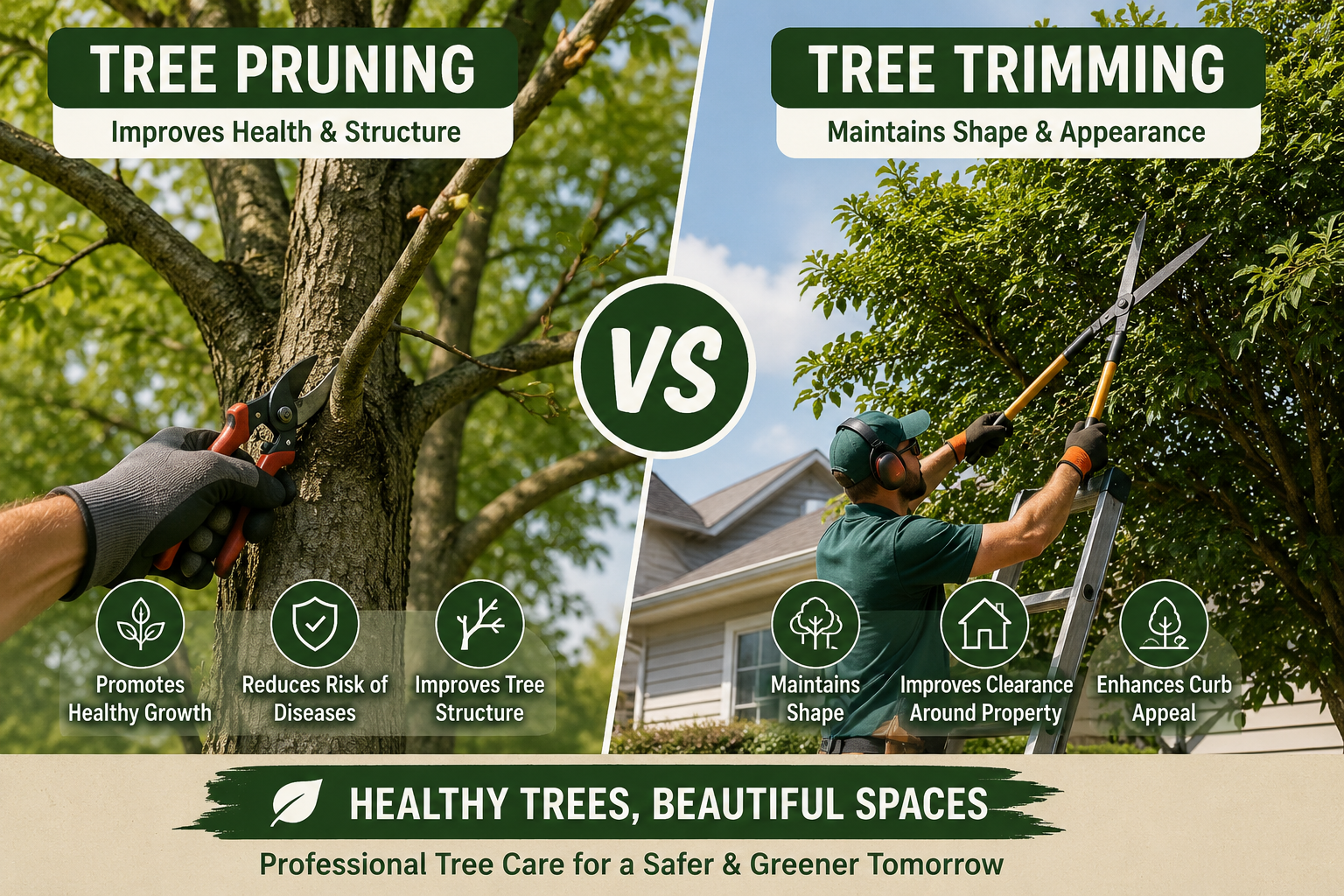
Tree pruning is the process of selectively removing specific branches to improve a tree’s health, structure, and long-term growth. Pruning typically focuses on removing dead, diseased, damaged, or poorly positioned branches.
Professional arborists may also prune trees to improve airflow through the canopy, reduce structural problems, and encourage healthy development.
Common reasons for tree pruning include:
- Removing dead or diseased branches
- Improving tree structure
- Removing crossing or rubbing branches
- Reducing the risk of falling limbs
- Improving airflow and sunlight penetration
- Supporting healthy new growth
When comparing Tree Pruning vs Tree Trimming, pruning is generally more focused on the tree’s health and structural condition rather than simply improving its appearance.
What Is Tree Trimming?
Tree trimming is usually performed to maintain a tree’s shape, appearance, and clearance around buildings or other structures. It can involve cutting back overgrown branches and managing excessive growth.
Homeowners may need tree trimming when branches grow too close to:
- Roofs
- Power lines
- Driveways
- Fences
- Windows
- Buildings
The main goal of trimming is often to control growth and maintain a neat appearance. However, improper trimming can damage a tree, especially when too many branches are removed at once.
Understanding Tree Pruning vs Tree Trimming can help homeowners choose the right service for their property’s needs.
Tree Pruning vs Tree Trimming: What Is the Difference?
The simplest way to understand Tree Pruning vs Tree Trimming is to look at the primary goal of each service.
Tree pruning focuses mainly on tree health, structure, and safety. It involves carefully selecting branches that should be removed to support the tree’s long-term condition.
Tree trimming focuses more on controlling growth, maintaining appearance, and keeping branches away from structures or obstacles.
Although the terms are sometimes used interchangeably by homeowners and tree service companies, the techniques and goals can be different.
Benefits of Tree Pruning
Proper pruning can provide several benefits for homeowners and their trees. One of the biggest tree pruning benefits is improved tree health.
Removing dead, diseased, or damaged branches can help prevent certain problems from spreading. Strategic pruning can also improve the tree’s structure and reduce weak branch unions.
Other benefits include:
- Healthier tree growth
- Better branch structure
- Reduced safety hazards
- Improved air circulation
- Better sunlight penetration
- Enhanced appearance
When considering Tree Pruning vs Tree Trimming, homeowners should remember that pruning is often a long-term investment in the health and stability of a tree.
Benefits of Tree Trimming
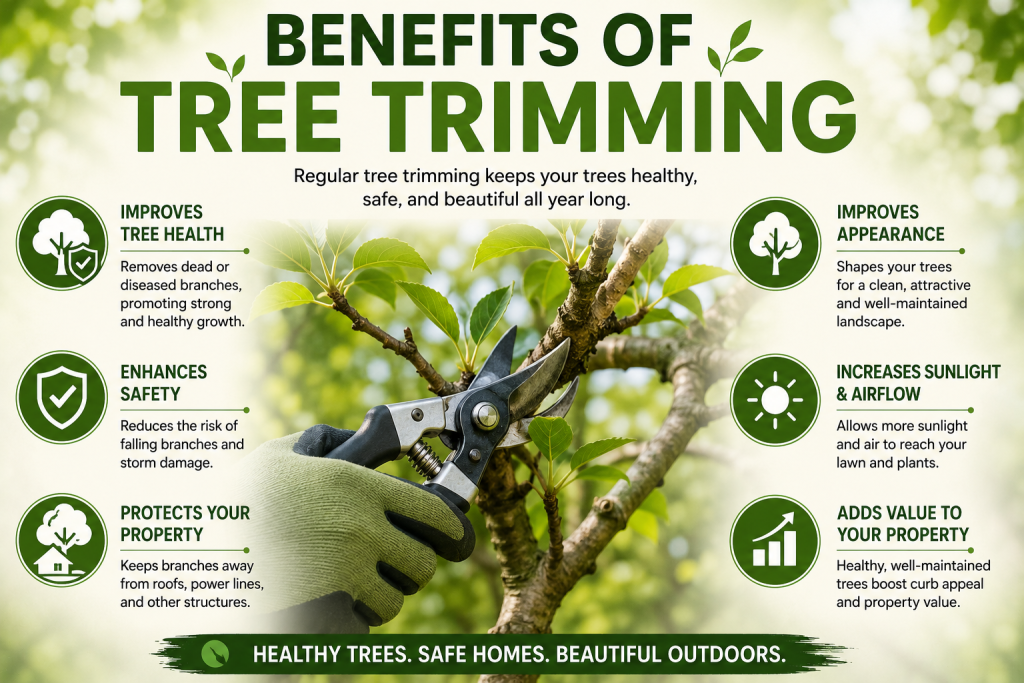
Regular trimming can help keep trees manageable and attractive. Overgrown branches can create problems when they interfere with buildings, sidewalks, driveways, or utility lines.
The main tree trimming benefits include:
- Maintaining a clean appearance
- Controlling excessive growth
- Improving clearance around structures
- Reducing interference with walkways
- Managing branches near roofs and buildings
- Supporting overall property maintenance
In the discussion of Tree Pruning vs Tree Trimming, trimming is often the better choice when the primary concern is controlling overgrowth or maintaining clearance.
When Should You Prune or Trim Trees?
The best time for tree care depends on the tree species, local climate, and reason for the work. In many parts of the US, late winter or early spring can be a suitable time for certain pruning tasks because trees may be dormant.
However, emergency pruning may be necessary at any time if a tree has broken, hazardous, or storm-damaged branches.
For homeowners comparing Tree Pruning vs Tree Trimming, it is important to consider the tree’s species and condition before scheduling work.
Texas homeowners, for example, may have different tree-care needs than homeowners in northern states because of differences in heat, drought, storms, and growing seasons.
Should You Hire a Professional?
Tree work can be dangerous, particularly when branches are large, trees are tall, or power lines are nearby. Professional tree care companies have the equipment and experience needed to handle difficult jobs safely.
A certified arborist can also evaluate the tree and recommend the appropriate service. This is especially helpful when you are unsure whether pruning or trimming is necessary.
Choosing between Tree Pruning vs Tree Trimming should be based on the tree’s condition, your property’s needs, and your long-term goals.
Avoid attempting major tree work yourself if the branches are large, the tree is unstable, or electrical lines are involved. Professional assistance can help protect both your property and your trees.
Final Thoughts on Tree Pruning vs Tree Trimming
Understanding Tree Pruning vs Tree Trimming is essential for effective tree maintenance. While pruning generally focuses on tree health and structural improvement, trimming is commonly used to control growth, improve appearance, and maintain clearance.
The right service depends on your tree’s species, age, health, location, and specific needs. Regular inspections and professional tree care can help identify problems before they become expensive or dangerous.
For US homeowners, investing in proper tree maintenance can improve curb appeal, support healthier trees, and help protect the property. If you are uncertain which service your tree needs, consult a qualified tree care professional or certified arborist for an evaluation.
Frequently Asked Questions (FAQs)
1. What is the main difference between tree pruning and tree trimming?
The key difference in Tree Pruning vs Tree Trimming is the purpose. Pruning generally focuses on tree health and structure, while trimming is commonly used to control growth, improve appearance, and maintain clearance.
2. Is tree pruning better than tree trimming?
Neither service is automatically better. Tree Pruning vs Tree Trimming depends on your tree’s specific needs. A healthy tree with structural problems may need pruning, while an overgrown tree may need trimming.
3. How often should trees be pruned?
The frequency depends on the tree species, age, health, and location. Some trees may benefit from periodic pruning every few years, while others may require more frequent attention.
4. Can I trim a tree myself?
Small branches that are easy to reach may be manageable for some homeowners. However, large branches, tall trees, and trees near power lines should generally be handled by trained professionals.
5. What happens if trees are trimmed incorrectly?
Incorrect trimming can weaken a tree, create decay problems, encourage unwanted growth, or damage its natural structure. Professional tree care can help avoid these issues.
6. When is the best time to prune trees?
The ideal timing varies by tree species and location. In many areas, late winter or early spring may be suitable for certain pruning tasks, but storm damage and hazardous branches may require immediate attention.
7. Does tree trimming improve tree health?
Proper trimming can contribute to overall tree health when performed correctly. However, excessive or improper trimming may harm the tree, so it is important to use appropriate techniques.
Leave a Reply