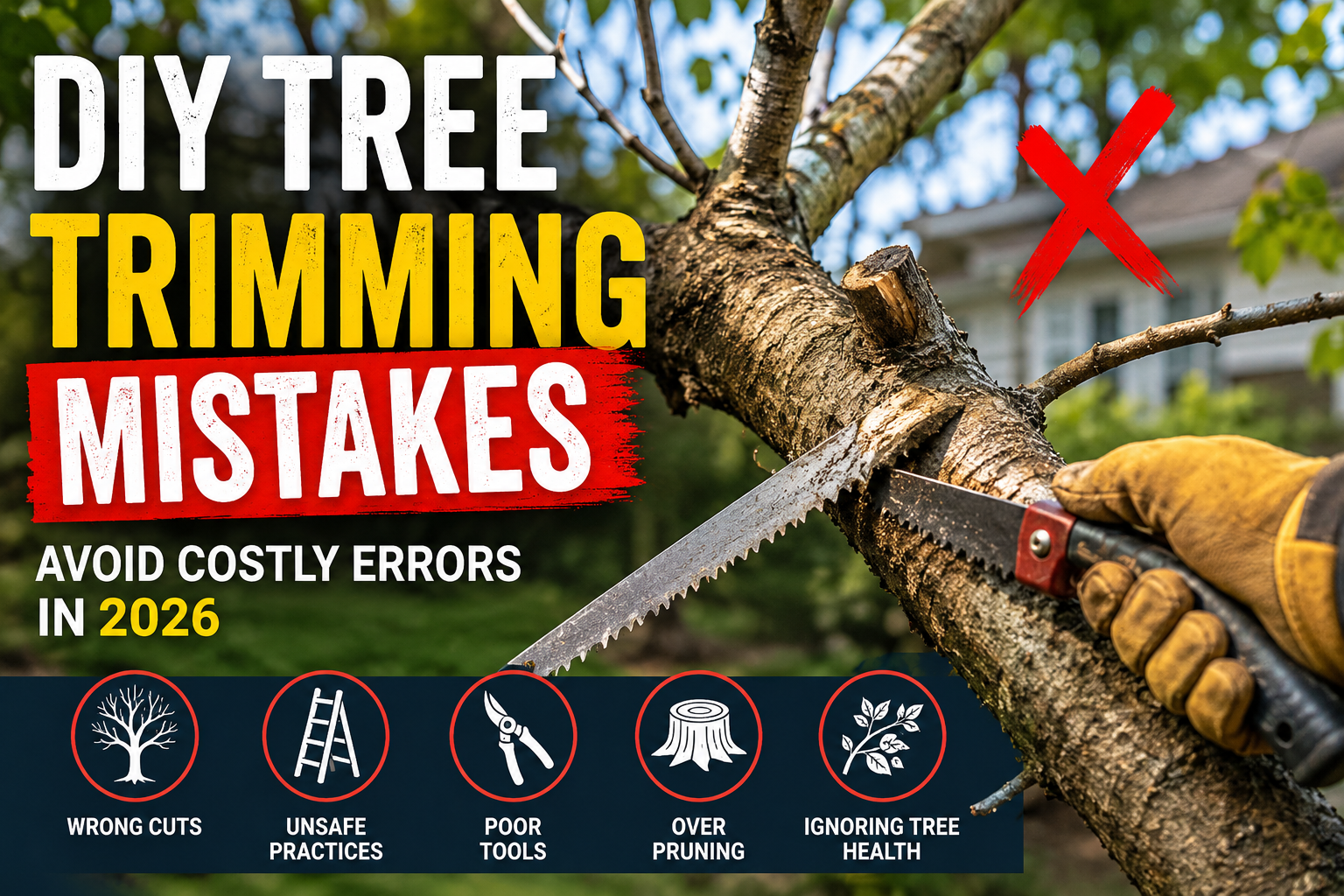
DIY Tree Trimming Mistakes Every U.S. Homeowner Should Avoid
Tree trimming can improve the appearance, safety, and structure of your landscape, but it is not as simple as cutting off unwanted branches. Many homeowners attempt to handle small pruning jobs themselves, only to make DIY Tree Trimming Mistakes that can weaken trees, encourage disease, or create expensive problems later.
Understanding DIY Tree Trimming Mistakes is especially important for U.S. homeowners because tree species, weather, and pruning requirements vary from state to state. Whether you live in Texas, Florida, California, or another part of the country, learning basic pruning principles can help you protect your trees and property in 2026.
1. Cutting Too Much at Once
One of the most common DIY Tree Trimming Mistakes is removing too many branches during a single pruning session. Homeowners sometimes believe that cutting more branches will produce faster results, but excessive pruning can put significant stress on a tree.
A tree needs its leaves to produce energy through photosynthesis. Removing too much of the canopy can reduce this energy production and leave the tree vulnerable to environmental stress.
2. Topping the Tree
Tree topping is another serious mistake. It involves cutting major branches back to stubs, often to reduce the tree’s height. This practice can create weak new growth and increase the risk of branch failure.
Among the worst DIY Tree Trimming Mistakes, topping can permanently damage a tree’s natural structure. The new shoots that develop after topping may grow rapidly but are often poorly attached.
Instead of topping, homeowners should use proper reduction pruning when appropriate.
3. Making Improper Pruning Cuts
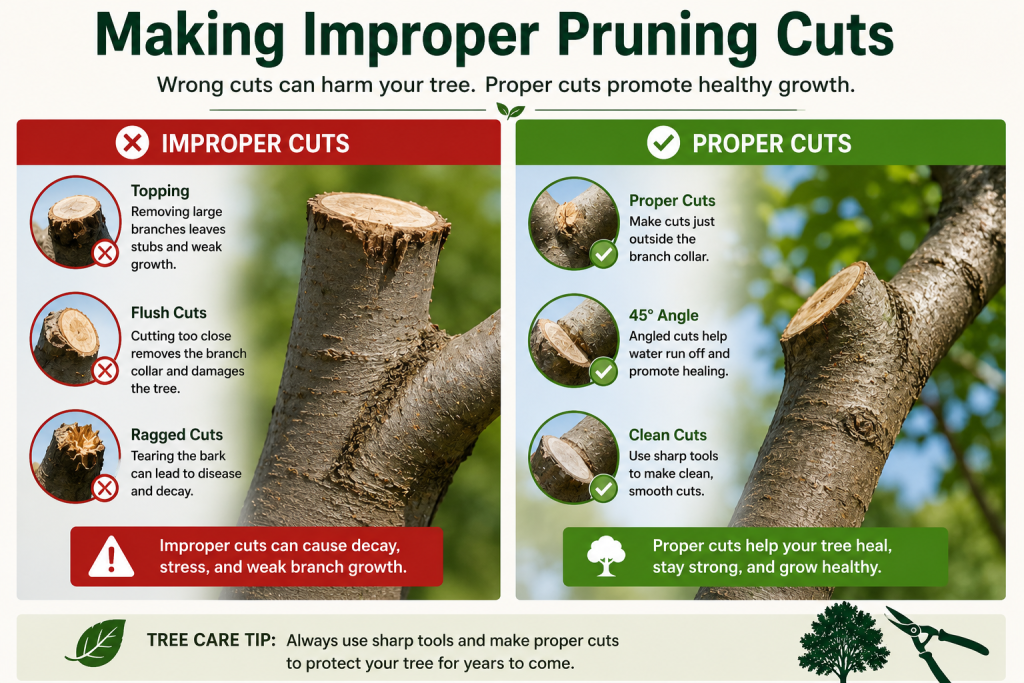
Incorrect cuts are among the most overlooked DIY Tree Trimming Mistakes. Cutting too close to the trunk can damage the branch collar, while leaving large stubs can slow healing and encourage decay.
When removing a branch, the goal is generally to make a proper cut just outside the branch collar without damaging the trunk. Larger limbs may require a three-cut method to prevent the bark from tearing.
4. Ignoring Tree Health
Another common problem is making DIY Tree Trimming Mistakes without first checking the tree’s overall condition. A tree showing signs of disease, decay, pest activity, or severe structural weakness may require more than basic pruning.
Before trimming, inspect the trunk, major branches, and canopy. Look for cavities, cracks, dead limbs, fungal growth, unusual leaf discoloration, and signs of insect damage.
5. Trimming at the Wrong Time
Timing is another area where homeowners make DIY Tree Trimming Mistakes. The ideal pruning season depends on the tree species, climate, and reason for trimming.
For example, some trees benefit from dormant-season pruning, while flowering trees may be best pruned after blooming. In regions affected by specific tree diseases, seasonal pruning restrictions may also apply.
Before starting a project, research the recommended pruning period for your tree and local area. This is particularly important for homeowners in states such as Texas.
6. Using Dull or Dirty Tools
Using poorly maintained equipment is one of the easiest DIY Tree Trimming Mistakes to prevent. Dull tools can create rough cuts that are difficult for trees to seal properly.
Dirty pruning equipment can also contribute to the spread of pathogens between trees. Before beginning work, make sure your tools are sharp, clean, and appropriate for the branch size.
7. Ignoring Power Lines and Safety Risks
Some DIY Tree Trimming Mistakes can put homeowners in serious danger. Never attempt to cut branches that are touching or growing near electrical lines.
Ladders, chainsaws, and large branches create additional risks. A falling limb can damage a roof, vehicle, fence, or person.
If the tree is tall, located near a structure, or close to utility lines, hiring a trained professional is usually the safest choice.
8. Removing the Wrong Branches
Another frequent mistake is removing healthy structural branches while leaving dead or hazardous limbs behind. These DIY Tree Trimming Mistakes can make the tree less stable rather than improving it.
Start by identifying branches that are dead, broken, diseased, crossing, or rubbing against one another. Avoid removing healthy major limbs unless there is a clear reason.
9. Failing to Clean Up and Monitor the Tree
After trimming, some homeowners simply walk away. However, avoiding cleanup and follow-up inspections can lead to additional problems.
One of the less obvious DIY Tree Trimming Mistakes is failing to monitor fresh cuts and the surrounding tree afterward. Watch for unusual discoloration, decay, insect activity, or signs of disease.
10. Trying to Handle a Job That Is Too Large
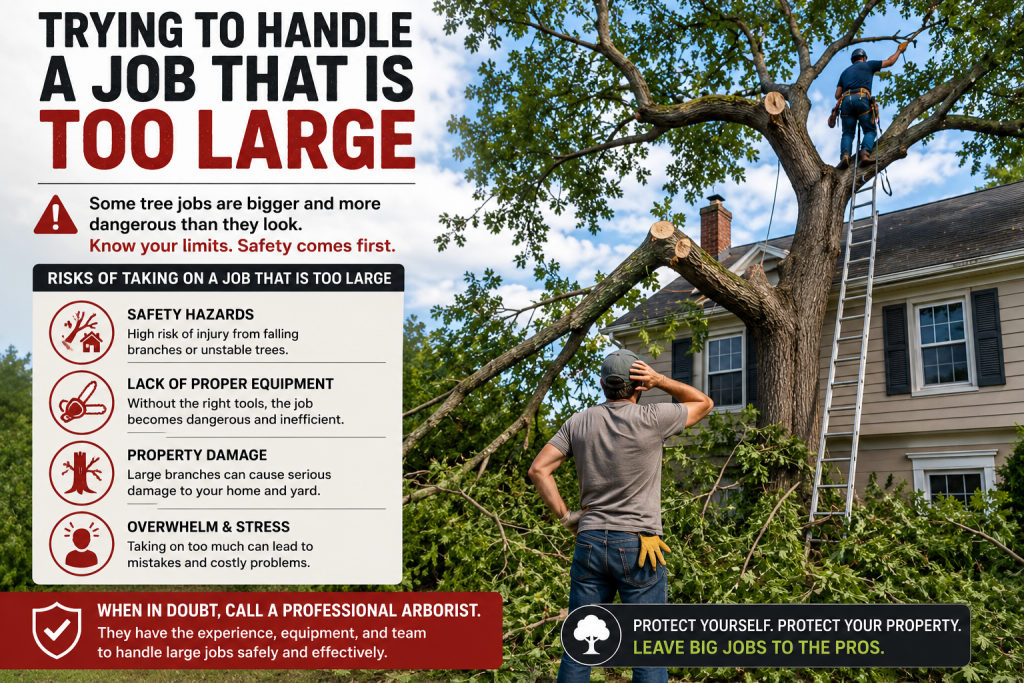
Perhaps the biggest mistake is assuming every tree can be safely trimmed without professional help. Large trees require specialized equipment, knowledge, and experience.
If your project involves significant DIY Tree Trimming Mistakes, a professional arborist may be able to identify problems before they become expensive. Consider hiring an expert when branches are large, the tree is unstable, the work requires climbing, or the tree is near power lines.
Final Thoughts
Avoiding DIY Tree Trimming Mistakes is essential for homeowners who want healthy, attractive, and structurally sound trees. The most common problems include excessive pruning, topping, improper cuts, poor timing, dirty tools, and unsafe work near power lines.
By learning proper pruning techniques and knowing when to call a professional, you can make smarter tree-care decisions in 2026. Remember that every tree is different, so when in doubt, getting advice from a qualified arborist is often the safest investment.
FAQs
Is DIY tree trimming safe?
Small pruning jobs may be manageable for homeowners when branches are low and easy to reach.
What is the biggest tree trimming mistake?
Topping is one of the most damaging practices because it can weaken tree structure and encourage poorly attached regrowth.
How much of a tree can I trim?
Avoid removing excessive amounts of live canopy at once. The appropriate amount depends on the tree’s species, age, health, and condition.
Should I trim trees near power lines myself?
No. Trees near electrical lines require professional attention because of the serious risk of electrical injury or death.
When should I hire an arborist?
Hire a qualified arborist for large trees, major structural problems, storm-damaged trees, suspected disease, or pruning near buildings and utility lines.
Leave a Reply