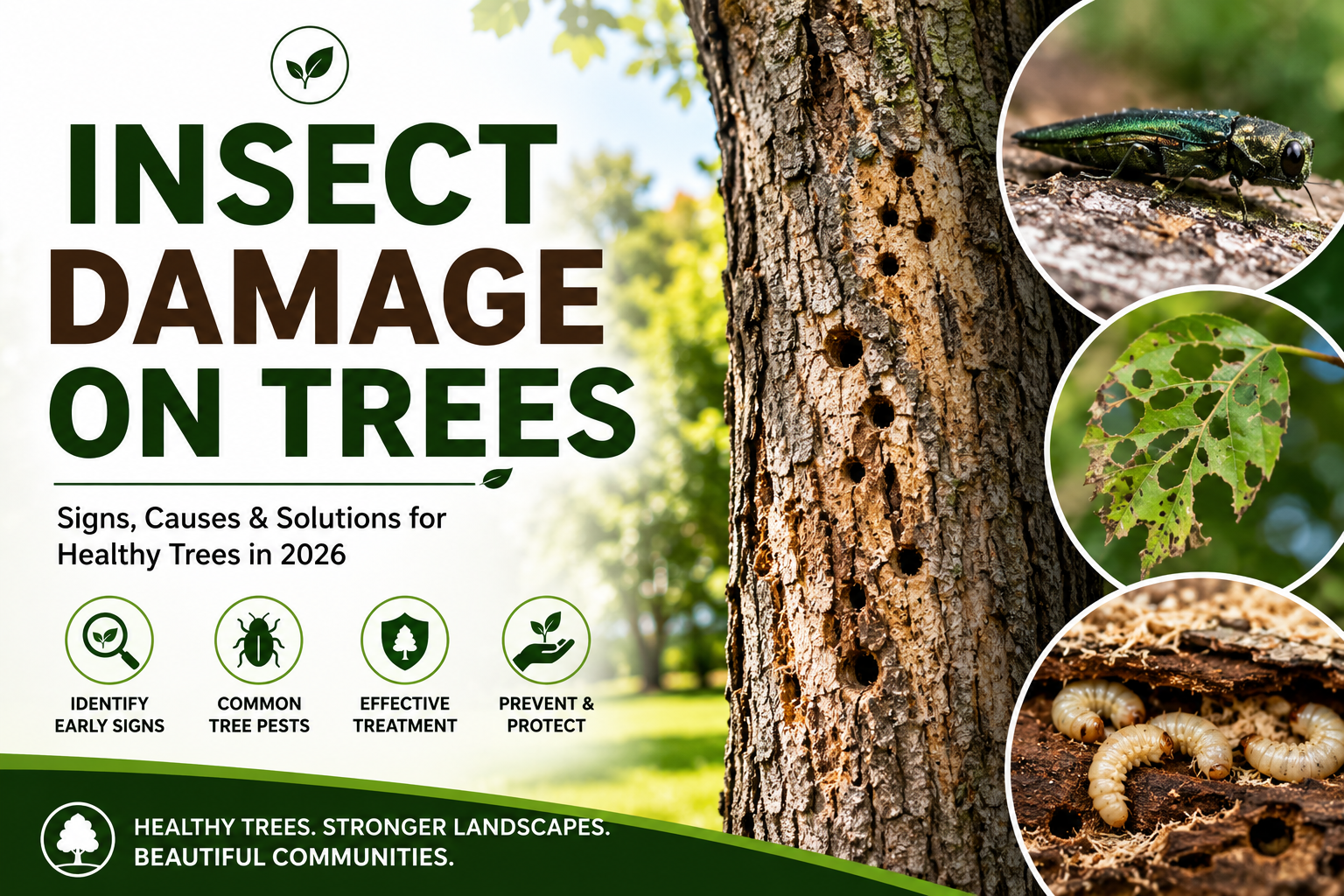
Insect Damage on Trees:
Insect Damage on Trees is a common problem for homeowners across the United States. From boring beetles and caterpillars to aphids and scale insects, pests can weaken branches, damage leaves, and create conditions that make trees more vulnerable to disease. Learning how to identify early warning signs can help protect valuable landscape trees and avoid expensive removal.
What Causes Insect Damage on Trees?
Insect Damage on Trees can occur when pests feed on leaves, bark, wood, roots, or sap. Some insects chew foliage, while others pierce plant tissue and remove sap. Wood-boring insects are especially concerning because their larvae can tunnel beneath bark and into the wood, interfering with the tree’s ability to transport water and nutrients.
Trees under drought stress, poor soil conditions, root damage, or physical injury may be more vulnerable to serious pest problems. Healthy trees are not immune, but good watering, proper pruning, mulching, and soil care can improve their natural defenses.
Common Signs of Insect Damage
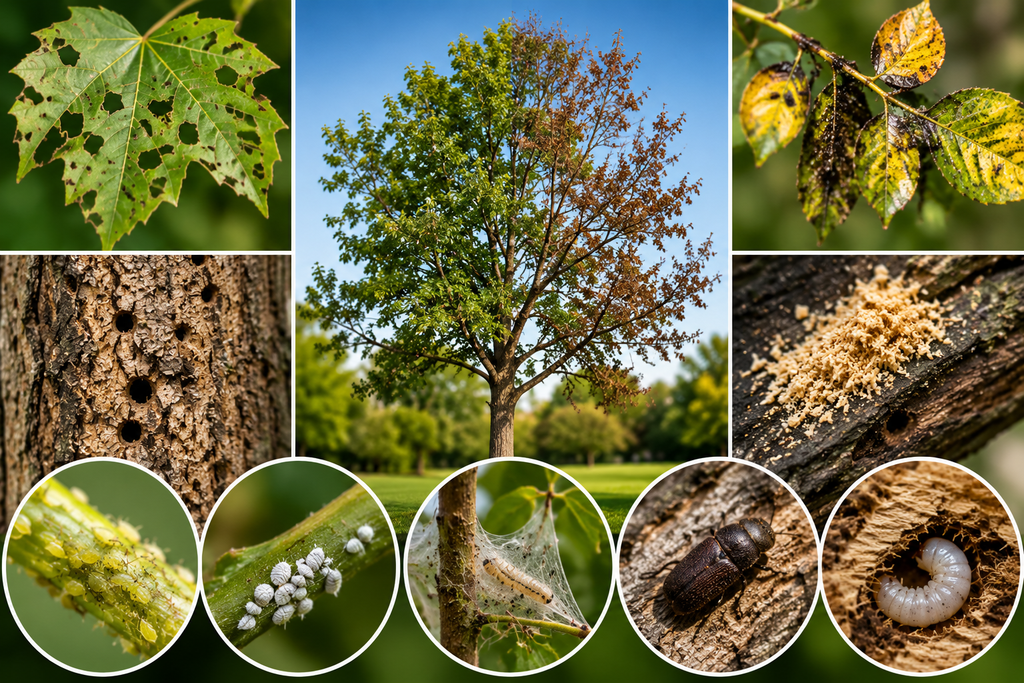
Homeowners should regularly inspect trees for unusual changes. Common signs include:
- Small holes in bark or branches
- Sawdust-like material around the trunk or branch joints
- Curling, yellowing, or prematurely dropping leaves
- Sticky honeydew on leaves, sidewalks, or vehicles
- Webbing, egg masses, or visible insects
- Cracked, loose, or peeling bark
- Dead twigs and thinning branches
Insect Damage on Trees may also appear as irregular leaf holes, skeletonized leaves, or discolored patches. If symptoms spread quickly or large branches begin dying, a professional tree inspection is recommended.
Common Tree Pests in the United States
Different regions of the U.S. have different pest populations. Common threats include emerald ash borer, Asian longhorned beetle, bark beetles, gypsy moths, aphids, scale insects, and various caterpillars. Some pests attack specific tree species, so identifying both the insect and host tree is important before treatment.
Emerald ash borer, for example, attacks ash trees and can cause canopy decline and branch dieback. Bark beetles can become especially problematic when trees are stressed by drought or other environmental conditions. Local extension services and certified arborists can help homeowners identify regional pests.
How to Treat Insect Damage on Trees
The best treatment depends on the insect, tree species, season, and severity of the infestation. Start by identifying the pest instead of applying a random insecticide. Some infestations can be managed by pruning affected branches, improving irrigation, removing heavily infested plant material, or encouraging beneficial insects.
Insect Damage on Trees may require professional treatment when pests are attacking the trunk, major limbs, or vascular system. A qualified arborist can inspect the tree, determine whether the infestation is active, and recommend an appropriate treatment plan. Chemical treatments should always be used according to the product label and applicable local requirements.
How to Prevent Future Pest Problems
Prevention is one of the most effective ways to reduce Insect Damage on Trees. Water trees deeply during dry periods, apply mulch around the root zone without piling it against the trunk, and avoid unnecessary trunk or root injuries. Prune dead or hazardous branches using proper techniques, and monitor trees throughout the growing season.
Avoid moving firewood long distances because some destructive insects can spread through transported wood. Buying properly sourced firewood and following state or local firewood regulations can help reduce pest movement.
When to Call a Tree Professional
Minor insect activity does not always mean a tree is in immediate danger. However, homeowners should seek professional help when they notice extensive canopy loss, multiple dead branches, bark splitting, repeated pest infestations, or signs of wood-boring insects.
Insect Damage on Trees can become more serious when the underlying cause is ignored. A certified arborist can evaluate tree health, identify contributing stress factors, and explain practical treatment options.
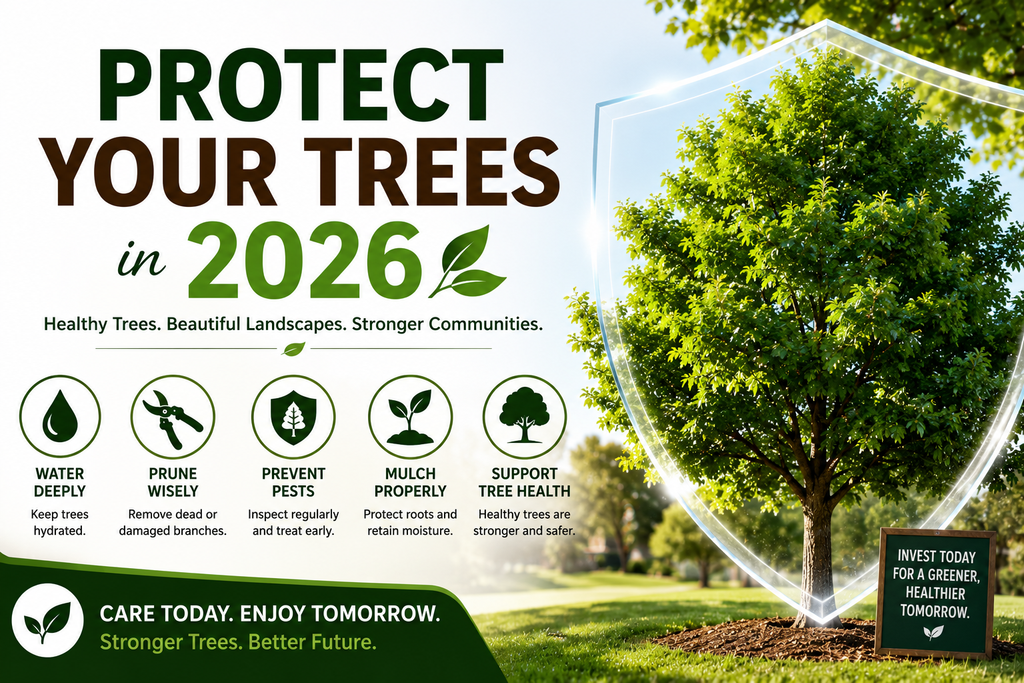
Protect Your Trees in 2026
Early detection is the key to managing Insect Damage on Trees. Walk around your property regularly, inspect trunks and branches, look closely at leaves, and pay attention to sudden changes in tree health. With proper watering, thoughtful pruning, good soil care, and timely pest management, U.S. homeowners can help keep their trees strong and attractive throughout the year.
For persistent infestations or valuable mature trees, professional evaluation is often the safest choice. Taking action early can protect your landscape, reduce future costs, and help preserve healthy trees for years to come.
Final Thoughts
Insect Damage on Trees should never be ignored, especially when you notice holes in the bark, dying branches, damaged leaves, or visible insects. Early identification can prevent a small pest problem from becoming a serious threat to the entire tree. U.S. homeowners can protect their trees by providing proper watering, maintaining healthy soil, pruning correctly, and regularly checking for signs of infestation.
If the damage is spreading or involves major branches or the trunk, consider having the tree evaluated by a qualified arborist. Taking action early in 2026 can help protect your landscape, reduce costly tree problems, and keep your trees healthy for years to come.
Leave a Reply