Tag: Tree Health

  • Insect Damage on Trees: Signs, Causes, and Treatment Guide for U.S. Homeowners in 2026

    Insect Damage on Trees: Signs, Causes, and Treatment Guide for U.S. Homeowners in 2026

    Insect Damage on Trees:

    Insect Damage on Trees is a common problem for homeowners across the United States. From boring beetles and caterpillars to aphids and scale insects, pests can weaken branches, damage leaves, and create conditions that make trees more vulnerable to disease. Learning how to identify early warning signs can help protect valuable landscape trees and avoid expensive removal.

    What Causes Insect Damage on Trees?

    Insect Damage on Trees can occur when pests feed on leaves, bark, wood, roots, or sap. Some insects chew foliage, while others pierce plant tissue and remove sap. Wood-boring insects are especially concerning because their larvae can tunnel beneath bark and into the wood, interfering with the tree’s ability to transport water and nutrients.

    Trees under drought stress, poor soil conditions, root damage, or physical injury may be more vulnerable to serious pest problems. Healthy trees are not immune, but good watering, proper pruning, mulching, and soil care can improve their natural defenses.
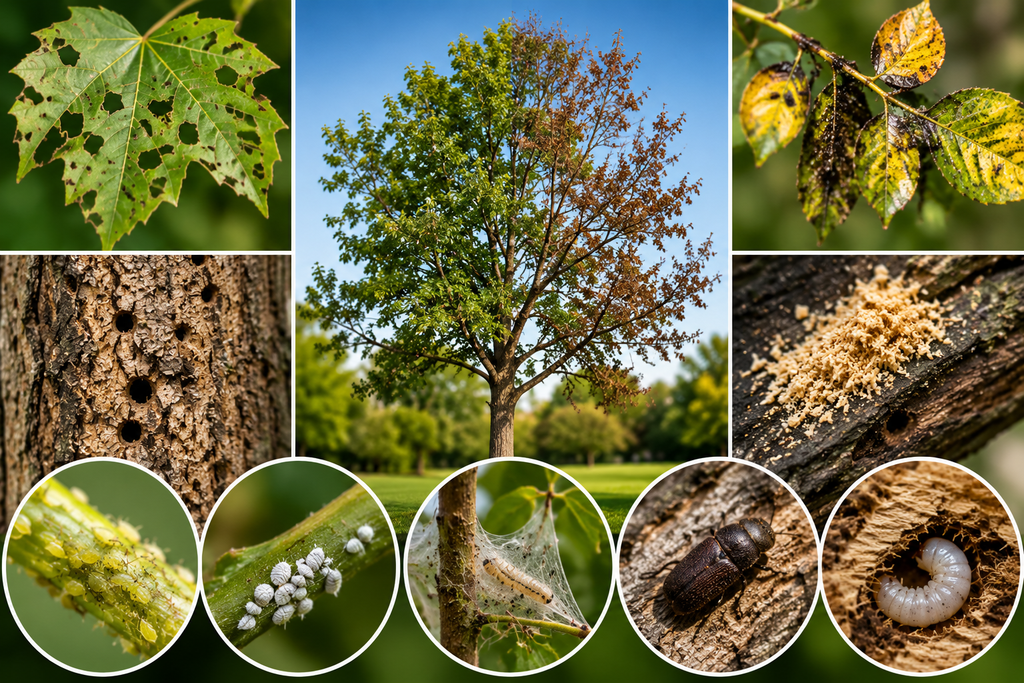
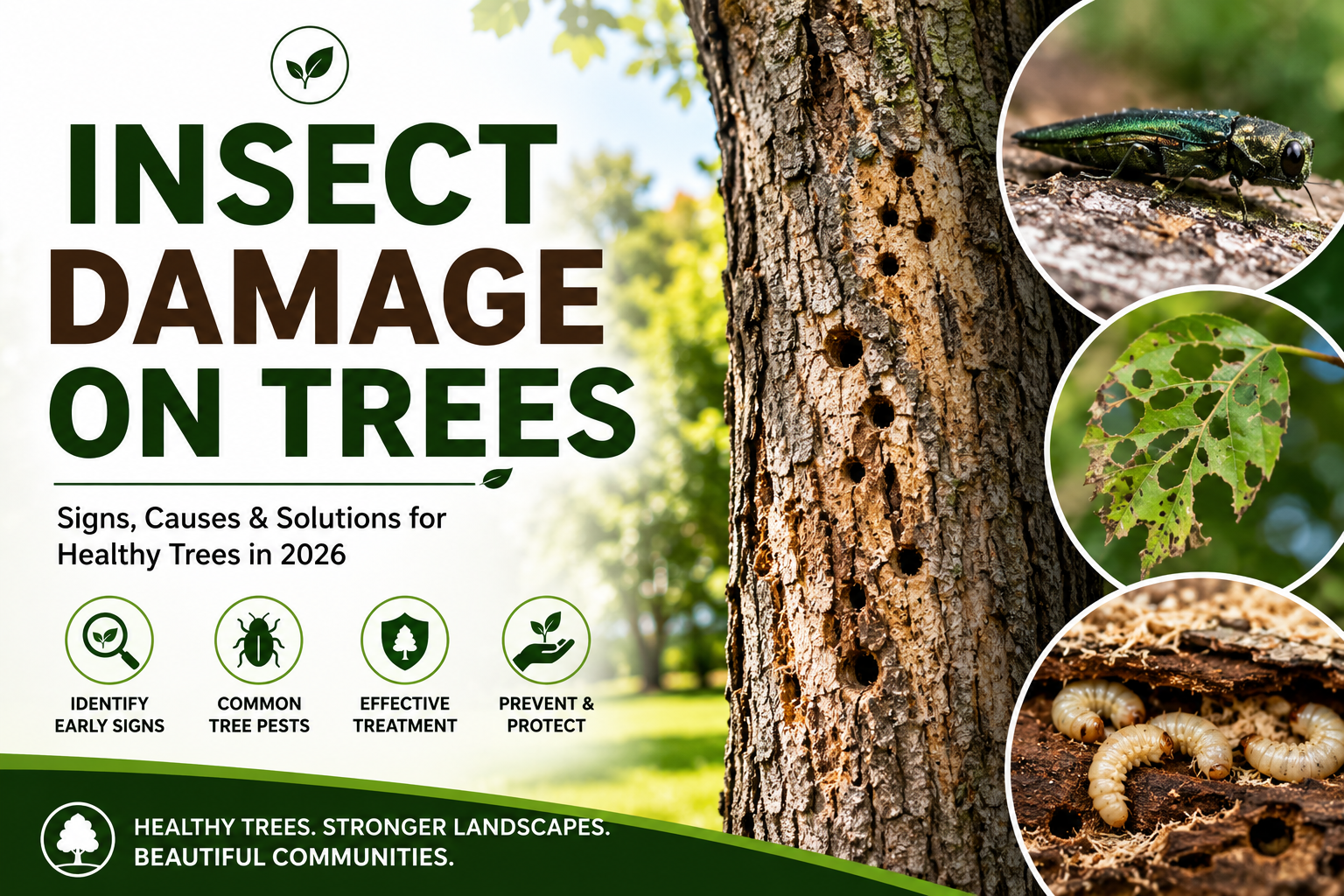
    Common signs of insect damage on trees including chewed leaves, bark holes, sawdust-like frass, webbing, aphids, beetles, and wood-boring larvae.

    Common Signs of Insect Damage

    Homeowners should regularly inspect trees for unusual changes. Common signs include:

    • Small holes in bark or branches
    • Sawdust-like material around the trunk or branch joints
    • Curling, yellowing, or prematurely dropping leaves
    • Sticky honeydew on leaves, sidewalks, or vehicles
    • Webbing, egg masses, or visible insects
    • Cracked, loose, or peeling bark
    • Dead twigs and thinning branches

    Insect Damage on Trees may also appear as irregular leaf holes, skeletonized leaves, or discolored patches. If symptoms spread quickly or large branches begin dying, a professional tree inspection is recommended.

    Common Tree Pests in the United States

    Different regions of the U.S. have different pest populations. Common threats include emerald ash borer, Asian longhorned beetle, bark beetles, gypsy moths, aphids, scale insects, and various caterpillars. Some pests attack specific tree species, so identifying both the insect and host tree is important before treatment.

    Emerald ash borer, for example, attacks ash trees and can cause canopy decline and branch dieback. Bark beetles can become especially problematic when trees are stressed by drought or other environmental conditions. Local extension services and certified arborists can help homeowners identify regional pests.

    How to Treat Insect Damage on Trees

    The best treatment depends on the insect, tree species, season, and severity of the infestation. Start by identifying the pest instead of applying a random insecticide. Some infestations can be managed by pruning affected branches, improving irrigation, removing heavily infested plant material, or encouraging beneficial insects.

    Insect Damage on Trees may require professional treatment when pests are attacking the trunk, major limbs, or vascular system. A qualified arborist can inspect the tree, determine whether the infestation is active, and recommend an appropriate treatment plan. Chemical treatments should always be used according to the product label and applicable local requirements.

    How to Prevent Future Pest Problems

    Prevention is one of the most effective ways to reduce Insect Damage on Trees. Water trees deeply during dry periods, apply mulch around the root zone without piling it against the trunk, and avoid unnecessary trunk or root injuries. Prune dead or hazardous branches using proper techniques, and monitor trees throughout the growing season.

    Avoid moving firewood long distances because some destructive insects can spread through transported wood. Buying properly sourced firewood and following state or local firewood regulations can help reduce pest movement.

    When to Call a Tree Professional

    Minor insect activity does not always mean a tree is in immediate danger. However, homeowners should seek professional help when they notice extensive canopy loss, multiple dead branches, bark splitting, repeated pest infestations, or signs of wood-boring insects.

    Insect Damage on Trees can become more serious when the underlying cause is ignored. A certified arborist can evaluate tree health, identify contributing stress factors, and explain practical treatment options.
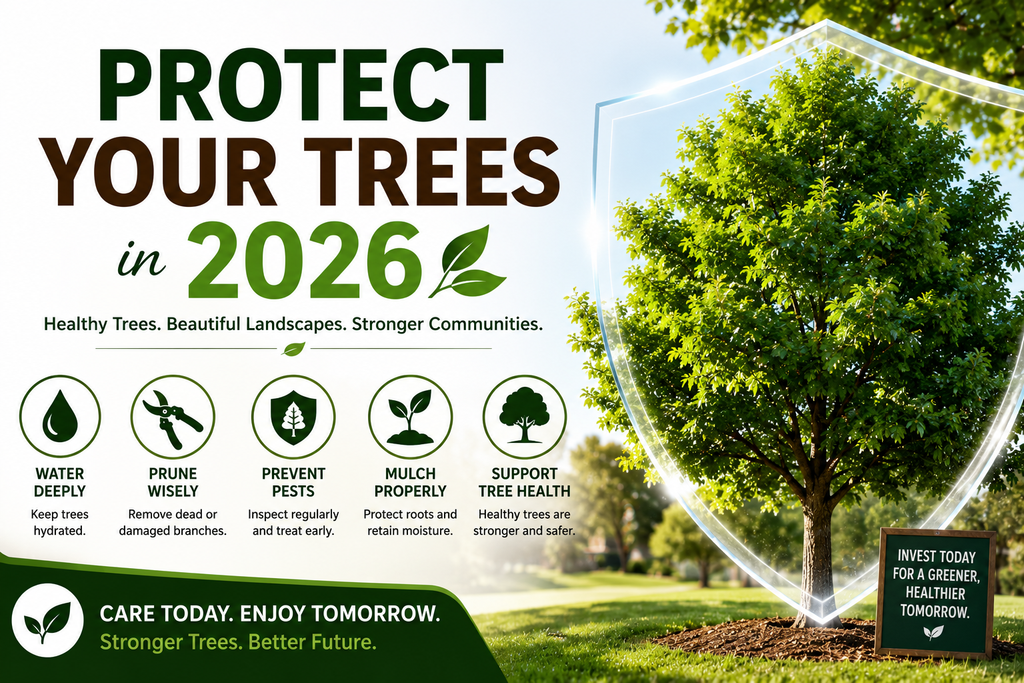
    Protect your trees in 2026 with proper watering, pruning, pest prevention, mulching, and healthy tree care practices.

    Protect Your Trees in 2026

    Early detection is the key to managing Insect Damage on Trees. Walk around your property regularly, inspect trunks and branches, look closely at leaves, and pay attention to sudden changes in tree health. With proper watering, thoughtful pruning, good soil care, and timely pest management, U.S. homeowners can help keep their trees strong and attractive throughout the year.

    For persistent infestations or valuable mature trees, professional evaluation is often the safest choice. Taking action early can protect your landscape, reduce future costs, and help preserve healthy trees for years to come.

    Final Thoughts

    Insect Damage on Trees should never be ignored, especially when you notice holes in the bark, dying branches, damaged leaves, or visible insects. Early identification can prevent a small pest problem from becoming a serious threat to the entire tree. U.S. homeowners can protect their trees by providing proper watering, maintaining healthy soil, pruning correctly, and regularly checking for signs of infestation.

    If the damage is spreading or involves major branches or the trunk, consider having the tree evaluated by a qualified arborist. Taking action early in 2026 can help protect your landscape, reduce costly tree problems, and keep your trees healthy for years to come.
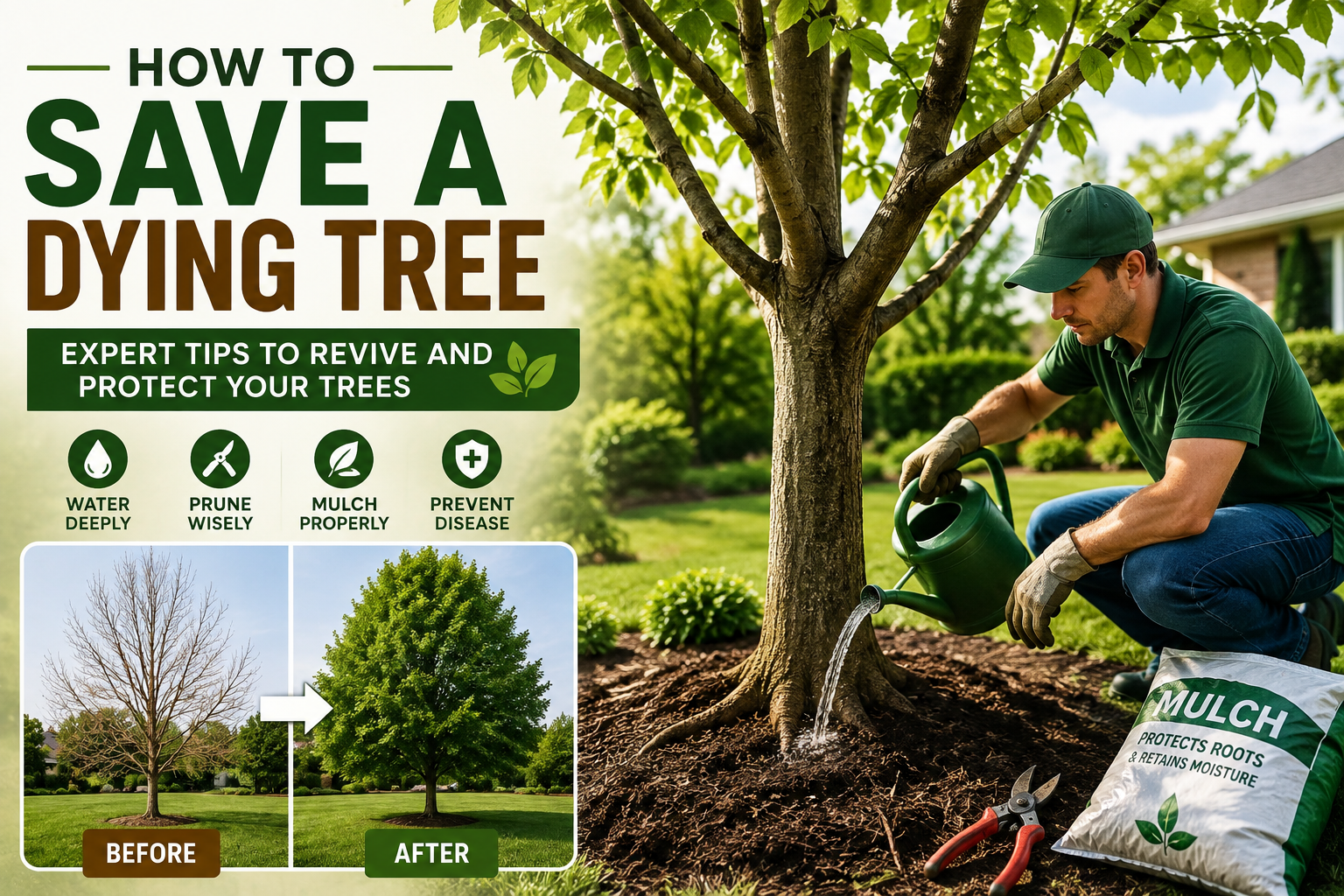
  • How to Save a Dying Tree: Complete Guide for Homeowners in 2026

    How to Save a Dying Tree: Complete Guide for Homeowners in 2026

    How to Save a Dying Tree

    Trees add beauty, shade, and value to your property. However, when a tree starts losing leaves, developing dead branches, or showing signs of stress, many homeowners wonder whether it can still be saved. The good news is that a struggling tree can often recover when the underlying problem is identified early and treated correctly. Common causes include improper watering, pests, diseases, soil compaction, root damage, and environmental stress.

    This guide explains how to save a dying tree using practical and effective methods that work for homeowners across the United States.

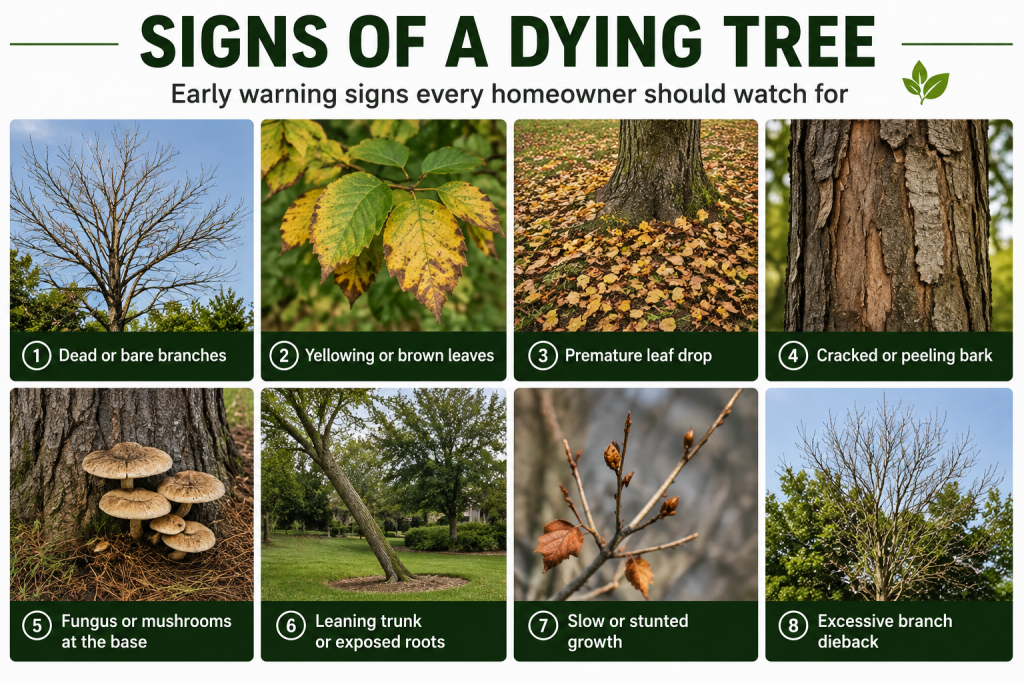
    Common signs of a dying tree including dead branches and yellow leaves

    Signs Your Tree May Be Dying

    Before taking action, How to Save a Dying Tree determine whether your tree is stressed or truly dying. Watch for these warning signs:

    • Dead or brittle branches
    • Sparse, yellow, or brown leaves
    • Premature leaf drop
    • Cracked or peeling bark
    • Mushrooms growing near the base
    • Leaning trunk or exposed roots
    • Slow or stunted growth
    • Excessive branch dieback

    If several of these symptoms appear at the same time, your tree likely needs immediate attention.

    Step 1: Identify the Cause of Decline

    The first step in learning how to save a dying tree is finding out what caused the problem.

    Common causes include:

    Underwatering

    Trees suffering from drought often develop brown leaves, thin canopies, and dry soil around the roots.

    Overwatering

    Too much water can suffocate roots and encourage fungal growth. Yellow leaves and constantly wet soil are common signs.

    Pest Infestations

    Insects such as borers, beetles, and aphids can weaken a tree by feeding on bark, leaves, and wood.

    Disease

    Fungal and bacterial diseases may cause cankers, leaf spots, root rot, or branch dieback.

    Root Damage

    Construction work, soil compaction, or buried roots can prevent a tree from absorbing water and nutrients.

    Correct diagnosis is essential because treating the wrong issue can make the situation worse.

    Step 2: Water Deeply and Correctly

    Proper watering is one of the most effective ways to save a stressed tree.

    Instead of frequent shallow watering:

    • Water slowly and deeply
    • Focus on the area beneath the canopy
    • Allow moisture to reach deeper roots
    • Water early in the morning when possible

    Most established trees benefit How to Save a Dying Tree from deep watering during dry periods rather than daily light watering. Deep watering encourages stronger root development and improves drought resistance.

    Step 3: Apply Mulch Properly

    Mulch helps retain moisture, regulate soil temperature, and reduce weed competition.

    For best results:

    • Apply 2 to 4 inches of organic mulch
    • Extend the mulch ring outward around the tree
    • Keep mulch several inches away from the trunk
    • Avoid creating a “mulch volcano” around the base

    Improper mulching can trap moisture against the bark and contribute to rot and disease. How to Save a Dying Tree

    Step 4: Prune Dead and Damaged Branches

    Pruning removes unhealthy growth and helps redirect energy to healthy portions of the tree.

    When pruning:

    • Remove dead, broken, or diseased branches
    • Use clean and sharp tools
    • Avoid excessive pruning
    • Cut just outside the branch collar

    Over-pruning can create additional stress, especially for already weakened trees. How to Save a Dying Tree

    Step 5: Improve Soil Health

    Healthy soil is critical for tree recovery. How to Save a Dying Tree

    You can improve soil conditions by:

    • Reducing soil compaction
    • Adding organic matter
    • Removing competing grass and weeds
    • Ensuring proper drainage

    If soil is heavily compacted, roots may struggle to access oxygen, water, and nutrients.

    Step 6: Monitor for Pests and Disease

    Inspect your tree regularly for signs of insects, fungi, or infections.

    Look for:

    • Holes in the bark
    • Oozing sap
    • Unusual leaf discoloration
    • Fungal growth
    • Sawdust-like material around the trunk

    Early treatment can prevent widespread damage and improve the chances of recovery.

    Step 7: Fertilize Carefully

    Many homeowners assume fertilizer is the solution, but applying fertilizer to a stressed tree can sometimes cause more harm than good.

    Before fertilizing:

    • Test the soil if possible
    • Determine nutrient deficiencies
    • Choose a slow-release tree fertilizer
    • Follow label instructions carefully

    Healthy roots and proper watering should be addressed before adding fertilizer.

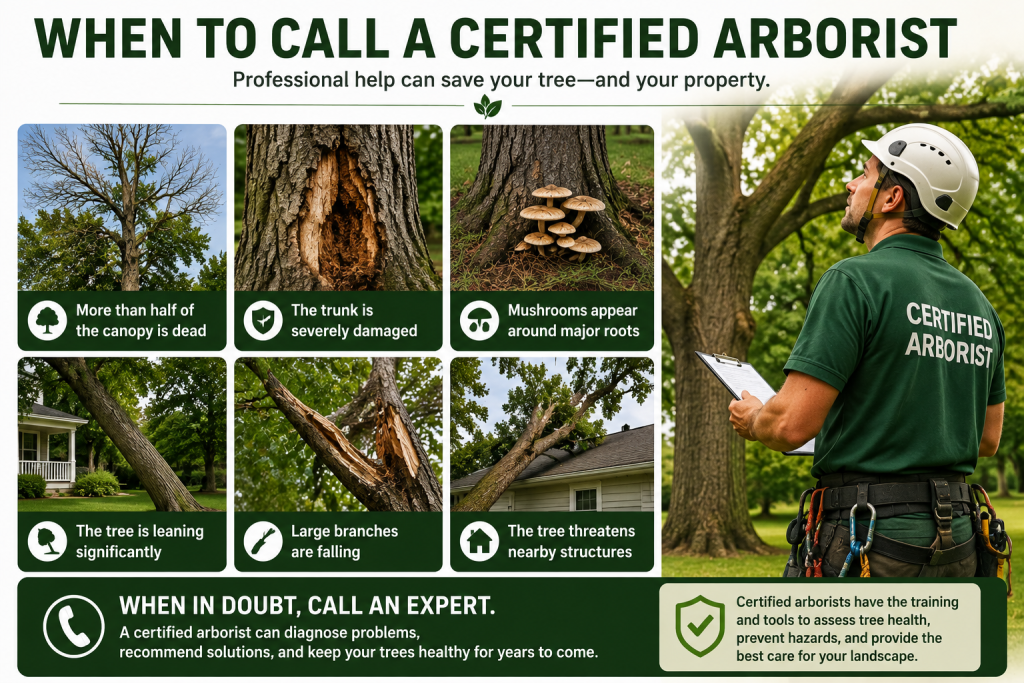
    When to call a certified arborist for a dying tree showing severe damage and safety risks

    When to Call a Certified Arborist

    Some trees require professional evaluation.

    Contact a certified arborist if:

    • More than half of the canopy is dead
    • The trunk is severely damaged
    • Mushrooms appear around major roots
    • The tree is leaning significantly
    • Large branches are falling
    • The tree threatens nearby structures

    Professional arborists can diagnose diseases, assess structural risks, and determine whether the tree can be saved.

    Final Thoughts

    Knowing how to save a dying tree can help protect one of the most valuable features of your landscape. The key is acting quickly, identifying the root cause, and providing proper care through deep watering, correct mulching, strategic pruning, and ongoing monitoring. For many US homeowners in 2026, early intervention can mean the difference between losing a mature tree and restoring it to full health.

    A healthy tree not only improves curb appeal but also increases property value, provides shade, supports local wildlife, and enhances the overall environment. How to Save a Dying Tree By following these proven tree-care practices, you can give your struggling tree the best possible chance of recovery.

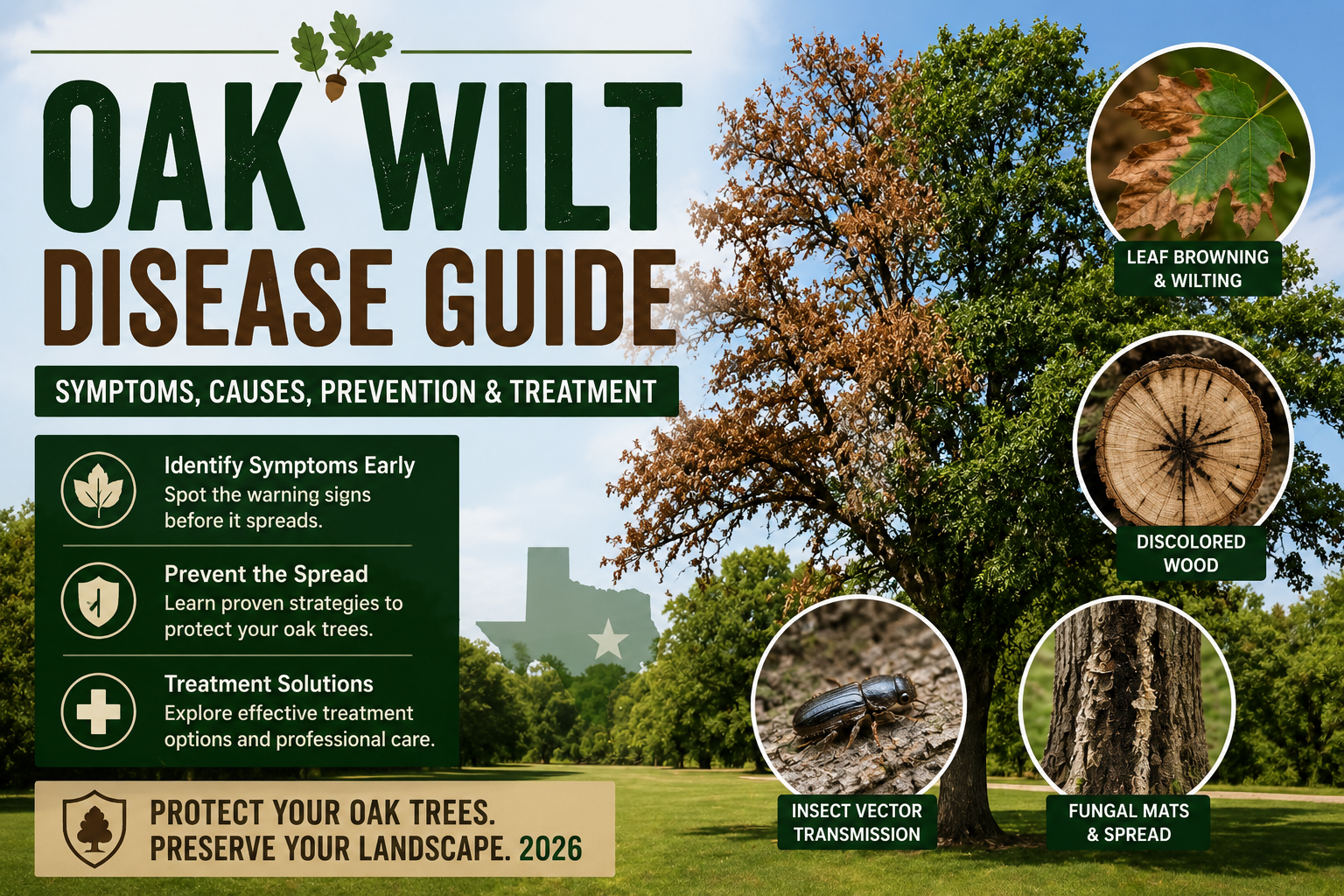
  • Oak Wilt Disease Guide: Symptoms, Causes, Prevention & Treatment in 2026

    Oak Wilt Disease Guide: Symptoms, Causes, Prevention & Treatment in 2026

    Oak Wilt Disease Guide: What Homeowners Need to Know

    Oak trees are an important part of landscapes across Texas and many other parts of the United States. Unfortunately, oak trees can be vulnerable to serious diseases, including oak wilt. This Oak Wilt Disease Guide explains what homeowners should know about symptoms, causes, prevention, and professional treatment in 2026.

    Oak wilt is caused by the fungus Bretziella fagacearum. The disease interferes with the tree’s water-conducting system and can cause rapid decline in susceptible oak species. Understanding the warning signs can help property owners take action before the disease spreads.

    What Is Oak Wilt?

    The Oak Wilt Disease Guide starts with understanding how this disease affects trees. Oak wilt is a vascular disease that prevents water from moving properly through an infected tree.

    In Texas, the disease is particularly important because it can affect valuable native and landscape oaks. Live oaks and red oaks are among the species commonly associated with oak wilt problems.

    Oak wilt can spread in two primary ways. Sap-feeding beetles can carry fungal spores from infected trees to fresh wounds on healthy oaks. The disease can also move through interconnected root systems between nearby trees.

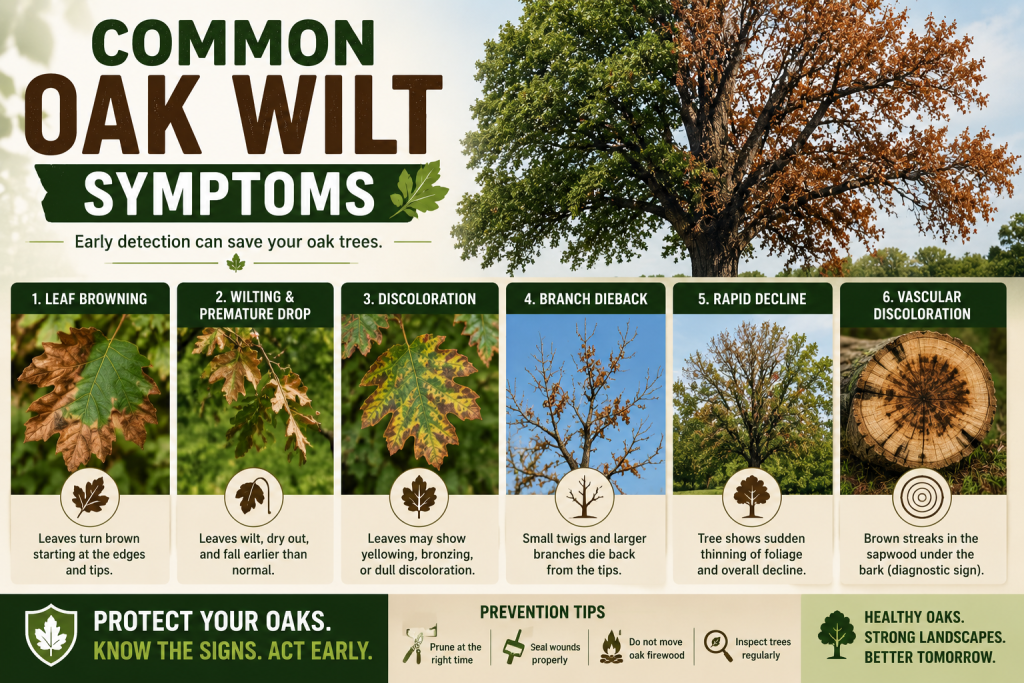
    Common oak wilt symptoms including leaf browning, wilting, branch dieback, and canopy thinning

    Common Oak Wilt Symptoms

    Recognizing symptoms early is one of the most important lessons in this Oak Wilt Disease Guide. Symptoms can vary depending on the oak species, weather, and stage of infection.

    Common warning signs include:

    • Leaves turning brown or bronze
    • Leaves wilting and falling prematurely
    • Rapid canopy thinning
    • Branch dieback
    • Discoloration of leaves
    • Sudden decline in an otherwise healthy tree
    • Browning that begins in sections of the canopy

    Live oaks may show a pattern where leaves turn brown and drop while other parts of the tree remain green. Red oaks can sometimes decline much more rapidly.

    Because several tree problems can produce similar symptoms, homeowners should not assume every dying oak has oak wilt.

    Why Oak Wilt Is Serious in Texas

    Oak Wilt in Texas is a major concern because the disease can spread from tree to tree through connected roots. In areas where susceptible oaks grow close together, one infected tree may put neighboring trees at risk.

    The Oak Wilt Disease Guide is especially useful for homeowners in Central Texas and other areas where oak wilt has been documented. Early identification and professional evaluation can help determine whether the symptoms are consistent with oak wilt or another problem.

    Property owners should also be cautious about pruning during periods when fungal-spore transmission is more likely.

    How Oak Wilt Spreads

    Understanding transmission is an important part of this Oak Wilt Disease Guide. The fungal pathogen can move above ground when sap-feeding insects visit fungal mats or infected material and then contact fresh wounds on healthy oak trees.

    Below ground, oak wilt can move through root connections between trees. This is one reason why simply removing one visibly sick tree may not always solve the problem.

    Avoiding unnecessary wounds and following proper pruning practices can reduce opportunities for infection.

    How to Prevent Oak Wilt

    Prevention is a major focus of this Oak Wilt Disease Guide. Homeowners can take several steps to reduce the risk of spreading oak wilt.

    First, avoid unnecessary pruning of oak trees during high-risk periods. If pruning is necessary, use proper techniques and immediately protect appropriate fresh wounds according to recommendations from qualified local tree professionals.

    Never move firewood from diseased oak trees to another property. Infected wood can contribute to disease spread when appropriate fungal material and insect activity are present.

    Keeping trees healthy through proper watering, mulching, soil care, and routine inspections can also help reduce overall stress.

    Oak Wilt Treatment Options

    The Oak Wilt Disease Guide would not be complete without discussing treatment. Treatment depends on the tree species, disease stage, location, and whether nearby trees are also affected.

    Professionals may use approaches such as removing infected trees, creating root barriers to limit underground spread, and in selected situations applying fungicide treatments. Fungicide injections are not appropriate for every tree or every situation, so diagnosis should come before treatment.

    A certified arborist or qualified tree professional can evaluate the property and recommend an appropriate management strategy.

    When Should You Call an Arborist?

    If you notice sudden leaf browning, unusual leaf drop, canopy thinning, or rapid branch death, professional evaluation is recommended. The Oak Wilt Disease Guide can help you recognize potential warning signs, but it cannot replace an on-site diagnosis.

    Call a tree professional quickly when:

    • Multiple nearby oaks are declining
    • A healthy-looking oak suddenly develops severe symptoms
    • Several trees show similar symptoms
    • You recently pruned an oak during a potentially risky period
    • You suspect oak wilt is spreading through your property

    Early action can be particularly important because oak wilt can move beyond the originally affected tree.

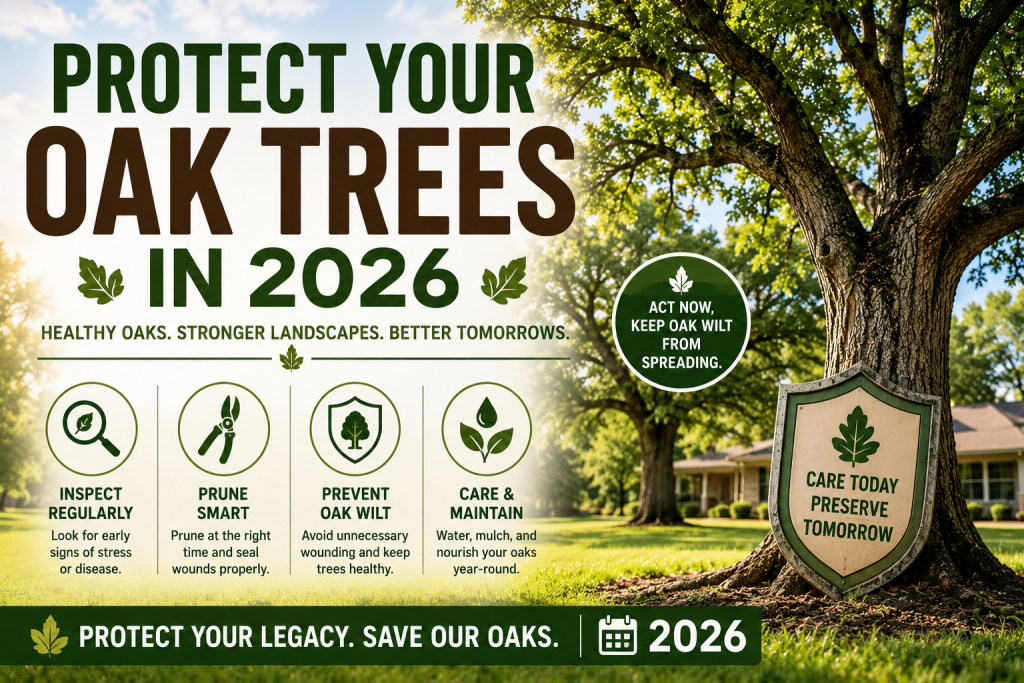
    Protect your oak trees in 2026 with proper care and oak wilt prevention

    Protect Your Oak Trees in 2026

    This Oak Wilt Disease Guide shows why prevention, early detection, and professional diagnosis matter for homeowners. Oak wilt can be a serious disease, but informed tree care can help reduce risks and protect valuable landscape trees.

    If you live in an area where Oak Wilt in Texas is a concern, inspect your oaks regularly and pay attention to sudden changes in foliage, canopy density, or branch health. Avoid unnecessary pruning, handle oak wood responsibly, and seek professional advice when symptoms appear.

    The best approach is to act early rather than waiting until an entire tree or group of trees has declined.

    Frequently Asked Questions

    Can an oak tree recover from oak wilt?

    Recovery depends on the tree species, stage of infection, and management approach. Some trees may be managed successfully, while severely affected trees may decline beyond recovery.

    What does oak wilt look like?

    Common symptoms include leaf browning, premature leaf drop, canopy thinning, and branch dieback. Symptoms can vary between oak species.

    Can oak wilt spread to nearby trees?

    Yes. Oak wilt can spread through interconnected root systems and can also be moved by sap-feeding insects that carry fungal spores to fresh wounds.

    Can I treat oak wilt myself?

    Professional diagnosis is strongly recommended before treatment. Management can involve tree removal, root-system management.

    Final Takeaway:

    The Oak Wilt Disease Guide is a useful starting point for understanding one of the most concerning oak diseases affecting parts of the United States. For suspected Oak Wilt in Texas, early professional assessment can help homeowners make informed decisions and protect surrounding trees.

  • Tree Health Complete Guide for US Homeowners 2026

    Tree Health Complete Guide for US Homeowners 2026

    Tree Health: Complete 2026 Guide for Healthy Trees in the USA

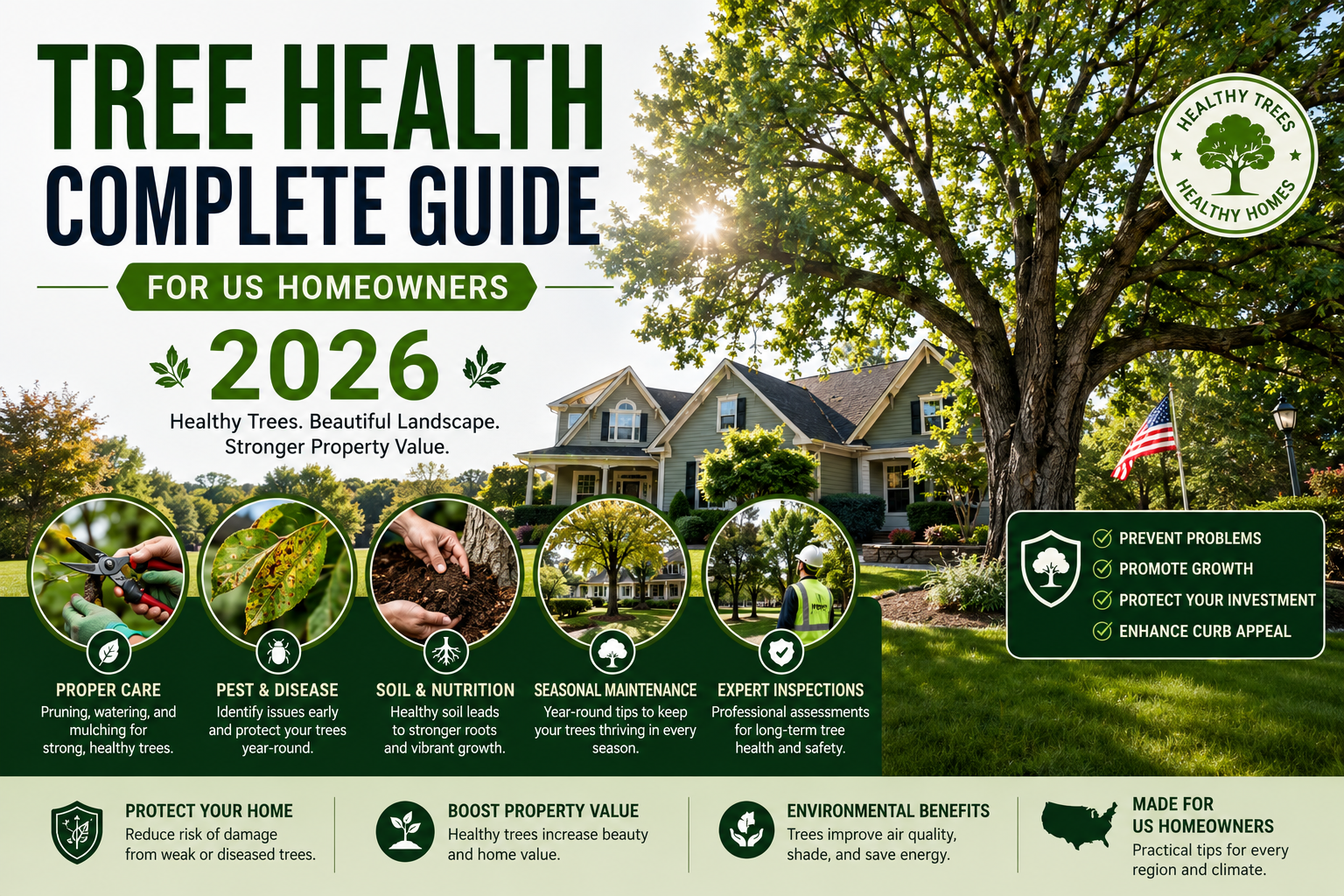
    Healthy trees improve your property’s appearance, increase home value, provide shade, and support the environment. Maintaining Tree Health should be a priority for every homeowner because strong trees are safer, live longer, and require fewer expensive repairs. Whether you own one tree or an entire landscape, understanding proper tree care can save time and money.

    This 2026 guide explains the essentials of Tree care, including watering, pruning, fertilization, disease prevention, and professional maintenance for homeowners across the United States.


    Why Tree Health Matters

    Maintaining Tree benefits both your property and the environment. Healthy trees absorb carbon dioxide, improve air quality, reduce soil erosion, and provide habitats for wildlife. They also increase curb appeal and can raise property value.

    Poor Tree can lead to weak branches, disease, pest infestations, and costly emergency tree removal.


    Signs of Good Tree Health

    A healthy tree usually displays several visible characteristics.

    Look for these signs:

    • Bright green leaves during the growing season
    • Strong branch structure
    • Healthy bark without deep cracks
    • New seasonal growth
    • Balanced canopy
    • No signs of decay
    • Strong root system

    Regular inspections help maintain excellent Tree throughout the year.


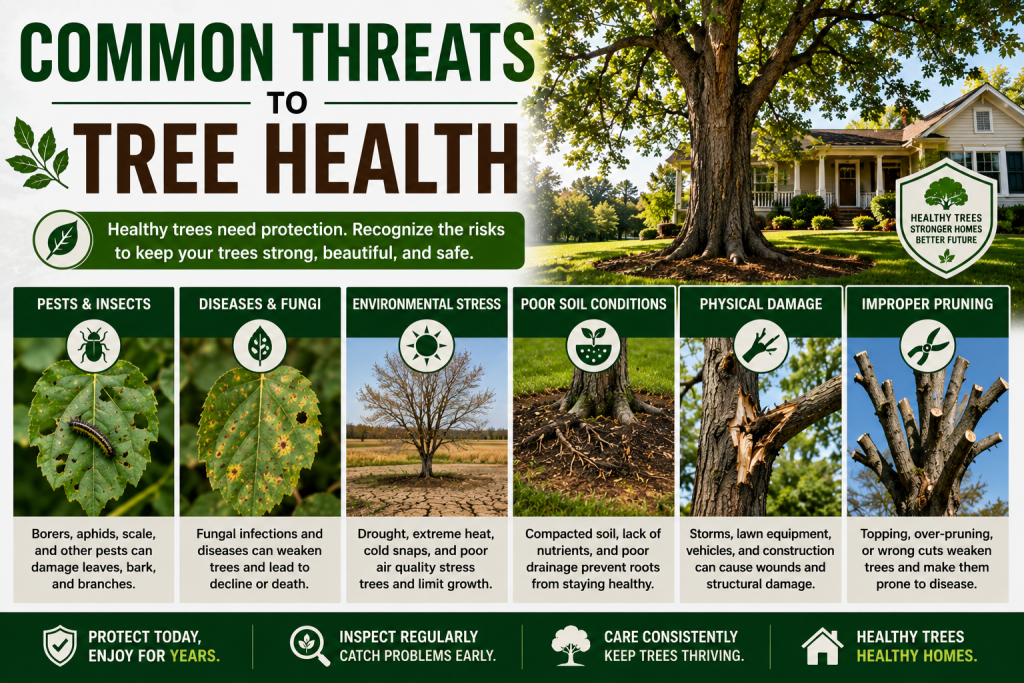
    Infographic showing common threats to tree health, including pests, diseases, drought, poor soil, storm damage, and improper pruning around a healthy residential tree.

    Common Threats to Tree Health

    Many factors can affect Tree if left untreated.

    The most common problems include:

    • Drought stress
    • Overwatering
    • Poor soil conditions
    • Insect infestations
    • Tree diseases
    • Storm damage
    • Root damage
    • Improper pruning

    Early detection makes protecting Tree Care much easier.


    Watering Trees Properly

    Water plays a major role in Tree Health.

    Best watering practices include:

    • Water deeply instead of frequently.
    • Water early in the morning.
    • Avoid flooding the roots.
    • Increase watering during drought.
    • Use mulch to retain moisture.

    Proper watering supports long-term Tree Care while preventing root stress.


    The Importance of Tree Pruning

    Routine pruning is one of the best ways to improve Tree.

    Professional pruning helps:

    • Remove dead branches
    • Improve airflow
    • Reduce storm damage
    • Encourage healthy growth
    • Prevent disease spread
    • Improve tree appearance

    Proper pruning is an essential part of Tree Care for residential landscapes.


    Fertilizing for Better Tree Health

    Trees require nutrients for healthy growth.

    Professional fertilization improves Tree by providing:

    • Nitrogen
    • Phosphorus
    • Potassium
    • Essential micronutrients

    Before fertilizing, consider a soil test to determine nutrient deficiencies. Proper fertilization strengthens Healthy Tree Care and promotes long-lasting growth.


    Protecting Trees from Pests and Diseases

    Pests and diseases are among the biggest threats to Tree Health.

    Watch for:

    • Leaf discoloration
    • Wilting leaves
    • Bark damage
    • Fungal growth
    • Insect holes
    • Premature leaf drop

    Early treatment is essential for successful Tree Care and preventing permanent damage.


    Seasonal Healthy Tree Care Tips

    Each season requires different maintenance practices.

    Spring

    • Inspect for winter damage.
    • Apply mulch.
    • Fertilize if needed.

    Summer

    • Water during dry periods.
    • Monitor pests.
    • Check soil moisture.

    Fall

    • Remove dead branches.
    • Clean fallen leaves.
    • Prepare trees for winter.

    Winter

    • Inspect after storms.
    • Protect young trees.
    • Avoid damaging roots with heavy equipment.

    Following seasonal routines keeps Tree strong throughout the year.


    When to Call a Professional Arborist

    Although homeowners can perform basic maintenance, some situations require professional help.

    Hire an arborist if you notice:

    • Large dead branches
    • Tree leaning suddenly
    • Root damage
    • Severe insect infestations
    • Tree disease
    • Storm damage
    • Cracked trunk

    Professional inspections improve Tree Care services and prevent major problems before they become expensive.


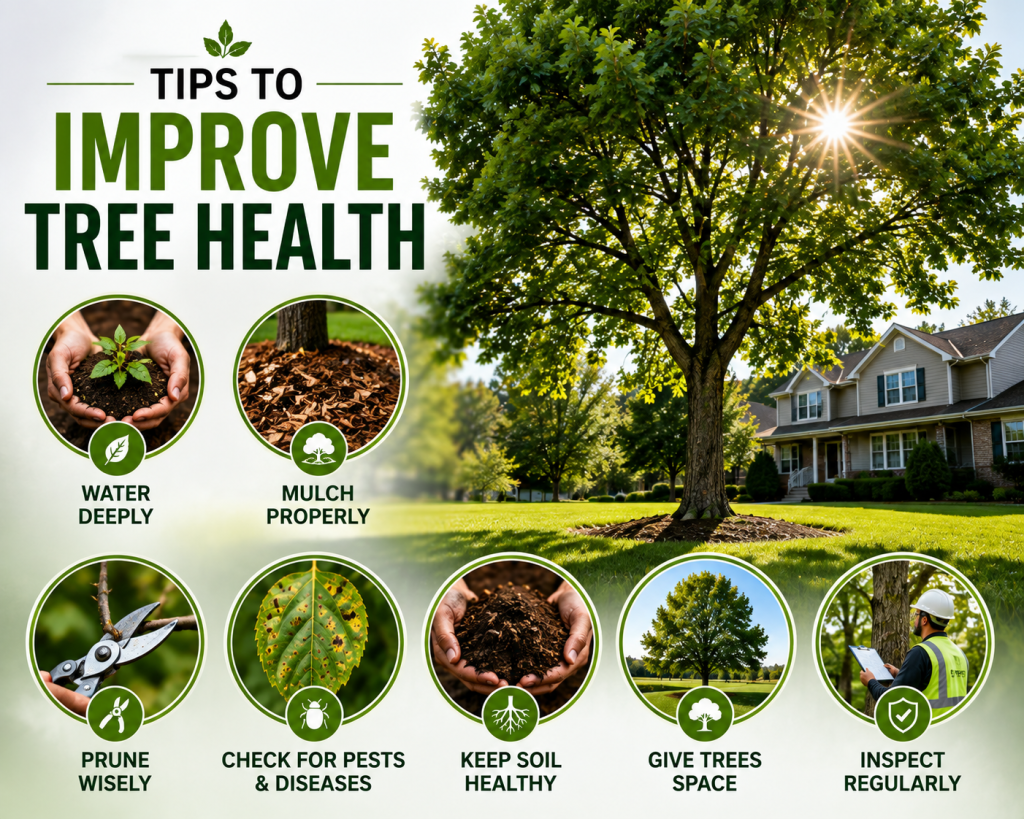
    Healthy tree with simple tree care tips including deep watering, mulching, pruning, pest inspection, healthy soil, and regular maintenance for stronger tree health.

    Tips to Improve Tree Health

    Use these simple practices to maintain excellent Tree :

    • Water deeply during dry weather.
    • Prune dead limbs annually.
    • Add organic mulch around the base.
    • Avoid damaging roots with lawn equipment.
    • Inspect trees after storms.
    • Monitor for pests and diseases.
    • Schedule yearly professional inspections.

    Consistent Tree Care keeps trees attractive, safe, and long-lasting.


    Conclusion

    Maintaining Healthy Tree is one of the best investments homeowners can make. Healthy trees provide beauty, shade, cleaner air, and greater property value while reducing safety risks.

    With proper watering, pruning, fertilization, and regular inspections, your trees can thrive for decades. Following these Tree practices and investing in professional Healthy Tree Care services when needed will help protect your landscape throughout 2026 and beyond.


    Frequently Asked Questions (FAQs)

    1. Why is tree health important?

    Good Tree Health helps trees grow stronger, resist disease, improve property value, and reduce safety hazards.

    2. How often should trees be inspected?

    Most arborists recommend professional inspections once a year and after major storms.

    3. What causes poor tree ?

    Common causes include drought, pests, disease, poor soil, improper pruning, and root damage.

    4. How can I improve tree naturally?

    Water deeply, apply mulch, fertilize when needed, prune correctly, and monitor for pests.

    5. When should I hire a professional arborist?

    Call an arborist if you notice dead branches, leaning trees, trunk damage, severe pest infestations, or signs of disease.