Tag: Tree Removal Services

  • Broken Tree Branch Safety: Complete Guide 2026

    Broken Tree Branch Safety: Complete Guide 2026

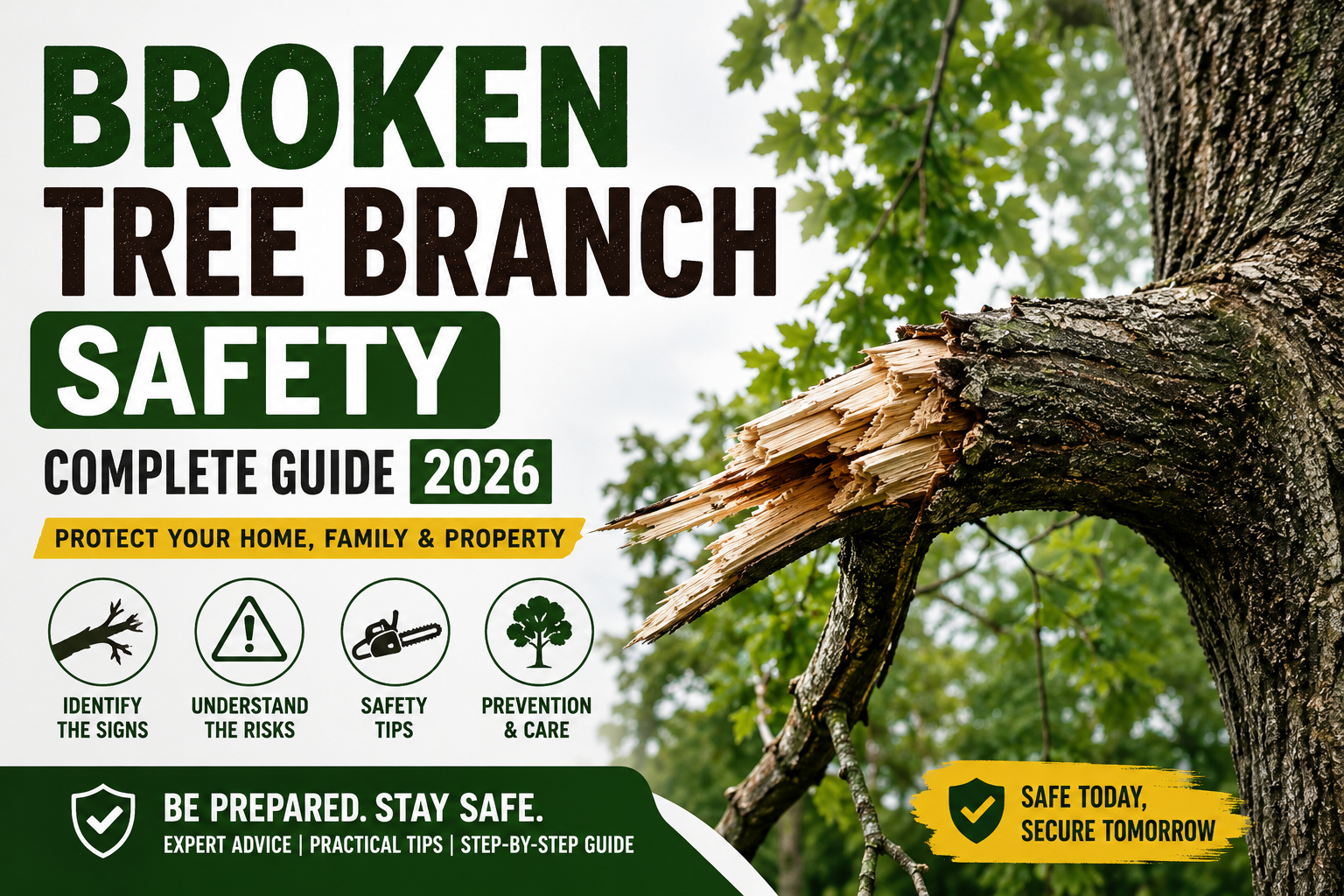
    Broken Tree Branch Safety

    Storms, heavy winds, ice, and aging trees can leave dangerous branches hanging over your home or yard. Understanding Broken Tree Branch Safety is essential for protecting your family, property, and neighbors. A damaged branch may appear stable but can fall without warning, causing serious injuries or expensive property damage.

    This 2026 guide explains why Broken Tree Branch Safety matters, how to recognize hazardous branches, what to do after a storm, and when to call professional tree experts.


    Why Broken Tree Branch Safety Is Important

    Practicing Broken Tree Branch Safety helps prevent accidents before they happen. Broken branches can fall on:

    • Homes
    • Vehicles
    • Power lines
    • Sidewalks
    • Driveways
    • People and pets

    Ignoring damaged branches increases the risk of injury and costly repairs. Following proper Broken Tree Branch Safety practices keeps your property secure throughout the year.


    Common Causes of Broken Tree Branches

    Several factors can create dangerous branches.

    The most common causes include:

    • Severe thunderstorms
    • High winds
    • Lightning strikes
    • Ice and snow accumulation
    • Dead or diseased limbs
    • Tree decay
    • Poor pruning practices
    • Heavy branch weight

    After any severe weather event, inspect your property while keeping Broken Tree Branch Safety in mind.
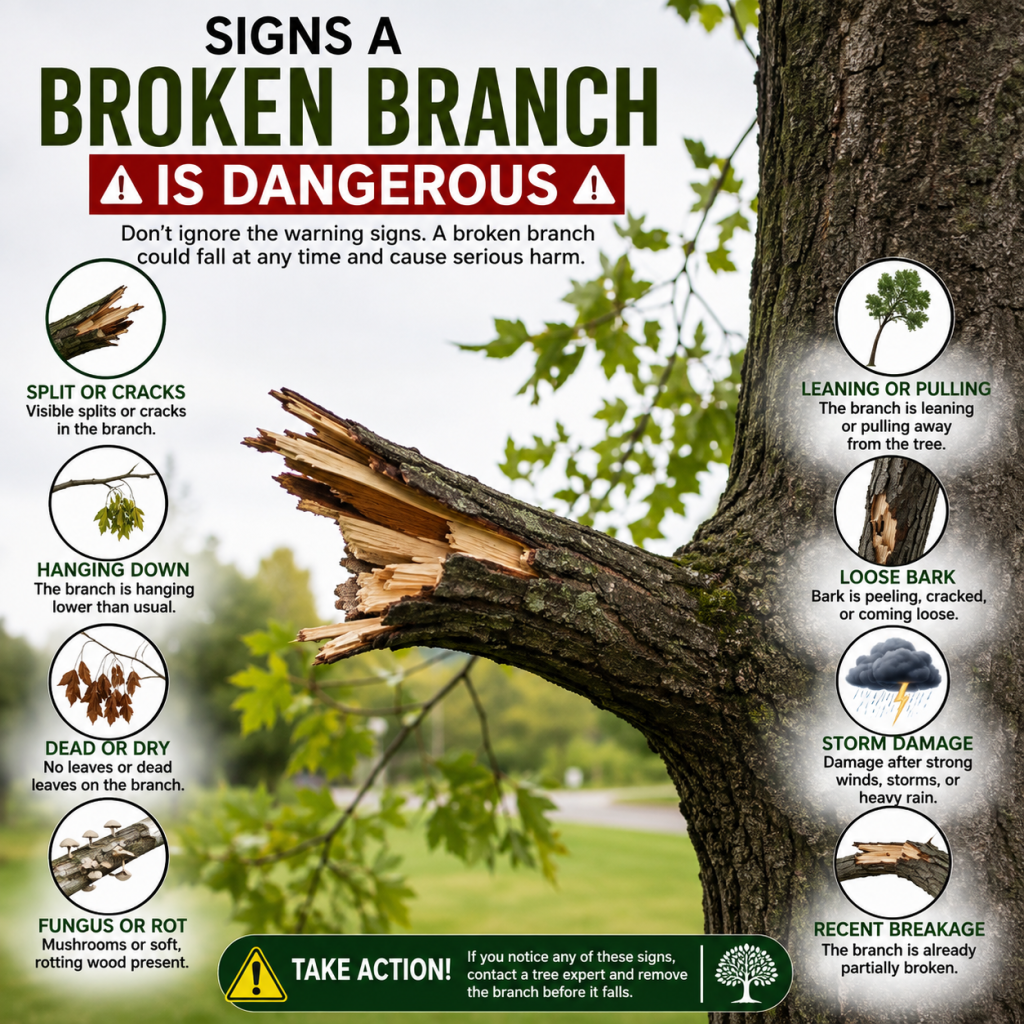

    Infographic showing the warning signs of a dangerous broken tree branch, including cracks, hanging limbs, dead leaves, loose bark, rot, storm damage, and leaning branches.

    Signs a Broken Branch Is Dangerous

    Not every broken limb creates an emergency, but some require immediate attention.

    Watch for:

    • Hanging branches
    • Large cracks in limbs
    • Split trunks
    • Branches touching power lines
    • Dead wood
    • Leaning trees
    • Fresh breaks after storms

    Recognizing these warning signs supports effective Broken Tree Branch Safety and reduces the chance of unexpected accidents.


    What to Do After Finding a Broken Branch

    If you notice a damaged branch, follow these steps.

    1. Stay Away

    Never stand beneath a hanging limb.

    2. Keep Others Safe

    Prevent children and pets from entering the area.

    3. Inspect From a Distance

    Use binoculars if necessary. Never climb a damaged tree.

    4. Contact Professionals

    Hire certified tree experts for safe removal.

    These simple actions improve Broken Tree Branch Safety and reduce unnecessary risks.


    Why Professional Broken Tree Branch Removal Matters

    Although small branches may seem easy to remove, larger limbs can be extremely dangerous.

    Professional Broken Tree Branch Removal offers several advantages:

    • Proper safety equipment
    • Certified arborist experience
    • Safe climbing techniques
    • Controlled branch removal
    • Protection for nearby structures
    • Complete debris cleanup

    Choosing professional Broken Tree Branch Removal minimizes the risk of injury and additional property damage.


    Preventing Broken Tree Branches

    The best way to improve Broken Tree Branch Safety is through regular maintenance.

    Helpful prevention tips include:

    • Schedule annual tree inspections.
    • Remove dead branches early.
    • Trim overgrown limbs.
    • Water trees during drought.
    • Watch for disease or pests.
    • Avoid improper pruning.
    • Inspect trees after storms.

    Routine maintenance significantly reduces the need for emergency Broken Tree Branch Removal.


    When Emergency Tree Service Is Needed

    Call emergency tree professionals immediately if:

    • A branch falls on your roof.
    • Power lines are involved.
    • The tree is unstable.
    • A branch blocks roads or driveways.
    • The damaged limb threatens people or property.

    Quick action supports Broken Tree Branch Safety and prevents further damage.


    Common Mistakes Homeowners Make

    Avoid these dangerous mistakes:

    • Climbing ladders during storms
    • Using chainsaws without training
    • Standing under hanging branches
    • Ignoring damaged limbs
    • Attempting large branch removal alone

    Professional Broken Tree Branch Removal is always the safest option for large or hazardous limbs.
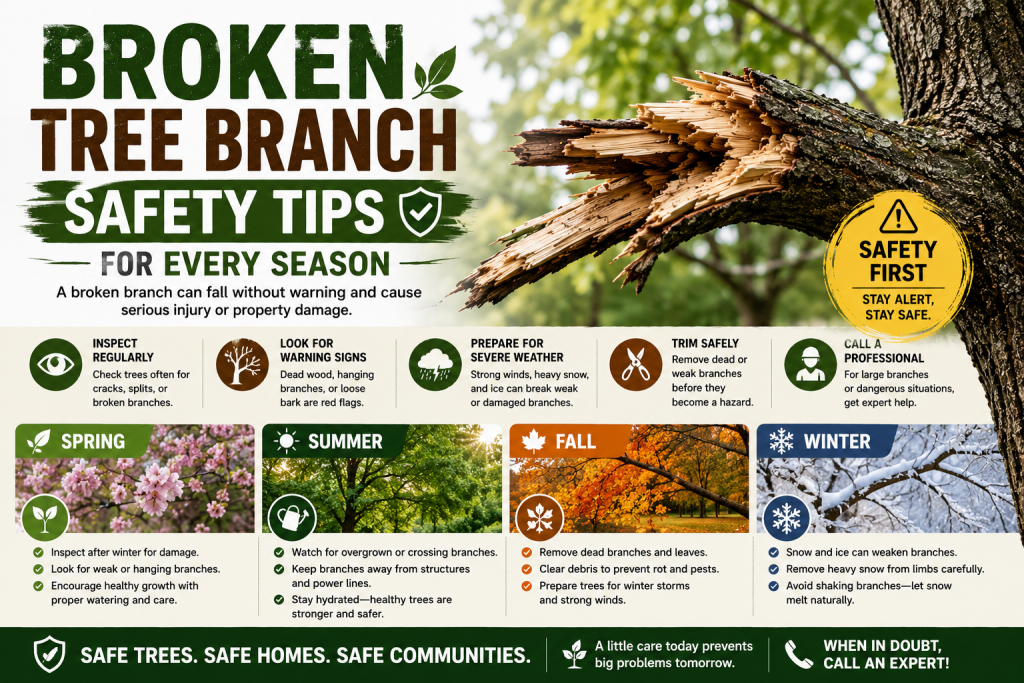

    Infographic showing broken tree branch safety tips for every season, including spring, summer, fall, and winter maintenance to prevent hazardous tree limb failures.

    Broken Tree Branch Safety Tips for Every Season

    Tree hazards are not limited to storm season.

    Maintain Broken Tree Branch Safety year-round by:

    • Inspecting trees each season.
    • Removing dead limbs before winter.
    • Monitoring trees after heavy rain.
    • Scheduling preventive pruning.
    • Keeping trees healthy with proper care.

    Consistent maintenance reduces emergency Broken Tree Branch Removal needs and extends tree life.


    Conclusion

    Practicing Broken Tree Branch Safety is one of the easiest ways to protect your home, family, and property. Hanging or damaged branches should never be ignored because they can fail without warning.

    By inspecting your trees regularly, following proper Broken Tree Branch Safety practices, and hiring professionals for Broken Tree Branch Removal, you can prevent injuries, reduce repair costs, and keep your landscape healthy throughout 2026 and beyond.


    Frequently Asked Questions (FAQs)

    1. What is broken tree branch safety?

    Broken Tree Branch Safety refers to identifying, avoiding, and safely removing damaged tree branches to prevent injuries and property damage.

    2. Can I remove a broken tree branch myself?

    Small branches may be manageable, but large or hanging limbs should always be handled through professional Broken Tree Branch Removal services.

    3. Are broken branches dangerous?

    Yes. Damaged branches can fall unexpectedly, especially after storms or high winds.

    4. When should I call a tree service?

    Call immediately if a branch threatens your home, vehicle, power lines, or public safety.

    5. How often should trees be inspected?

    Most experts recommend inspecting trees at least once a year and after every major storm.
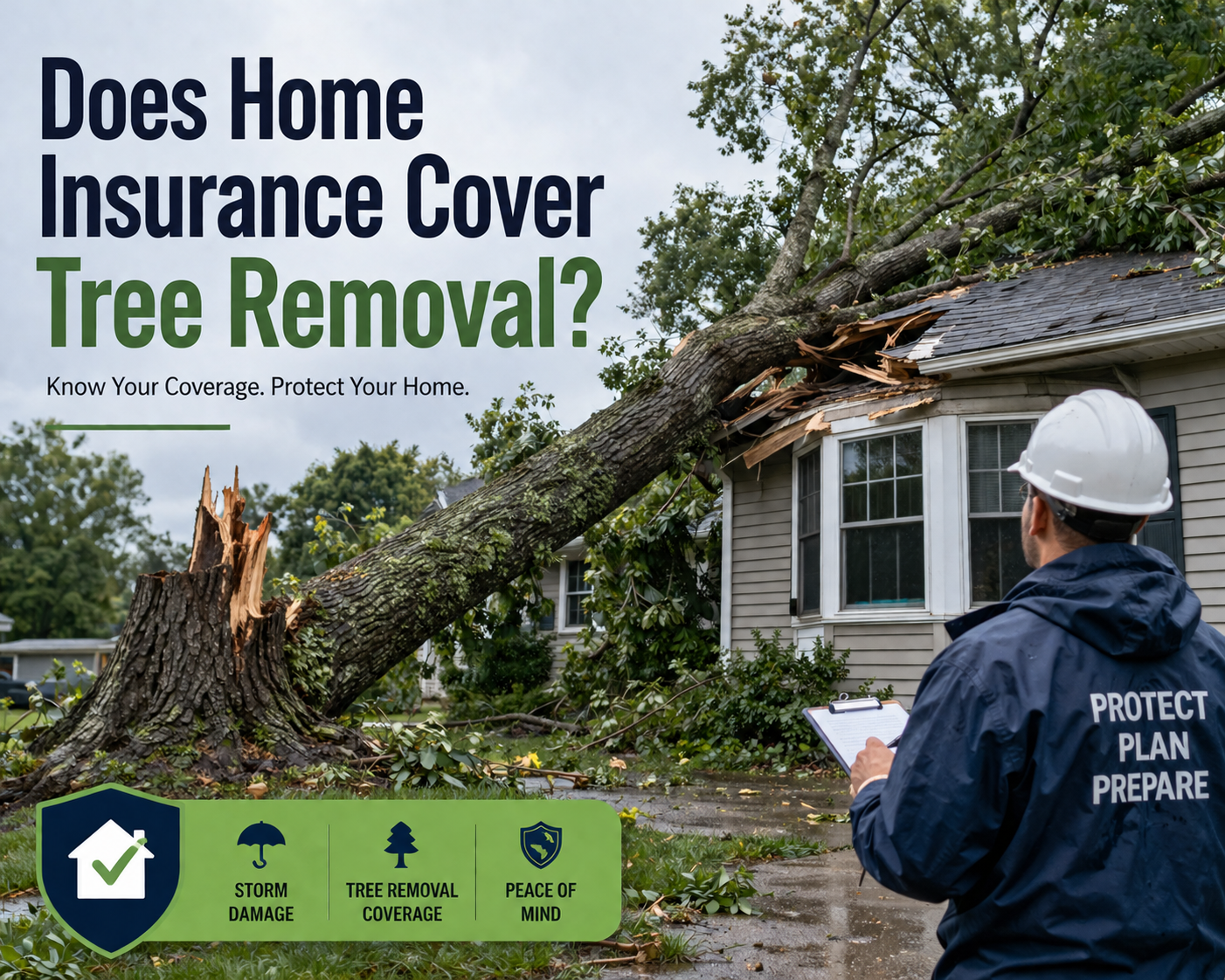
  • Does Home Insurance Cover Tree Removal? Best Guide (2026)

    Does Home Insurance Cover Tree Removal? Best Guide (2026)

    Does Home Insurance Cover Tree Removal?

    If a tree falls on your property, one of the first questions you may ask is: Does Home Insurance Cover Tree Removal? The answer is often yes, but coverage depends on why the tree fell, where it landed, and the specific terms of your homeowners insurance policy.

    In many situations, homeowners insurance may cover the cost of removing a fallen tree when the tree damages a covered structure, such as your home, garage, or fence. However, insurance policies do not automatically cover every type of tree removal. This 2026 guide explains Does Home Insurance Cover Tree Removal, when coverage may apply, and what U.S. homeowners should know before filing a claim.

    Does Home Insurance Cover Tree Removal After a Storm?

    A common situation where Does Home Insurance Cover Tree Removal becomes important is after a severe storm. High winds, lightning, hurricanes, tornadoes, and heavy snow can cause trees to fall unexpectedly.

    If a covered storm causes a tree to fall and damage your home or another covered structure, your homeowners insurance may help pay for the necessary removal. Your policy may also cover repairs to the damaged structure, subject to your deductible and coverage limits.

    However, the exact coverage depends on your policy language. Always review your policy or contact your insurance company after significant property damage.

    When Does Home Insurance Cover Tree Removal?

    In general, Does Home Insurance Cover Tree Removal depends on whether the tree caused covered property damage.

    Insurance may cover tree removal when a fallen tree:

    • Damages your house
    • Falls on a detached garage
    • Damages a covered fence
    • Blocks a driveway after causing covered damage
    • Falls on another insured structure

    Some policies may also provide limited coverage for removing a tree that blocks access to a driveway or wheelchair ramp, even when the tree does not damage a structure. This type of coverage often has specific limits and conditions.

    When Does Home Insurance Not Cover Tree Removal?

    Understanding when Does Home Insurance Cover Tree Removal does not apply is equally important.

    Homeowners insurance may not cover removal when:

    • The tree falls without damaging insured property
    • The tree was dead or neglected before the incident
    • The removal is considered routine maintenance
    • The tree is removed only because it is considered dangerous
    • The tree falls due to an excluded event
    • The damage is below your policy deductible

    For example, if a healthy tree falls in your backyard during a storm but does not damage your home, your policy may not pay for removing it. In this situation, the cost may be the homeowner’s responsibility.

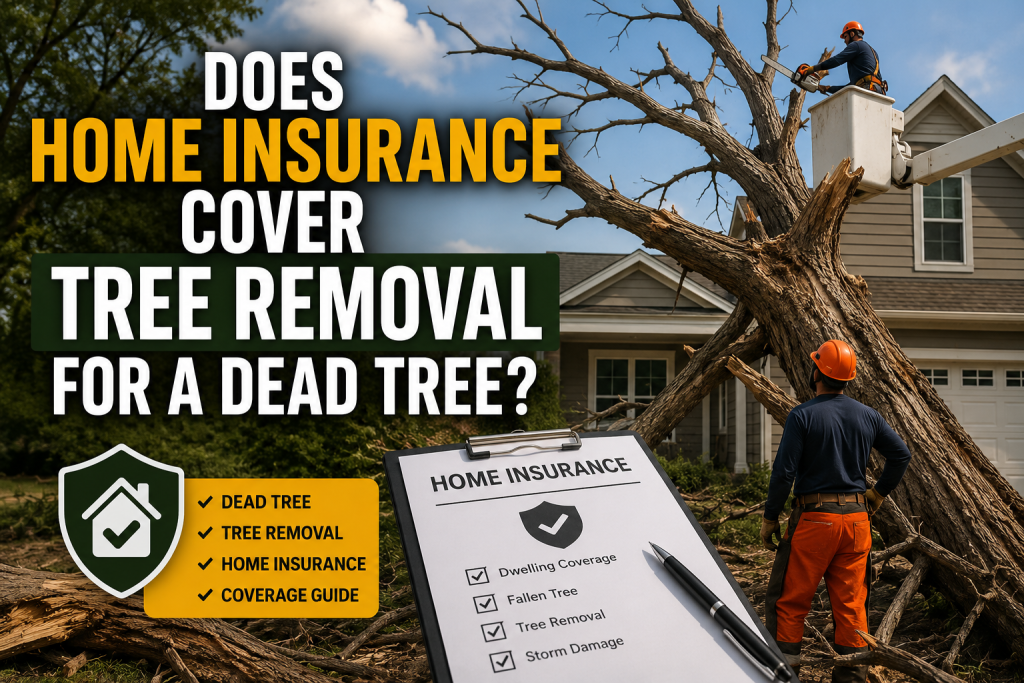
    A professional tree removal crew safely removes a large dead tree near a residential home, illustrating home insurance coverage considerations for dead tree removal and fallen tree damage.

    Does Home Insurance Cover Tree Removal for a Dead Tree?

    Many homeowners ask Does Home Insurance Cover Tree Removal when they have a dead or diseased tree on their property.

    Usually, homeowners insurance is designed to cover sudden and unexpected damage rather than routine maintenance. If a tree is clearly dead, diseased, or dangerously weakened and the homeowner fails to address the problem, an insurer may deny a claim in certain circumstances.

    This is why regular tree inspections and professional maintenance are important. Removing a hazardous tree before it falls may prevent expensive property damage.

    Does Home Insurance Cover Tree Removal After Lightning or Wind?

    A tree damaged by lightning, strong winds, or another covered weather event may qualify for coverage if it falls and causes covered damage.

    Whether Does Home Insurance Cover Tree Removal applies depends on the specific cause of loss and your policy’s covered-perils section. Some policies may cover certain storm-related events while excluding others.

    After a storm, take photographs of the damage, avoid dangerous areas, and contact your insurance provider for instructions.

    How Much Tree Removal Does Insurance Usually Cover?

    Coverage limits vary significantly between insurance policies. Some homeowners policies may provide limited tree removal coverage, while others may offer additional coverage through endorsements.

    Your deductible also matters. If the cost of tree removal is less than your deductible, filing a claim may not provide a financial benefit.

    Before hiring a tree removal company, ask your insurance provider:

    1. Is the tree removal covered?
    2. What caused the tree to fall?
    3. Is there a coverage limit?
    4. Does my deductible apply?
    5. Is emergency tree removal covered?
    6. Do I need an approved contractor?

    What Should You Do If a Tree Falls on Your Property?

    If you are wondering Does Home Insurance Cover Tree Removal, follow these steps after a tree falls:

    1. Protect Your Safety

    Stay away from fallen trees near power lines or unstable structures. Contact the utility company if electrical lines are involved.

    2. Document the Damage

    Take clear photographs and videos of the tree, damaged property, and surrounding area.

    3. Contact Your Insurance Company

    Report the damage as soon as possible and ask what documentation is required.

    4. Hire a Qualified Tree Professional

    A professional tree removal company can safely remove the tree and help prevent additional property damage.

    5. Keep Receipts and Records

    Save estimates, invoices, photographs, and communication related to the claim.

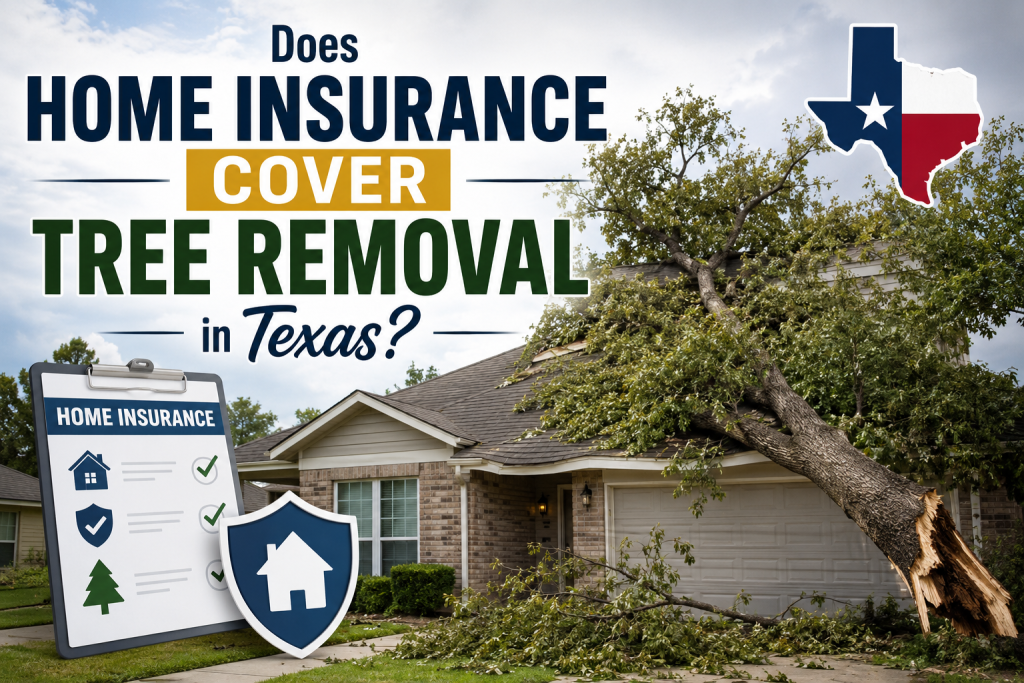
    A Texas suburban home with a large fallen tree after storm damage, illustrating whether homeowners insurance covers tree removal costs in Texas.

    Does Home Insurance Cover Tree Removal in Texas?

    Texas homeowners should pay close attention to their individual insurance policies because coverage can vary based on the insurer, policy type, deductible, and cause of damage.

    Severe thunderstorms, high winds, hail, and other weather events can create significant tree hazards. If a tree falls and damages an insured structure, coverage may be available depending on the policy terms.

    For Dallas-area homeowners, it is especially important to review your policy before an emergency occurs and understand whether emergency tree removal services are covered.

    Final Answer: Does Home Insurance Cover Tree Removal?

    So, Does Home Insurance Cover Tree Removal? In many cases, homeowners insurance may cover tree removal when a covered event causes a tree to fall and damage an insured structure. However, coverage is not automatic, and limits, exclusions, and deductibles can apply.

    The best way to determine Does Home Insurance Cover Tree Removal for your specific situation is to review your policy and contact your insurance provider. If a tree has already fallen, document the damage, prioritize safety, and follow your insurer’s claim instructions.

    For U.S. homeowners, understanding your insurance coverage before a tree emergency can help reduce confusion, delays, and unexpected expenses.

  • Best Time of Year for Tree Removal in Texas (2026 Guide)

    Best Time of Year for Tree Removal in Texas (2026 Guide)

    Best Time of Year for Tree Removal in Texas

    If you’re wondering about the Best Time of Year for Tree Removal in Texas, you’re not alone. Texas homeowners often need tree removal due to storms, disease, construction projects, or safety concerns. However, choosing the right season can save money, reduce property damage, and make the removal process safer.

    In this 2026 guide, you’ll learn the Best Time of Year for Tree Removal in Texas, why timing matters, and when emergency tree removal should never be delayed.


    Why Timing Matters for Tree Removal

    The timing of tree removal affects:

    • Cost of the service
    • Safety during removal
    • Tree health and surrounding landscape
    • Equipment accessibility
    • Property protection

    Understanding the Best Time of Year for Tree Removal in Texas helps homeowners make informed decisions while avoiding unnecessary expenses.


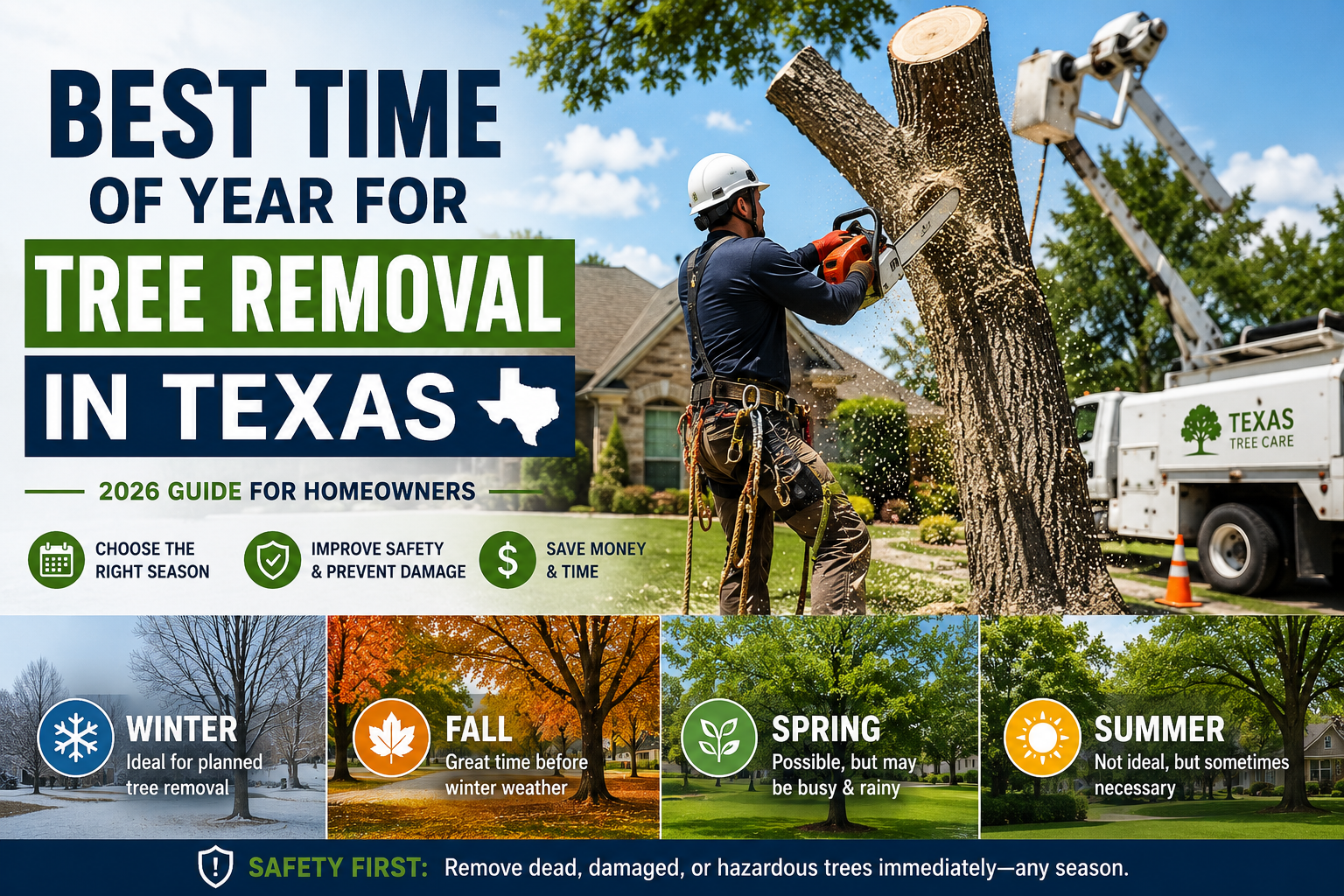
    Winter Is the Best Time of Year for Tree Removal in Texas

    For most homeowners, winter is considered the Best Time of Year for Tree Removal in Texas.

    During winter:

    • Trees become dormant.
    • Leaves have fallen, making branches easier to inspect.
    • Tree removal companies often have greater availability.
    • Frozen or dry ground may reduce lawn damage in some areas.
    • Lower demand can sometimes mean better pricing.

    If your tree is healthy but needs removal for landscaping or construction, winter is generally the ideal season.


    Fall Is Another Great Time

    Fall is also a good season if you’re planning ahead.

    Benefits include:

    • Cooler temperatures for safer work
    • Easier scheduling before winter demand
    • Less stress on surrounding plants
    • Better preparation before severe winter weather

    Many experts consider fall close to the Best Time of Year for Tree Removal in Texas, especially for planned removals.


    Spring Tree Removal

    Spring tree removal is possible, but there are some drawbacks.

    Spring often brings:

    • New tree growth
    • Heavy rainfall
    • Busy landscaping schedules
    • Higher demand for tree services

    If the tree is dangerous or diseased, don’t wait. Safety should always come first regardless of season.


    Summer Tree Removal

    Texas summers can be extremely hot.

    Tree removal during summer may involve:

    • High temperatures
    • Increased labour challenges
    • Dry conditions
    • Peak demand after storms

    However, if a tree has become hazardous after strong winds or drought damage, immediate removal is recommended.

    Although summer isn’t always the Best Time of Year for Tree Removal in Texas, emergency situations should never be postponed.


    When You Should Remove a Tree Immediately

    Sometimes waiting for the ideal season isn’t an option.

    Schedule tree removal immediately if you notice:

    • Dead tree
    • Large cracked trunk
    • Leaning tree
    • Broken major branches
    • Root damage
    • Storm damage
    • Lightning strikes
    • Fungus growing near the base
    • Hollow trunk
    • Tree touching power lines

    In these cases, safety matters more than seasonal timing.


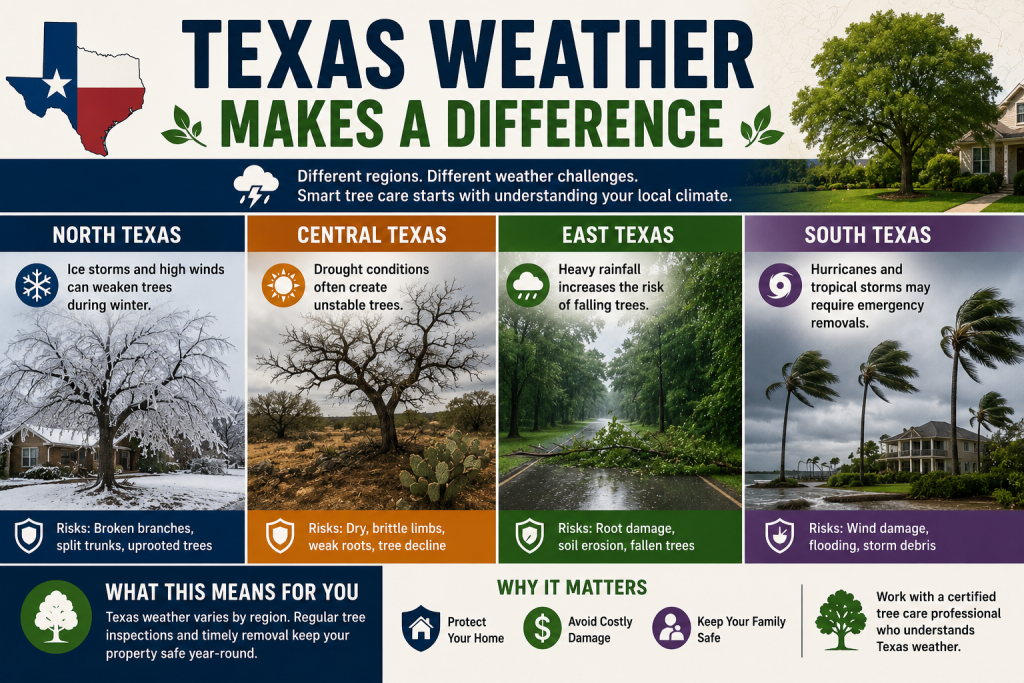
    Texas weather conditions across North, Central, East, and South Texas affecting tree removal timing and homeowner safety in 2026.

    Texas Weather Makes a Difference

    Texas weather varies significantly across the state.

    Consider:

    North Texas

    Ice storms and high winds can weaken trees during winter.

    Central Texas

    Drought conditions often create unstable trees.

    East Texas

    Heavy rainfall increases the risk of falling trees.

    South Texas

    Hurricanes and tropical storms may require emergency removals.

    Because of these regional differences, the Best Time of Year for Tree Removal in Texas may vary slightly depending on your location.


    Can You Save Money by Removing Trees in Winter?

    Yes.

    Many professional tree companies experience slower schedules during winter.

    Possible benefits include:

    • Better appointment availability
    • Faster project completion
    • Potential seasonal discounts
    • Less competition for booking

    While prices depend on tree size and complexity, winter often offers cost advantages.


    Signs It’s Time to Remove a Tree

    Even if it’s not winter, watch for these warning signs:

    • Dead branches
    • Severe insect infestation
    • Decaying trunk
    • Large cavities
    • Split limbs
    • Roots lifting sidewalks
    • Tree growing too close to your house
    • Repeated storm damage

    Ignoring these problems can increase repair costs later.


    Should You Wait Until Winter?

    Not always.

    If the tree threatens:

    • Your home
    • Vehicles
    • Family members
    • Neighbours
    • Utility lines

    Remove it immediately.

    The Best Time of Year for Tree Removal in Texas applies mainly to planned removals—not emergency situations.


    Hire a Certified Tree Removal Professional

    Professional tree removal companies have:

    • Safety equipment
    • Insurance coverage
    • Certified crews
    • Proper machinery
    • Experience with large Texas trees

    DIY tree removal can be extremely dangerous, especially for mature trees near buildings or electrical lines.


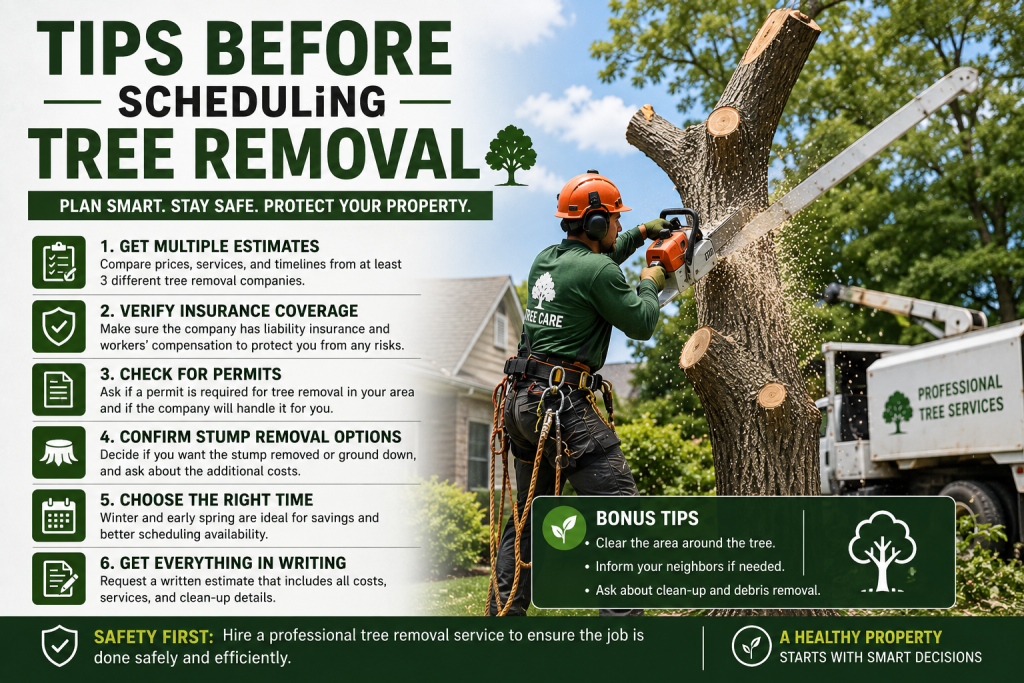
    Infographic showing essential tips before scheduling tree removal, including getting estimates, verifying insurance, checking permits, and choosing the right season.

    Tips Before Scheduling Tree Removal

    Before hiring a company:

    • Get multiple estimates.
    • Verify insurance coverage.
    • Ask about permits if required.
    • Confirm stump removal options.
    • Schedule during slower seasons when possible.
    • Request a written estimate.

    Planning ahead often leads to better service and pricing.


    Conclusion

    The Best Time of Year for Tree Removal in Texas is generally during the winter months because trees are dormant, crews have better availability, and the work can often be completed more efficiently. Fall is another excellent option for planned projects.

    However, if a tree is damaged, diseased, leaning, or creating a safety hazard, don’t wait for the perfect season. Immediate removal is always the safest decision.

    By understanding the Best Time of Year for Tree Removal in Texas, homeowners can protect their property, save money, and maintain a safer landscape throughout 2026 and beyond.


    Frequently Asked Questions (FAQs)

    What is the Best Time of Year for Tree Removal in Texas?

    Winter is generally considered the Best Time of Year for Tree Removal in Texas because trees are dormant and tree service companies often have greater availability.

    Is tree removal cheaper during winter?

    In many cases, yes. Winter may offer lower demand, which can sometimes result in better pricing.

    Can trees be removed during summer?

    Yes. While summer isn’t usually the ideal season, hazardous or storm-damaged trees should be removed immediately.

    Should I remove a dead tree right away?

    Yes. Dead trees can fall unexpectedly and pose serious safety risks.

    Does Texas weather affect tree removal?

    Absolutely. Storms, hurricanes, droughts, and high winds all influence when tree removal becomes necessary.

  • Large Tree Removal Process Explained (2026 Guide )

    Large Tree Removal Process Explained (2026 Guide )

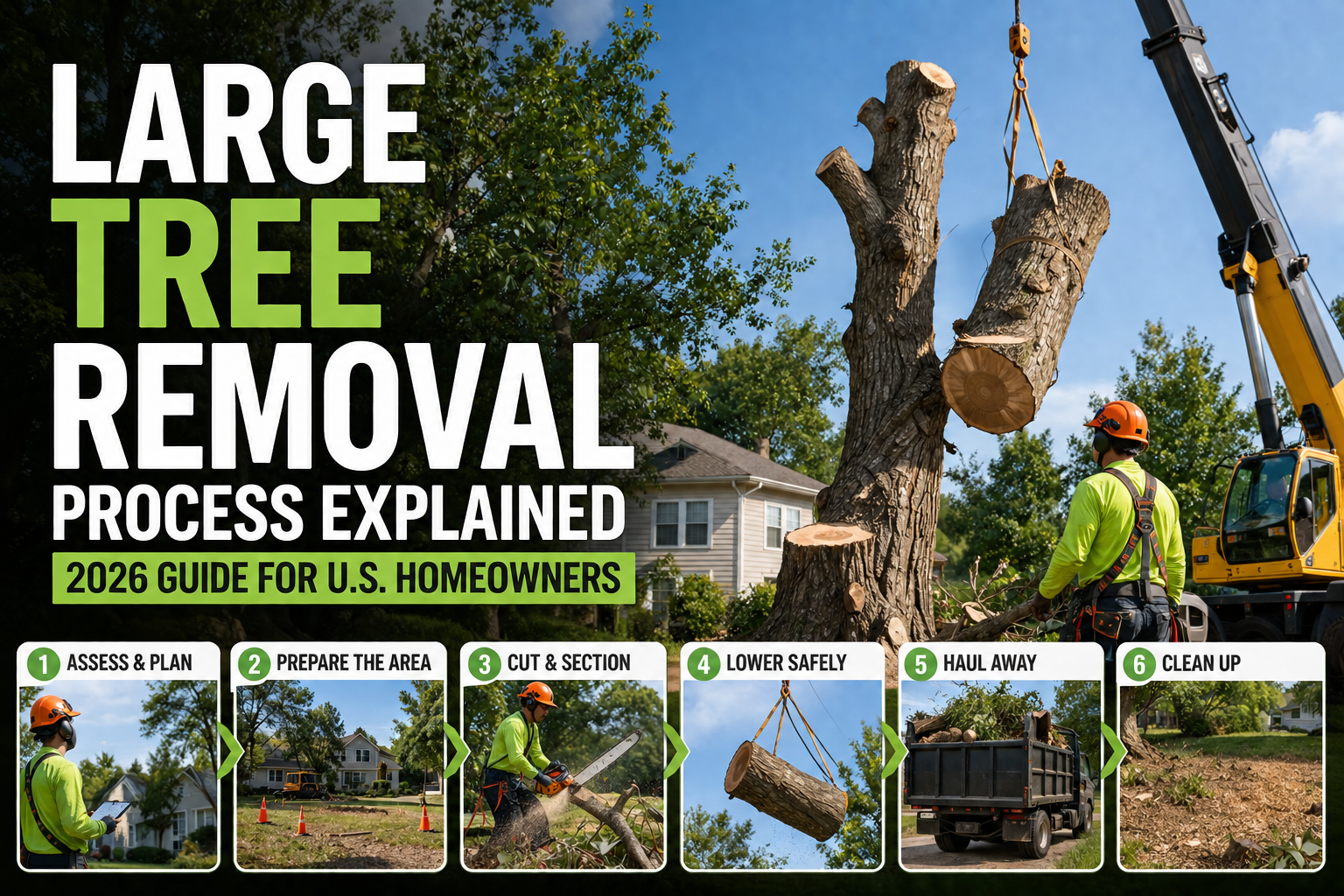
    Large Tree Removal Process Explained:

    Removing a large tree is one of the most challenging landscaping projects a homeowner can face. Whether a tree is diseased, storm-damaged, or threatening nearby structures, the job requires careful planning, specialized equipment, and trained professionals. This Large Tree Removal Process Explained guide walks U.S. homeowners through every step so you know what to expect before the work begins.

    Understanding the Large Tree Removal Process Explained can help you make informed decisions, improve safety, and avoid unnecessary costs.


    Why Large Trees Need Professional Removal

    Large trees can weigh several tons, making removal dangerous without proper equipment and experience. Attempting a DIY removal increases the risk of injury, property damage, and liability.

    Professional tree removal is recommended when a tree:

    • Is dead or dying
    • Has severe storm damage
    • Is leaning dangerously
    • Has extensive disease or decay
    • Threatens homes, driveways, or power lines
    • Interferes with construction projects

    Hiring experienced professionals ensures the Large Tree Removal Process Explained is completed safely and efficiently.


    Step 1: Tree Inspection and Risk Assessment

    The first step in the Large Tree Removal Process Explained is a detailed inspection.

    A certified arborist evaluates:

    • Tree height
    • Trunk condition
    • Branch stability
    • Root health
    • Lean direction
    • Nearby buildings
    • Utility lines
    • Access for equipment

    This assessment helps determine the safest removal strategy.


    Step 2: Planning the Removal

    Before cutting begins, professionals create a removal plan.

    Planning includes:

    • Selecting the safest fall direction
    • Identifying escape routes
    • Protecting nearby structures
    • Securing the work area
    • Obtaining permits if required

    Every successful Large Tree Removal Process Explained project starts with careful preparation.


    Step 3: Preparing the Work Area

    Safety is the highest priority.

    The crew will:

    • Set up safety barriers
    • Move outdoor furniture
    • Protect landscaping
    • Close access to the work zone
    • Position trucks and equipment

    Preparing the site minimizes risks to people and property.


    Step 4: Removing Large Branches First

    Instead of cutting the entire tree at once, professionals remove branches in sections.

    Using climbing gear, cranes, or bucket trucks, they carefully lower heavy limbs with ropes.

    This controlled method:

    • Prevents falling debris
    • Protects nearby buildings
    • Reduces stress on the trunk
    • Improves worker safety

    This is one of the most important stages in the Large Tree Removal Process Explained.


    Step 5: Cutting the Trunk in Sections

    Once the canopy has been removed, the trunk is cut into manageable pieces.

    Depending on the location, crews may:

    • Climb the tree
    • Use cranes
    • Lower sections with rigging ropes
    • Cut from top to bottom

    Each section is carefully lowered instead of allowed to fall freely.


    Step 6: Removing the Remaining Trunk

    After the upper trunk has been dismantled, the remaining base is cut close to ground level.

    Large log sections are loaded onto trucks using specialized equipment.

    At this stage of the Large Tree Removal Process Explained, the major hazard has been eliminated.


    Step 7: Stump Removal or Grinding

    Homeowners usually choose between:

    Stump Grinding

    • Faster
    • Less expensive
    • Leaves roots underground

    Complete Stump Removal

    • Removes roots
    • Ideal for construction
    • More labor-intensive

    Many U.S. homeowners prefer stump grinding because it is cost-effective and allows for easy landscaping afterward.


    Step 8: Cleanup and Debris Removal

    Professional tree companies finish the project by cleaning the property.

    Cleanup includes:

    • Removing logs
    • Chipping branches
    • Raking debris
    • Hauling away wood
    • Final safety inspection

    A complete cleanup is the final step in the Large Tree Removal Process Explained.


    Equipment Used for Large Tree Removal

    Professional crews use specialized equipment such as:

    • Chainsaws
    • Bucket trucks
    • Cranes
    • Rigging ropes
    • Wood chippers
    • Safety harnesses
    • Helmets and protective gear
    • Log loaders

    The right equipment improves both efficiency and safety.


    How Much Does Large Tree Removal Cost in 2026?

    Costs vary depending on tree size, location, and complexity.

    Average U.S. prices include:

    • Small large tree: $800–$1,500
    • Medium large tree: $1,500–$2,500
    • Extra-large tree: $2,500–$5,000+

    Additional costs may apply for:

    • Emergency removal
    • Crane services
    • Stump grinding
    • Permit fees
    • Hazardous locations

    Getting multiple estimates is the best way to compare pricing.


    Safety Tips for Homeowners

    During removal, homeowners should:

    • Stay away from the work zone.
    • Keep children and pets indoors.
    • Never stand beneath suspended branches.
    • Follow the crew’s safety instructions.
    • Avoid parking vehicles near the tree.

    These precautions help ensure the Large Tree Removal Process Explained is completed without accidents.


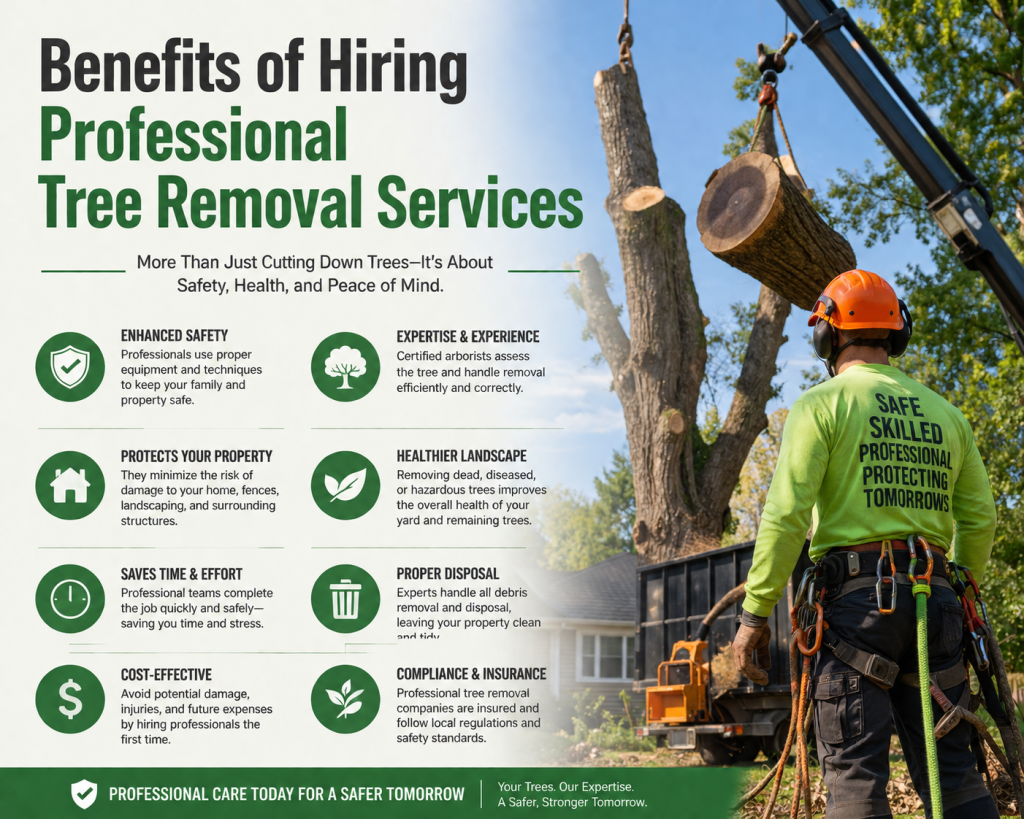
    Benefits of hiring professional tree removal services, including improved safety, property protection, expert removal, proper debris disposal, and a healthier landscape.

    Benefits of Hiring Professional Tree Removal Services

    Professional companies provide:

    • Licensed and insured crews
    • Advanced safety equipment
    • Faster project completion
    • Proper debris disposal
    • Reduced property damage
    • Expert tree assessments

    Experienced professionals understand every stage of the Large Tree Removal Process Explained, making the process safer and more efficient than attempting it yourself.


    Final Thoughts

    Understanding the Large Tree Removal Process Explained helps homeowners prepare for one of the most complex tree care services. From the initial inspection to stump grinding and cleanup, each step is designed to protect people, property, and surrounding landscapes.

    If you have a large tree showing signs of disease, storm damage, or structural instability, contact a qualified tree service company. Investing in professional removal protects your home, increases safety, and preserves the value of your property in 2026 and beyond.


    Frequently Asked Questions (FAQs)

    How long does large tree removal take?

    Most projects take between a few hours and one full day, depending on the tree’s size and location.

    Can a large tree be removed without damaging my yard?

    Yes. Professional crews use rigging systems, cranes, and protective measures to minimize damage.

    Is a permit required for large tree removal?

    Some U.S. cities require permits, especially for protected or heritage trees. Check with your local municipality.

    Should I remove the stump after tree removal?

    Stump grinding is recommended if you want a cleaner landscape and to prevent pests or regrowth.

    Is DIY large tree removal safe?

    No. Large tree removal is extremely dangerous and should only be performed by trained professionals with the proper equipment.