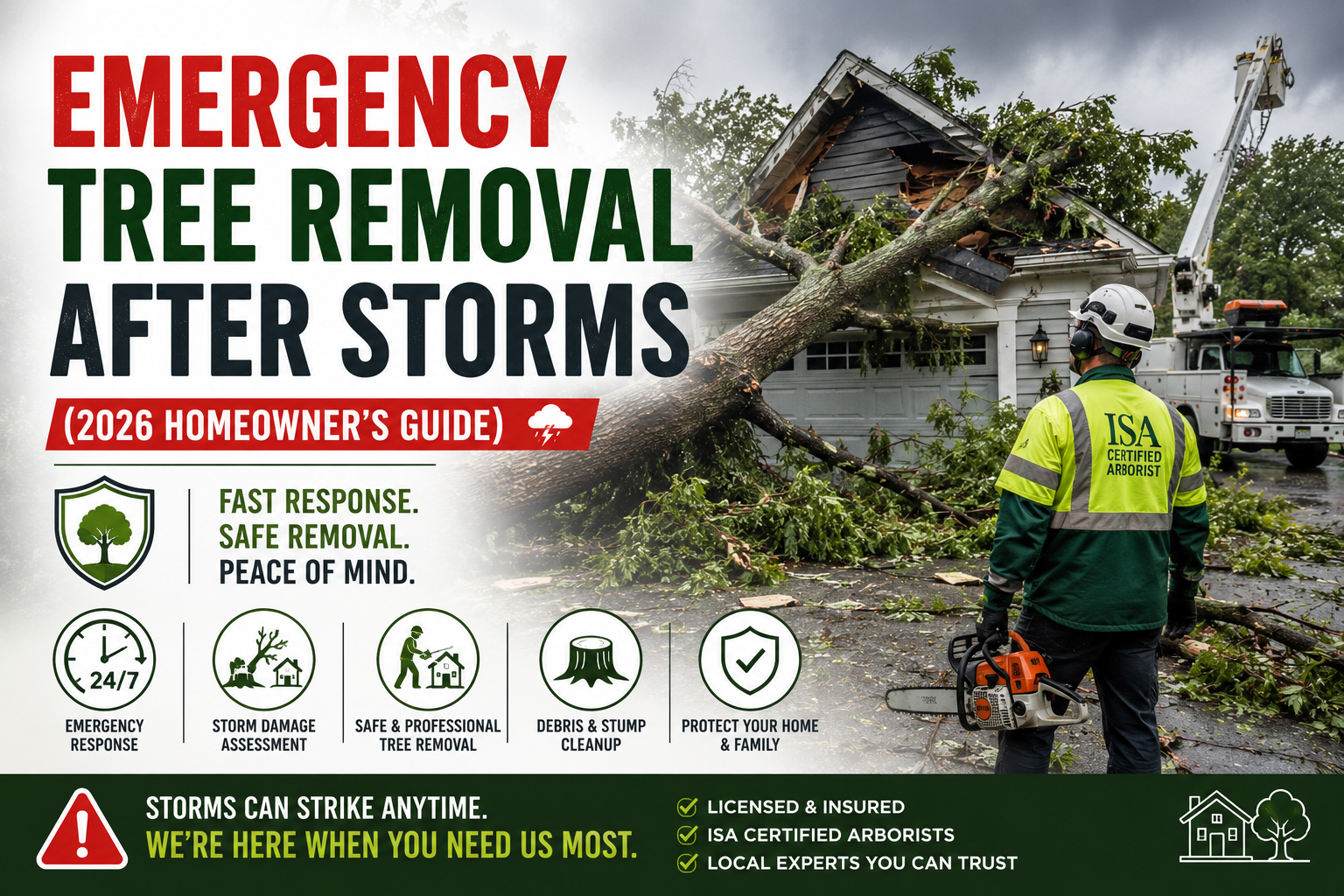
Emergency Tree Removal After Storms (2026 Homeowner’s Guide)
Severe storms can leave behind fallen trees, broken branches, and dangerous property damage. Knowing when to schedule Emergency Tree Removal After Storms can protect your home, family, and neighbors from additional hazards. High winds, heavy rain, tornadoes, hurricanes, and lightning strikes often weaken trees, making immediate professional removal essential.
This 2026 guide explains when emergency tree removal is necessary, what it costs, whether homeowners insurance covers it, and how to choose the right tree removal company. If you own a home in the United States, this guide will help you respond safely after severe weather.
Why Emergency Tree Removal After Storms Is Important
Ignoring the need for Emergency Tree Removal After Storms can create serious safety risks. Damaged trees may fall unexpectedly, block driveways, damage roofs, crush vehicles, or interfere with power lines.
Prompt removal helps:
- Protect your family
- Prevent further property damage
- Restore safe access to your property
- Reduce liability risks
- Speed up insurance claims
Professional crews have the training and equipment needed to handle dangerous storm-damaged trees safely.
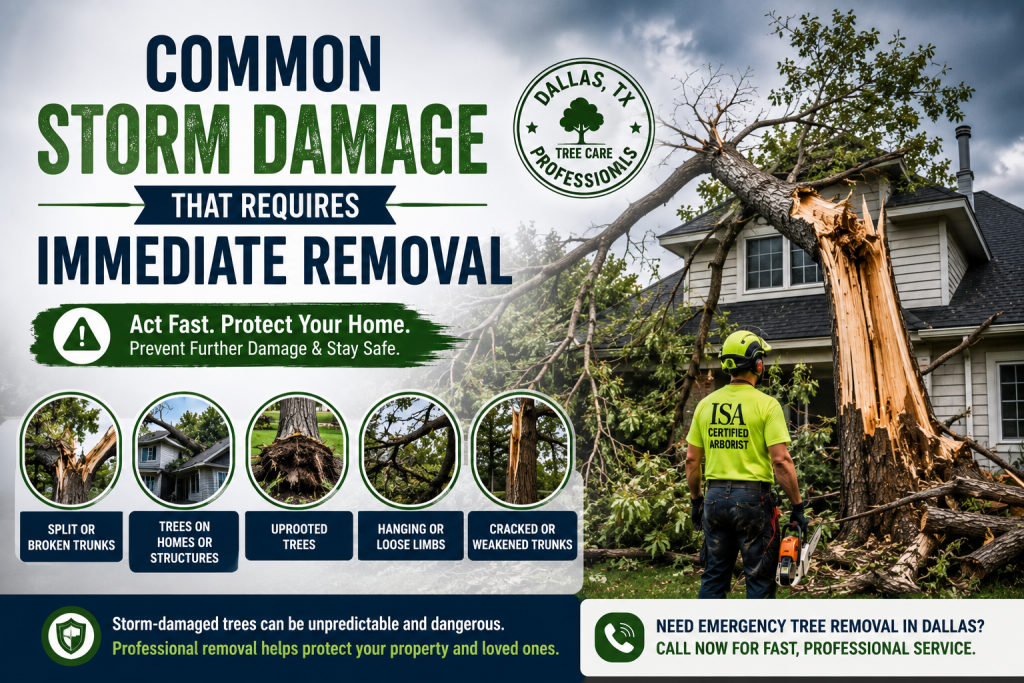
Common Storm Damage That Requires Immediate Removal
Several situations require Emergency Tree Removal After Storms.
Fallen Trees
Trees that have already fallen on homes, garages, fences, or driveways require immediate professional attention.
Hanging or Broken Branches
Large broken limbs, often called “widowmakers,” can fall without warning and should never be ignored.
Leaning Trees
A tree that suddenly leans after a storm often has damaged roots and may collapse at any time.
Split Trunks
Major cracks or splits weaken the tree’s structure and significantly increase the risk of failure.
Trees Touching Power Lines
Never attempt to remove trees contacting electrical lines. Contact your utility company immediately before scheduling Emergency Tree Removal After Storms.
What to Do Immediately After a Storm
If your property has storm-damaged trees, follow these safety steps:
Stay Away from Damaged Trees
Never walk under hanging branches or unstable trees.
Watch for Downed Power Lines
Assume all power lines are energized and stay a safe distance away.
Document the Damage
Take photos for insurance purposes before cleanup begins.
Contact Your Insurance Company
Report damage as soon as possible.
Call a Professional Tree Service
Licensed professionals can safely perform Emergency Tree Removal After Storms using specialized equipment.
Average Cost of Emergency Tree Removal After Storms (2026)
The cost of Emergency Tree Removal After Storms varies depending on several factors.
Typical price ranges include:
| Service | Average Cost |
|---|---|
| Small Tree | $300–$700 |
| Medium Tree | $700–$1,500 |
| Large Tree | $1,500–$3,000 |
| Emergency Hazard Removal | $3,000–$6,000+ |
Factors affecting pricing include:
- Tree size
- Storm severity
- Accessibility
- Crane requirements
- Power line hazards
- Cleanup services
- Stump grinding
Emergency work typically costs more because it often requires immediate response outside normal business hours.
Does Homeowners Insurance Cover Emergency Tree Removal?
In many cases, homeowners insurance may help cover Emergency Tree Removal After Storms if:
- A tree falls on your home.
- The tree blocks your driveway.
- The damage results from a covered event such as a windstorm or lightning.
Coverage varies by insurance provider, so review your policy carefully before filing a claim.
Why You Should Never Remove Storm-Damaged Trees Yourself
DIY removal can be extremely dangerous after severe weather.
Risks include:
- Falling branches
- Hidden trunk damage
- Unstable root systems
- Electrical hazards
- Chainsaw injuries
- Property damage
Professional tree crews use cranes, bucket trucks, chainsaws, climbing equipment, and safety gear to complete the work safely.
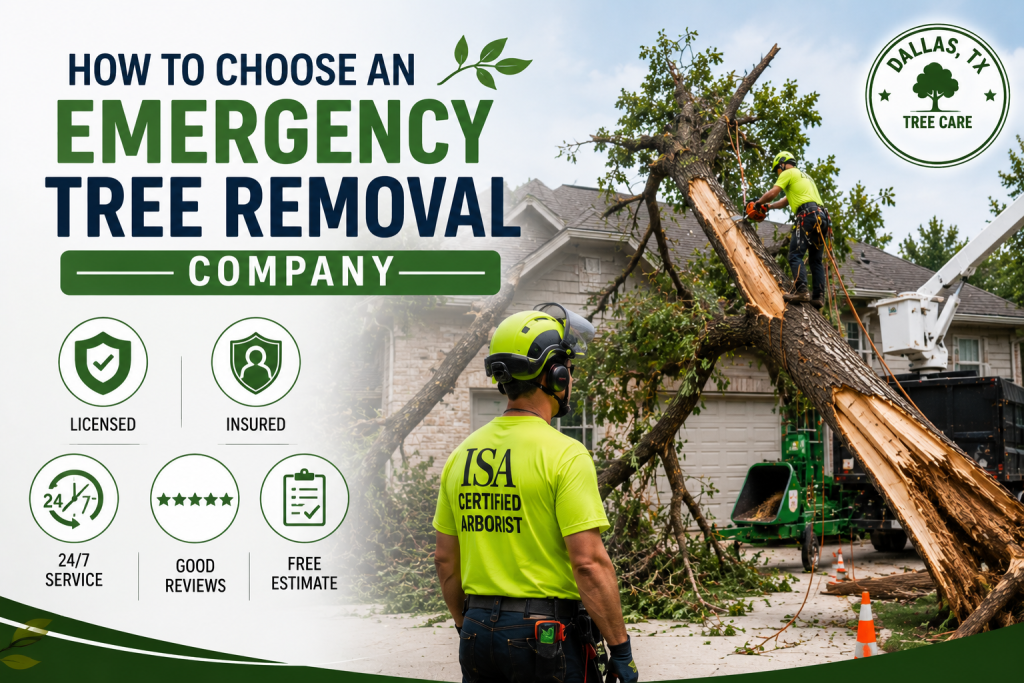
How to Choose an Emergency Tree Removal Company
When selecting a contractor for Emergency Tree Removal After Storms, look for:
- Licensed and insured professionals
- Certified arborists
- 24/7 emergency response
- Positive customer reviews
- Modern equipment
- Written estimates
- Complete cleanup services
Avoid companies requesting full payment before work begins.
Prevent Future Storm Damage
While storms cannot be prevented, proper tree maintenance reduces future risks.
Helpful practices include:
- Annual tree inspections
- Routine pruning
- Removing dead branches
- Monitoring tree health
- Removing diseased trees
- Trimming branches near roofs
Preventive maintenance often costs far less than emergency tree removal.
Final Thoughts
Knowing when to schedule Emergency Tree Removal After Storms can protect your property and keep your family safe. Storm-damaged trees should never be ignored, especially if they are leaning, split, or threatening nearby structures or power lines.
After severe weather, prioritize safety, document any damage, contact your insurance company, and hire a licensed tree removal professional. Acting quickly can prevent further damage and ensure your property is restored safely throughout 2026 and beyond.
Frequently Asked Questions (FAQs)
1. When is Emergency Tree Removal After Storms necessary?
Emergency removal is needed when a tree has fallen, is leaning dangerously, has major structural damage, or threatens people, buildings, or power lines.
2. How much does Emergency Tree Removal After Storms cost?
Most emergency removals cost between $300 and $6,000, depending on the size of the tree, the complexity of the job, and the level of hazard.
3. Will homeowners insurance pay for storm-damaged tree removal?
Insurance may cover removal if a covered event causes the tree to damage an insured structure or block access to your property. Coverage depends on your policy.
4. Can I remove a storm-damaged tree myself?
DIY removal is not recommended for damaged or unstable trees because of the risk of injury, property damage, and electrical hazards.
5. How can I reduce the risk of storm tree damage?
Regular inspections, pruning, removing dead branches, and maintaining healthy trees can significantly reduce storm-related risks.
Leave a Reply