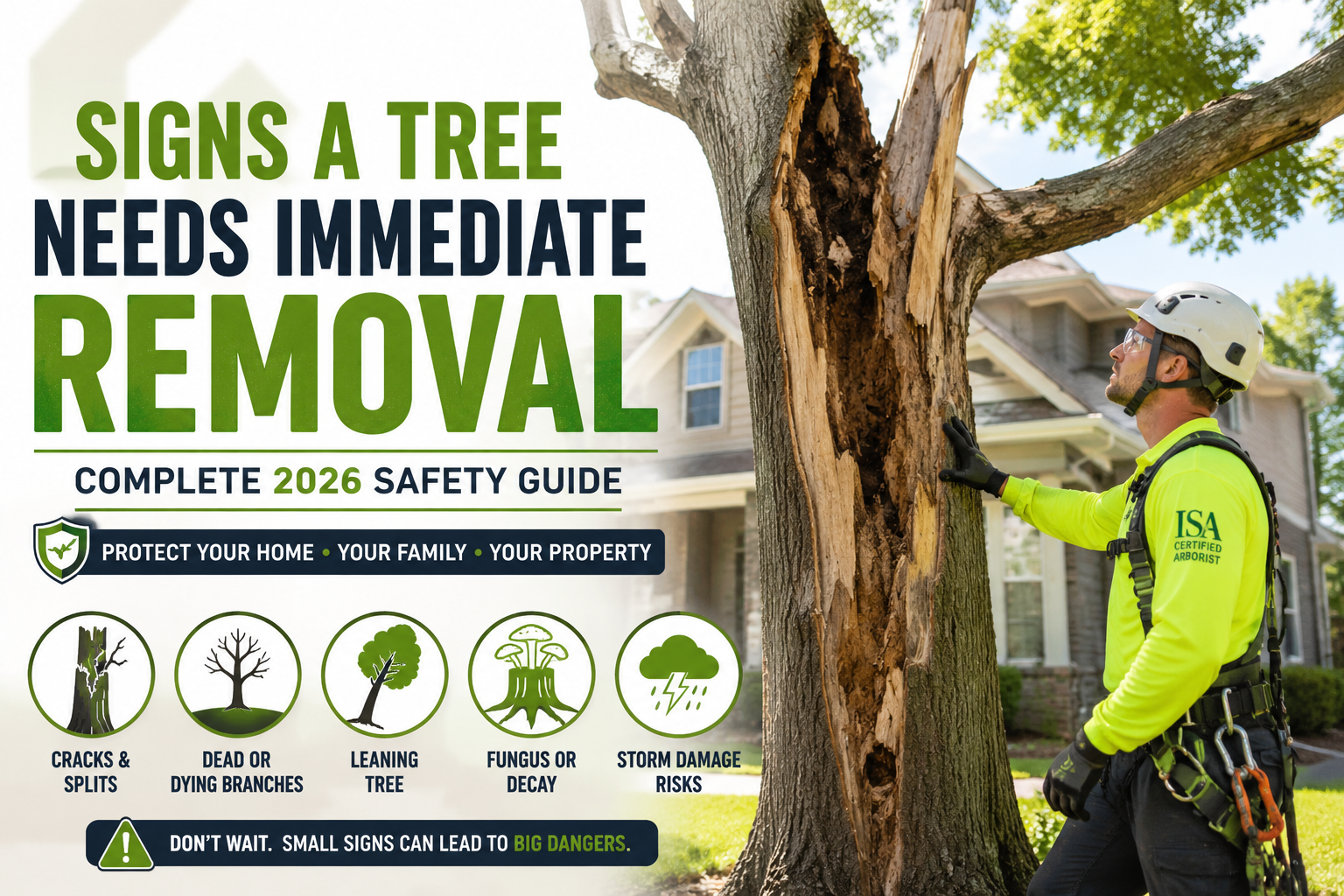
Signs a Tree Needs Immediate Removal (2026 Homeowner Guide)
Trees enhance curb appeal, provide shade, and increase property value. However, a damaged or dying tree can quickly become a serious safety hazard. Recognizing the Signs a Tree Needs Immediate Removal can help homeowners prevent injuries, property damage, and costly emergency repairs.
Whether you live in Texas or anywhere else in the United States, knowing when to remove a hazardous tree is essential. This guide explains the most common warning signs, why prompt action matters, and when to call a professional tree removal company.
Why Immediate Tree Removal Is Important
Ignoring the Signs a Tree Needs Immediate Removal can put your family, neighbors, and property at risk. Weak or unstable trees may collapse during heavy rain, strong winds, or severe storms, causing expensive damage to roofs, vehicles, fences, and utility lines.
Removing a dangerous tree early is often more affordable than dealing with emergency tree removal after it falls.
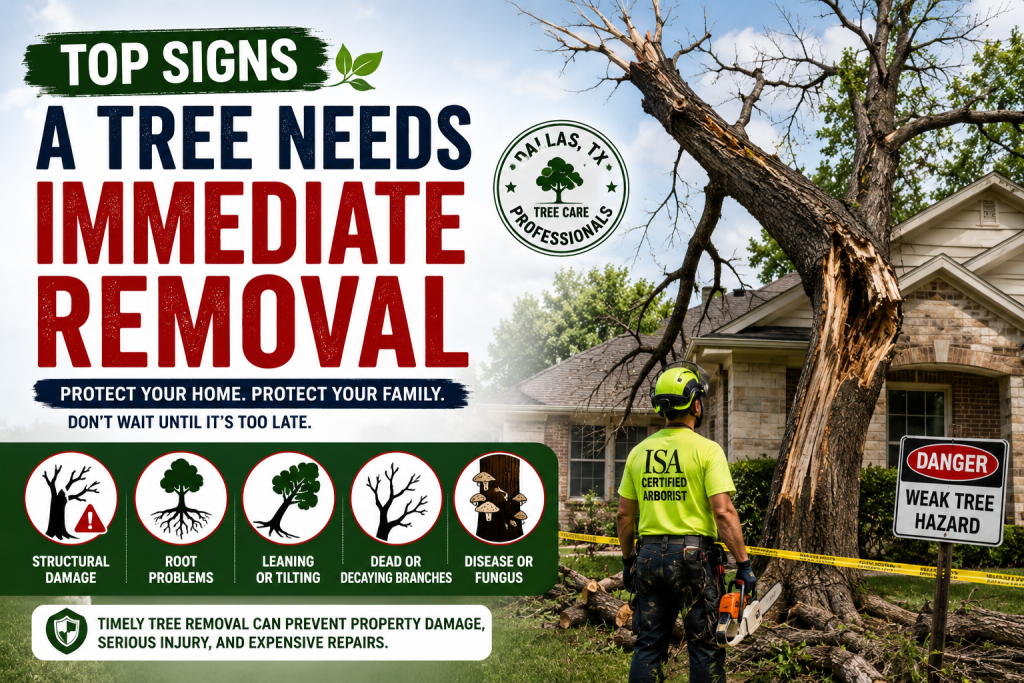
Top Signs a Tree Needs Immediate Removal
Understanding the Signs a Tree Needs Immediate Removal can help you act before the situation becomes dangerous.
1. The Tree Is Leaning Suddenly
A tree that suddenly begins leaning after a storm may have damaged roots or structural failure. While some trees naturally grow at an angle, a new lean often signals an urgent problem.
If the lean continues to increase, contact a certified arborist immediately.
2. Large Dead Branches Are Falling
One of the most common Signs a Tree Needs Immediate Removal is the presence of large dead branches, also known as widowmakers.
Dead limbs can fall without warning, especially during windy conditions, creating a serious safety hazard.
3. Deep Cracks in the Trunk
Large vertical cracks or splits weaken the tree’s structure.
If multiple cracks appear or the trunk begins separating, removal is often the safest solution.
4. Hollow or Decaying Trunk
A hollow trunk indicates internal decay.
Although some older trees survive with hollow sections, extensive decay significantly reduces stability and increases the likelihood of failure.
5. Severe Storm Damage
Strong storms frequently damage trees across the United States.
Broken trunks, split branches, and uprooted trees are clear Signs a Tree Needs Immediate Removal, especially if the tree threatens nearby structures.
6. Root Damage
Healthy roots keep trees stable.
Construction work, soil erosion, flooding, or visible root decay may weaken the tree’s foundation, making it unsafe.
7. Fungus Growing Near the Base
Large mushrooms or fungal growth around the trunk often indicate internal root decay.
This hidden damage can compromise the tree’s strength even when the canopy still appears healthy.
8. Pest Infestation
Termites, carpenter ants, borers, and other insects may attack weakened trees.
Severe infestations often indicate advanced decay and should be inspected by a professional.
9. Tree Is Too Close to Your Home
Trees growing too close to houses, garages, driveways, or power lines become increasingly hazardous as they mature.
Large branches hanging over your roof are common Signs a Tree Needs Immediate Removal when structural defects are also present.
10. More Than 50% of the Tree Is Dead
If over half of the canopy has died, the tree is unlikely to recover.
Removing the tree is usually more practical and safer than attempting expensive treatments.
Common Causes of Hazardous Trees
Several factors contribute to dangerous tree conditions, including:
- Severe storms
- Lightning strikes
- Drought stress
- Disease
- Insect infestations
- Soil erosion
- Construction damage
- Old age
Routine inspections can identify these problems before they become emergencies.
Should You Remove the Tree Yourself?
Although small ornamental trees may be manageable, most hazardous trees require professional equipment and expertise.
DIY tree removal can result in:
- Serious injuries
- Property damage
- Power line accidents
- Falling limbs
- Expensive repairs
Professional tree removal companies use specialized equipment to safely remove dangerous trees.
When to Call a Professional
If you notice any of the Signs a Tree Needs Immediate Removal, don’t delay.
Call a licensed tree removal company if:
- The tree leans suddenly.
- Large branches are falling.
- The trunk has major cracks.
- Roots are exposed or damaged.
- Storm damage has weakened the tree.
- The tree threatens nearby buildings or power lines.
Early action can prevent accidents and reduce overall removal costs.
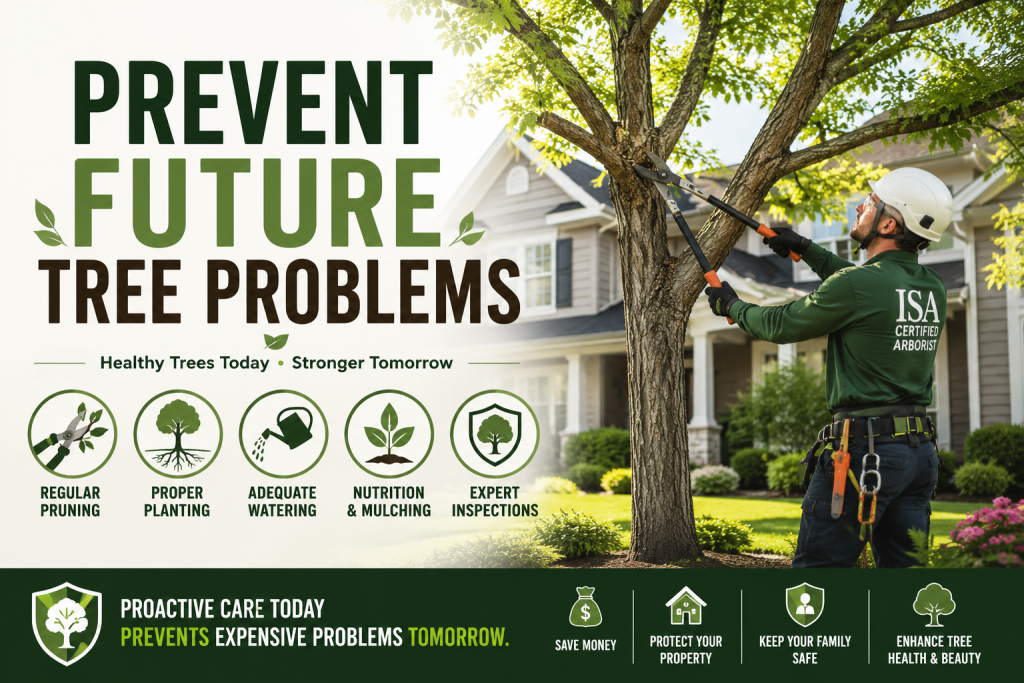
Prevent Future Tree Problems
Routine maintenance helps reduce the need for emergency removal.
Homeowners should:
- Schedule annual tree inspections.
- Prune dead branches.
- Monitor tree health after storms.
- Water trees during droughts.
- Watch for signs of disease or pests.
- Remove hazardous trees before they fail.
Preventive care extends tree life while protecting your property.
Final Thoughts
Recognizing the Signs a Tree Needs Immediate Removal can save lives, protect your home, and prevent thousands of dollars in damage. While healthy trees add beauty and value, hazardous trees should never be ignored.
If you observe leaning trunks, severe decay, storm damage, or falling branches, contact a qualified tree removal professional immediately. Acting early is the safest and most cost-effective solution for homeowners in 2026.
Frequently Asked Questions (FAQs)
1. What are the most common Signs a Tree Needs Immediate Removal?
Common warning signs include a leaning tree, dead branches, trunk cracks, root damage, severe storm damage, fungal growth, and a dying canopy.
2. Can a leaning tree be saved?
Sometimes. A certified arborist can determine whether the tree can be stabilized or if removal is the safest option.
3. Is a hollow tree always dangerous?
Not always, but a large hollow trunk often indicates significant internal decay and should be professionally inspected.
4. How quickly should a hazardous tree be removed?
A tree posing an immediate risk to people, homes, or power lines should be removed as soon as possible.
5. Does homeowners insurance cover tree removal?
Insurance may cover tree removal if the tree falls due to a covered event, such as a storm, and damages an insured structure. Check your individual policy for coverage details.
Leave a Reply