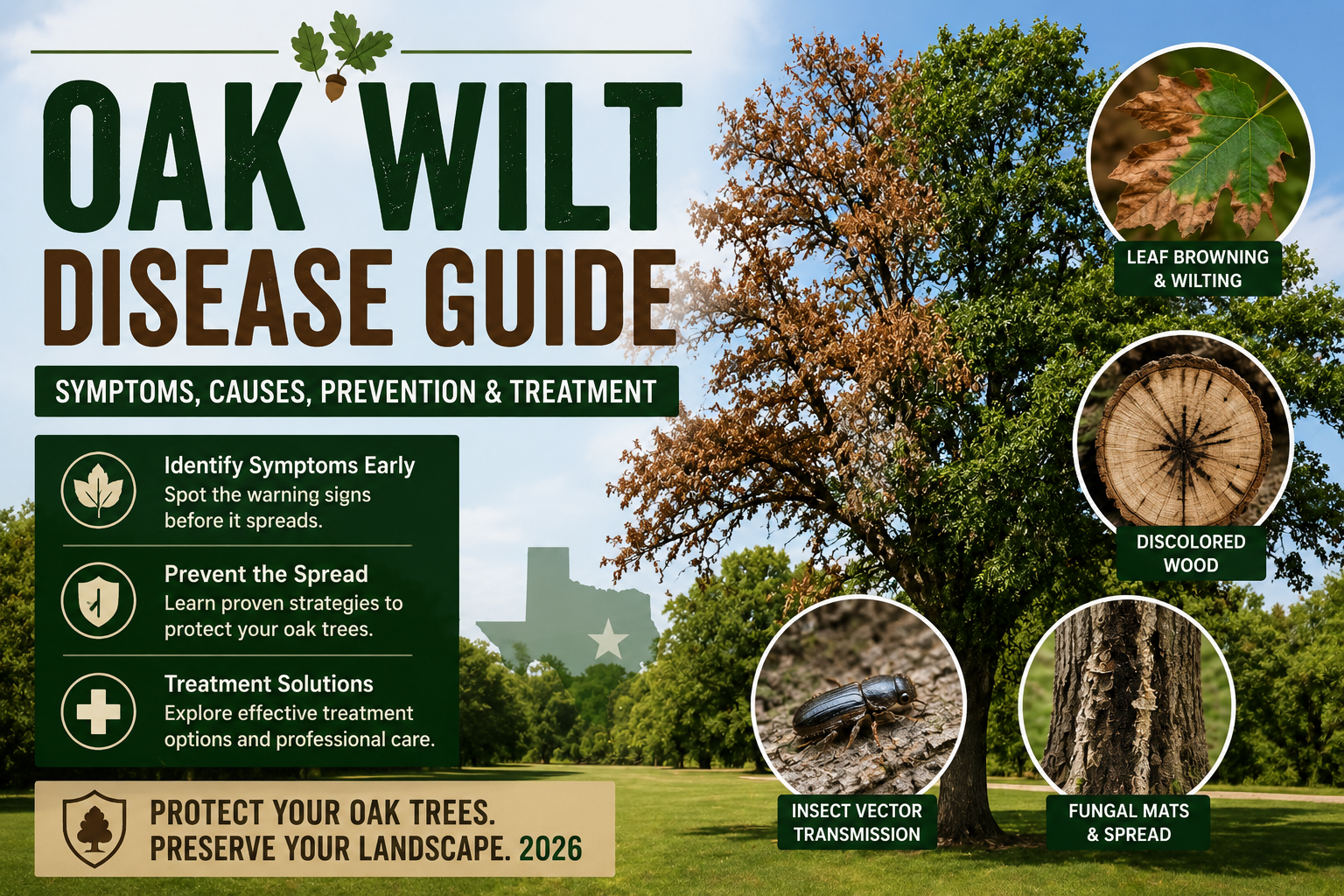
Oak Wilt Disease Guide: What Homeowners Need to Know
Oak trees are an important part of landscapes across Texas and many other parts of the United States. Unfortunately, oak trees can be vulnerable to serious diseases, including oak wilt. This Oak Wilt Disease Guide explains what homeowners should know about symptoms, causes, prevention, and professional treatment in 2026.
Oak wilt is caused by the fungus Bretziella fagacearum. The disease interferes with the tree’s water-conducting system and can cause rapid decline in susceptible oak species. Understanding the warning signs can help property owners take action before the disease spreads.
What Is Oak Wilt?
The Oak Wilt Disease Guide starts with understanding how this disease affects trees. Oak wilt is a vascular disease that prevents water from moving properly through an infected tree.
In Texas, the disease is particularly important because it can affect valuable native and landscape oaks. Live oaks and red oaks are among the species commonly associated with oak wilt problems.
Oak wilt can spread in two primary ways. Sap-feeding beetles can carry fungal spores from infected trees to fresh wounds on healthy oaks. The disease can also move through interconnected root systems between nearby trees.
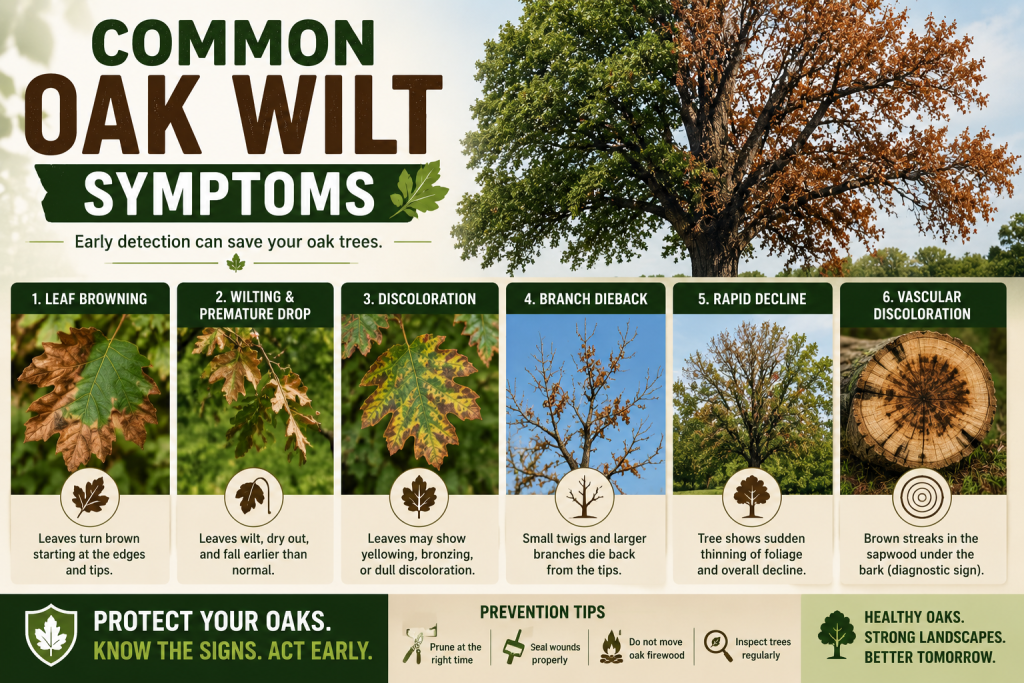
Common Oak Wilt Symptoms
Recognizing symptoms early is one of the most important lessons in this Oak Wilt Disease Guide. Symptoms can vary depending on the oak species, weather, and stage of infection.
Common warning signs include:
- Leaves turning brown or bronze
- Leaves wilting and falling prematurely
- Rapid canopy thinning
- Branch dieback
- Discoloration of leaves
- Sudden decline in an otherwise healthy tree
- Browning that begins in sections of the canopy
Live oaks may show a pattern where leaves turn brown and drop while other parts of the tree remain green. Red oaks can sometimes decline much more rapidly.
Because several tree problems can produce similar symptoms, homeowners should not assume every dying oak has oak wilt.
Why Oak Wilt Is Serious in Texas
Oak Wilt in Texas is a major concern because the disease can spread from tree to tree through connected roots. In areas where susceptible oaks grow close together, one infected tree may put neighboring trees at risk.
The Oak Wilt Disease Guide is especially useful for homeowners in Central Texas and other areas where oak wilt has been documented. Early identification and professional evaluation can help determine whether the symptoms are consistent with oak wilt or another problem.
Property owners should also be cautious about pruning during periods when fungal-spore transmission is more likely.
How Oak Wilt Spreads
Understanding transmission is an important part of this Oak Wilt Disease Guide. The fungal pathogen can move above ground when sap-feeding insects visit fungal mats or infected material and then contact fresh wounds on healthy oak trees.
Below ground, oak wilt can move through root connections between trees. This is one reason why simply removing one visibly sick tree may not always solve the problem.
Avoiding unnecessary wounds and following proper pruning practices can reduce opportunities for infection.
How to Prevent Oak Wilt
Prevention is a major focus of this Oak Wilt Disease Guide. Homeowners can take several steps to reduce the risk of spreading oak wilt.
First, avoid unnecessary pruning of oak trees during high-risk periods. If pruning is necessary, use proper techniques and immediately protect appropriate fresh wounds according to recommendations from qualified local tree professionals.
Never move firewood from diseased oak trees to another property. Infected wood can contribute to disease spread when appropriate fungal material and insect activity are present.
Keeping trees healthy through proper watering, mulching, soil care, and routine inspections can also help reduce overall stress.
Oak Wilt Treatment Options
The Oak Wilt Disease Guide would not be complete without discussing treatment. Treatment depends on the tree species, disease stage, location, and whether nearby trees are also affected.
Professionals may use approaches such as removing infected trees, creating root barriers to limit underground spread, and in selected situations applying fungicide treatments. Fungicide injections are not appropriate for every tree or every situation, so diagnosis should come before treatment.
A certified arborist or qualified tree professional can evaluate the property and recommend an appropriate management strategy.
When Should You Call an Arborist?
If you notice sudden leaf browning, unusual leaf drop, canopy thinning, or rapid branch death, professional evaluation is recommended. The Oak Wilt Disease Guide can help you recognize potential warning signs, but it cannot replace an on-site diagnosis.
Call a tree professional quickly when:
- Multiple nearby oaks are declining
- A healthy-looking oak suddenly develops severe symptoms
- Several trees show similar symptoms
- You recently pruned an oak during a potentially risky period
- You suspect oak wilt is spreading through your property
Early action can be particularly important because oak wilt can move beyond the originally affected tree.

Protect Your Oak Trees in 2026
This Oak Wilt Disease Guide shows why prevention, early detection, and professional diagnosis matter for homeowners. Oak wilt can be a serious disease, but informed tree care can help reduce risks and protect valuable landscape trees.
If you live in an area where Oak Wilt in Texas is a concern, inspect your oaks regularly and pay attention to sudden changes in foliage, canopy density, or branch health. Avoid unnecessary pruning, handle oak wood responsibly, and seek professional advice when symptoms appear.
The best approach is to act early rather than waiting until an entire tree or group of trees has declined.
Frequently Asked Questions
Can an oak tree recover from oak wilt?
Recovery depends on the tree species, stage of infection, and management approach. Some trees may be managed successfully, while severely affected trees may decline beyond recovery.
What does oak wilt look like?
Common symptoms include leaf browning, premature leaf drop, canopy thinning, and branch dieback. Symptoms can vary between oak species.
Can oak wilt spread to nearby trees?
Yes. Oak wilt can spread through interconnected root systems and can also be moved by sap-feeding insects that carry fungal spores to fresh wounds.
Can I treat oak wilt myself?
Professional diagnosis is strongly recommended before treatment. Management can involve tree removal, root-system management.
Final Takeaway:
The Oak Wilt Disease Guide is a useful starting point for understanding one of the most concerning oak diseases affecting parts of the United States. For suspected Oak Wilt in Texas, early professional assessment can help homeowners make informed decisions and protect surrounding trees.
Leave a Reply