Complete Guide to Stump Grinding: What Homeowners Need to Know in 2026
Tree removal does not always mean the job is completely finished. After a tree is cut down, the remaining stump can become an eyesore, attract pests, interfere with landscaping, and create a tripping hazard. Stump grinding is one of the most practical ways for U.S. homeowners to deal with these unwanted tree remnants.
This complete guide to stump grinding explains how the process works, its benefits, costs, safety considerations, and what homeowners should expect in 2026.
What Is Stump Grinding?
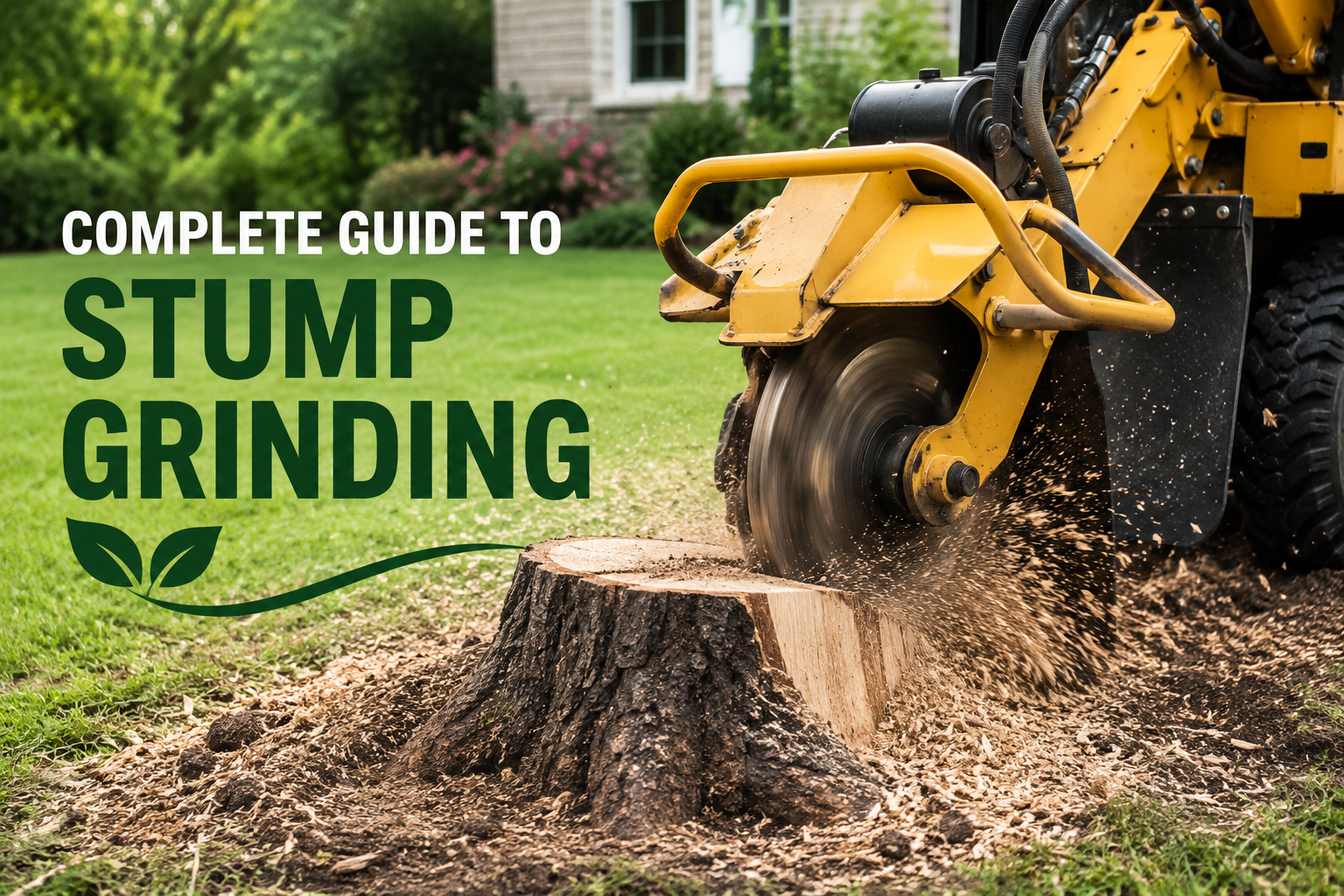
Stump grinding is the process of mechanically reducing a tree stump into small wood chips using a specialized machine called a stump grinder. Instead of removing the entire root system, the grinder cuts the visible stump several inches below ground level.
The resulting wood chips can usually be removed or used as mulch, while the remaining area can be filled with soil and prepared for new grass, plants, or other landscaping.
Unlike traditional stump removal, stump grinding is generally less invasive because it does not require digging out the entire root ball.
Why Should You Grind a Tree Stump?
Leaving an old stump in your yard can cause several problems. One of the biggest benefits of stump grinding is that it improves both the appearance and usability of your property.
Common reasons homeowners choose stump grinding include:
- Improved curb appeal: An old stump can make an otherwise attractive yard look unfinished.
- Better lawn maintenance: Stumps can interfere with mowing and other landscaping equipment.
- Reduced safety risks: A low or hidden stump can become a tripping hazard.
- Pest prevention: Decaying wood can attract insects and other unwanted pests.
- More usable space: Removing the visible stump creates room for grass, flower beds, or other landscaping.
- Easier future maintenance: A cleared area is simpler to maintain than a yard containing multiple tree stumps.
How Does Stump Grinding Work?
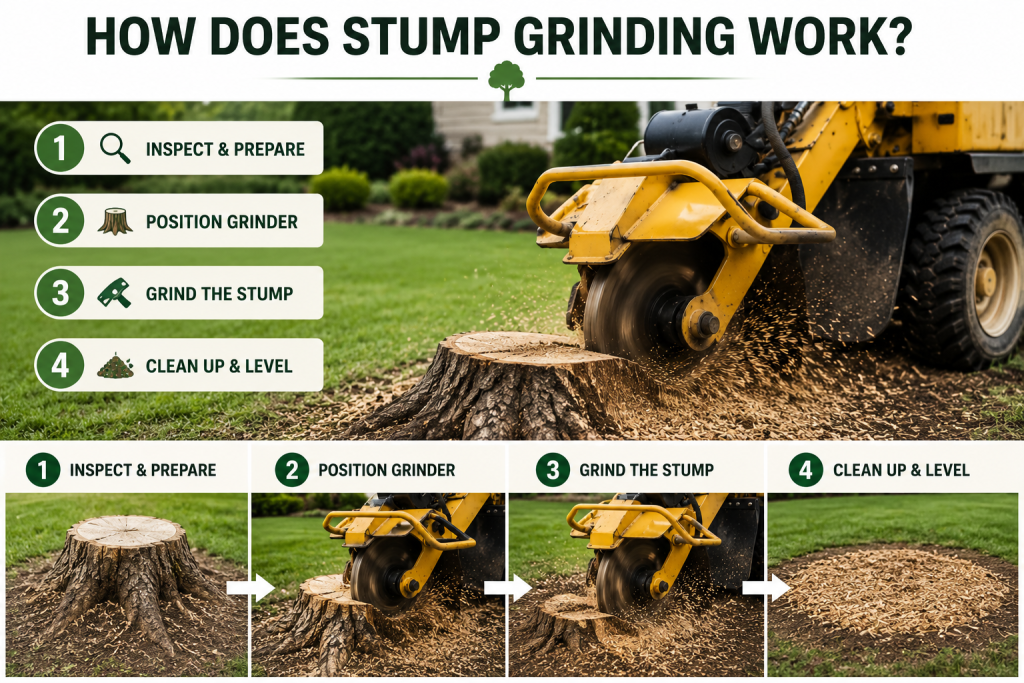
Professional stump grinding usually involves several steps.
1. Inspecting the Stump
Before starting, the technician evaluates the stump, surrounding property, accessibility, and potential underground hazards.
2. Preparing the Work Area
The area around the stump is cleared of furniture, decorations, rocks, toys, and other objects. Professionals may also establish a safety zone to protect people and property from flying wood chips.
3. Positioning the Grinder
The stump grinder is carefully positioned over or next to the stump. Different machines are available depending on stump size and site accessibility.
4. Grinding the Stump
A rotating cutting wheel gradually chips away at the wood. The operator moves the grinder across the stump until the main portion has been reduced below ground level.
5. Cleaning the Area
After grinding, the wood chips can be raked away or used to fill the resulting depression.
6. Restoring the Ground
Topsoil can be added to level the area. Homeowners can then plant grass, install landscaping, or use the space for another purpose.
How Much Does Stump Grinding Cost in 2026?
The cost of stump grinding varies considerably across the United States. A small, easily accessible stump may cost relatively little, while a large stump with extensive roots or difficult access can cost substantially more.
Factors that influence stump grinding prices include:
- Stump diameter
- Number of stumps
- Tree species and wood hardness
- Root spread
- Stump location
- Accessibility for equipment
- Required grinding depth
- Cleanup and disposal
- Local labor rates
For an accurate price, homeowners should request a quote based on an inspection rather than relying solely on an online average.
Stump Grinding vs. Stump Removal
Although these terms are sometimes used interchangeably, they describe different processes.
Stump grinding removes the visible stump by grinding it into wood chips while leaving most of the root system underground.
Stump removal involves digging out the stump and a significant portion of its roots. This can require more labor, excavation, and equipment.
For many residential landscaping projects, stump grinding is a convenient option because it typically causes less disruption to the surrounding yard.
However, complete stump removal may make more sense when homeowners need to build, install hardscaping, or plant in a location where the remaining root system could interfere.
Can You Grind a Stump Yourself?
Homeowners can rent stump-grinding equipment in some areas, but using a commercial grinder requires caution. These machines contain powerful cutting wheels that can cause serious injuries if operated incorrectly.
DIY stump grinding may also create problems if the operator does not identify underground utilities, sprinkler systems, buried cables, or other obstacles.
For large stumps, difficult locations, or properties with potential underground hazards, hiring an experienced professional is generally the safer choice.
What Happens After Stump Grinding?
After stump grinding, you will usually have a shallow hole containing wood chips and some remaining roots. The area can be leveled with suitable soil.
Keep in mind that wood chips and remaining roots may gradually decompose, causing the soil to settle. Homeowners may need to add additional soil later before establishing a lawn or planting new vegetation.
If you plan to plant another tree in the same location, ask a local arborist or landscaping professional whether the site is suitable.
How to Choose a Stump Grinding Professional
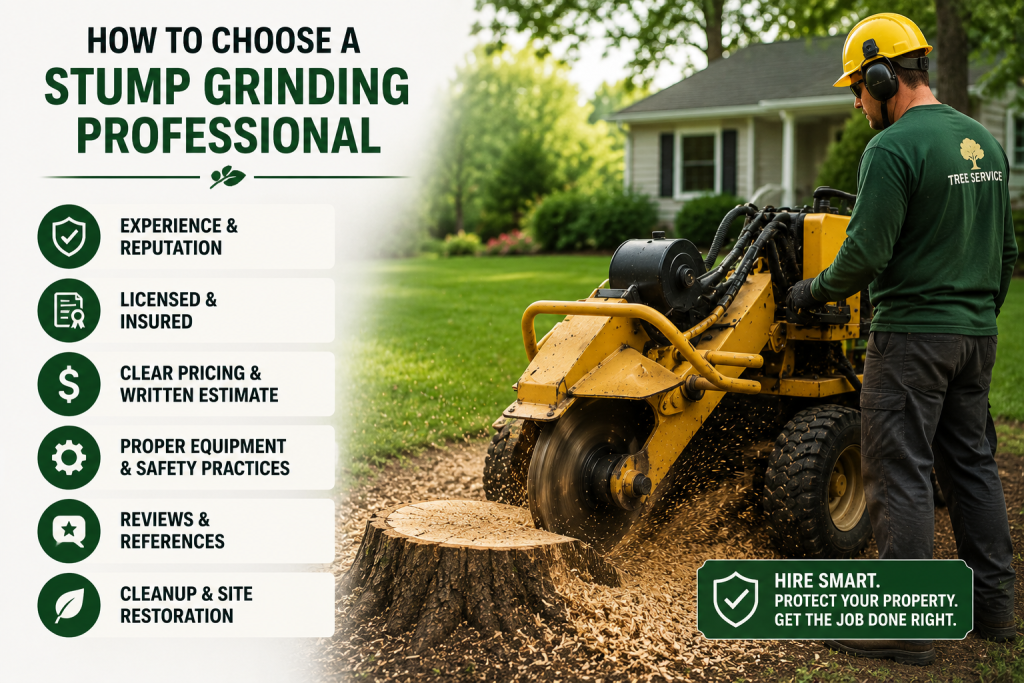
When hiring a professional, look beyond the lowest price. Ask about:
- Experience with residential stump grinding
- Insurance coverage
- Equipment and safety practices
- Cleanup and debris removal
- Grinding depth
- Written estimates
- References or reviews
- Any additional charges
A reputable contractor should clearly explain what is included in the quoted price.
Final Thoughts
Stump grinding is an efficient way to improve the appearance, safety, and usability of a property after tree removal. By reducing the stump below ground level, homeowners can reclaim valuable yard space without the extensive excavation often associated with complete stump removal.
Whether you have one small stump or several large stumps, understanding the process and pricing factors can help you make an informed decision. In 2026, homeowners should compare qualified local professionals, request detailed estimates, and make sure the work area is handled safely.