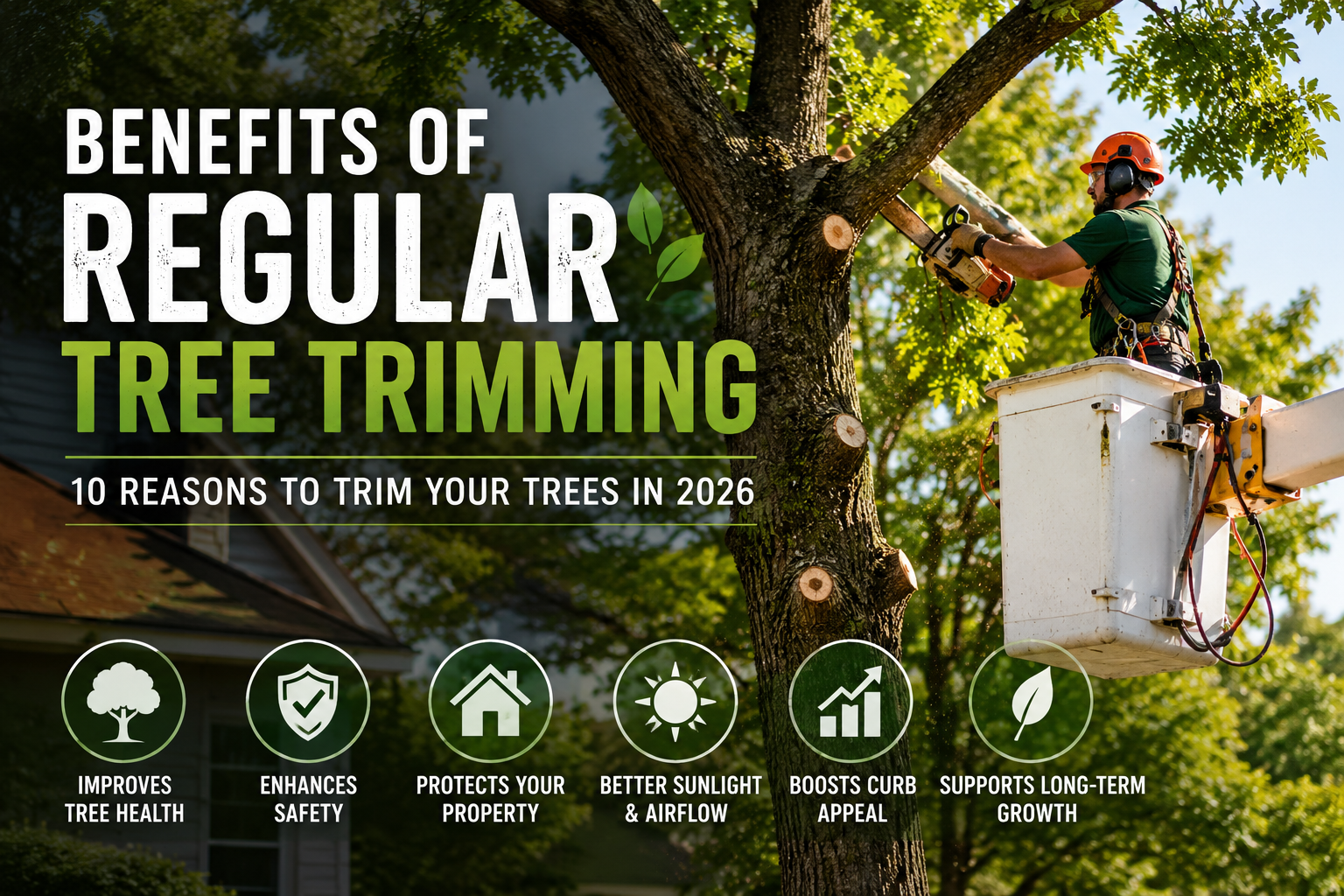
Benefits of Regular Tree Trimming
Trees are an important part of any American property. They provide shade, improve curb appeal, support local wildlife, and can even increase the overall beauty of your landscape. However, trees need proper care to remain healthy and safe. One of the most effective ways to maintain healthy trees is regular trimming.
Understanding the Benefits of Regular Tree Trimming can help homeowners protect their property, improve tree health, and prevent costly problems. Whether you own a home in Texas, Florida, California, or another part of the United States, professional tree trimming should be an important part of your regular landscape maintenance routine.
What Is Tree Trimming?
Tree trimming is the process of carefully removing dead, damaged, diseased, or overgrown branches from a tree. Professional arborists use proper pruning techniques to improve the structure, appearance, and health of trees.
Unlike simply cutting branches whenever they become inconvenient, professional tree trimming requires knowledge of tree species, growth patterns, seasonal conditions, and local safety concerns.
For US homeowners, the Benefits of Regular Tree Trimming can vary depending on the tree species, climate, location, and condition of the property.
1. Improves Overall Tree Health
One of the biggest Benefits of Regular Tree Trimming is improved tree health. Dead and diseased branches can weaken a tree and may allow insects, fungi, or diseases to spread.
Removing unhealthy branches helps the tree direct its energy toward healthy growth. Regular trimming can also improve air circulation and sunlight penetration throughout the canopy.
A healthy tree is generally better prepared to handle environmental stress, including drought, extreme heat, strong winds, and severe weather.
2. Reduces the Risk of Falling Branches
Overgrown, weak, or damaged branches can become dangerous, especially during storms. Strong winds, heavy rain, ice, and snow can cause unstable branches to break and fall.
Safety is one of the most important Benefits of Regular Tree Trimming for homeowners. Removing hazardous branches before they fail can reduce the risk of damage to roofs, vehicles, fences, power lines, and outdoor structures.
If you notice large dead branches or branches hanging over your home, contact a qualified tree care professional for an inspection.
3. Protects Your Home and Property
Trees growing too close to buildings can create potential property problems. Branches may scrape against roofs, damage siding, block gutters, or interfere with windows.
One of the practical Benefits of Regular Tree Trimming is maintaining safe clearance between trees and structures. Proper trimming can help keep branches away from your roof and other vulnerable parts of your property.
Homeowners should also monitor trees growing near driveways, sidewalks, fences, and outdoor living spaces.
4. Encourages Better Tree Growth
Proper trimming can help shape a tree while encouraging stronger and more balanced growth. Removing poorly positioned branches can reduce overcrowding and allow healthy branches to develop.
The Benefits of Regular Tree Trimming are especially noticeable when trimming is performed correctly and at the appropriate time of year.
However, excessive trimming can damage a tree. Homeowners should avoid removing too much of the canopy at once and should consider hiring a certified arborist for larger or complicated trees.
5. Improves Curb Appeal
Well-maintained trees can make a property look cleaner, more attractive, and professionally cared for. Overgrown trees can make a landscape appear neglected, while properly shaped trees can complement your home’s exterior.
Improved curb appeal is another valuable Benefits of Regular Tree Trimming, particularly for homeowners planning to sell their property.
A healthy and attractive landscape can create a positive first impression for potential buyers and visitors.
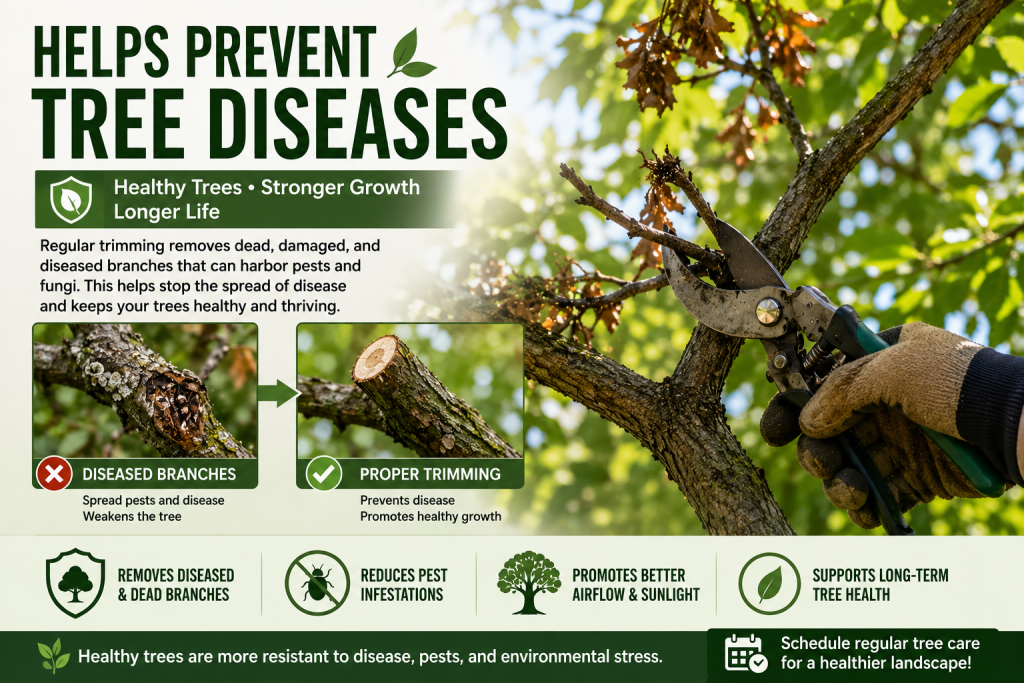
6. Helps Prevent Tree Diseases
Diseased branches can sometimes spread problems throughout a tree. Regular inspections and professional trimming may help identify and remove affected areas before the problem becomes more serious.
This is one reason the Benefits of Regular Tree Trimming go beyond appearance. Tree trimming can be an important part of a broader tree health and disease management strategy.
However, trimming alone cannot prevent every tree disease. Proper watering, soil care, pest management, and professional inspections may also be necessary.
7. Improves Sunlight and Air Circulation
Dense tree canopies can prevent sunlight and air from reaching the inner branches and surrounding landscape. Strategic trimming can open the canopy and improve airflow.
Better sunlight exposure may also benefit grass, plants, and other landscaping beneath the tree.
Among the many Benefits of Regular Tree Trimming, improved sunlight and air circulation can contribute to a healthier landscape and better overall tree structure.
8. Keeps Trees Away From Power Lines
Trees growing near utility lines require special attention. Branches that touch or grow toward power lines can create serious safety hazards and may cause service interruptions.
One of the most important Benefits of Regular Tree Trimming is maintaining appropriate clearance around utility infrastructure.
Never attempt to trim branches that are touching or close to electrical lines yourself. Contact your local utility company or a qualified professional who is trained to handle these situations safely.
9. Supports Long-Term Property Value
Healthy, mature trees can be an attractive feature for many US homeowners. However, neglected trees may become liabilities if they develop structural problems or pose safety risks.
The Benefits of Regular Tree Trimming include helping maintain trees in better condition over the long term. Consistent tree care can protect your landscape investment and help preserve the visual appeal of your property.
Regular maintenance is usually easier and less expensive than dealing with a major tree emergency caused by neglected branches.
10. Helps Prepare Trees for Severe Weather
Many areas of the United States experience severe weather, including thunderstorms, hurricanes, tornadoes, ice storms, and high winds.
One of the key Benefits of Regular Tree Trimming is reducing weak or hazardous branches that could become problematic during extreme weather.
While trimming cannot guarantee that a tree will survive a major storm, proper structural pruning may help reduce certain risks. A professional tree inspection can identify weak branch attachments, deadwood, and other potential hazards.
How Often Should You Trim Your Trees?
The ideal trimming schedule depends on the tree species, age, location, health, and growth rate. Many mature trees may only require professional trimming every few years, while young or fast-growing trees may need more frequent attention.
Instead of following a one-size-fits-all schedule, homeowners should have their trees inspected regularly by a qualified tree care professional.
In many cases, the Benefits of Regular Tree Trimming are greatest when trimming is performed proactively rather than waiting until a branch becomes dangerous.
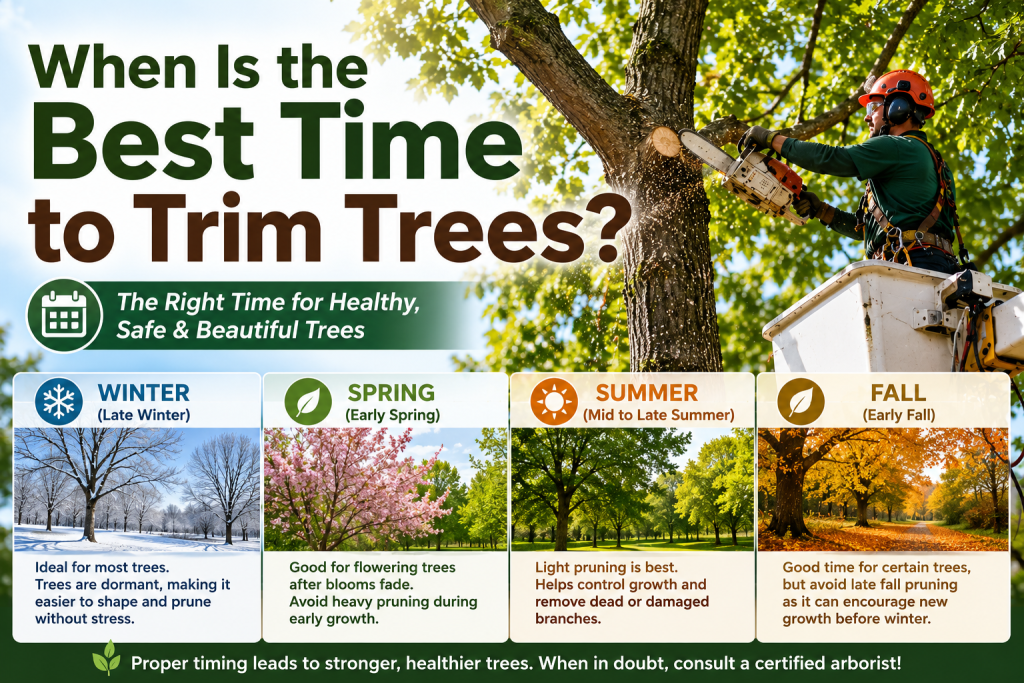
When Is the Best Time to Trim Trees?
The best time for tree trimming depends on the species and your local climate. In many parts of the US, late winter or early spring can be a suitable time for certain types of pruning because trees are often dormant.
However, dead, broken, or hazardous branches may need to be removed at any time of year.
For homeowners in Texas and other regions with hot climates, professional advice is especially helpful because extreme heat and drought can affect tree health.
Should You Hire a Professional Tree Trimming Service?
For small branches that are safely reachable from the ground, basic pruning may be possible for experienced homeowners. However, large trees, high branches, trees near power lines, and hazardous situations should be handled by trained professionals.
A professional tree care company can evaluate the tree, identify structural problems, and use appropriate equipment and techniques.
Hiring a qualified professional is often the safest way to maximize the Benefits of Regular Tree Trimming while minimizing the risk of property damage or personal injury.
Final Thoughts
The Benefits of Regular Tree Trimming include healthier trees, improved safety, better curb appeal, stronger growth, and greater protection for your home and property. Regular tree care is an important part of responsible homeownership across the United States.
For the best results in 2026, homeowners should avoid excessive DIY trimming and consider professional inspections for mature, large, or hazardous trees. With proper care and timely maintenance, your trees can remain healthy, attractive, and valuable parts of your landscape for many years.
Frequently Asked Questions (FAQs)
1. What are the main benefits of regular tree trimming?
The main benefits include better tree health, improved safety, stronger growth, enhanced curb appeal, better air circulation, and reduced risk from dead or hazardous branches.
2. How often should trees be trimmed?
The frequency depends on the tree species, age, health, and location. Many mature trees may need professional trimming every few years, while younger trees may require more frequent maintenance.
3. Can regular tree trimming prevent storm damage?
Proper trimming can reduce some risks by removing dead, weak, or hazardous branches. However, no trimming method can completely prevent storm damage during extreme weather.
4. Is tree trimming the same as tree pruning?
The terms are often used interchangeably, but pruning generally focuses more on tree health and structure, while trimming may focus on removing overgrowth and maintaining appearance or clearance.5. Can I trim a large tree myself?
It is generally safer to hire a professional for large trees, high branches, or trees located near buildings and power lines. DIY work in these situations can result in serious injuries or property damage.