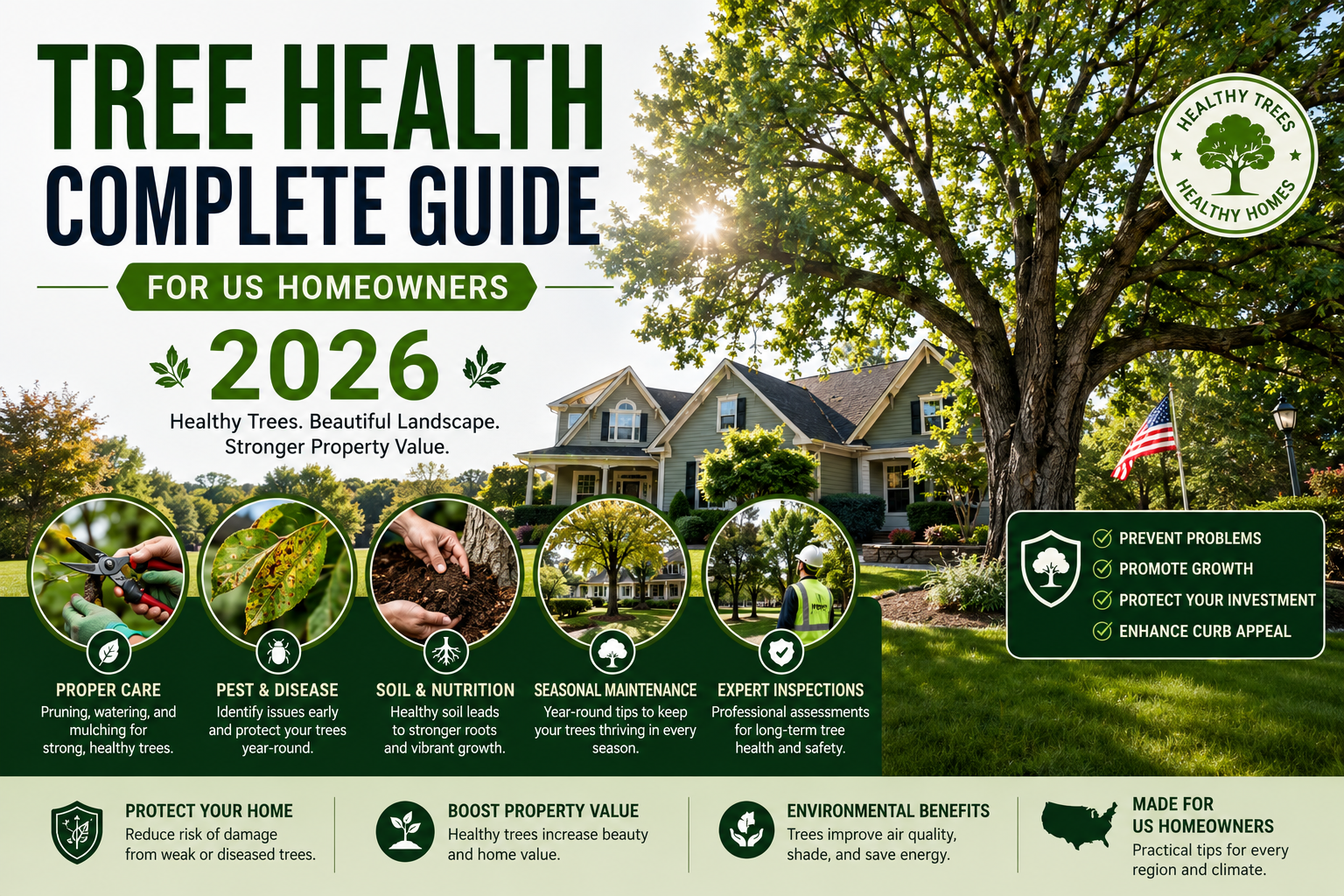
Tree Health: Complete 2026 Guide for Healthy Trees in the USA
Healthy trees improve your property’s appearance, increase home value, provide shade, and support the environment. Maintaining Tree Health should be a priority for every homeowner because strong trees are safer, live longer, and require fewer expensive repairs. Whether you own one tree or an entire landscape, understanding proper tree care can save time and money.
This 2026 guide explains the essentials of Tree care, including watering, pruning, fertilization, disease prevention, and professional maintenance for homeowners across the United States.
Why Tree Health Matters
Maintaining Tree benefits both your property and the environment. Healthy trees absorb carbon dioxide, improve air quality, reduce soil erosion, and provide habitats for wildlife. They also increase curb appeal and can raise property value.
Poor Tree can lead to weak branches, disease, pest infestations, and costly emergency tree removal.
Signs of Good Tree Health
A healthy tree usually displays several visible characteristics.
Look for these signs:
- Bright green leaves during the growing season
- Strong branch structure
- Healthy bark without deep cracks
- New seasonal growth
- Balanced canopy
- No signs of decay
- Strong root system
Regular inspections help maintain excellent Tree throughout the year.
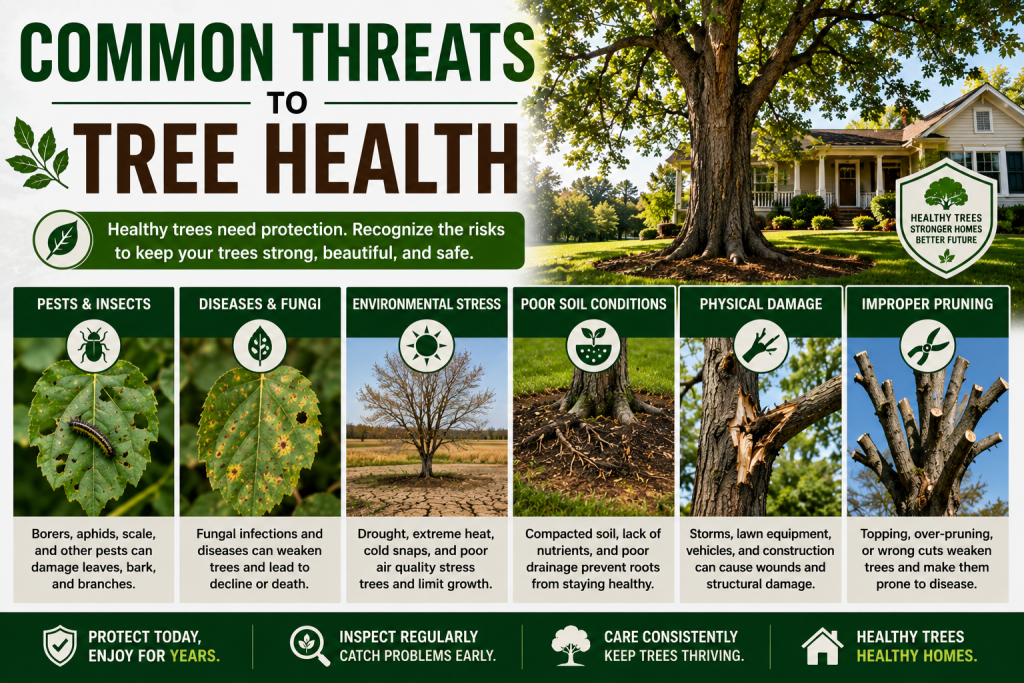
Common Threats to Tree Health
Many factors can affect Tree if left untreated.
The most common problems include:
- Drought stress
- Overwatering
- Poor soil conditions
- Insect infestations
- Tree diseases
- Storm damage
- Root damage
- Improper pruning
Early detection makes protecting Tree Care much easier.
Watering Trees Properly
Water plays a major role in Tree Health.
Best watering practices include:
- Water deeply instead of frequently.
- Water early in the morning.
- Avoid flooding the roots.
- Increase watering during drought.
- Use mulch to retain moisture.
Proper watering supports long-term Tree Care while preventing root stress.
The Importance of Tree Pruning
Routine pruning is one of the best ways to improve Tree.
Professional pruning helps:
- Remove dead branches
- Improve airflow
- Reduce storm damage
- Encourage healthy growth
- Prevent disease spread
- Improve tree appearance
Proper pruning is an essential part of Tree Care for residential landscapes.
Fertilizing for Better Tree Health
Trees require nutrients for healthy growth.
Professional fertilization improves Tree by providing:
- Nitrogen
- Phosphorus
- Potassium
- Essential micronutrients
Before fertilizing, consider a soil test to determine nutrient deficiencies. Proper fertilization strengthens Healthy Tree Care and promotes long-lasting growth.
Protecting Trees from Pests and Diseases
Pests and diseases are among the biggest threats to Tree Health.
Watch for:
- Leaf discoloration
- Wilting leaves
- Bark damage
- Fungal growth
- Insect holes
- Premature leaf drop
Early treatment is essential for successful Tree Care and preventing permanent damage.
Seasonal Healthy Tree Care Tips
Each season requires different maintenance practices.
Spring
- Inspect for winter damage.
- Apply mulch.
- Fertilize if needed.
Summer
- Water during dry periods.
- Monitor pests.
- Check soil moisture.
Fall
- Remove dead branches.
- Clean fallen leaves.
- Prepare trees for winter.
Winter
- Inspect after storms.
- Protect young trees.
- Avoid damaging roots with heavy equipment.
Following seasonal routines keeps Tree strong throughout the year.
When to Call a Professional Arborist
Although homeowners can perform basic maintenance, some situations require professional help.
Hire an arborist if you notice:
- Large dead branches
- Tree leaning suddenly
- Root damage
- Severe insect infestations
- Tree disease
- Storm damage
- Cracked trunk
Professional inspections improve Tree Care services and prevent major problems before they become expensive.
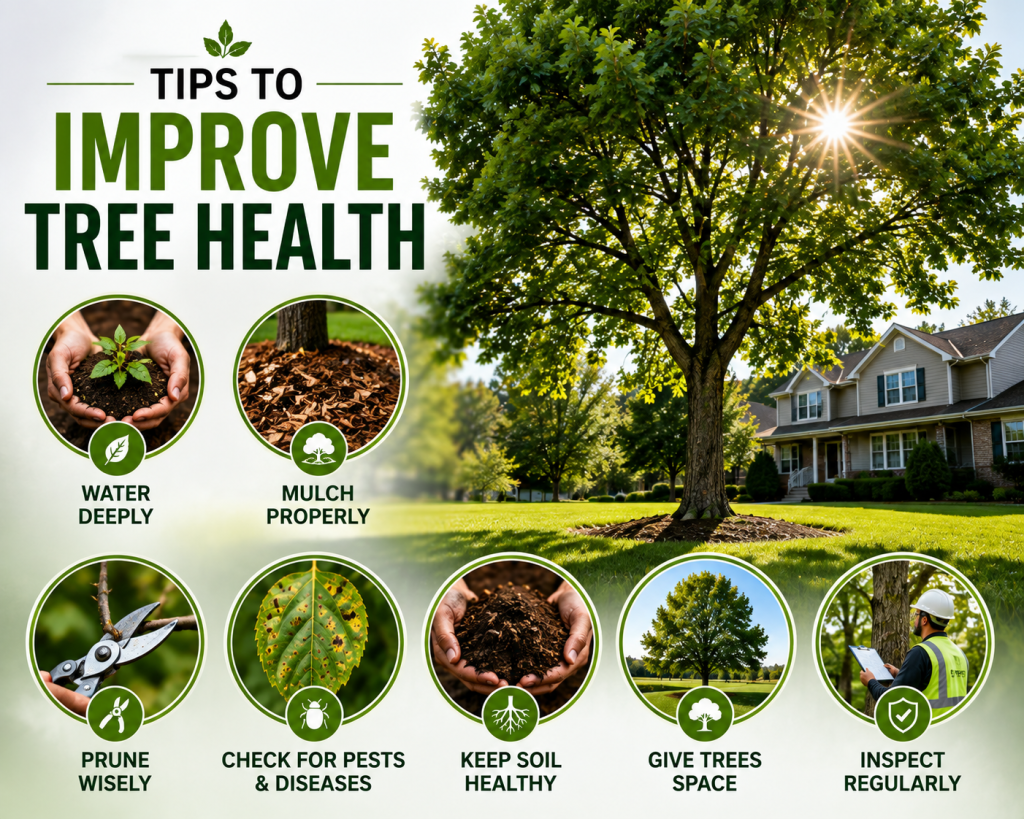
Tips to Improve Tree Health
Use these simple practices to maintain excellent Tree :
- Water deeply during dry weather.
- Prune dead limbs annually.
- Add organic mulch around the base.
- Avoid damaging roots with lawn equipment.
- Inspect trees after storms.
- Monitor for pests and diseases.
- Schedule yearly professional inspections.
Consistent Tree Care keeps trees attractive, safe, and long-lasting.
Conclusion
Maintaining Healthy Tree is one of the best investments homeowners can make. Healthy trees provide beauty, shade, cleaner air, and greater property value while reducing safety risks.
With proper watering, pruning, fertilization, and regular inspections, your trees can thrive for decades. Following these Tree practices and investing in professional Healthy Tree Care services when needed will help protect your landscape throughout 2026 and beyond.
Frequently Asked Questions (FAQs)
1. Why is tree health important?
Good Tree Health helps trees grow stronger, resist disease, improve property value, and reduce safety hazards.
2. How often should trees be inspected?
Most arborists recommend professional inspections once a year and after major storms.
3. What causes poor tree ?
Common causes include drought, pests, disease, poor soil, improper pruning, and root damage.
4. How can I improve tree naturally?
Water deeply, apply mulch, fertilize when needed, prune correctly, and monitor for pests.
5. When should I hire a professional arborist?
Call an arborist if you notice dead branches, leaning trees, trunk damage, severe pest infestations, or signs of disease.