Tag: Tree Care Tips

  • Tree Watering Tips During Summer: Complete 2026 Guide for Healthy Trees

    Tree Watering Tips During Summer: Complete 2026 Guide for Healthy Trees

    Tree Watering Tips During Summer:

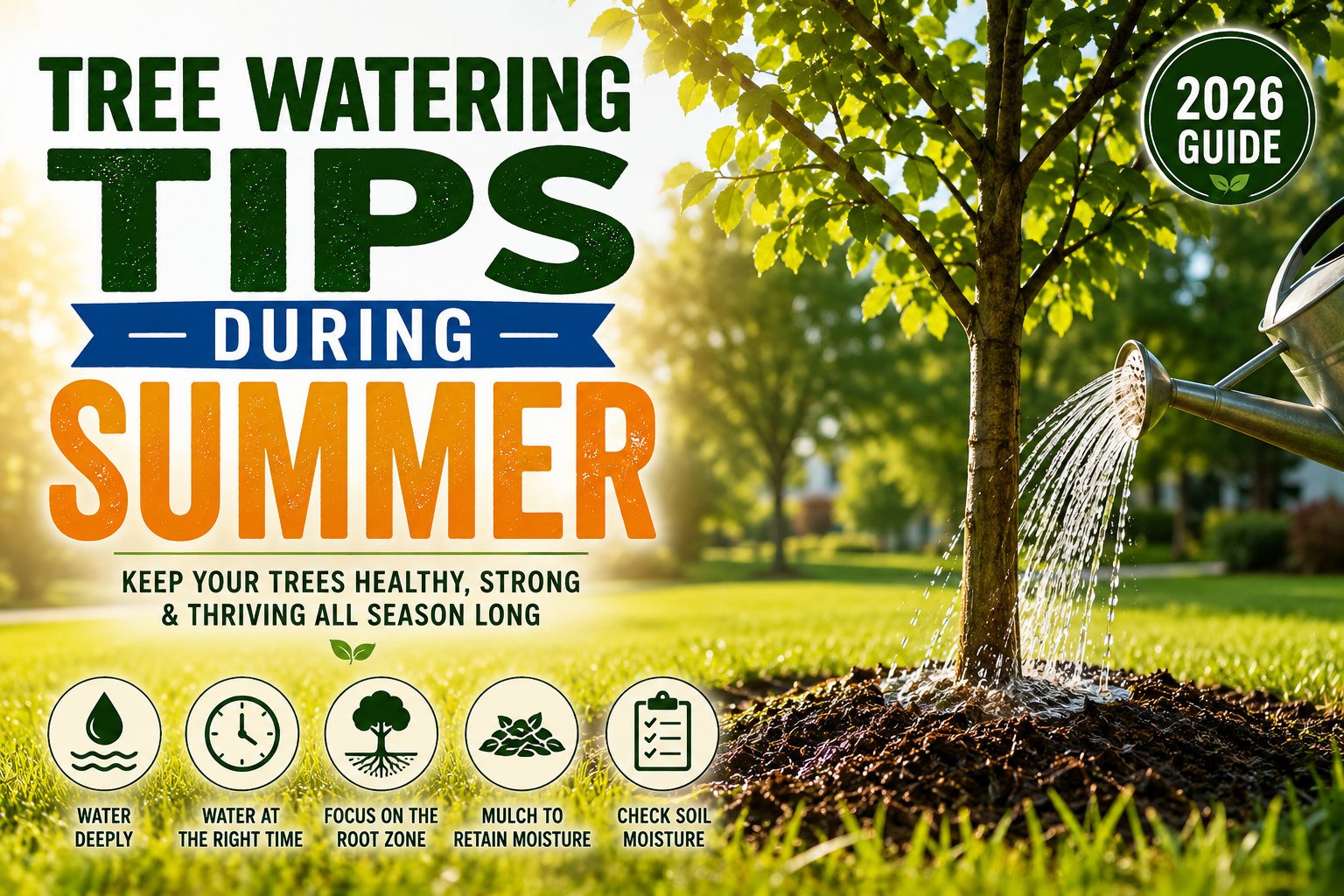
    Summer heat can put significant stress on trees, especially when temperatures rise and rainfall becomes inconsistent. Following the right Tree Watering Tips During Summer can help homeowners protect mature trees, young trees, and newly planted trees from drought stress, leaf scorch, and long-term damage.

    Why Summer Tree Watering Matters

    Trees lose moisture through their leaves during hot weather. When the soil around the root zone becomes too dry, roots may struggle to absorb enough water to support healthy growth. Young trees are particularly vulnerable because their root systems are not fully established.

    The goal is not simply to water more often. Effective Tree Watering Tips During Summer focus on delivering water deeply and consistently while avoiding conditions that keep the soil constantly saturated.
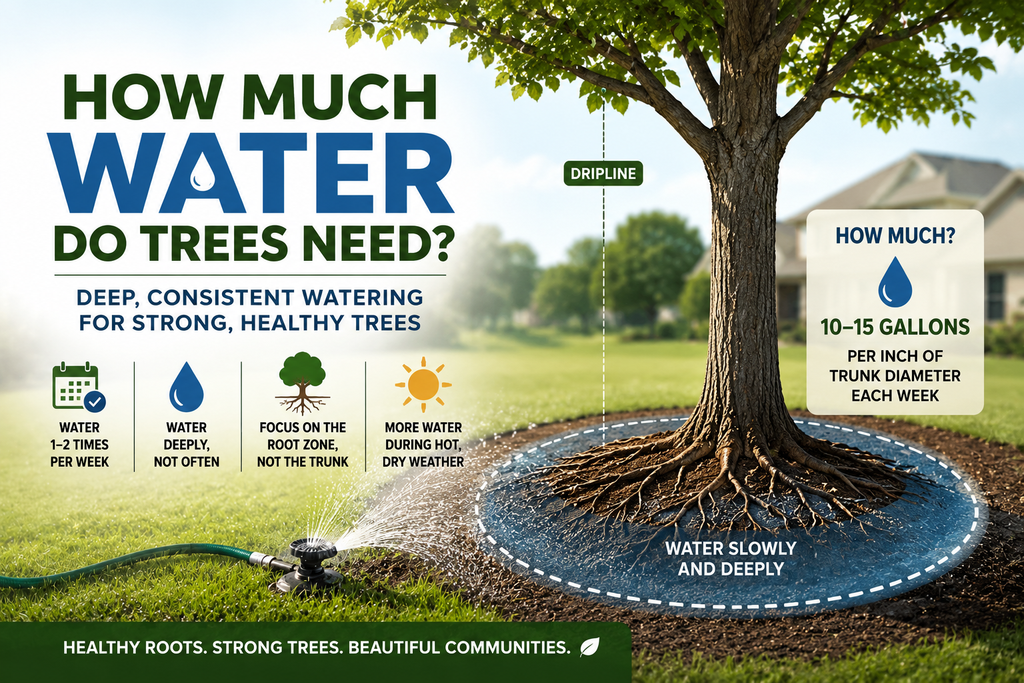
    How much water do trees need infographic showing a mature tree, root zone, dripline, hose, and recommended weekly watering amount for healthy tree growth.

    How Much Water Do Trees Need?

    Water requirements depend on tree species, age, soil type, weather, and location. A newly planted tree generally needs more frequent attention than an established tree. During prolonged heat or drought, mature trees may also require supplemental irrigation.

    Instead of following a fixed schedule, check the soil several inches below the surface. If it feels dry, watering may be necessary. If the soil remains damp, wait before adding more water. These simple Tree Watering Tips During Summer can prevent both underwatering and overwatering.

    Water Slowly and Deeply

    One of the most important principles is slow, deep watering. Applying a large amount of water quickly can cause runoff, especially in compacted or clay-heavy soil. Slow application gives water more time to move into the root zone.

    Use a soaker hose, drip irrigation system, or a garden hose with low water flow. Move the hose around the tree’s root zone instead of concentrating water against the trunk. Deep watering encourages roots to access moisture farther below the soil surface.

    Focus on the Root Zone

    Tree roots usually extend well beyond the trunk area. Avoid assuming that watering only at the base provides enough moisture. Apply water across the area beneath and beyond the canopy when practical.

    For young trees, keep the soil around the developing root ball consistently moist but not waterlogged. Established trees often benefit from watering across a wider area. These Tree Watering Tips During Summer are especially useful for trees growing in hot, dry regions of the United States.

    Choose the Right Time to Water

    Early morning is generally an excellent time to water trees because temperatures are cooler and evaporation is lower. Evening watering can also work, but avoid leaving foliage wet for extended periods when disease conditions are a concern.

    During extreme heat, monitor trees more frequently rather than automatically increasing watering every day. Weather forecasts, soil moisture, and tree condition should guide your schedule.

    Use Mulch to Protect Soil Moisture

    A layer of organic mulch can help reduce evaporation and moderate soil temperature. Apply mulch around the root zone, but keep it several inches away from the trunk. Avoid creating a thick mound directly against the bark.

    Mulching works alongside other Tree Watering Tips During Summer by helping the soil retain moisture between watering sessions. It can also reduce competition from grass and weeds around the tree.

    Watch for Signs of Water Stress

    Trees can show several signs when they are not receiving enough moisture. Wilting leaves, premature leaf drop, dry soil, leaf scorch, and slowed growth may indicate drought stress. However, overwatering can produce similar symptoms, including yellowing leaves and declining roots.

    Inspect the soil before watering and look for changes in the tree’s overall appearance. If a tree shows severe or persistent stress, consider contacting a certified arborist for professional evaluation.

    Avoid Common Watering Mistakes

    One common mistake is watering too frequently but too shallowly. Another is relying on rainfall alone during extended dry periods. Watering directly against the trunk can also contribute to bark problems.

    Homeowners should also avoid excessive irrigation after heavy rain. Good drainage is essential because saturated soil can limit oxygen around roots. Following practical Tree Watering Tips During Summer means adjusting your routine according to actual conditions rather than using the same schedule throughout the season.
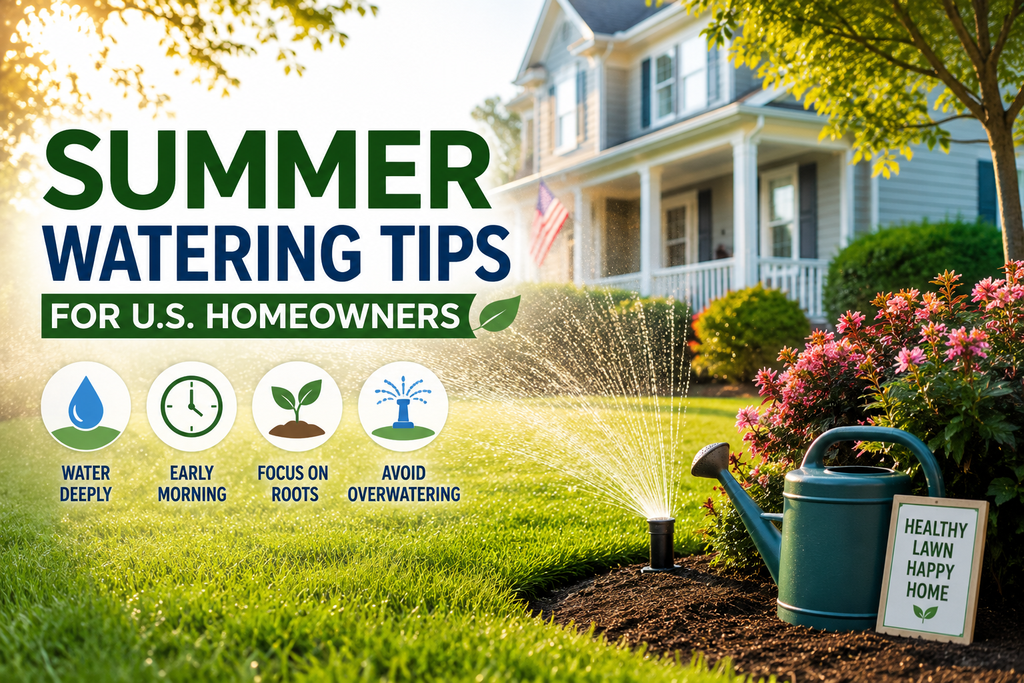
    Summer watering tips for U.S. homeowners showing a sprinkler watering a healthy lawn and garden in a sunny suburban yard.

    Summer Watering Tips for U.S. Homeowners

    Watering needs can vary across the United States. Trees in hot, dry areas may need more supplemental water, while homeowners in regions receiving regular summer rainfall may need less. Local soil conditions and water restrictions should also be considered.

    In areas affected by drought, prioritize newly planted and vulnerable trees while following local watering regulations. The most effective Tree Watering Tips During Summer combine careful observation, efficient irrigation, mulch, and appropriate timing.

    Final Thoughts

    Healthy trees need consistent care throughout the hottest months. By checking soil moisture, watering deeply, protecting the root zone with mulch, and watching for stress, homeowners can improve tree health and resilience.

    The best Tree Watering Tips During Summer are practical rather than complicated. Adjust watering according to temperature, rainfall, soil conditions, and tree age, and seek professional help when a tree shows serious signs of decline. With the right approach, U.S. homeowners can help their trees remain strong and healthy throughout summer and beyond.
  • How to Save a Dying Tree: Complete Guide for Homeowners in 2026

    How to Save a Dying Tree: Complete Guide for Homeowners in 2026

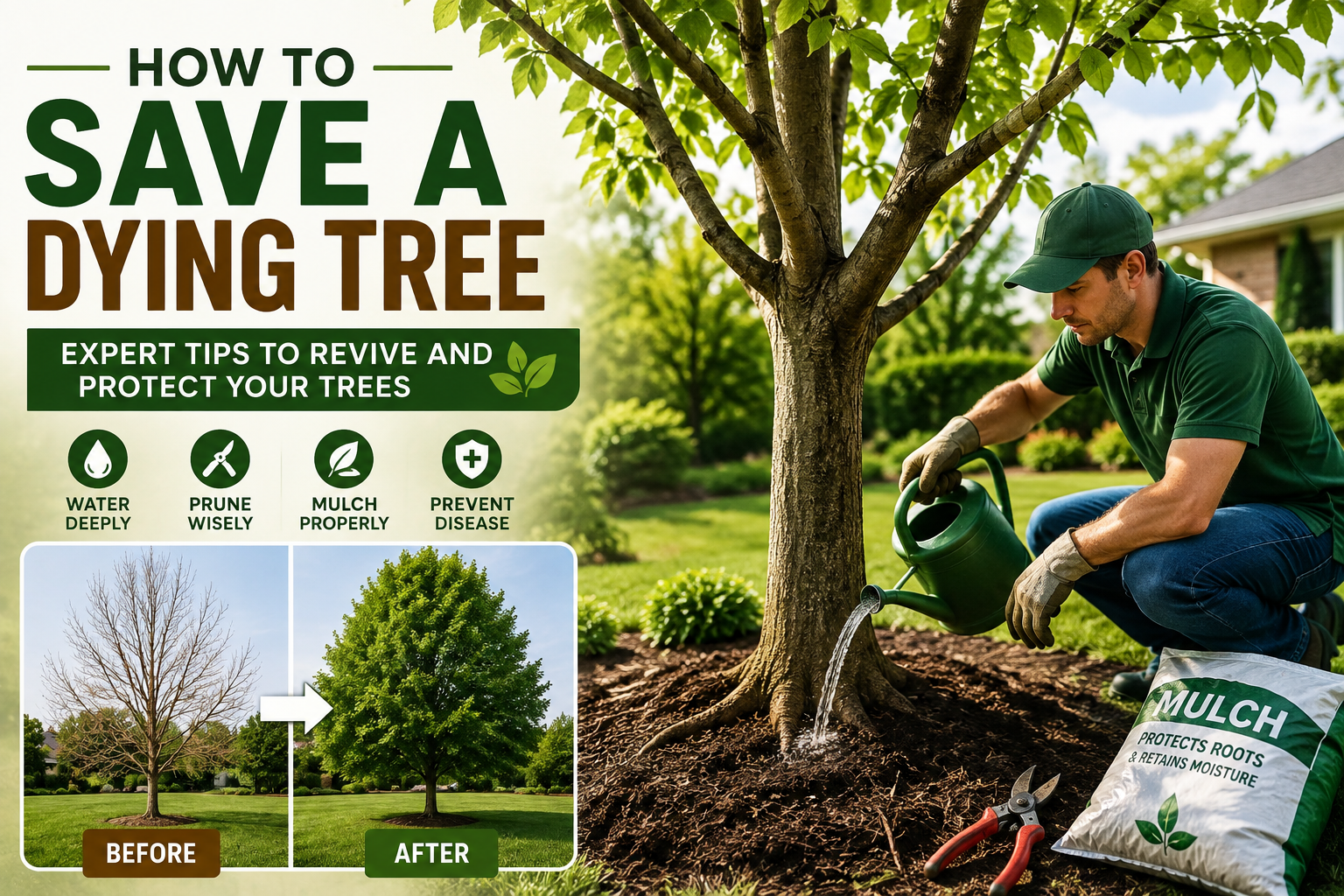
    How to Save a Dying Tree

    Trees add beauty, shade, and value to your property. However, when a tree starts losing leaves, developing dead branches, or showing signs of stress, many homeowners wonder whether it can still be saved. The good news is that a struggling tree can often recover when the underlying problem is identified early and treated correctly. Common causes include improper watering, pests, diseases, soil compaction, root damage, and environmental stress.

    This guide explains how to save a dying tree using practical and effective methods that work for homeowners across the United States.

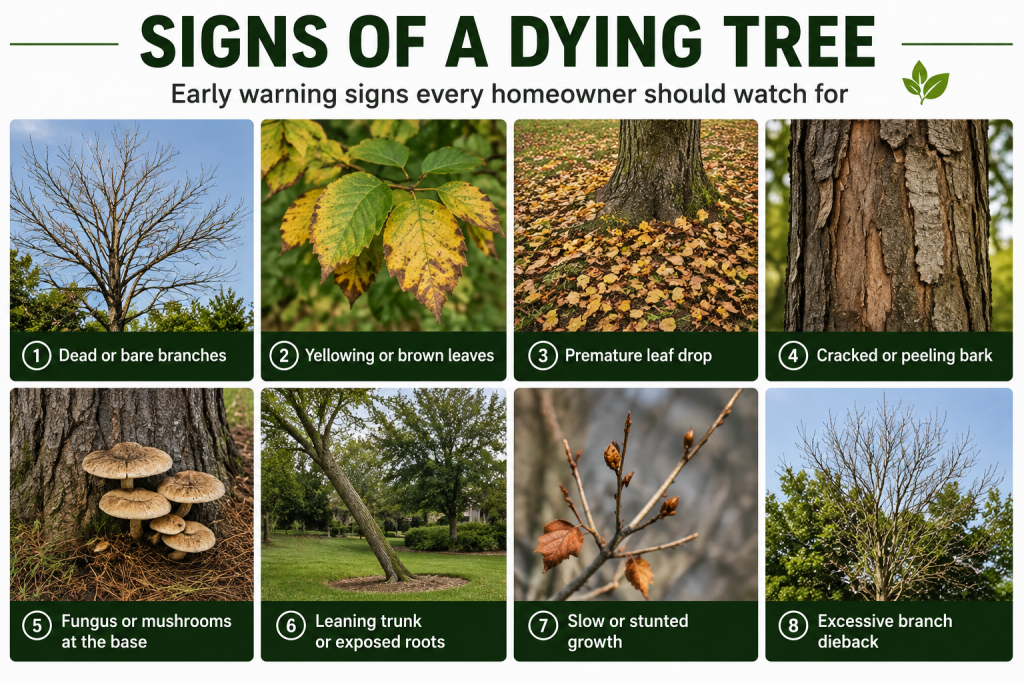
    Common signs of a dying tree including dead branches and yellow leaves

    Signs Your Tree May Be Dying

    Before taking action, How to Save a Dying Tree determine whether your tree is stressed or truly dying. Watch for these warning signs:

    • Dead or brittle branches
    • Sparse, yellow, or brown leaves
    • Premature leaf drop
    • Cracked or peeling bark
    • Mushrooms growing near the base
    • Leaning trunk or exposed roots
    • Slow or stunted growth
    • Excessive branch dieback

    If several of these symptoms appear at the same time, your tree likely needs immediate attention.

    Step 1: Identify the Cause of Decline

    The first step in learning how to save a dying tree is finding out what caused the problem.

    Common causes include:

    Underwatering

    Trees suffering from drought often develop brown leaves, thin canopies, and dry soil around the roots.

    Overwatering

    Too much water can suffocate roots and encourage fungal growth. Yellow leaves and constantly wet soil are common signs.

    Pest Infestations

    Insects such as borers, beetles, and aphids can weaken a tree by feeding on bark, leaves, and wood.

    Disease

    Fungal and bacterial diseases may cause cankers, leaf spots, root rot, or branch dieback.

    Root Damage

    Construction work, soil compaction, or buried roots can prevent a tree from absorbing water and nutrients.

    Correct diagnosis is essential because treating the wrong issue can make the situation worse.

    Step 2: Water Deeply and Correctly

    Proper watering is one of the most effective ways to save a stressed tree.

    Instead of frequent shallow watering:

    • Water slowly and deeply
    • Focus on the area beneath the canopy
    • Allow moisture to reach deeper roots
    • Water early in the morning when possible

    Most established trees benefit How to Save a Dying Tree from deep watering during dry periods rather than daily light watering. Deep watering encourages stronger root development and improves drought resistance.

    Step 3: Apply Mulch Properly

    Mulch helps retain moisture, regulate soil temperature, and reduce weed competition.

    For best results:

    • Apply 2 to 4 inches of organic mulch
    • Extend the mulch ring outward around the tree
    • Keep mulch several inches away from the trunk
    • Avoid creating a “mulch volcano” around the base

    Improper mulching can trap moisture against the bark and contribute to rot and disease. How to Save a Dying Tree

    Step 4: Prune Dead and Damaged Branches

    Pruning removes unhealthy growth and helps redirect energy to healthy portions of the tree.

    When pruning:

    • Remove dead, broken, or diseased branches
    • Use clean and sharp tools
    • Avoid excessive pruning
    • Cut just outside the branch collar

    Over-pruning can create additional stress, especially for already weakened trees. How to Save a Dying Tree

    Step 5: Improve Soil Health

    Healthy soil is critical for tree recovery. How to Save a Dying Tree

    You can improve soil conditions by:

    • Reducing soil compaction
    • Adding organic matter
    • Removing competing grass and weeds
    • Ensuring proper drainage

    If soil is heavily compacted, roots may struggle to access oxygen, water, and nutrients.

    Step 6: Monitor for Pests and Disease

    Inspect your tree regularly for signs of insects, fungi, or infections.

    Look for:

    • Holes in the bark
    • Oozing sap
    • Unusual leaf discoloration
    • Fungal growth
    • Sawdust-like material around the trunk

    Early treatment can prevent widespread damage and improve the chances of recovery.

    Step 7: Fertilize Carefully

    Many homeowners assume fertilizer is the solution, but applying fertilizer to a stressed tree can sometimes cause more harm than good.

    Before fertilizing:

    • Test the soil if possible
    • Determine nutrient deficiencies
    • Choose a slow-release tree fertilizer
    • Follow label instructions carefully

    Healthy roots and proper watering should be addressed before adding fertilizer.

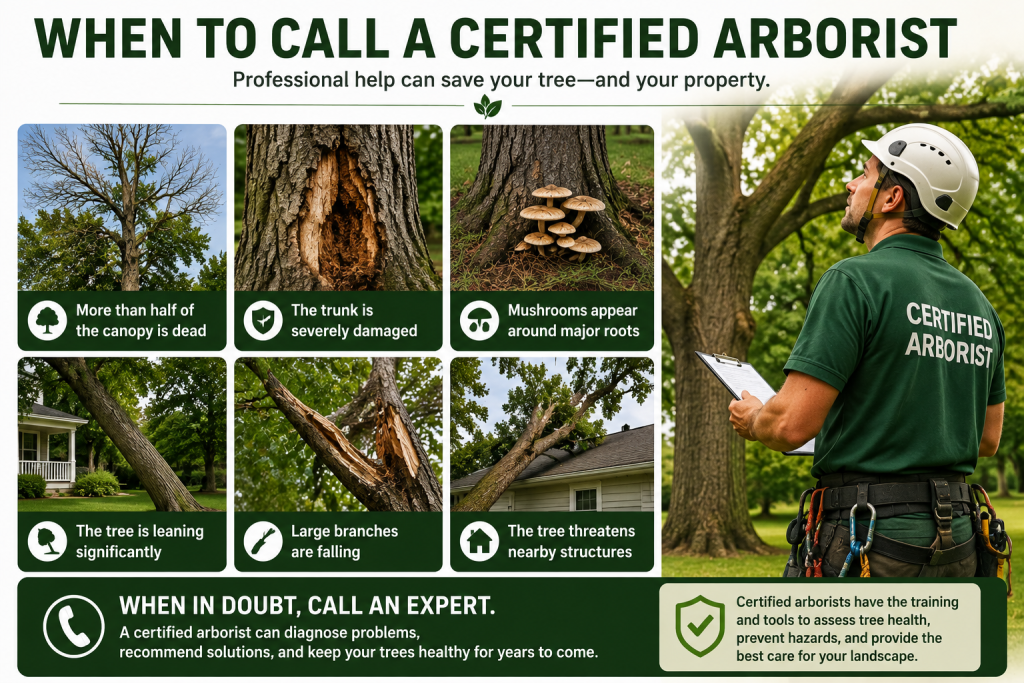
    When to call a certified arborist for a dying tree showing severe damage and safety risks

    When to Call a Certified Arborist

    Some trees require professional evaluation.

    Contact a certified arborist if:

    • More than half of the canopy is dead
    • The trunk is severely damaged
    • Mushrooms appear around major roots
    • The tree is leaning significantly
    • Large branches are falling
    • The tree threatens nearby structures

    Professional arborists can diagnose diseases, assess structural risks, and determine whether the tree can be saved.

    Final Thoughts

    Knowing how to save a dying tree can help protect one of the most valuable features of your landscape. The key is acting quickly, identifying the root cause, and providing proper care through deep watering, correct mulching, strategic pruning, and ongoing monitoring. For many US homeowners in 2026, early intervention can mean the difference between losing a mature tree and restoring it to full health.

    A healthy tree not only improves curb appeal but also increases property value, provides shade, supports local wildlife, and enhances the overall environment. How to Save a Dying Tree By following these proven tree-care practices, you can give your struggling tree the best possible chance of recovery.

  • Tree Health Complete Guide for US Homeowners 2026

    Tree Health Complete Guide for US Homeowners 2026

    Tree Health: Complete 2026 Guide for Healthy Trees in the USA

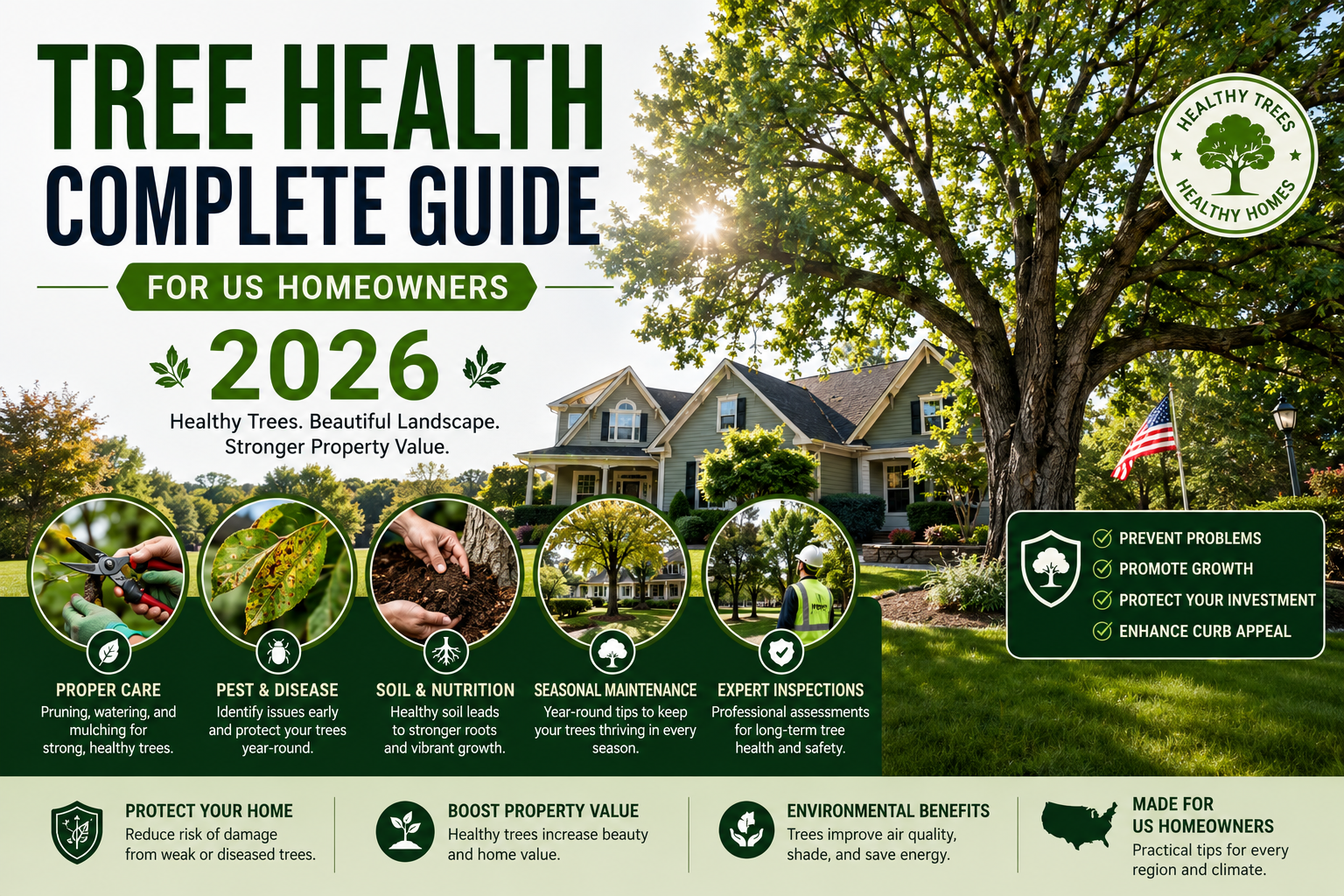
    Healthy trees improve your property’s appearance, increase home value, provide shade, and support the environment. Maintaining Tree Health should be a priority for every homeowner because strong trees are safer, live longer, and require fewer expensive repairs. Whether you own one tree or an entire landscape, understanding proper tree care can save time and money.

    This 2026 guide explains the essentials of Tree care, including watering, pruning, fertilization, disease prevention, and professional maintenance for homeowners across the United States.


    Why Tree Health Matters

    Maintaining Tree benefits both your property and the environment. Healthy trees absorb carbon dioxide, improve air quality, reduce soil erosion, and provide habitats for wildlife. They also increase curb appeal and can raise property value.

    Poor Tree can lead to weak branches, disease, pest infestations, and costly emergency tree removal.


    Signs of Good Tree Health

    A healthy tree usually displays several visible characteristics.

    Look for these signs:

    • Bright green leaves during the growing season
    • Strong branch structure
    • Healthy bark without deep cracks
    • New seasonal growth
    • Balanced canopy
    • No signs of decay
    • Strong root system

    Regular inspections help maintain excellent Tree throughout the year.


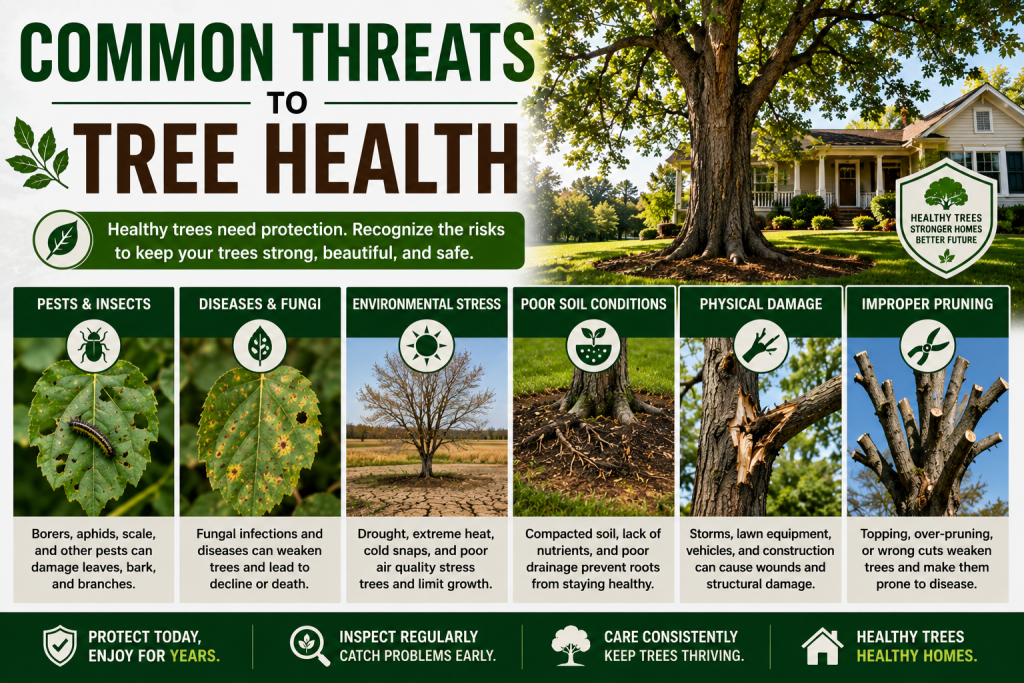
    Infographic showing common threats to tree health, including pests, diseases, drought, poor soil, storm damage, and improper pruning around a healthy residential tree.

    Common Threats to Tree Health

    Many factors can affect Tree if left untreated.

    The most common problems include:

    • Drought stress
    • Overwatering
    • Poor soil conditions
    • Insect infestations
    • Tree diseases
    • Storm damage
    • Root damage
    • Improper pruning

    Early detection makes protecting Tree Care much easier.


    Watering Trees Properly

    Water plays a major role in Tree Health.

    Best watering practices include:

    • Water deeply instead of frequently.
    • Water early in the morning.
    • Avoid flooding the roots.
    • Increase watering during drought.
    • Use mulch to retain moisture.

    Proper watering supports long-term Tree Care while preventing root stress.


    The Importance of Tree Pruning

    Routine pruning is one of the best ways to improve Tree.

    Professional pruning helps:

    • Remove dead branches
    • Improve airflow
    • Reduce storm damage
    • Encourage healthy growth
    • Prevent disease spread
    • Improve tree appearance

    Proper pruning is an essential part of Tree Care for residential landscapes.


    Fertilizing for Better Tree Health

    Trees require nutrients for healthy growth.

    Professional fertilization improves Tree by providing:

    • Nitrogen
    • Phosphorus
    • Potassium
    • Essential micronutrients

    Before fertilizing, consider a soil test to determine nutrient deficiencies. Proper fertilization strengthens Healthy Tree Care and promotes long-lasting growth.


    Protecting Trees from Pests and Diseases

    Pests and diseases are among the biggest threats to Tree Health.

    Watch for:

    • Leaf discoloration
    • Wilting leaves
    • Bark damage
    • Fungal growth
    • Insect holes
    • Premature leaf drop

    Early treatment is essential for successful Tree Care and preventing permanent damage.


    Seasonal Healthy Tree Care Tips

    Each season requires different maintenance practices.

    Spring

    • Inspect for winter damage.
    • Apply mulch.
    • Fertilize if needed.

    Summer

    • Water during dry periods.
    • Monitor pests.
    • Check soil moisture.

    Fall

    • Remove dead branches.
    • Clean fallen leaves.
    • Prepare trees for winter.

    Winter

    • Inspect after storms.
    • Protect young trees.
    • Avoid damaging roots with heavy equipment.

    Following seasonal routines keeps Tree strong throughout the year.


    When to Call a Professional Arborist

    Although homeowners can perform basic maintenance, some situations require professional help.

    Hire an arborist if you notice:

    • Large dead branches
    • Tree leaning suddenly
    • Root damage
    • Severe insect infestations
    • Tree disease
    • Storm damage
    • Cracked trunk

    Professional inspections improve Tree Care services and prevent major problems before they become expensive.


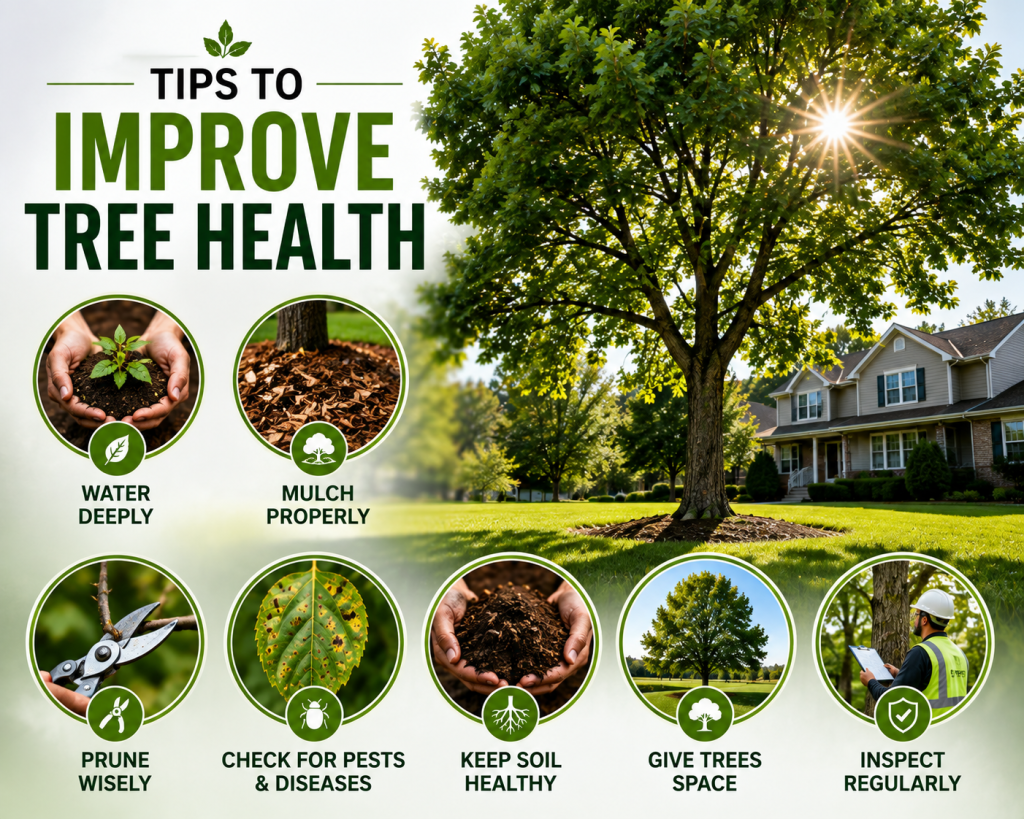
    Healthy tree with simple tree care tips including deep watering, mulching, pruning, pest inspection, healthy soil, and regular maintenance for stronger tree health.

    Tips to Improve Tree Health

    Use these simple practices to maintain excellent Tree :

    • Water deeply during dry weather.
    • Prune dead limbs annually.
    • Add organic mulch around the base.
    • Avoid damaging roots with lawn equipment.
    • Inspect trees after storms.
    • Monitor for pests and diseases.
    • Schedule yearly professional inspections.

    Consistent Tree Care keeps trees attractive, safe, and long-lasting.


    Conclusion

    Maintaining Healthy Tree is one of the best investments homeowners can make. Healthy trees provide beauty, shade, cleaner air, and greater property value while reducing safety risks.

    With proper watering, pruning, fertilization, and regular inspections, your trees can thrive for decades. Following these Tree practices and investing in professional Healthy Tree Care services when needed will help protect your landscape throughout 2026 and beyond.


    Frequently Asked Questions (FAQs)

    1. Why is tree health important?

    Good Tree Health helps trees grow stronger, resist disease, improve property value, and reduce safety hazards.

    2. How often should trees be inspected?

    Most arborists recommend professional inspections once a year and after major storms.

    3. What causes poor tree ?

    Common causes include drought, pests, disease, poor soil, improper pruning, and root damage.

    4. How can I improve tree naturally?

    Water deeply, apply mulch, fertilize when needed, prune correctly, and monitor for pests.

    5. When should I hire a professional arborist?

    Call an arborist if you notice dead branches, leaning trees, trunk damage, severe pest infestations, or signs of disease.