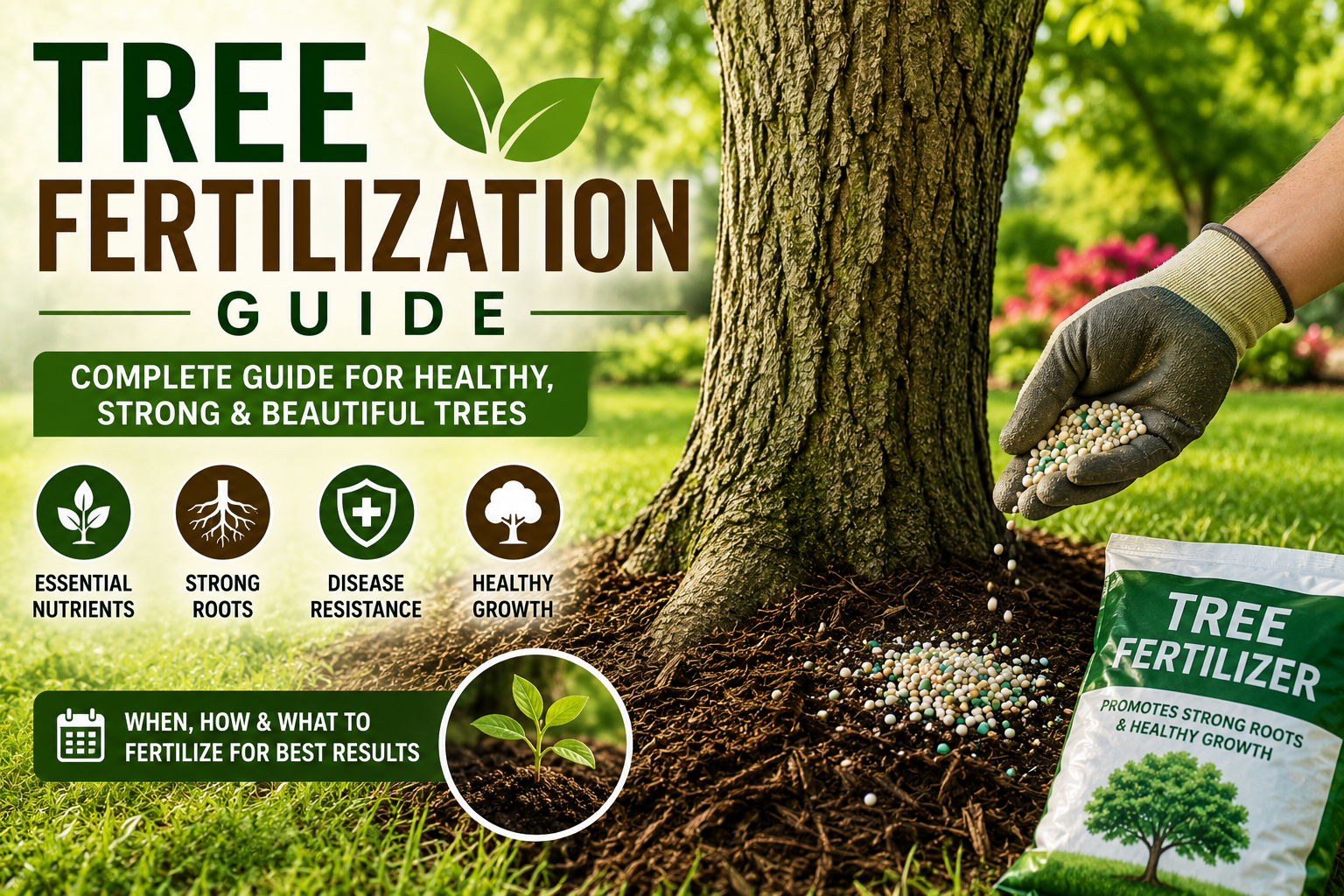
Tree Fertilization Guide
Healthy trees are a valuable part of any landscape. They provide shade, improve air quality, increase property value, and enhance curb appeal. However, many homeowners overlook one essential aspect of tree care: proper fertilization. A well-planned Tree Fertilization Guide can help trees grow stronger, resist disease, and thrive throughout the year.
Whether you have ornamental trees, shade trees, or fruit-bearing varieties, understanding how and when to fertilize is critical. This comprehensive Tree Fertilization Guide is designed specifically for US homeowners who want healthier and more resilient trees in 2026 and beyond.
Why Tree Fertilization Matters
Trees require nutrients to support healthy growth. While natural soil contains essential nutrients, these resources can become depleted over time due to weather conditions, construction activities, lawn competition, and repeated plant growth.
The three primary nutrients trees need are:
- Nitrogen (N): Promotes leaf and branch growth.
- Phosphorus (P): Supports root development.
- Potassium (K): Enhances overall tree health and disease resistance.
Following a proper Tree Fertilization Guide helps replenish these nutrients and supports long-term tree vitality.
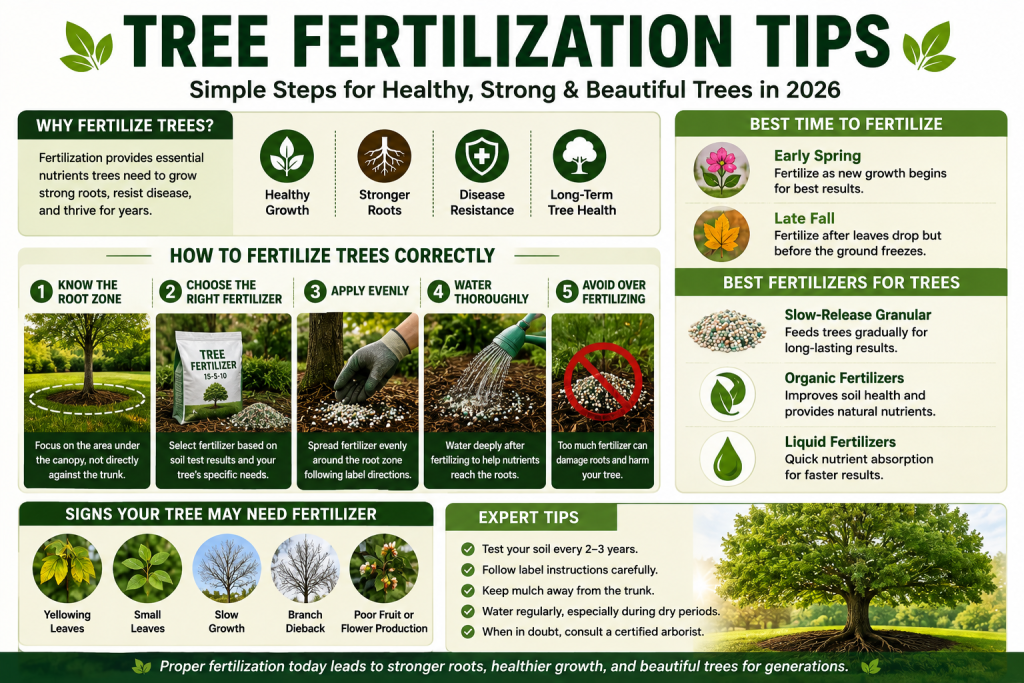
Signs Your Tree May Need Fertilizer
Not every tree requires fertilization every year. However, several warning signs may indicate nutrient deficiencies:
Slow Growth
Trees that grow less than expected each season may lack essential nutrients.
Yellowing Leaves
Leaves that become pale green or yellow during the growing season can signal nutrient shortages.
Small Leaves
Reduced leaf size often indicates poor soil fertility.
Branch Dieback
Weak branches and declining canopy growth may suggest nutritional stress.
Poor Flower or Fruit Production
Fruit and flowering trees often show reduced productivity when nutrients are lacking.
If you notice these symptoms, it may be time to follow a proven Tree Fertilization Guide to restore tree health.
Best Time to Fertilize Trees
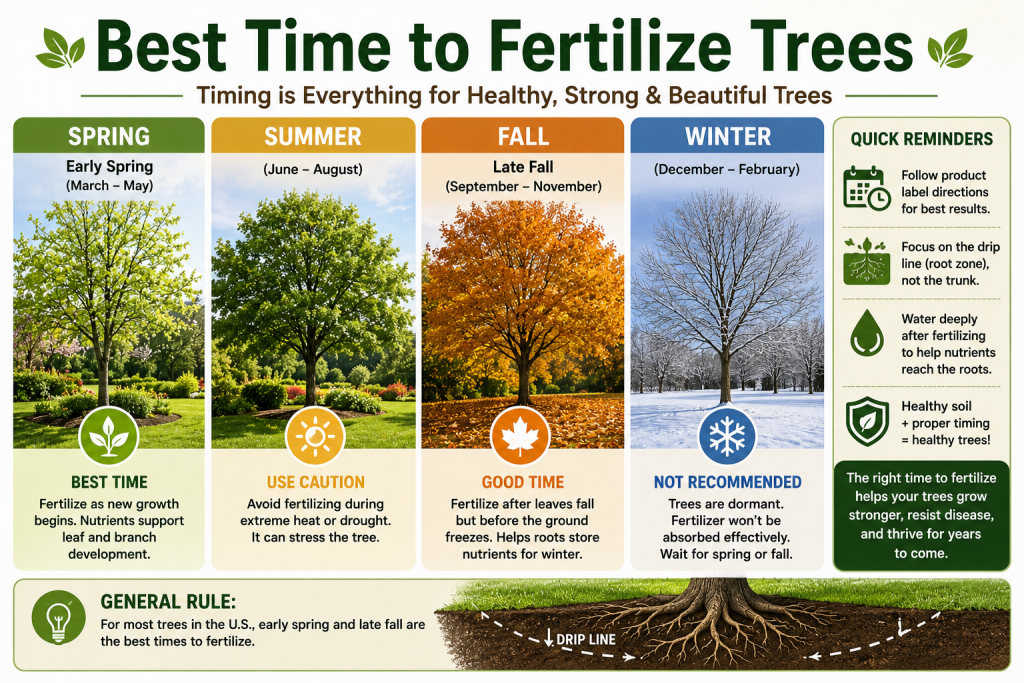
Timing plays a major role in successful fertilization.
Early Spring
Spring is often considered the ideal time to fertilize trees because nutrients support new growth as the growing season begins.
Late Fall
Many arborists also recommend fertilizing in late fall after leaves have dropped but before the ground freezes.
Avoid Mid-Summer Stress Periods
Fertilizing during extreme heat can place additional stress on trees, especially in southern US states.
A strategic schedule is one of the most important parts of any effective Tree Fertilization Guide.
Choosing the Right Tree Fertilizer
Different trees have different nutritional requirements. The most common fertilizer options include:
Slow-Release Granular Fertilizer
Slow-release products provide nutrients gradually over time and are often preferred for landscape trees.
Organic Fertilizers
Organic options improve soil structure while supplying nutrients naturally.
Liquid Fertilizers
These provide faster nutrient availability but may require more frequent applications.
Specialized Tree Fertilizers
Some products are designed specifically for flowering trees, evergreens, or fruit trees.
Before applying fertilizer, consider conducting a soil test to determine the exact nutrient needs of your landscape.
How to Fertilize Trees Correctly
Applying fertilizer properly is just as important as selecting the right product.
Step 1: Measure the Root Zone
Focus on the root zone beneath the tree canopy rather than applying fertilizer directly against the trunk.
Step 2: Calculate the Amount Needed
Follow manufacturer recommendations carefully to avoid over-fertilization.
Step 3: Distribute Evenly
Spread fertilizer uniformly throughout the root area.
Step 4: Water Thoroughly
Watering helps nutrients move into the soil where roots can absorb them.
Following these simple steps ensures your Tree Fertilization Guide produces the best possible results.
Common Tree Fertilization Mistakes
Many homeowners unintentionally damage trees through improper fertilization practices.
Avoid these common mistakes:
- Applying too much fertilizer
- Fertilizing unhealthy or severely stressed trees
- Ignoring soil testing
- Applying fertilizer directly against the trunk
- Using lawn fertilizer around trees without checking nutrient content
- Fertilizing during drought conditions without adequate watering
A balanced Tree Fertilization Guide focuses on supporting healthy growth rather than forcing excessive growth.
Organic Tree Fertilization Tips
Organic tree care continues to gain popularity among environmentally conscious homeowners.
Consider these natural options:
- Compost
- Aged manure
- Leaf mold
- Organic mulch
- Compost tea
These materials gradually improve soil health while supplying nutrients that support sustainable tree growth.
Benefits of Proper Tree Fertilization
A well-executed Tree Fertilization Guide provides numerous advantages:
- Stronger root systems
- Improved disease resistance
- Better drought tolerance
- Healthier foliage
- Enhanced flowering and fruit production
- Increased longevity
- Improved property value
Healthy trees contribute significantly to both residential landscapes and local ecosystems.
Should You Hire a Professional Arborist?
While many homeowners can fertilize trees themselves, certain situations may require professional assistance.
Consider hiring a certified arborist if:
- Large mature trees are declining
- Soil conditions are poor
- Nutrient deficiencies are severe
- You need professional soil analysis
- Valuable landscape trees require specialized care
Professional arborists can develop customized fertilization programs tailored to your specific tree species and local soil conditions.
Conclusion
A reliable Tree Fertilization Guide is one of the most valuable resources for maintaining healthy trees in your landscape. By understanding nutrient requirements, choosing the right fertilizer, applying it correctly, and avoiding common mistakes, homeowners can significantly improve tree health and longevity.
As we move through 2026, proper tree fertilization remains a key component of responsible landscape management across the United States. Healthy, well-nourished trees not only beautify your property but also provide environmental benefits that can last for generations.