Tag: Tree Care 2026

  • Common Tree Diseases in Texas: Guide for Homeowners 2026

    Common Tree Diseases in Texas: Guide for Homeowners 2026

    Common Tree Diseases in Texas

    Texas has a wide variety of trees, from live oaks and red oaks to pecans, elms, and cedar trees. Unfortunately, the state’s hot summers, unpredictable weather, drought conditions, humidity, and occasional heavy rainfall can create ideal conditions for fungal infections and other tree problems.

    Knowing the common tree diseases in Texas can help homeowners identify warning signs early and protect valuable landscape trees. In 2026, regular tree inspections remain one of the best ways to prevent minor disease problems from becoming major tree health issues.

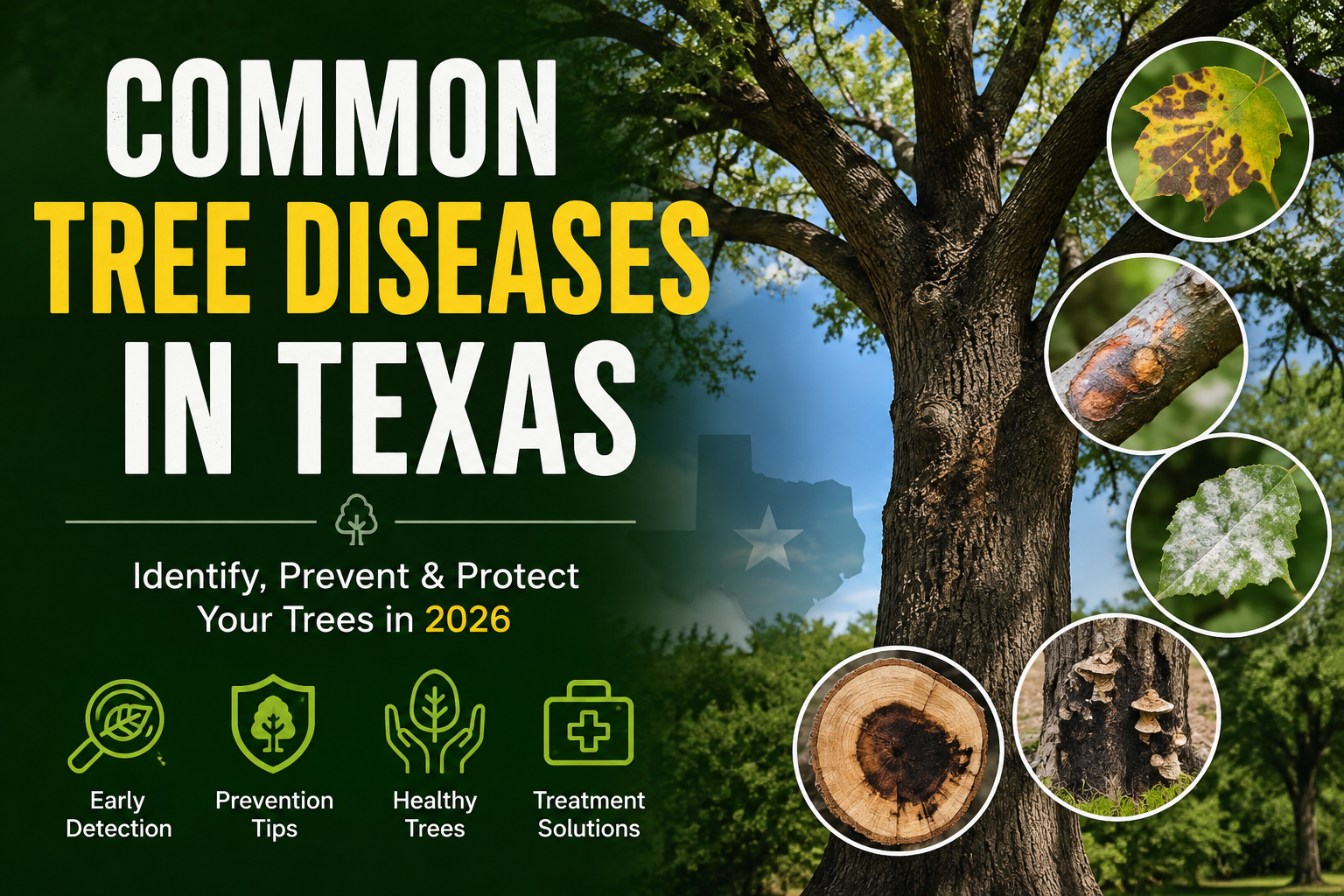
    1. Oak Wilt

    Oak wilt is one of the most serious common tree diseases in Texas, particularly for certain oak species. It is caused by a fungus that interferes with the tree’s water-conducting system.

    Symptoms may include browning or wilting leaves, premature leaf drop, and discoloration spreading through the canopy. Red oak species can be especially vulnerable.

    Because oak wilt can spread between nearby trees through interconnected roots, professional diagnosis is important. Avoid pruning oak trees during periods when the disease can spread easily, and always use proper pruning practices.

    2. Hypoxylon Canker

    Hypoxylon canker is another important concern among common tree diseases in Texas. It commonly affects stressed or weakened trees, especially during drought conditions.

    A tree affected by Hypoxylon canker may develop thinning foliage, dying branches, and patches of gray or silver-colored bark. Eventually, the outer bark may fall away and reveal a dark, powdery layer underneath.

    There is no simple cure for advanced Hypoxylon canker. Improving overall tree health through proper watering, mulching, and protection from unnecessary damage can help reduce stress.

    3. Anthracnose

    Anthracnose is a fungal disease that can affect leaves, twigs, and young branches. It is often associated with cool, wet spring weather.

    Symptoms can include dark spots on leaves, irregular brown patches, premature leaf drop, and twig damage. Although anthracnose may look alarming, healthy mature trees can often recover when growing conditions improve.

    Good air circulation, removal of infected plant material, and appropriate pruning can help manage the disease.

    4. Powdery Mildew

    Powdery mildew is easy to recognize because it creates a white, powder-like coating on leaves. It is among the common tree diseases in Texas and can affect ornamental trees and shrubs.

    The disease typically develops when humidity is high and air circulation is poor. In severe cases, affected leaves may curl, yellow, or fall prematurely.

    Keeping plants properly spaced and avoiding unnecessary overhead watering can help reduce favorable conditions for fungal growth.

    5. Root Rot

    Root rot is another serious problem included among common tree diseases in Texas. It is generally associated with excessive soil moisture, poor drainage, or fungal organisms attacking damaged roots.

    Signs can include yellowing leaves, slow growth, branch dieback, and a generally unhealthy appearance. Because root problems occur underground, diagnosis can be difficult without professional evaluation.

    Improving drainage and avoiding excessive irrigation are important preventative steps.

    How to Identify Tree Disease Symptoms

    Recognizing symptoms early can make managing common tree diseases in Texas much easier. Homeowners should regularly check for:

    • Discolored or unusually small leaves
    • Premature leaf drop
    • Dead branches
    • Cankers or unusual bark damage
    • White, black, or powdery growth
    • Thinning tree canopies
    • Fungal growth around the trunk
    • Poor or stunted growth

    Not every symptom means a tree has a disease. Insects, drought, soil problems, construction damage, and extreme temperatures can create similar signs.

    How to Prevent Texas Tree Diseases

    Prevention is one of the most effective ways to manage common tree diseases in Texas. Start by selecting tree species that are appropriate for your local climate and soil conditions.

    Water trees deeply when necessary, but avoid keeping the soil constantly saturated. Apply mulch around the root zone while keeping mulch away from direct contact with the trunk.

    Proper pruning is also important. Remove dead or damaged branches using clean equipment, and avoid unnecessary cuts that create entry points for pathogens.

    Professional inspections can also help identify common tree diseases in Texas before visible damage becomes severe.

    When to Call a Tree Professional

    Some common tree diseases in Texas require professional diagnosis because different diseases can produce similar symptoms. A certified arborist can examine the leaves, branches, trunk, roots, and surrounding soil to determine the likely cause.

    Professional help is especially important when a tree is large, located near a house or power line, losing major branches, or showing rapid decline.

    Early action can sometimes protect the affected tree and reduce the risk of disease spreading to nearby trees.
    Protect your trees in 2026 with proper tree care and early disease detection

    Protect Your Trees in 2026

    Understanding common tree diseases in Texas gives homeowners a better chance of maintaining healthy and attractive landscapes. Oak wilt, Hypoxylon canker, anthracnose, powdery mildew, and root rot can all affect Texas trees under the right conditions.

    Regular inspections, proper watering, appropriate pruning, good soil management, and professional diagnosis can make a significant difference. If you notice unusual leaf discoloration, branch dieback, bark damage, or rapid tree decline, don’t ignore the warning signs.

    By learning about common tree diseases in Texas and taking preventive action, Texas homeowners can help their trees remain healthier and safer throughout 2026 and beyond.

    Frequently Asked Questions

    What is the most serious tree disease in Texas?
    Oak wilt is considered one of the most serious diseases affecting susceptible oak trees in Texas because it can spread between trees and cause significant mortality.

    How do I know if my Texas tree is diseased?
    Look for unusual leaf discoloration, premature leaf loss, dead branches, bark changes, fungal growth, and unexplained canopy thinning. These symptoms can also result from drought or insects, so professional diagnosis may be necessary.

    Can diseased trees be saved?
    It depends on the disease, tree species, and severity. Some problems can be managed successfully when detected early, while severely affected trees may not be recoverable.

    When should I call an arborist?
    Contact an arborist when symptoms are spreading quickly, major branches are dying, the trunk shows significant damage, or you are unsure whether the problem is disease, insects, or environmental stress.
  • Broken Tree Branch Safety: Complete Guide 2026

    Broken Tree Branch Safety: Complete Guide 2026

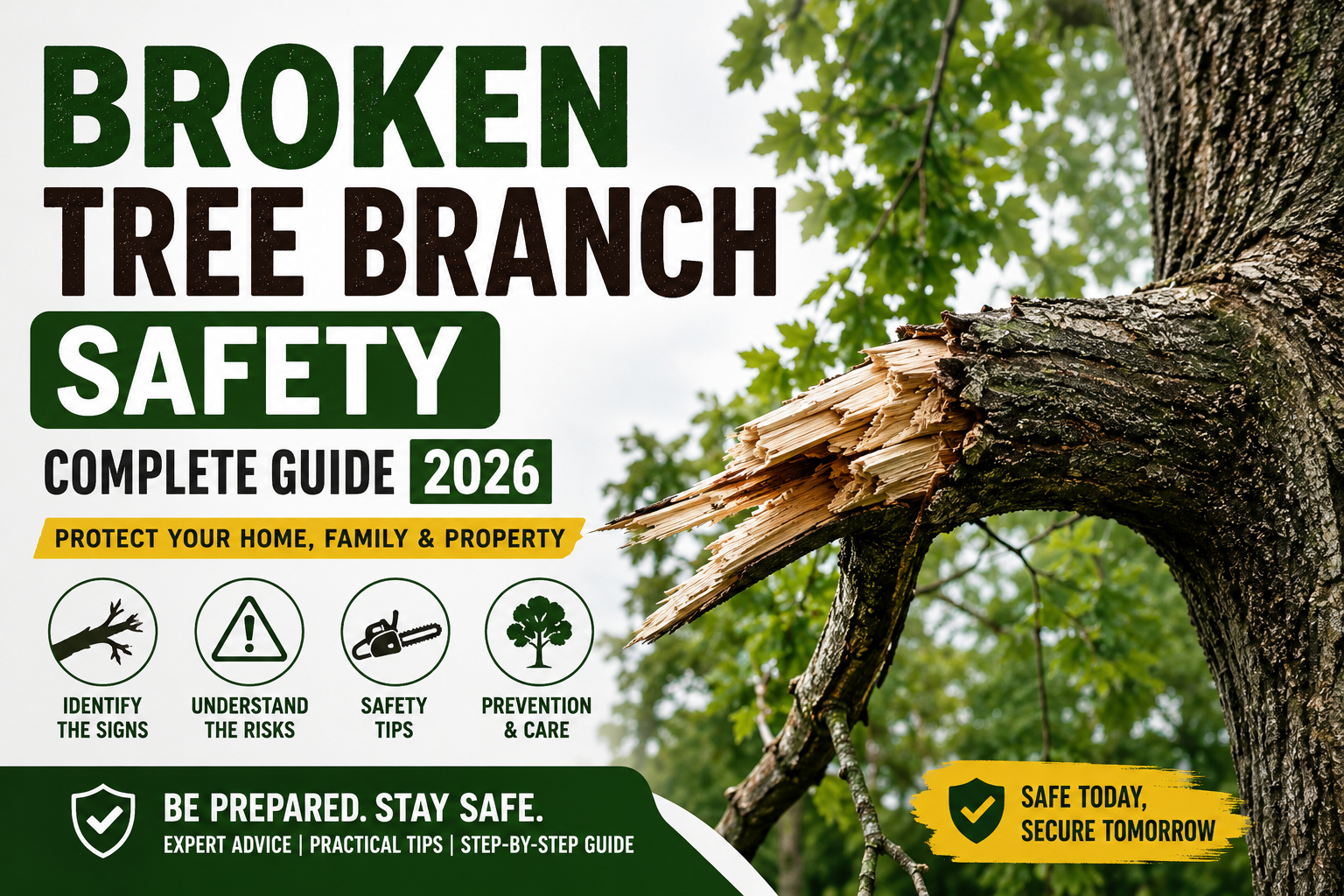
    Broken Tree Branch Safety

    Storms, heavy winds, ice, and aging trees can leave dangerous branches hanging over your home or yard. Understanding Broken Tree Branch Safety is essential for protecting your family, property, and neighbors. A damaged branch may appear stable but can fall without warning, causing serious injuries or expensive property damage.

    This 2026 guide explains why Broken Tree Branch Safety matters, how to recognize hazardous branches, what to do after a storm, and when to call professional tree experts.


    Why Broken Tree Branch Safety Is Important

    Practicing Broken Tree Branch Safety helps prevent accidents before they happen. Broken branches can fall on:

    • Homes
    • Vehicles
    • Power lines
    • Sidewalks
    • Driveways
    • People and pets

    Ignoring damaged branches increases the risk of injury and costly repairs. Following proper Broken Tree Branch Safety practices keeps your property secure throughout the year.


    Common Causes of Broken Tree Branches

    Several factors can create dangerous branches.

    The most common causes include:

    • Severe thunderstorms
    • High winds
    • Lightning strikes
    • Ice and snow accumulation
    • Dead or diseased limbs
    • Tree decay
    • Poor pruning practices
    • Heavy branch weight

    After any severe weather event, inspect your property while keeping Broken Tree Branch Safety in mind.


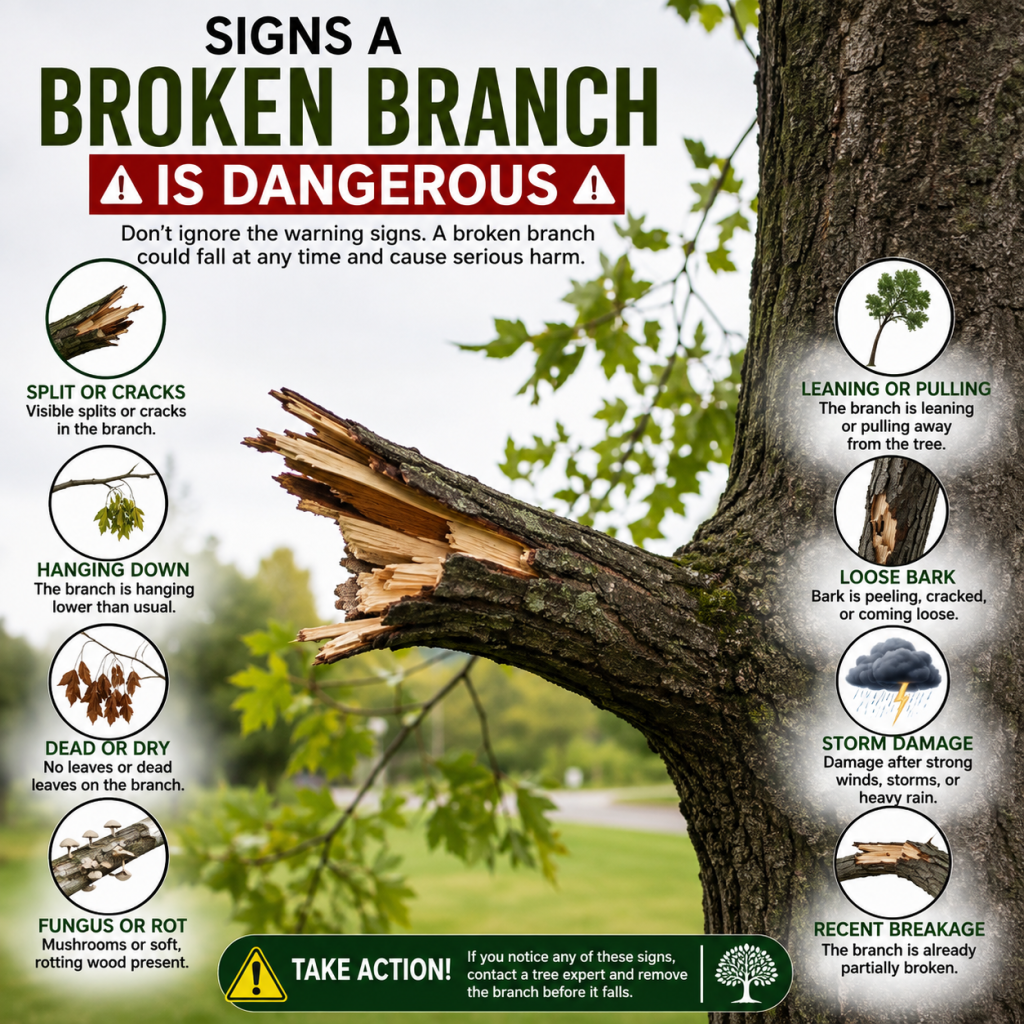
    Infographic showing the warning signs of a dangerous broken tree branch, including cracks, hanging limbs, dead leaves, loose bark, rot, storm damage, and leaning branches.

    Signs a Broken Branch Is Dangerous

    Not every broken limb creates an emergency, but some require immediate attention.

    Watch for:

    • Hanging branches
    • Large cracks in limbs
    • Split trunks
    • Branches touching power lines
    • Dead wood
    • Leaning trees
    • Fresh breaks after storms

    Recognizing these warning signs supports effective Broken Tree Branch Safety and reduces the chance of unexpected accidents.


    What to Do After Finding a Broken Branch

    If you notice a damaged branch, follow these steps.

    1. Stay Away

    Never stand beneath a hanging limb.

    2. Keep Others Safe

    Prevent children and pets from entering the area.

    3. Inspect From a Distance

    Use binoculars if necessary. Never climb a damaged tree.

    4. Contact Professionals

    Hire certified tree experts for safe removal.

    These simple actions improve Broken Tree Branch Safety and reduce unnecessary risks.


    Why Professional Broken Tree Branch Removal Matters

    Although small branches may seem easy to remove, larger limbs can be extremely dangerous.

    Professional Broken Tree Branch Removal offers several advantages:

    • Proper safety equipment
    • Certified arborist experience
    • Safe climbing techniques
    • Controlled branch removal
    • Protection for nearby structures
    • Complete debris cleanup

    Choosing professional Broken Tree Branch Removal minimizes the risk of injury and additional property damage.


    Preventing Broken Tree Branches

    The best way to improve Broken Tree Branch Safety is through regular maintenance.

    Helpful prevention tips include:

    • Schedule annual tree inspections.
    • Remove dead branches early.
    • Trim overgrown limbs.
    • Water trees during drought.
    • Watch for disease or pests.
    • Avoid improper pruning.
    • Inspect trees after storms.

    Routine maintenance significantly reduces the need for emergency Broken Tree Branch Removal.


    When Emergency Tree Service Is Needed

    Call emergency tree professionals immediately if:

    • A branch falls on your roof.
    • Power lines are involved.
    • The tree is unstable.
    • A branch blocks roads or driveways.
    • The damaged limb threatens people or property.

    Quick action supports Broken Tree Branch Safety and prevents further damage.


    Common Mistakes Homeowners Make

    Avoid these dangerous mistakes:

    • Climbing ladders during storms
    • Using chainsaws without training
    • Standing under hanging branches
    • Ignoring damaged limbs
    • Attempting large branch removal alone

    Professional Broken Tree Branch Removal is always the safest option for large or hazardous limbs.


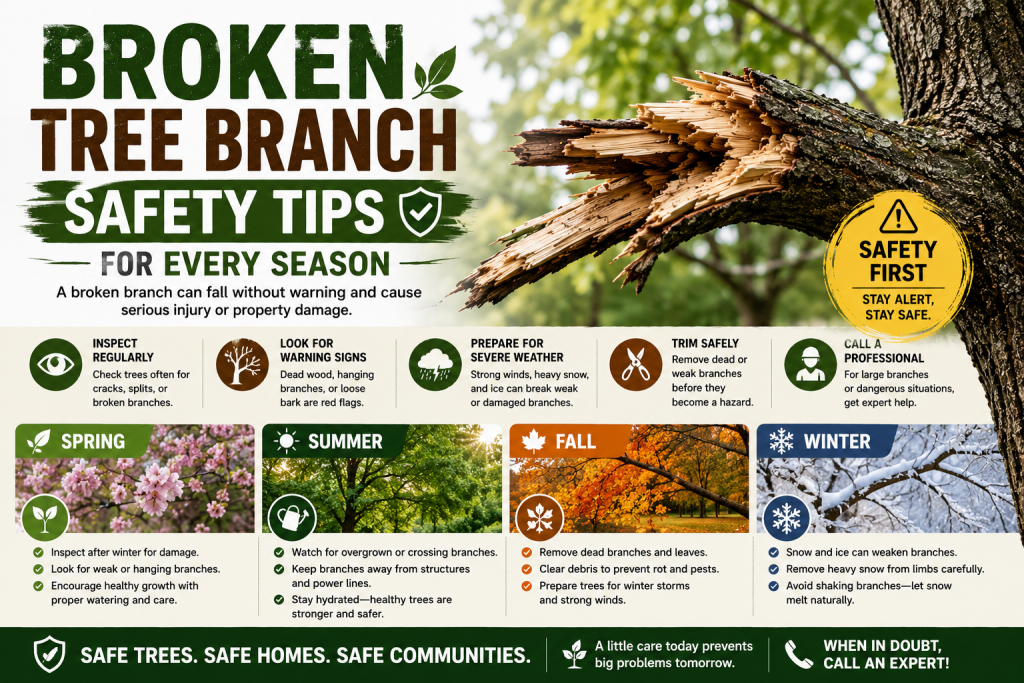
    Infographic showing broken tree branch safety tips for every season, including spring, summer, fall, and winter maintenance to prevent hazardous tree limb failures.

    Broken Tree Branch Safety Tips for Every Season

    Tree hazards are not limited to storm season.

    Maintain Broken Tree Branch Safety year-round by:

    • Inspecting trees each season.
    • Removing dead limbs before winter.
    • Monitoring trees after heavy rain.
    • Scheduling preventive pruning.
    • Keeping trees healthy with proper care.

    Consistent maintenance reduces emergency Broken Tree Branch Removal needs and extends tree life.


    Conclusion

    Practicing Broken Tree Branch Safety is one of the easiest ways to protect your home, family, and property. Hanging or damaged branches should never be ignored because they can fail without warning.

    By inspecting your trees regularly, following proper Broken Tree Branch Safety practices, and hiring professionals for Broken Tree Branch Removal, you can prevent injuries, reduce repair costs, and keep your landscape healthy throughout 2026 and beyond.


    Frequently Asked Questions (FAQs)

    1. What is broken tree branch safety?

    Broken Tree Branch Safety refers to identifying, avoiding, and safely removing damaged tree branches to prevent injuries and property damage.

    2. Can I remove a broken tree branch myself?

    Small branches may be manageable, but large or hanging limbs should always be handled through professional Broken Tree Branch Removal services.

    3. Are broken branches dangerous?

    Yes. Damaged branches can fall unexpectedly, especially after storms or high winds.

    4. When should I call a tree service?

    Call immediately if a branch threatens your home, vehicle, power lines, or public safety.

    5. How often should trees be inspected?

    Most experts recommend inspecting trees at least once a year and after every major storm.