Stump Removal vs Grinding Guide for US Homeowners
After a tree is removed, homeowners often face one important question: Should you choose stump removal vs grinding? While both methods eliminate the remaining tree stump, they work differently and offer unique benefits.
Understanding the difference between stump removal vs grinding can help you make the best decision for your landscape, future construction plans, and budget. In this 2026 guide, we’ll explain how each method works, compare their pros and cons, and help US homeowners choose the right solution.
What Is Stump Removal?
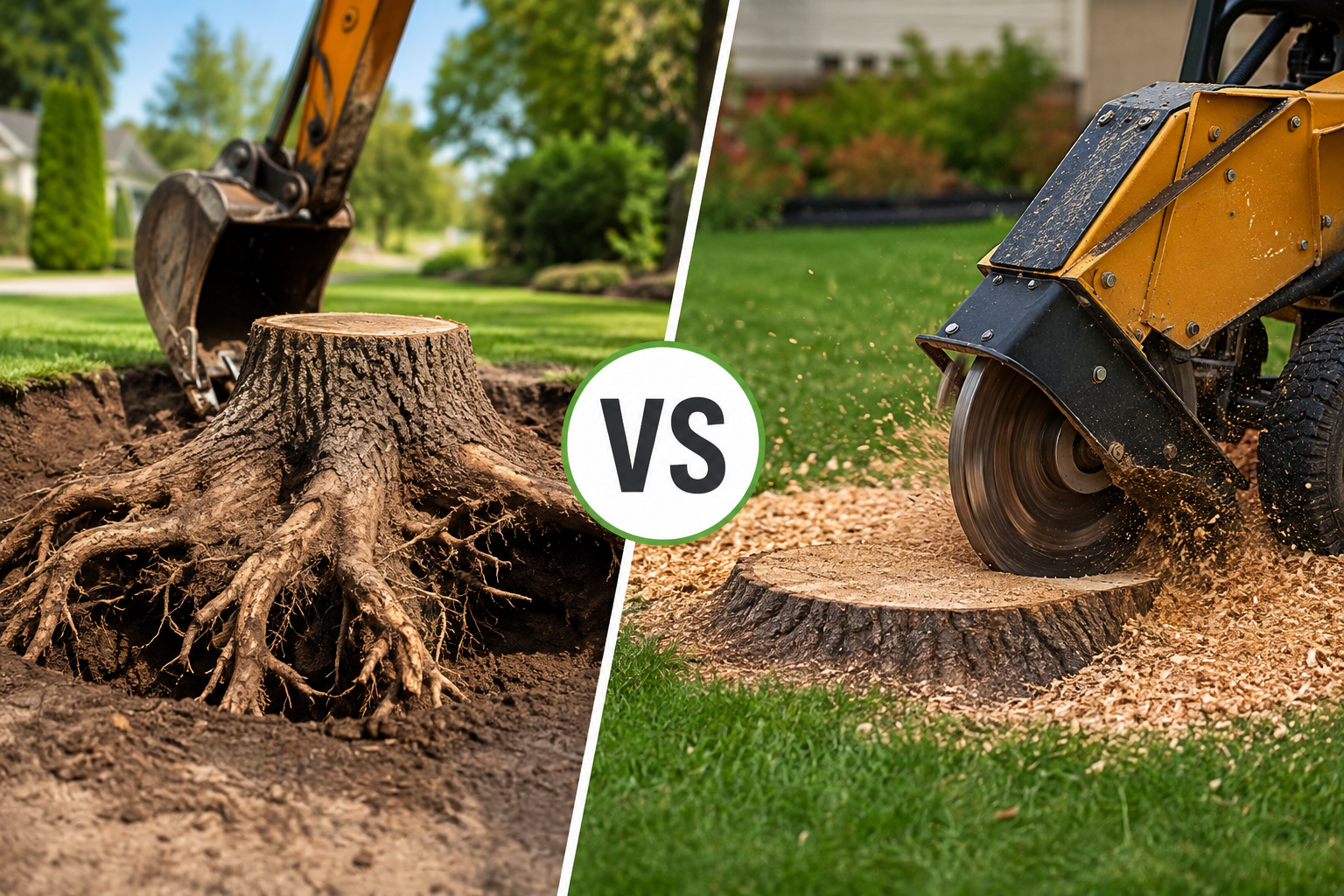
Stump removal is the process of extracting the entire tree stump along with its root system from the ground. Contractors use heavy equipment to pull the stump and major roots out, leaving a large hole that must be filled afterward.
This option completely eliminates the tree from your property, making the area ready for new landscaping or construction.
Benefits of Stump Removal
- Completely removes the stump and roots
- Prevents future root growth
- Ideal for new construction projects
- Allows planting another tree in the same location
- Eliminates hidden root-related issues
Drawbacks
- More expensive than grinding
- Requires heavy machinery
- Can disturb lawns, gardens, and nearby landscaping
- Leaves a large hole that needs restoration
What Is Stump Grinding?
Stump grinding uses a specialized machine that grinds the tree stump into small wood chips. Instead of removing the roots, the stump is ground several inches below ground level.
The remaining roots naturally decay underground over time.
Benefits of Stump Grinding
- Faster process
- Lower cost
- Minimal damage to your yard
- Eco-friendly because mulch can be reused
- Suitable for most residential properties
Drawbacks
- Roots remain underground
- Not suitable if you plan to build over the area
- Small root decay may take several years
- Some tree species may produce new sprouts
Stump Removal vs Grinding: Key Differences
| Feature | Stump Removal | Stump Grinding |
|---|---|---|
| Removes Entire Stump | ✔ Yes | ✘ No |
| Removes Roots | ✔ Mostly | ✘ No |
| Cost | Higher | Lower |
| Time Required | Longer | Faster |
| Yard Damage | Moderate to High | Minimal |
| Best for Construction | ✔ Yes | ✘ No |
| Best for Landscaping | Sometimes | ✔ Yes |
Cost Comparison Stump Removal vs Grinding in the United States (2026)
The cost depends on stump size, tree species, accessibility, and location.
Average Stump Grinding Cost
- Small stump: $100–$180
- Medium stump: $180–$350
- Large stump: $350–$600
Average Stump Removal Cost
- Small stump: $250–$500
- Medium stump: $500–$900
- Large stump: $900–$1,500+
Although stump removal costs more upfront, it may save money if you’re preparing the area for future construction.
Which Option Is Better?
The answer depends on your long-term plans.
Choose Stump Grinding If:
- You want the most affordable solution.
- You want minimal lawn damage.
- You’re not planning construction.
- You want quick cleanup.
- You simply want the stump gone.
Choose Stump Removal If:
- You’re building a patio or driveway.
- You’re installing a foundation or pool.
- You want to plant another tree in the exact location.
- You want all major roots removed.
Environmental Impact
Both methods are environmentally friendly when performed properly.
Stump grinding often has a smaller environmental footprint because:
- Existing roots naturally decompose.
- Wood chips can be recycled into mulch.
- Less soil disruption protects nearby plants.
Stump removal vs Grinding creates more soil disturbance but is sometimes necessary for redevelopment projects.
Can You Leave a Tree Stump?
Some homeowners choose to leave old stumps, but doing so can lead to several problems Stump removal vs Grinding :
- Insect infestations
- Termites and carpenter ants
- Fungal growth
- Lawn mowing obstacles
- Trip hazards
- Reduced curb appeal
Removing or grinding the stump improves both safety and property appearance.
Factors to Consider Before Choosing
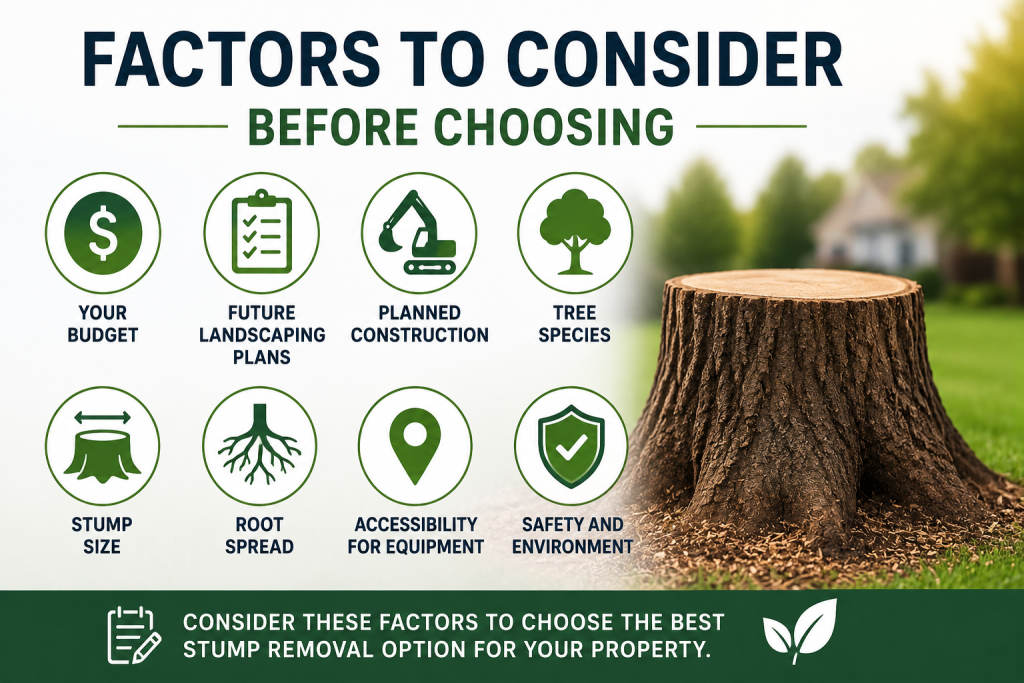
Before deciding between stump removal vs grinding, consider:
- Your budget
- Future landscaping plans
- Planned construction
- Tree species
- Stump size
- Root spread
- Accessibility for equipment
A professional tree service can inspect the site and recommend the most cost-effective option.
Why Professional Service Matters:
Although DIY stump grinders are available, professional contractors have the experience and equipment to complete the job safely.
Hiring professionals helps:
- Prevent underground utility damage
- Avoid property damage
- Complete the project faster
- Ensure proper cleanup
- Improve overall safety
For large or difficult stumps, professional removal is usually the safest investment.
Final Thoughts
When comparing stump removal vs grinding, neither method is universally better—it depends on your property’s needs.
If you’re looking for an affordable, fast, and low-impact solution,
stump grinding is the preferred choice for most US homeowners. However, if you’re planning construction, major landscaping, or want complete root removal, stump removal offers long-term benefits despite the higher cost.
Consulting a qualified tree service professional in 2026 can help you choose the option that best fits your budget, property goals, and future plans.
Frequently Asked Questions (FAQs)
Is stump grinding better than stump removal?
For most residential properties, stump grinding is the better choice because it is faster, less expensive, and causes minimal landscape disruption.
Does stump grinding remove the roots?
No. Stump grinding removes the visible stump, while most roots remain underground and naturally decompose over time.
Can a tree grow back after stump grinding?
Some tree species may produce new shoots, but most trees will not fully regrow after proper stump grinding.
How long does stump removal take?
Most stump removal projects are completed within a few hours, depending on stump size and site conditions.
Which is cheaper: stump removal vs grinding?
Stump grinding is generally the more affordable option and is the preferred choice for homeowners who do not need complete root removal.