Tag: Stump Grinding 2026

  • DIY vs Professional Stump Grinding: (2026 Guide)

    DIY vs Professional Stump Grinding: (2026 Guide)

    DIY vs Professional Stump Grinding

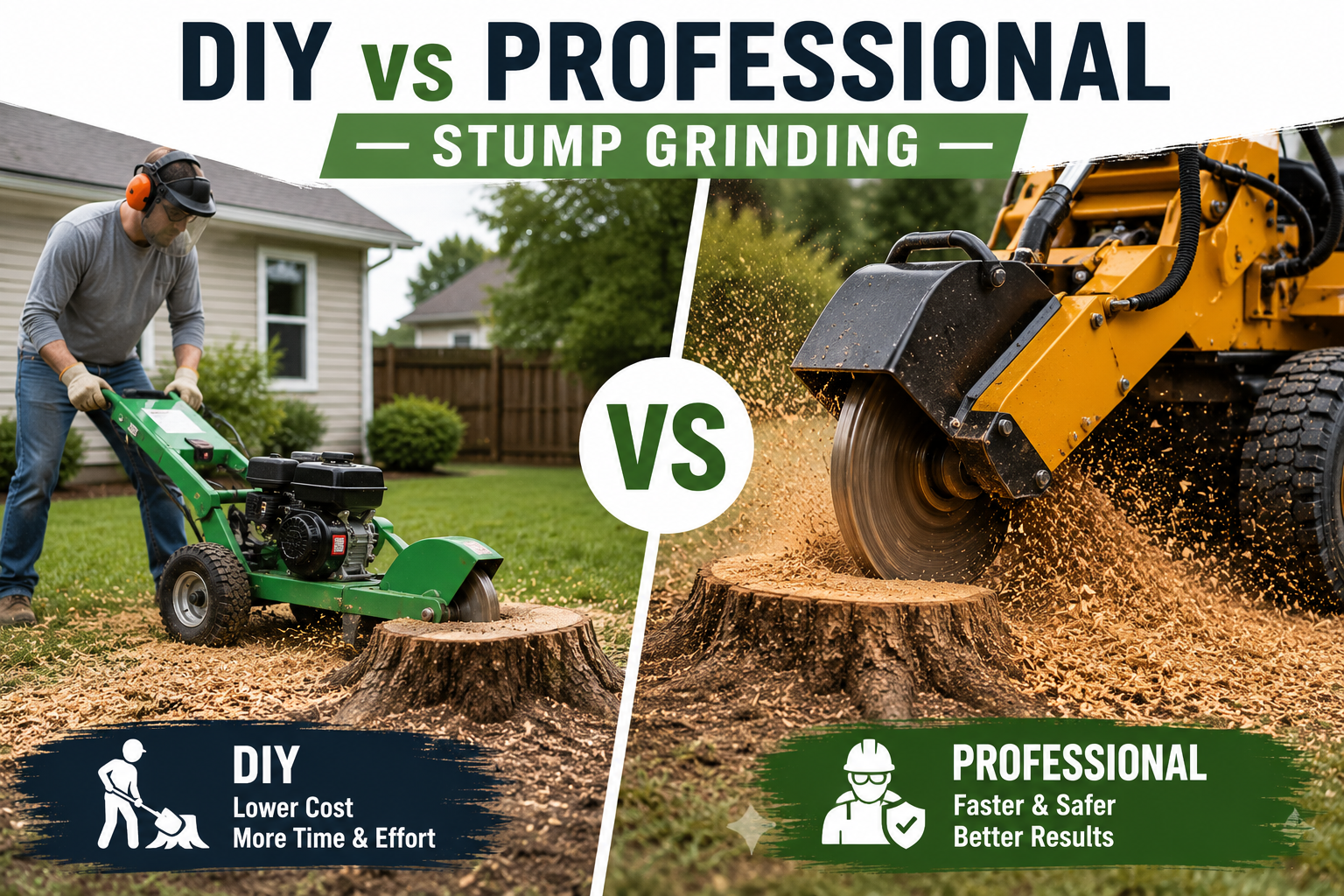
    After removing a tree, homeowners often wonder whether they should handle the remaining stump themselves or hire a professional. Understanding DIY vs Professional Stump Grinding is essential before making a decision. While renting a stump grinder may seem like a money-saving option, professional services often provide better results, improved safety, and faster completion.

    This 2026 guide explains DIY vs Professional Stump Grinding, including costs, equipment, safety concerns, and long-term value for homeowners across the United States.


    What Is Stump Grinding?

    Stump grinding is the process of removing a tree stump using a powerful grinding machine that cuts the wood into small chips. Unlike complete stump removal, grinding leaves the root system underground, where it naturally decomposes over time.

    When comparing DIY vs Professional Stump Grinding, it’s important to understand that both methods remove the visible stump, but they differ greatly in efficiency, safety, and overall results.


    DIY vs Professional Stump Grinding: What’s the Difference?

    The biggest difference between DIY vs Professional Stump Grinding is who performs the work and the equipment being used.

    DIY Stump Grinding

    DIY stump grinding involves renting a stump grinder from a local equipment rental company and completing the project yourself.

    Professional Stump Grinding

    Professional stump grinding is performed by trained tree service experts using commercial-grade equipment designed for faster, safer, and more effective stump removal.


    Pros of DIY Stump Grinding

    Many homeowners consider DIY because of the potential cost savings.

    Advantages

    • Lower upfront cost
    • Flexible work schedule
    • Suitable for small stumps
    • Opportunity to complete simple yard projects yourself

    For homeowners with landscaping experience, DIY may be practical for small and easily accessible stumps.


    Cons of DIY Stump Grinding

    Although DIY sounds appealing, it comes with several challenges.

    Disadvantages

    • Steep learning curve
    • Heavy equipment can be dangerous
    • Higher risk of personal injury
    • Possible damage to underground utilities
    • Equipment rental costs
    • Physical labor required
    • Longer completion time

    When evaluating DIY vs Professional Stump Grinding, safety should always be one of the biggest considerations.


    Benefits of Professional Stump Grinding

    Professional tree service companies bring experience and specialized equipment to every project.

    Advantages

    • Fast completion
    • Commercial-grade machinery
    • Experienced operators
    • Minimal lawn damage
    • Proper cleanup
    • Lower risk of accidents
    • Better final appearance

    For most homeowners, DIY vs Professional Stump Grinding becomes an easy decision when convenience and safety are priorities.
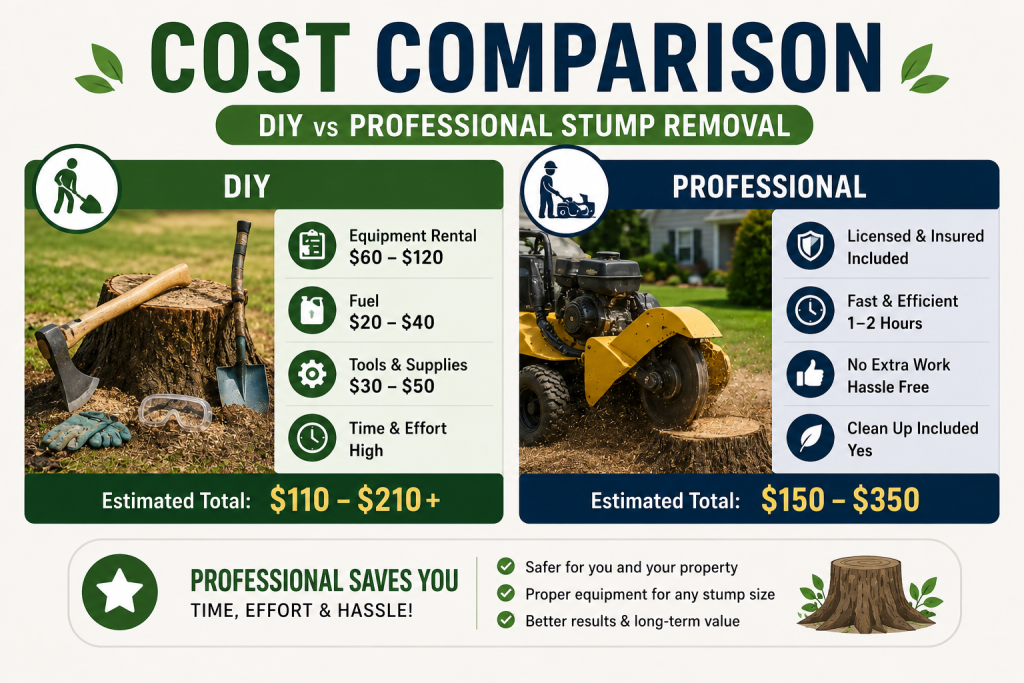

    A professional infographic comparing the cost of DIY vs. professional stump removal. The image highlights estimated expenses for equipment rental, fuel, tools, and labor while showing the advantages of hiring a professional, including licensed service, faster completion, hassle-free cleanup, and long-term value for homeowners.

    Cost Comparison

    One reason homeowners compare DIY vs Professional Stump Grinding is cost.

    DIY Costs

    • Equipment rental: $100–$300 per day
    • Fuel costs
    • Safety gear
    • Transportation fees
    • Potential repair charges

    Professional Costs

    • Small stump: $100–$200
    • Medium stump: $200–$400
    • Large stump: $400–$700+

    Although professional services may appear more expensive initially, they often provide better overall value by saving time and avoiding costly mistakes.


    Safety Considerations

    Safety is one of the most important factors when comparing DIY vs Professional Stump Grinding.

    Professional stump grinders are extremely powerful machines capable of throwing rocks, wood chips, and debris at high speeds. Improper use may result in:

    • Serious injuries
    • Property damage
    • Broken windows
    • Utility line damage
    • Equipment accidents

    Professional contractors are trained to operate these machines safely and follow industry best practices.


    Which Option Saves More Time?

    Time is another major difference in DIY vs Professional Stump Grinding.

    DIY

    • Equipment pickup
    • Learning how to operate the machine
    • Grinding
    • Cleanup
    • Equipment return

    This process may take an entire day or longer.

    Professional

    Most professional stump grinding jobs are completed within 30 minutes to 2 hours, depending on stump size and site conditions.


    When DIY Makes Sense

    DIY may be a reasonable choice if:

    • The stump is small.
    • The ground is level.
    • Equipment is easily accessible.
    • You have experience operating heavy machinery.
    • Safety risks are minimal.

    When You Should Hire a Professional

    Professional stump grinding is recommended when:

    • The stump is large.
    • Multiple stumps need removal.
    • The stump is close to buildings.
    • Underground utilities are nearby.
    • You want quick, clean results.
    • Safety is your top priority.

    For most residential properties, DIY vs Professional Stump Grinding usually favors hiring an experienced tree service company.


    A professional infographic showing essential tips before choosing a tree stump removal service. The image features a tree stump in a residential yard alongside a checklist with key factors including checking experience, verifying licenses and insurance, reading customer reviews, getting multiple quotes, and asking about available services. The green-themed design is ideal for landscaping and tree care websites targeting homeowners.

    Tips Before Choosing

    Before deciding between DIY vs Professional Stump Grinding, consider:

    • Your budget
    • Stump size
    • Tree species
    • Equipment availability
    • Time commitment
    • Physical effort
    • Safety concerns
    • Future landscaping plans

    Making the right choice depends on your experience level and the complexity of the project.


    Final Thoughts

    Choosing between DIY vs Professional Stump Grinding ultimately depends on your budget, experience, and project goals. While DIY may work well for small, uncomplicated jobs, professional stump grinding provides faster results, greater safety, and a cleaner finish.

    For most US homeowners in 2026, hiring a professional is the most reliable and cost-effective solution. Experienced tree service providers have the skills and equipment needed to complete the job efficiently while protecting your property and ensuring long-lasting results.


    Frequently Asked Questions (FAQs)

    Is DIY stump grinding cheaper than hiring a professional?

    DIY can have a lower upfront cost, but equipment rental, fuel, and potential repair expenses can reduce the savings.

    Is stump grinding dangerous?

    Yes. Stump grinders are powerful machines that require proper training and protective equipment to operate safely.

    How long does professional stump grinding take?

    Most residential stump grinding jobs take 30 minutes to 2 hours, depending on the stump size and accessibility.

    Can I rent a stump grinder?

    Yes. Many equipment rental companies across the US offer stump grinders for daily or hourly rental.

    Which option is best for large tree stumps?

    Professional stump grinding is the safest and most effective choice for large or difficult-to-access stumps.
  • How Long Does Stump Grinding Take? Complete Guide 2026

    How Long Does Stump Grinding Take? Complete Guide 2026

    How Long Does Stump Grinding Take?

    If you’ve recently removed a tree, you’re probably wondering, How Long Does Stump Grinding Take? The answer depends on several factors, including the size of the stump, tree species, root system, and the equipment being used. In most cases, stump grinding is a quick and efficient process that can be completed in less than a few hours.

    This 2026 guide explains How Long Does Stump Grinding Take?, what affects the timeline, and how homeowners across the United States can prepare for a smooth and hassle-free stump grinding service.


    What Is Stump Grinding?

    Stump grinding is a tree service that removes the visible tree stump using a specialized grinding machine. Instead of digging out the entire root system, the machine grinds the stump into small wood chips several inches below ground level.

    Many homeowners ask, How Long Does Stump Grinding Take?, because they want to restore their lawn quickly without major excavation or damage.


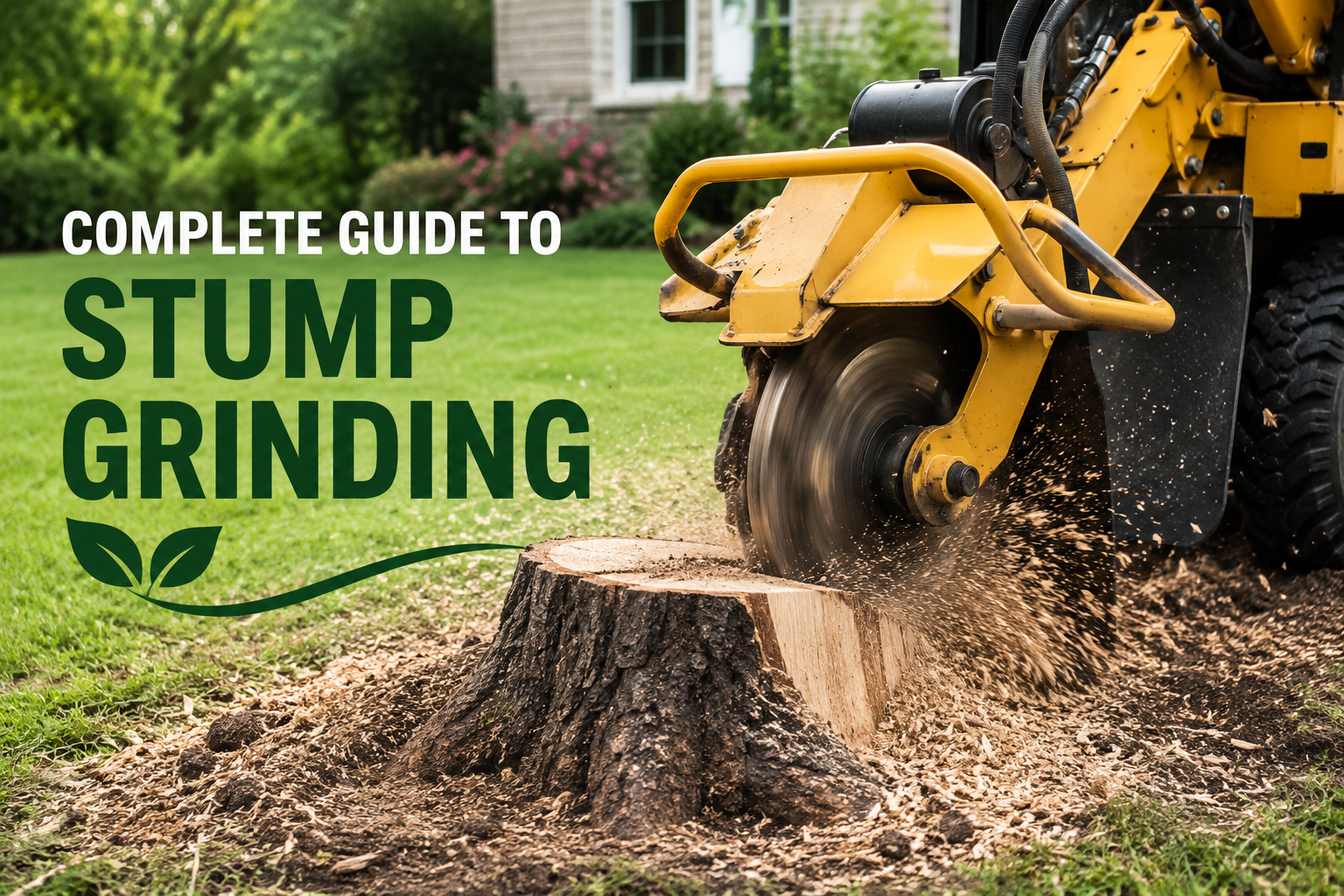
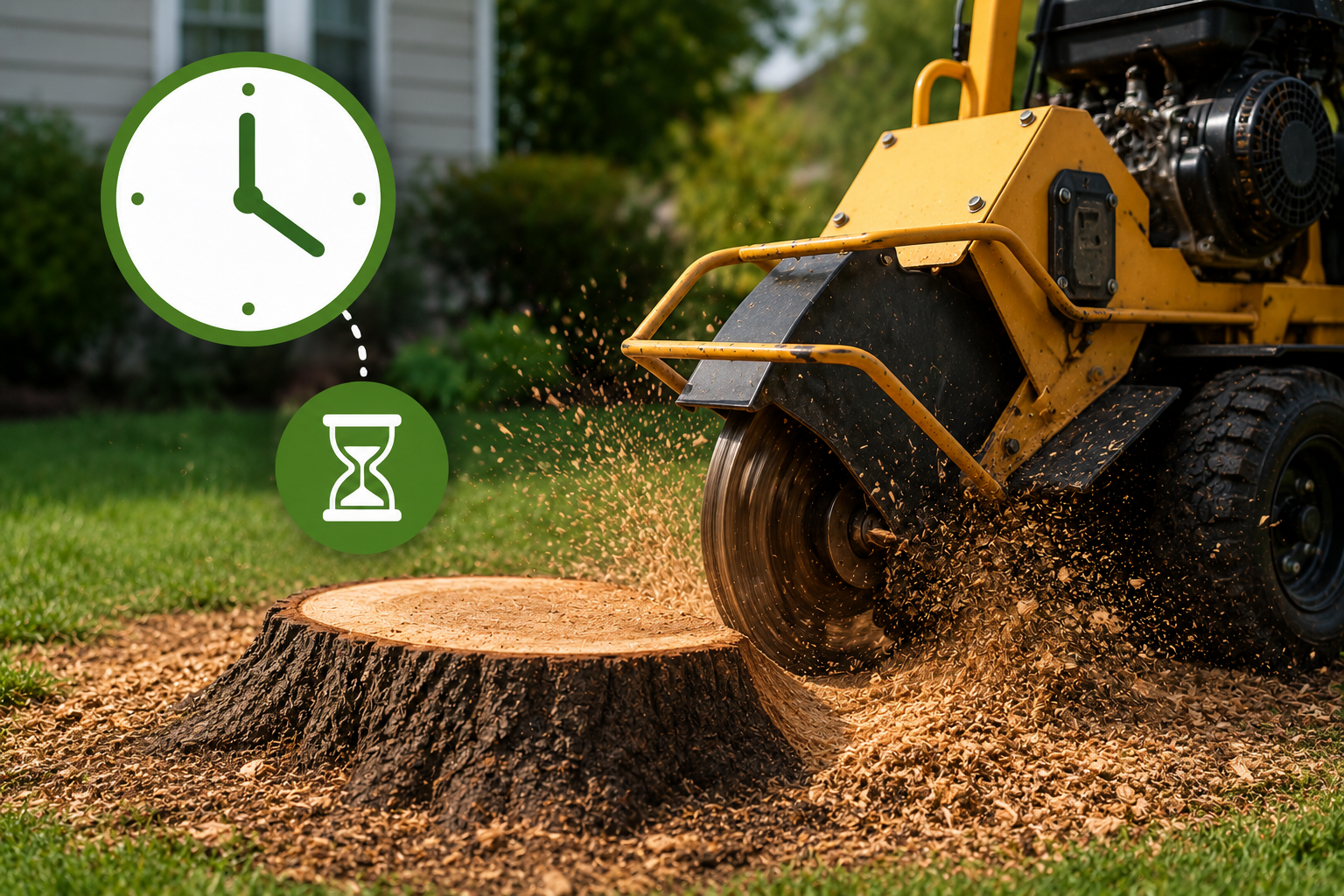
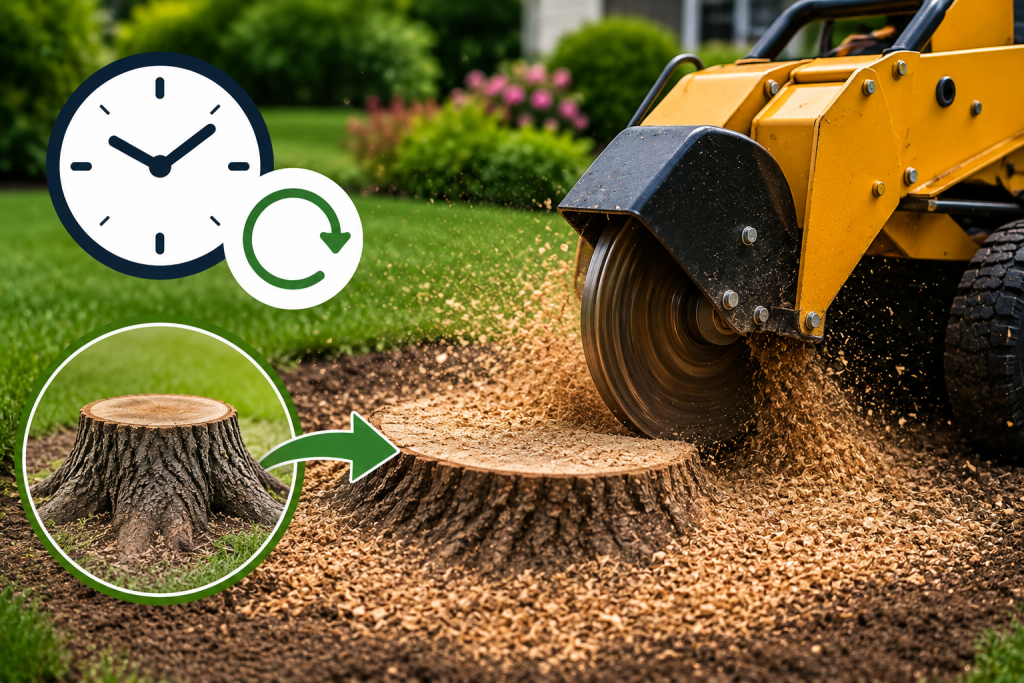
    How long does stump grinding take? Professional stump grinder removing a tree stump in a residential yard with wood chips, illustrating the stump grinding process for US homeowners.

    How Long Does Stump Grinding Take? Average Time

    The average answer to How Long Does Stump Grinding Take? is:

    • Small stump (under 12 inches): 15–30 minutes
    • Medium stump (12–24 inches): 30–60 minutes
    • Large stump (24–36 inches): 1–2 hours
    • Extra-large stump (over 36 inches): 2–4 hours

    For most residential properties in the US, a single stump grinding job is completed within 30 minutes to 2 hours.


    Factors That Affect How Long Stump Grinding Takes

    Several important factors determine How Long Does Stump Grinding Take?

    1. Stump Size

    The larger the stump diameter, the longer the grinding process. Wide hardwood stumps require more passes with the grinder.

    2. Tree Species

    Hardwood trees such as oak, maple, and hickory take longer to grind than softer species like pine or cedar.

    3. Root System

    Although stump grinding doesn’t remove the entire root system, large surface roots often require additional grinding time.

    4. Equipment Used

    Professional contractors use commercial stump grinders that work much faster than rental machines available to homeowners.

    5. Accessibility

    If the stump is located behind fences, near buildings, or on steep slopes, moving equipment into position can increase the total job time.

    6. Number of Stumps

    Naturally, grinding multiple stumps will take longer than grinding just one.


    How Long Does Stump Grinding Take Compared to Stump Removal?

    Homeowners often compare How Long Does Stump Grinding Take? with complete stump removal.

    ServiceAverage Time
    Stump Grinding30 minutes–2 hours
    Stump Removal2–6 hours or more

    Stump grinding is usually the faster, cleaner, and more affordable option for residential properties.


    What Happens After Stump Grinding?

    Once the grinding process is complete, the contractor will:

    • Remove excess wood chips (if requested)
    • Fill the hole with mulch or soil
    • Level the area
    • Clean up debris
    • Prepare the ground for grass or landscaping

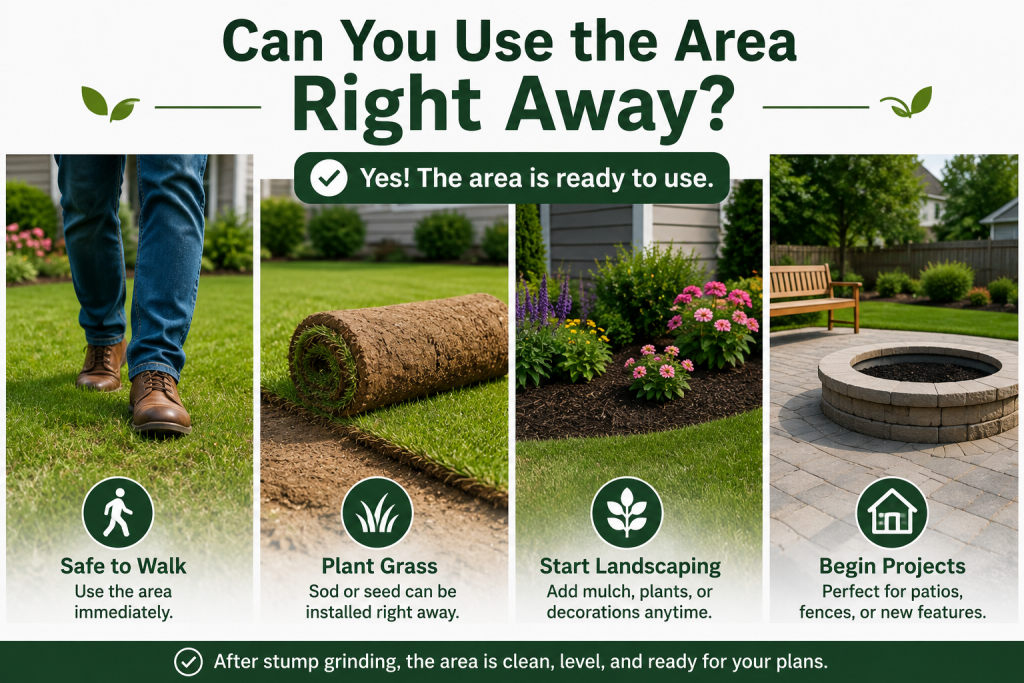
    Most homeowners can begin restoring the area immediately after the service.


    A clean infographic illustrating that the area can be used shortly after stump grinding. It highlights activities such as walking on the lawn, planting grass, starting landscaping, and beginning outdoor projects, helping US homeowners understand what to expect after the stump grinding process.

    Can You Use the Area Right Away?

    Yes. One reason homeowners ask How Long Does Stump Grinding Take? is because they want to know when the yard can be used again.

    In most cases:

    • Walking on the area is safe immediately.
    • Sod or grass seed can be installed after leveling the ground.
    • Landscaping can begin within a day.
    • Construction projects may require additional soil preparation.

    Is DIY Stump Grinding Faster?

    Many homeowners rent stump grinders, but DIY jobs often take much longer.

    Professional services offer:

    • Commercial-grade equipment
    • Experienced operators
    • Faster completion
    • Better safety
    • More complete grinding

    Hiring professionals is usually the quickest and safest solution.


    Tips to Speed Up the Stump Grinding Process

    To reduce the total service time:

    • Clear rocks and debris around the stump.
    • Remove outdoor furniture nearby.
    • Mark underground utilities before work begins.
    • Provide easy equipment access.
    • Schedule service during favorable weather.

    These simple steps help contractors complete the job efficiently.


    Why Professional Stump Grinding Is Worth It

    Professional stump grinding offers several advantages:

    • Saves time
    • Improves curb appeal
    • Prevents pest infestations
    • Eliminates tripping hazards
    • Causes minimal lawn damage
    • Prepares the area for new landscaping

    For most US homeowners, professional stump grinding is a worthwhile investment that delivers fast and lasting results.


    Final Thoughts

    If you’ve been asking, How Long Does Stump Grinding Take?, the good news is that it’s one of the fastest tree care services available. Most residential stump grinding projects are completed within 30 minutes to 2 hours, depending on the stump’s size, tree species, and accessibility.

    Choosing a professional tree service ensures the work is completed safely, efficiently, and with minimal impact on your property. Whether you’re improving curb appeal or preparing for a landscaping project, stump grinding is a practical solution for homeowners across the United States in 2026.


    Frequently Asked Questions (FAQs)

    1. How long does stump grinding take for one stump?

    Most single stumps can be ground in 30 minutes to 2 hours, depending on size and location.

    2. Does stump grinding remove all the roots?

    No. It removes the visible stump, while most roots remain underground and naturally decompose.

    3. Can I plant grass after stump grinding?

    Yes. After adding soil and leveling the area, you can seed or sod the ground.

    4. Is stump grinding faster than stump removal?

    Yes. Stump grinding is generally much faster and causes less disruption to your yard.

    5. Does weather affect stump grinding time?

    Yes. Heavy rain, frozen ground, or poor site access can slightly increase the time required.

  • Complete Guide to Stump Grinding In 2026

    Complete Guide to Stump Grinding In 2026

    Complete Guide to Stump Grinding: What Homeowners Need to Know in 2026

    Tree removal does not always mean the job is completely finished. After a tree is cut down, the remaining stump can become an eyesore, attract pests, interfere with landscaping, and create a tripping hazard. Stump grinding is one of the most practical ways for U.S. homeowners to deal with these unwanted tree remnants.

    This complete guide to stump grinding explains how the process works, its benefits, costs, safety considerations, and what homeowners should expect in 2026.

    What Is Stump Grinding?

    Stump grinding is the process of mechanically reducing a tree stump into small wood chips using a specialized machine called a stump grinder. Instead of removing the entire root system, the grinder cuts the visible stump several inches below ground level.

    The resulting wood chips can usually be removed or used as mulch, while the remaining area can be filled with soil and prepared for new grass, plants, or other landscaping.

    Unlike traditional stump removal, stump grinding is generally less invasive because it does not require digging out the entire root ball.

    Why Should You Grind a Tree Stump?

    Leaving an old stump in your yard can cause several problems. One of the biggest benefits of stump grinding is that it improves both the appearance and usability of your property.

    Common reasons homeowners choose stump grinding include:

    • Improved curb appeal: An old stump can make an otherwise attractive yard look unfinished.
    • Better lawn maintenance: Stumps can interfere with mowing and other landscaping equipment.
    • Reduced safety risks: A low or hidden stump can become a tripping hazard.
    • Pest prevention: Decaying wood can attract insects and other unwanted pests.
    • More usable space: Removing the visible stump creates room for grass, flower beds, or other landscaping.
    • Easier future maintenance: A cleared area is simpler to maintain than a yard containing multiple tree stumps.
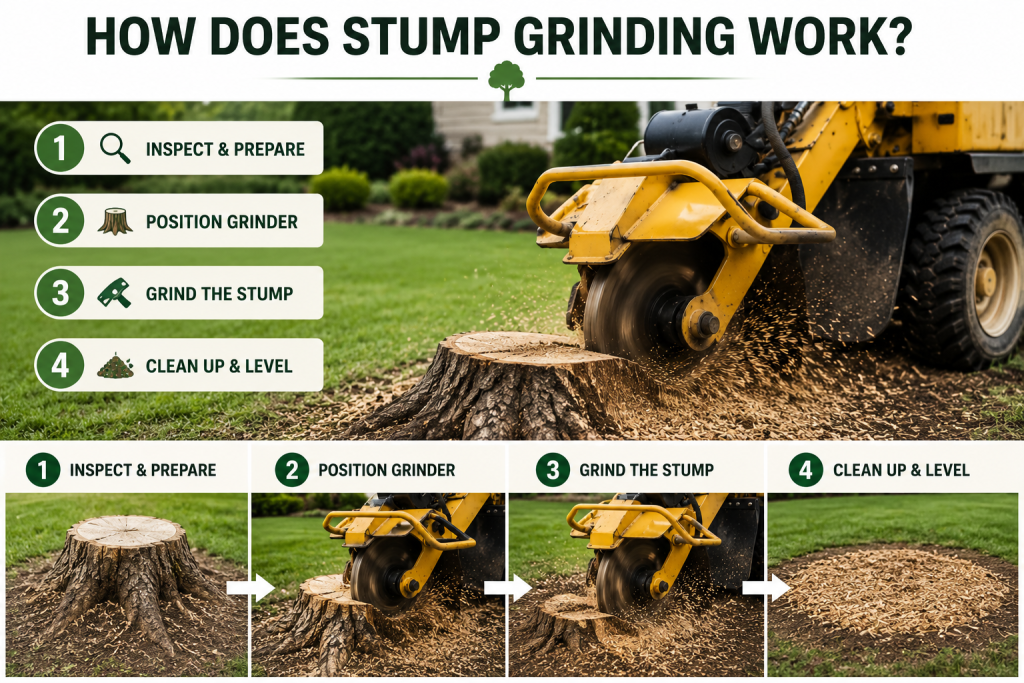
    Stump grinding process showing a grinder removing a tree stump in a residential yard

    How Does Stump Grinding Work?

    Professional stump grinding usually involves several steps.

    1. Inspecting the Stump

    Before starting, the technician evaluates the stump, surrounding property, accessibility, and potential underground hazards.

    2. Preparing the Work Area

    The area around the stump is cleared of furniture, decorations, rocks, toys, and other objects. Professionals may also establish a safety zone to protect people and property from flying wood chips.

    3. Positioning the Grinder

    The stump grinder is carefully positioned over or next to the stump. Different machines are available depending on stump size and site accessibility.

    4. Grinding the Stump

    A rotating cutting wheel gradually chips away at the wood. The operator moves the grinder across the stump until the main portion has been reduced below ground level.

    5. Cleaning the Area

    After grinding, the wood chips can be raked away or used to fill the resulting depression.

    6. Restoring the Ground

    Topsoil can be added to level the area. Homeowners can then plant grass, install landscaping, or use the space for another purpose.

    How Much Does Stump Grinding Cost in 2026?

    The cost of stump grinding varies considerably across the United States. A small, easily accessible stump may cost relatively little, while a large stump with extensive roots or difficult access can cost substantially more.

    Factors that influence stump grinding prices include:

    • Stump diameter
    • Number of stumps
    • Tree species and wood hardness
    • Root spread
    • Stump location
    • Accessibility for equipment
    • Required grinding depth
    • Cleanup and disposal
    • Local labor rates

    For an accurate price, homeowners should request a quote based on an inspection rather than relying solely on an online average.

    Stump Grinding vs. Stump Removal

    Although these terms are sometimes used interchangeably, they describe different processes.

    Stump grinding removes the visible stump by grinding it into wood chips while leaving most of the root system underground.

    Stump removal involves digging out the stump and a significant portion of its roots. This can require more labor, excavation, and equipment.

    For many residential landscaping projects, stump grinding is a convenient option because it typically causes less disruption to the surrounding yard.

    However, complete stump removal may make more sense when homeowners need to build, install hardscaping, or plant in a location where the remaining root system could interfere.

    Can You Grind a Stump Yourself?

    Homeowners can rent stump-grinding equipment in some areas, but using a commercial grinder requires caution. These machines contain powerful cutting wheels that can cause serious injuries if operated incorrectly.

    DIY stump grinding may also create problems if the operator does not identify underground utilities, sprinkler systems, buried cables, or other obstacles.

    For large stumps, difficult locations, or properties with potential underground hazards, hiring an experienced professional is generally the safer choice.

    What Happens After Stump Grinding?

    After stump grinding, you will usually have a shallow hole containing wood chips and some remaining roots. The area can be leveled with suitable soil.

    Keep in mind that wood chips and remaining roots may gradually decompose, causing the soil to settle. Homeowners may need to add additional soil later before establishing a lawn or planting new vegetation.

    If you plan to plant another tree in the same location, ask a local arborist or landscaping professional whether the site is suitable.

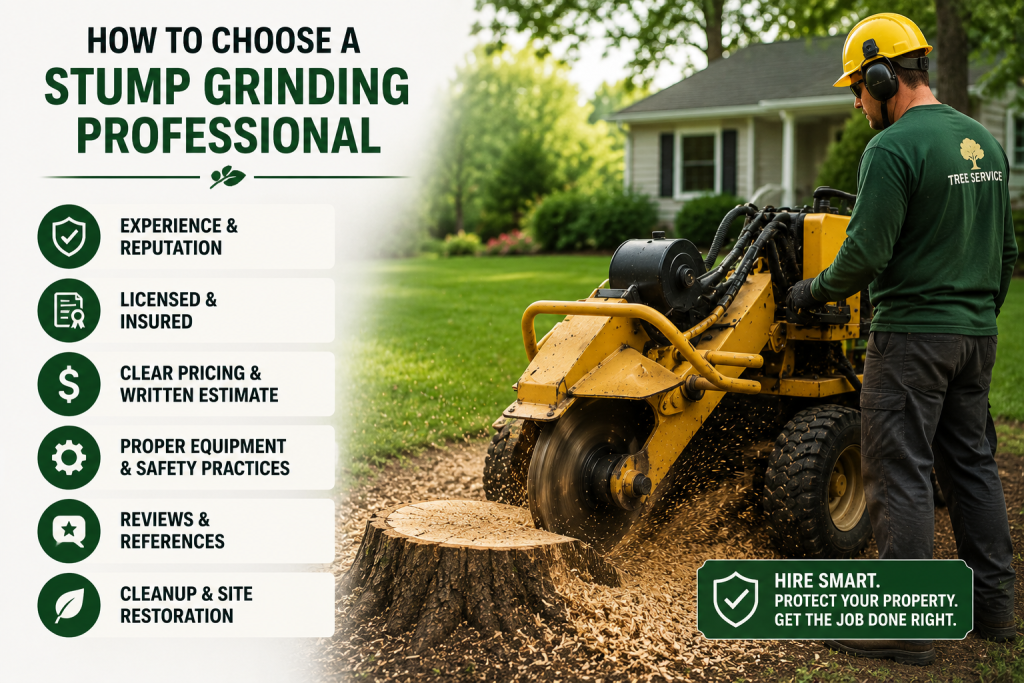
    Professional stump grinding service with safety equipment and a stump grinder in a residential yard

    How to Choose a Stump Grinding Professional

    When hiring a professional, look beyond the lowest price. Ask about:

    • Experience with residential stump grinding
    • Insurance coverage
    • Equipment and safety practices
    • Cleanup and debris removal
    • Grinding depth
    • Written estimates
    • References or reviews
    • Any additional charges

    A reputable contractor should clearly explain what is included in the quoted price.

    Final Thoughts

    Stump grinding is an efficient way to improve the appearance, safety, and usability of a property after tree removal. By reducing the stump below ground level, homeowners can reclaim valuable yard space without the extensive excavation often associated with complete stump removal.

    Whether you have one small stump or several large stumps, understanding the process and pricing factors can help you make an informed decision. In 2026, homeowners should compare qualified local professionals, request detailed estimates, and make sure the work area is handled safely.