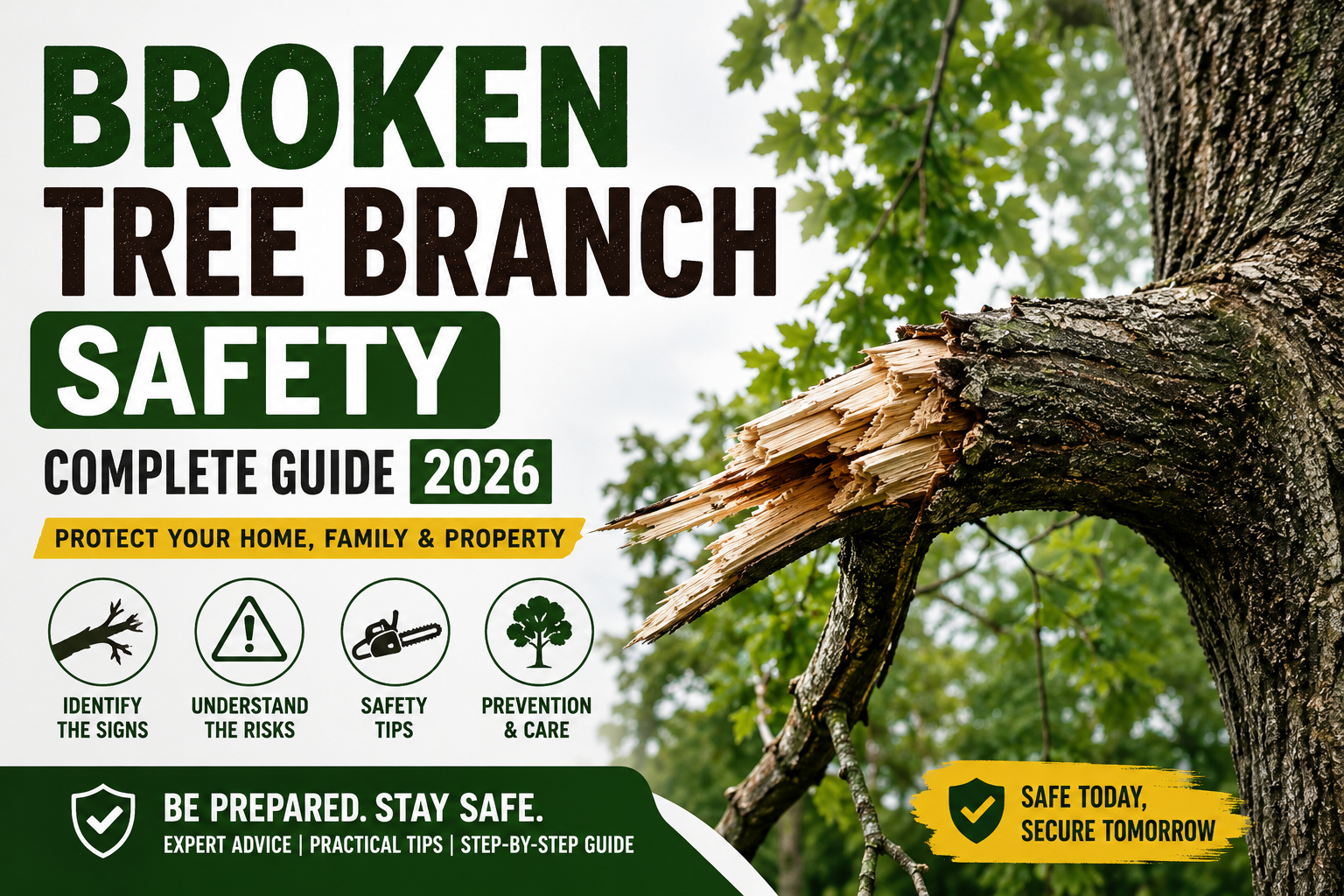
Broken Tree Branch Safety
Storms, heavy winds, ice, and aging trees can leave dangerous branches hanging over your home or yard. Understanding Broken Tree Branch Safety is essential for protecting your family, property, and neighbors. A damaged branch may appear stable but can fall without warning, causing serious injuries or expensive property damage.
This 2026 guide explains why Broken Tree Branch Safety matters, how to recognize hazardous branches, what to do after a storm, and when to call professional tree experts.
Why Broken Tree Branch Safety Is Important
Practicing Broken Tree Branch Safety helps prevent accidents before they happen. Broken branches can fall on:
- Homes
- Vehicles
- Power lines
- Sidewalks
- Driveways
- People and pets
Ignoring damaged branches increases the risk of injury and costly repairs. Following proper Broken Tree Branch Safety practices keeps your property secure throughout the year.
Common Causes of Broken Tree Branches
Several factors can create dangerous branches.
The most common causes include:
- Severe thunderstorms
- High winds
- Lightning strikes
- Ice and snow accumulation
- Dead or diseased limbs
- Tree decay
- Poor pruning practices
- Heavy branch weight
After any severe weather event, inspect your property while keeping Broken Tree Branch Safety in mind.
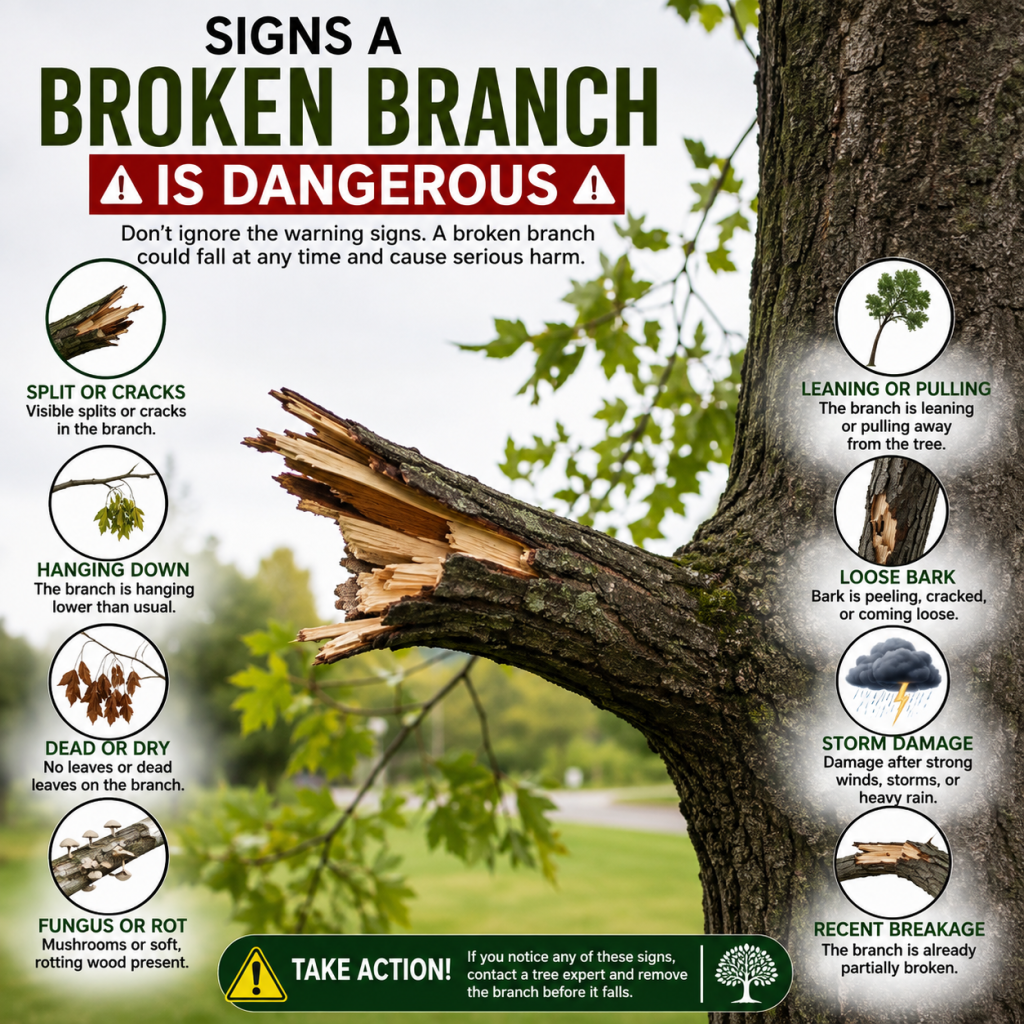
Signs a Broken Branch Is Dangerous
Not every broken limb creates an emergency, but some require immediate attention.
Watch for:
- Hanging branches
- Large cracks in limbs
- Split trunks
- Branches touching power lines
- Dead wood
- Leaning trees
- Fresh breaks after storms
Recognizing these warning signs supports effective Broken Tree Branch Safety and reduces the chance of unexpected accidents.
What to Do After Finding a Broken Branch
If you notice a damaged branch, follow these steps.
1. Stay Away
Never stand beneath a hanging limb.
2. Keep Others Safe
Prevent children and pets from entering the area.
3. Inspect From a Distance
Use binoculars if necessary. Never climb a damaged tree.
4. Contact Professionals
Hire certified tree experts for safe removal.
These simple actions improve Broken Tree Branch Safety and reduce unnecessary risks.
Why Professional Broken Tree Branch Removal Matters
Although small branches may seem easy to remove, larger limbs can be extremely dangerous.
Professional Broken Tree Branch Removal offers several advantages:
- Proper safety equipment
- Certified arborist experience
- Safe climbing techniques
- Controlled branch removal
- Protection for nearby structures
- Complete debris cleanup
Choosing professional Broken Tree Branch Removal minimizes the risk of injury and additional property damage.
Preventing Broken Tree Branches
The best way to improve Broken Tree Branch Safety is through regular maintenance.
Helpful prevention tips include:
- Schedule annual tree inspections.
- Remove dead branches early.
- Trim overgrown limbs.
- Water trees during drought.
- Watch for disease or pests.
- Avoid improper pruning.
- Inspect trees after storms.
Routine maintenance significantly reduces the need for emergency Broken Tree Branch Removal.
When Emergency Tree Service Is Needed
Call emergency tree professionals immediately if:
- A branch falls on your roof.
- Power lines are involved.
- The tree is unstable.
- A branch blocks roads or driveways.
- The damaged limb threatens people or property.
Quick action supports Broken Tree Branch Safety and prevents further damage.
Common Mistakes Homeowners Make
Avoid these dangerous mistakes:
- Climbing ladders during storms
- Using chainsaws without training
- Standing under hanging branches
- Ignoring damaged limbs
- Attempting large branch removal alone
Professional Broken Tree Branch Removal is always the safest option for large or hazardous limbs.
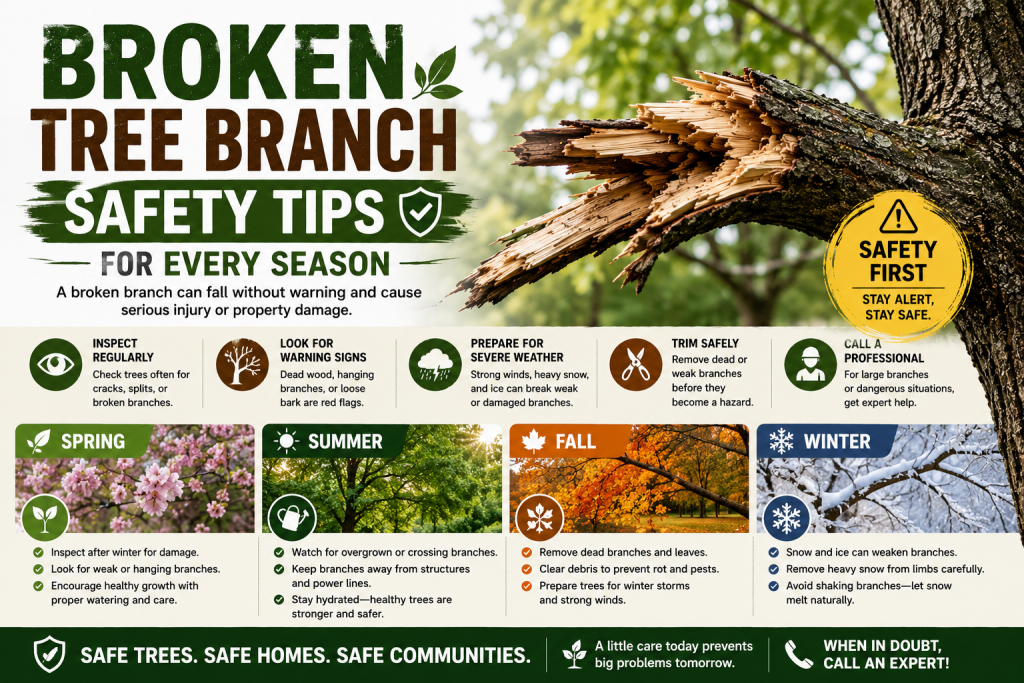
Broken Tree Branch Safety Tips for Every Season
Tree hazards are not limited to storm season.
Maintain Broken Tree Branch Safety year-round by:
- Inspecting trees each season.
- Removing dead limbs before winter.
- Monitoring trees after heavy rain.
- Scheduling preventive pruning.
- Keeping trees healthy with proper care.
Consistent maintenance reduces emergency Broken Tree Branch Removal needs and extends tree life.
Conclusion
Practicing Broken Tree Branch Safety is one of the easiest ways to protect your home, family, and property. Hanging or damaged branches should never be ignored because they can fail without warning.
By inspecting your trees regularly, following proper Broken Tree Branch Safety practices, and hiring professionals for Broken Tree Branch Removal, you can prevent injuries, reduce repair costs, and keep your landscape healthy throughout 2026 and beyond.
Frequently Asked Questions (FAQs)
1. What is broken tree branch safety?
Broken Tree Branch Safety refers to identifying, avoiding, and safely removing damaged tree branches to prevent injuries and property damage.
2. Can I remove a broken tree branch myself?
Small branches may be manageable, but large or hanging limbs should always be handled through professional Broken Tree Branch Removal services.
3. Are broken branches dangerous?
Yes. Damaged branches can fall unexpectedly, especially after storms or high winds.
4. When should I call a tree service?
Call immediately if a branch threatens your home, vehicle, power lines, or public safety.
5. How often should trees be inspected?
Most experts recommend inspecting trees at least once a year and after every major storm.