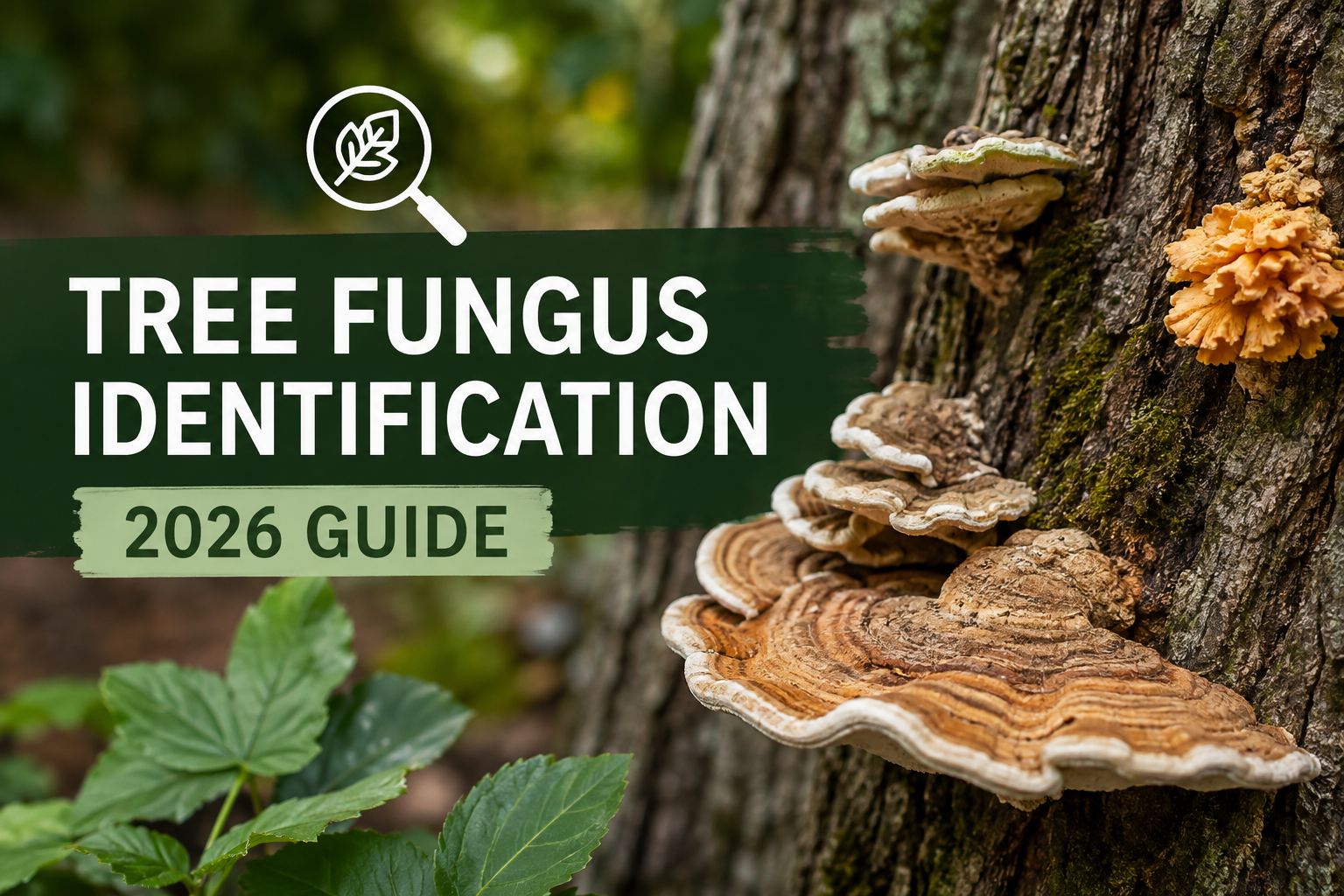
Tree fungus identification is an important part of maintaining healthy and safe trees. Fungal growth can appear as mushrooms around the tree base, shelf-like conks on the trunk, unusual bark changes, dead branches, or declining leaves. While some fungi simply grow on dead organic matter, others can indicate serious decay or disease.
For homeowners in the United States, learning the basic signs of tree fungus can help identify potential problems early and determine when professional tree care may be necessary.
What Is Tree Fungus?
Tree fungus identification refers to fungi that grow on, inside, or around trees. Some fungi live on dead wood and organic material without harming healthy trees. Others can infect living tissues, cause diseases, or contribute to wood decay.
The appearance of a mushroom or fungal growth does not automatically mean a tree is dying. For example, some fungi are harmless decomposers. However, fungal growth associated with wounds, cavities, declining branches, or soft wood can be a warning sign of structural problem.
Common Signs of Fungus on Trees
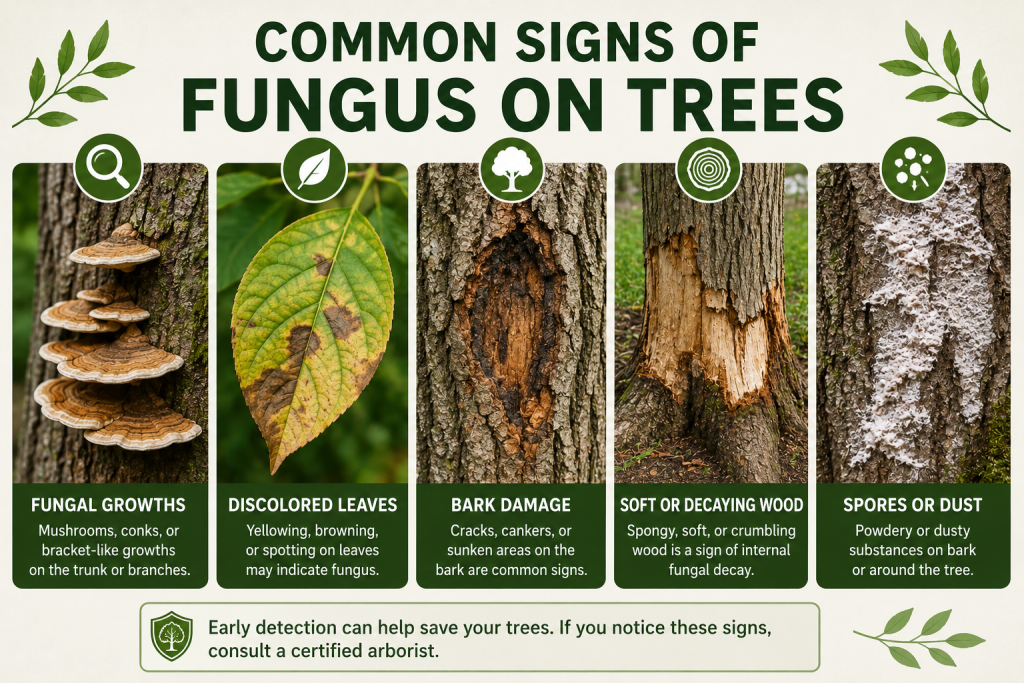
Knowing what to look for is the first step in tree fungus identification. Common warning signs include:
- Mushrooms growing near the tree base
- Shelf-like or bracket-shaped fungi on the trunk
- White fungal growth beneath damaged bark
- Soft, crumbly, or spongy wood
- Dead or declining branches
- Yellowing or unusually small leaves
- Thin or thinning canopy
- Cracks, cavities, or wounds containing fungal growth
- Sudden dieback in portions of the tree
Some fungal diseases can also cause specific leaf symptoms. For example, oak wilt in Texas may produce leaf discoloration, browning, rapid defoliation, and distinctive patterns of dead tissue along leaf veins. Laboratory testing may be recommended when a definitive diagnosis is needed.
Common Types of Tree Fungus
1. Heart Rot
Heart rot fungi can decay the interior wood of a tree. A tree may appear relatively healthy from the outside while internal wood becomes soft, crumbly, stringy, or spongy.
Fungal fruiting bodies may appear near pruning wounds, cracks, or other injuries. Because internal decay can weaken a tree, professional assessment is important when large conks or significant cavities are present.
2. Armillaria Root Rot
Armillaria fungi can affect roots and the lower trunk. Possible signs include poor growth, yellow or undersized leaves, dead branches, and white fungal growth beneath the bark. Honey-colored mushrooms may also appear near the tree base.
Trees affected by serious root decay can become more vulnerable to breaking or falling, particularly during storms.
3. Ganoderma Butt Rot
Ganoderma can produce distinctive shelf-like conks near the base of a tree. The infected wood may become white, soft, stringy, or spongy, while the canopy can become thin with dead branches.
Because decay at the base can affect structural stability, trees with these symptoms should be evaluated carefully.
4. Oak Wilt
Tree fungus identification The Oak wilt is a serious fungal disease affecting oak trees in parts of the United States, including Texas. Symptoms can include leaf discoloration, wilting, defoliation, and progressive tree decline.
Texas A&M AgriLife Extension recommends consulting a trained professional when oak wilt is suspected because laboratory diagnosis can help confirm the disease.
How to Identify Tree Fungus Safely
Start by examining the entire tree rather than focusing only on the visible mushroom or conk. Check the trunk, major branches, root flare, canopy, and surrounding soil.
Take clear photographs of unusual growth, damaged bark, leaves, and the overall tree. Note when the symptoms appeared and whether they are spreading.
Avoid cutting into the trunk or removing large sections of bark simply to investigate a suspected fungus. Some fungal diseases require professional sampling or laboratory testing for accurate identification.
When Should You Call an Arborist?
Professional help is recommended when fungal growth is accompanied by major cavities, extensive decay, dead branches, rapid canopy decline, leaning, cracked trunks, or other structural concerns.
This is especially important when the affected tree is close to a house, driveway, power line, sidewalk, or other property. The tree fungus identification A qualified arborist can evaluate the tree and determine whether treatment, monitoring, pruning, or removal is appropriate.
How to Prevent Tree Fungus Problems
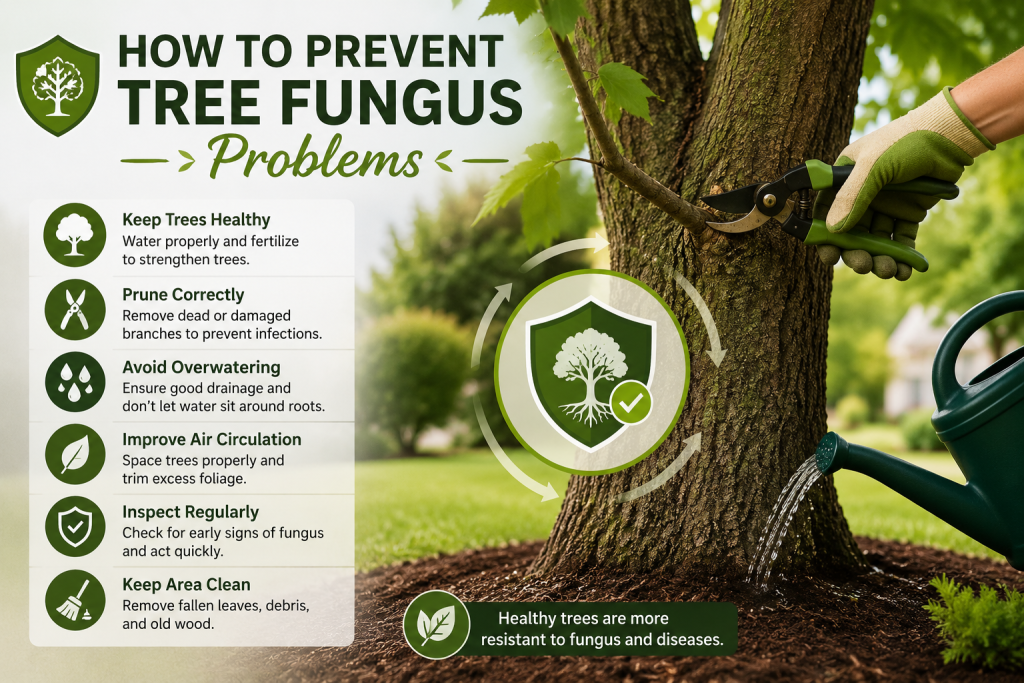
Healthy trees are generally better able to tolerate environmental stress. Homeowners can reduce potential problems by avoiding unnecessary trunk wounds, using proper pruning practices, improving growing conditions, and monitoring tree fungus identification regularly.
In Texas and other regions where drought, heat, soil compaction, or construction stress can weaken trees, maintaining overall tree health is particularly important. Texas A&M notes that weakened or stressed hardwoods can be more vulnerable to certain fungal problems.
Final Thoughts
Tree fungus identification can help U.S. homeowners recognize potential tree health and safety problems before they become more serious. Not every mushroom or fungal growth requires treatment, but fungi associated with decay, wounds, declining branches, or structural damage deserve closer attention.
If you are unsure what type of fungus is affecting your tree, avoid guessing based only on appearance. A qualified arborist or local extension professional can help determine the likely cause and recommend the appropriate next step.