Blog

  • Insurance Claims for Fallen Trees: Complete Guide (2026)

    Insurance Claims for Fallen Trees: Complete Guide (2026)

    Insurance Claims for Fallen Trees

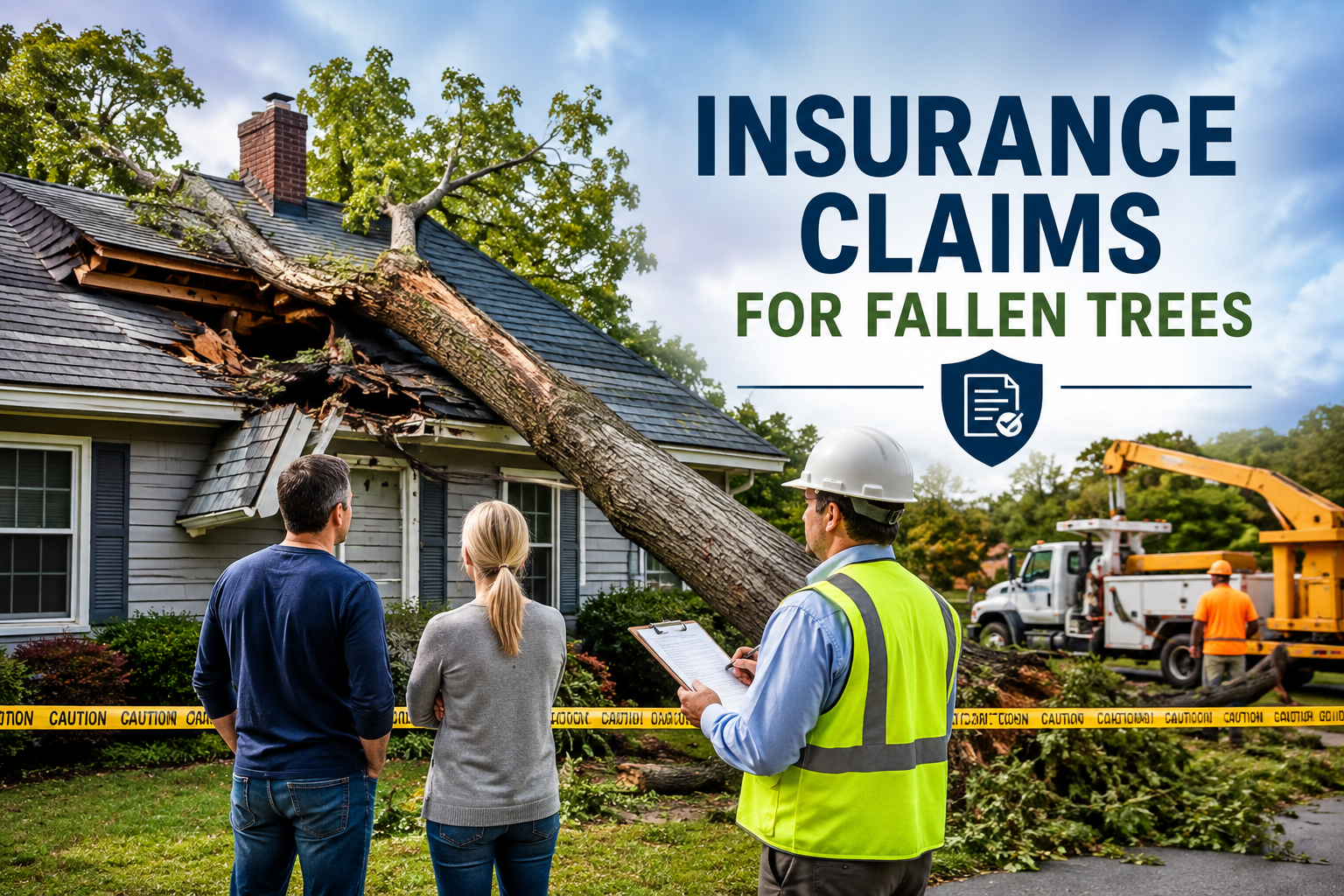
    Storms, hurricanes, tornadoes, and heavy winds frequently cause trees to fall across homes, garages, fences, and vehicles throughout the United States. Understanding Insurance Claims for Fallen Trees can help homeowners avoid unnecessary financial stress and recover damages faster.

    Whether a tree falls during a severe storm or because of hidden decay, knowing how Insurance Claims for Fallen Trees work can make the difference between a smooth reimbursement process and a denied claim. This 2026 guide explains what is covered, how to file a claim, and practical tips for maximizing your insurance payout.


    What Are Insurance Claims for Fallen Trees?

    Insurance Claims for Fallen Trees are requests submitted to your homeowners insurance company after a tree causes damage to your insured property.

    In most cases, homeowners insurance pays for damages when a healthy tree falls because of a covered event such as:

    • Windstorms
    • Lightning
    • Hail
    • Snow or ice storms
    • Hurricanes
    • Tornadoes

    However, insurance companies may deny Insurance Claims for Fallen Trees if the damage resulted from poor maintenance or neglect.


    When Does Homeowners Insurance Cover Fallen Trees?

    Most homeowners insurance policies cover fallen tree damage when the incident is sudden and accidental.

    Coverage usually includes:

    • Roof damage
    • Structural damage
    • Garage damage
    • Fence damage
    • Detached structures
    • Tree removal (within policy limits)
    • Debris cleanup
    • Emergency temporary repairs

    Understanding your policy helps ensure your Insurance Claims for Fallen Trees are processed successfully.


    Situations That May Not Be Covered

    Not every incident qualifies for insurance reimbursement.

    Your insurer may reject Insurance Claims for Fallen Trees if:

    • The tree was dead or diseased before it fell.
    • You ignored obvious signs of decay.
    • Damage occurred because of lack of maintenance.
    • The tree simply fell in your yard without damaging insured property (unless your policy specifically covers removal).

    Routine tree maintenance can reduce the chances of denied claims.
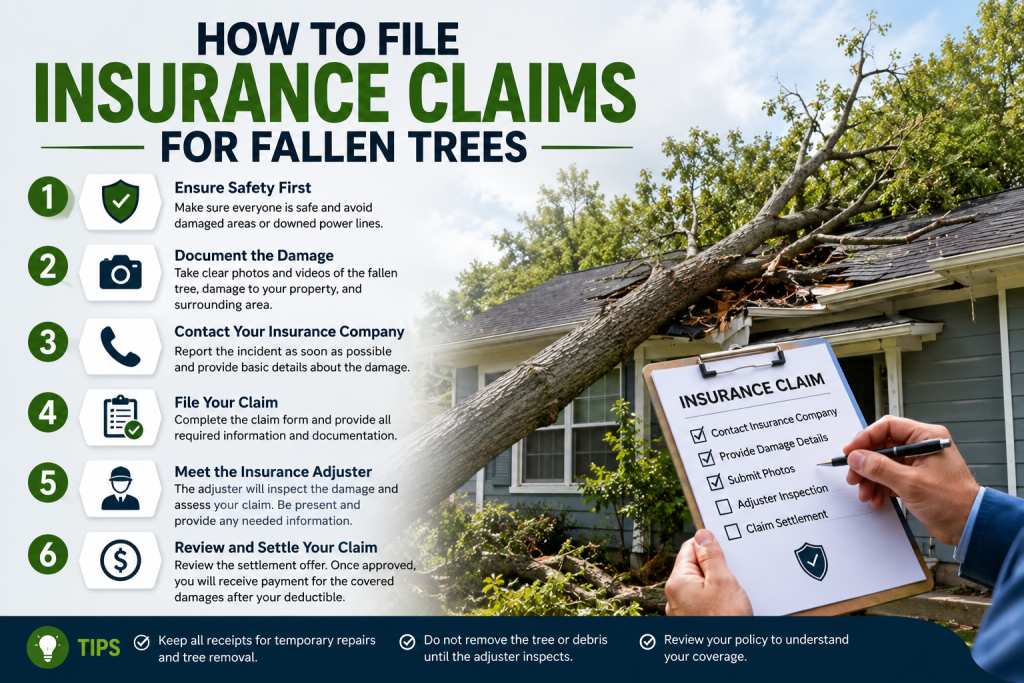

    how-to-file-insurance-claims-for-fallen-trees.jpg

    How to File Insurance Claims for Fallen Trees

    Filing Insurance Claims for Fallen Trees is easier when you follow the proper steps.

    1. Ensure Safety

    Stay away from downed power lines and unstable trees. Contact emergency services if necessary.

    2. Document the Damage

    Take clear photos and videos before moving debris.

    Capture:

    • Roof damage
    • Broken windows
    • Vehicles
    • Landscaping
    • Entire fallen tree

    These images strengthen your Insurance Claims for Fallen Trees.

    3. Prevent Additional Damage

    Use tarps or temporary coverings to prevent water intrusion.

    Keep receipts because emergency repair costs are often reimbursable.

    4. Contact Your Insurance Company

    Report the damage immediately.

    Provide:

    • Policy number
    • Date of incident
    • Cause of damage
    • Photos
    • Repair estimates

    Prompt reporting improves the success of Insurance Claims for Fallen Trees.

    5. Work With the Insurance Adjuster

    An adjuster will inspect the damage and determine the amount covered under your policy.

    Do not remove the tree completely unless it’s necessary for safety or instructed by emergency officials.


    Does Insurance Cover Tree Removal?

    Many homeowners ask whether tree removal is included.

    The answer depends on your policy.

    Tree removal is often covered when:

    • The tree damages an insured structure.
    • The tree blocks a driveway or wheelchair access.
    • Removal is necessary for repairs.

    Most policies include reimbursement limits ranging from a few hundred to several thousand dollars.

    Review your policy carefully before assuming full coverage.


    Tips to Maximize Your Insurance Settlement

    Improve the chances of successful Insurance Claims for Fallen Trees by following these best practices:

    • Inspect trees regularly.
    • Remove dead or hazardous trees.
    • Keep maintenance records.
    • Photograph your property before storm season.
    • Hire licensed tree service professionals.
    • Save all repair invoices.
    • File your claim immediately after damage occurs.

    Proper documentation significantly improves claim approval.


    Common Mistakes Homeowners Should Avoid

    Avoid these errors during Insurance Claims for Fallen Trees:

    • Waiting too long to report damage
    • Throwing away damaged materials before inspection
    • Failing to document the incident
    • Hiring uninsured contractors
    • Ignoring policy deductibles
    • Not reading coverage exclusions

    Small mistakes can delay or reduce your insurance payout.
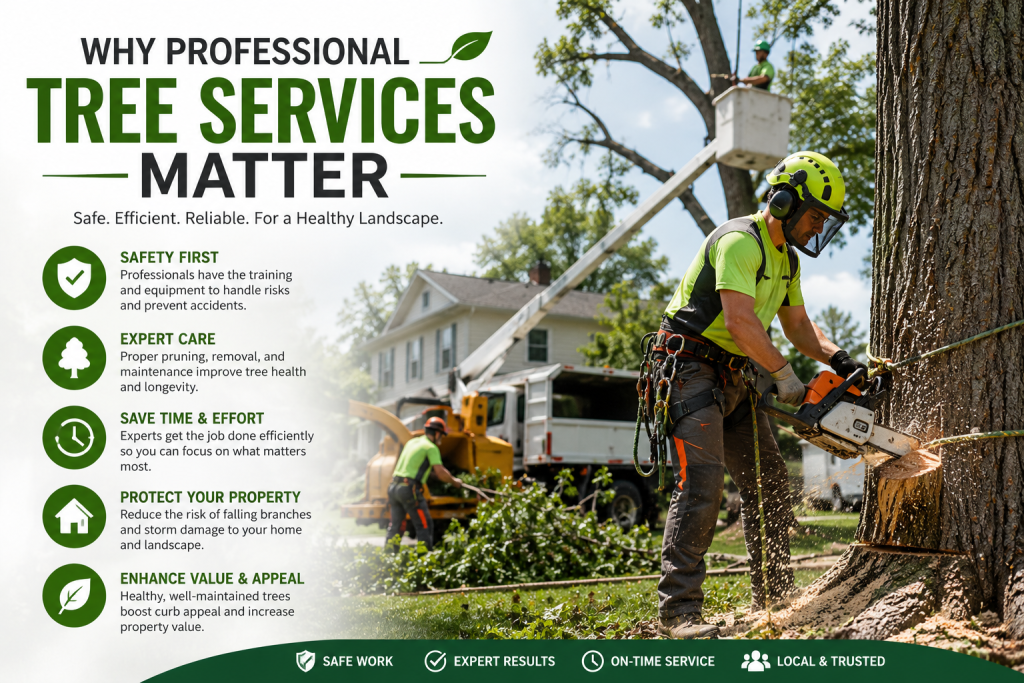

    Professional tree service crew safely trimming a large tree near a residential home using protective equipment and a bucket truck.

    Why Professional Tree Services Matter

    Certified tree removal companies understand insurance requirements.

    Many professionals provide:

    • Detailed damage reports
    • Written estimates
    • Emergency tree removal
    • Photographic documentation
    • Assistance working with insurance adjusters

    Their documentation often strengthens Insurance Claims for Fallen Trees and speeds up the approval process.


    Final Thoughts

    Severe weather can strike unexpectedly, but understanding Insurance Claims for Fallen Trees helps homeowners recover faster and protect their investment. By documenting damage, acting quickly, maintaining healthy trees, and working with qualified professionals, you can improve the likelihood of receiving fair compensation under your homeowners insurance policy.

    As storms continue to impact communities across the United States in 2026, being prepared before disaster strikes is one of the smartest ways to safeguard your home and finances.


    FAQs

    1. Does homeowners insurance cover fallen trees?

    Yes. Most policies cover damage caused by storms, wind, lightning, or other covered events.

    2. Will insurance pay for tree removal?

    Usually, if the fallen tree damages an insured structure or blocks access, subject to policy limits.

    3. Can a claim be denied?

    Yes. Claims may be denied if the tree was dead, diseased, or poorly maintained.

    4. Should I remove the tree before the adjuster arrives?

    Only if it’s necessary for safety. Document everything with photos first.

    5. How soon should I file a claim?

    Report the damage as soon as possible to avoid delays and improve claim processing.
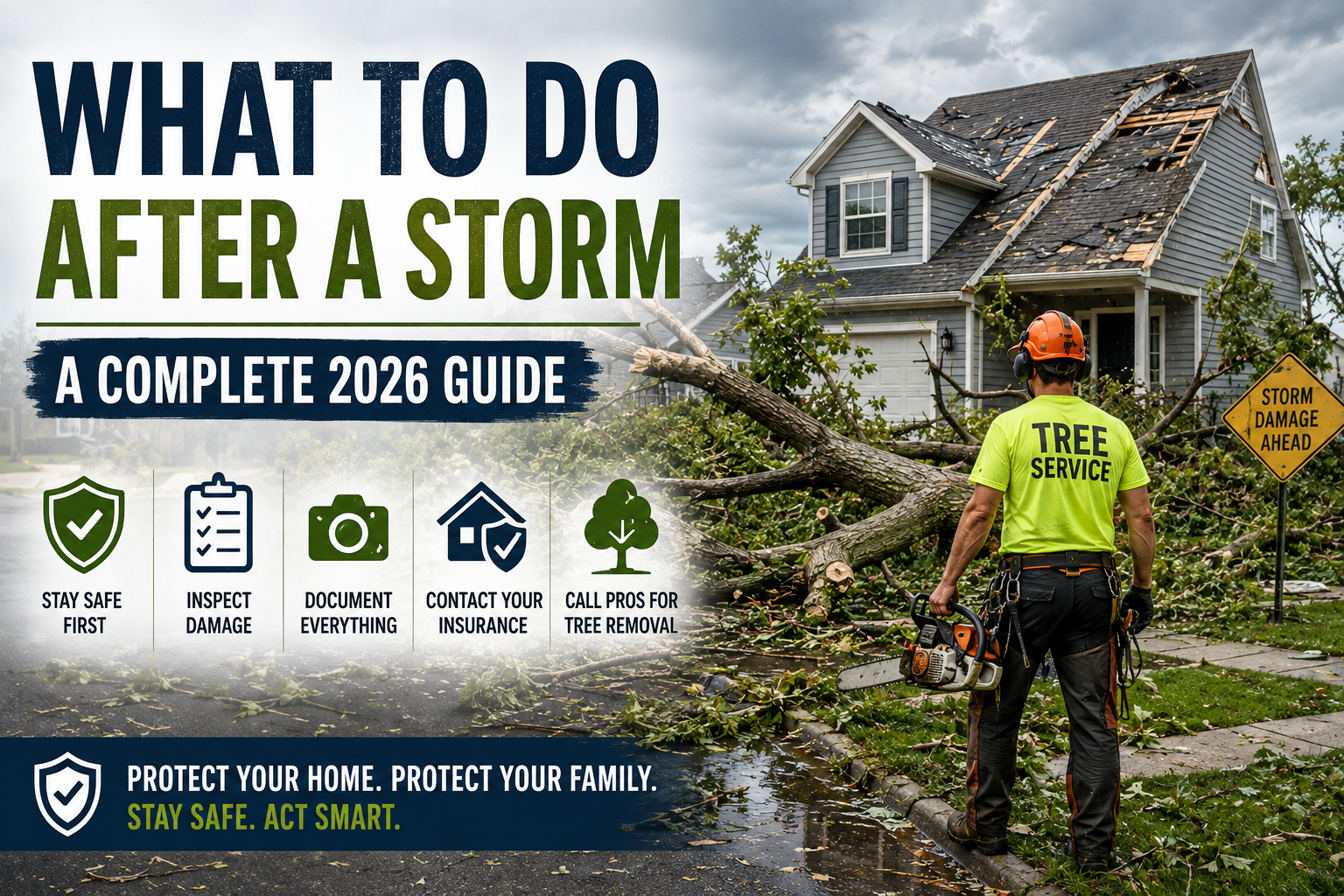
  • What to Do After a Storm (2026): Complete US Homeowner Safety Guide

    What to Do After a Storm (2026): Complete US Homeowner Safety Guide

    Immediate Steps After a Storm

    Storms can leave behind fallen trees, damaged roofs, flooded yards, and dangerous power lines. Knowing What to Do After a Storm can help protect your family, reduce property damage, and speed up the recovery process. Whether your area has experienced high winds, heavy rain, hail, or a hurricane, taking the right steps immediately after the storm is essential.

    This 2026 guide explains What to Do After a Storm, including safety checks, property inspections, insurance tips, and when to call professional tree removal services.


    1. Make Safety Your First Priority

    The first step in What to Do After a Storm is ensuring everyone is safe.

    Before leaving your home:

    • Check for injuries.
    • Stay away from downed power lines.
    • Watch for broken glass and debris.
    • Avoid standing water that may hide electrical hazards.
    • Follow instructions from local emergency officials.

    Never enter severely damaged buildings until authorities confirm they are safe.


    2. Inspect Your Property Carefully

    Another important part of What to Do After a Storm is inspecting your property without putting yourself at risk.

    Look for:

    • Roof damage
    • Broken windows
    • Fallen trees
    • Hanging tree limbs
    • Fence damage
    • Cracked foundations
    • Damaged siding
    • Flooding around the home

    Take clear photos and videos before beginning any cleanup. These records can help support insurance claims.


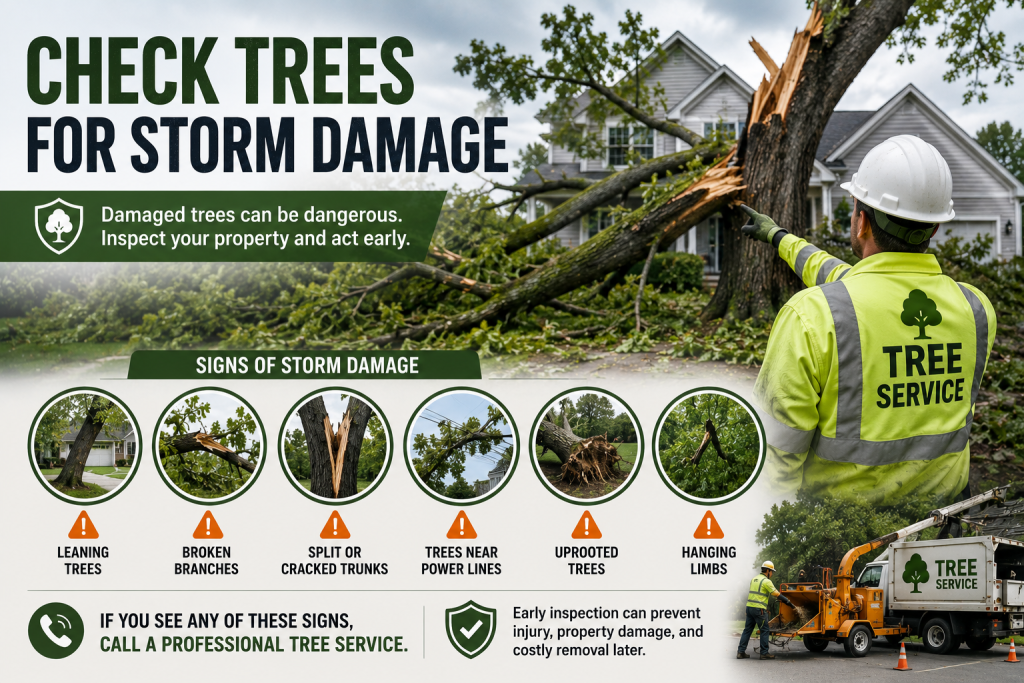
    Professional arborist inspecting a storm-damaged tree with cracked branches and a leaning trunk near a suburban US home after severe weather, highlighting the importance of checking trees for storm damage before cleanup.

    3. Check Trees for Storm Damage

    Trees often suffer the most damage during severe weather.

    Signs you may need emergency tree service include:

    • Leaning trees
    • Broken branches
    • Split trunks
    • Trees touching power lines
    • Uprooted trees
    • Hanging limbs

    If you notice these hazards, What to Do After a Storm includes contacting a licensed tree removal company instead of attempting dangerous work yourself.


    4. Contact Your Insurance Company

    One of the smartest things to include in What to Do After a Storm is filing your insurance claim early.

    When speaking with your insurance provider:

    • Document all damage.
    • Save receipts for emergency repairs.
    • Ask about temporary housing if needed.
    • Confirm tree removal coverage.
    • Keep copies of all claim documents.

    Early reporting often helps speed up the claims process.


    5. Avoid Dangerous Cleanup

    Storm cleanup can be hazardous.

    Avoid:

    • Climbing damaged trees
    • Using chainsaws without experience
    • Touching power lines
    • Entering unstable structures
    • Removing large branches under tension

    Professional crews have specialized equipment and safety training for hazardous storm cleanup.


    6. Remove Debris Safely

    Once your property is safe, begin removing small debris.

    Focus on:

    • Leaves
    • Small branches
    • Loose fencing
    • Outdoor furniture
    • Yard clutter

    Wear gloves, eye protection, sturdy boots, and long sleeves during cleanup.

    Large trees should always be removed by certified professionals.


    7. Prevent Additional Damage

    Part of What to Do After a Storm is protecting your property from further problems.

    Temporary measures may include:

    • Cover damaged roofs with tarps.
    • Board broken windows.
    • Remove standing water.
    • Dry wet areas quickly to prevent mold.
    • Shut off damaged utilities if necessary.

    Quick action helps reduce repair costs.


    8. Hire Licensed Tree Professionals

    Storm-damaged trees are unpredictable and extremely dangerous.

    Professional tree companies provide:

    • Emergency tree removal
    • Tree trimming
    • Hazard inspections
    • Crane-assisted removals
    • Complete debris cleanup

    Hiring insured professionals protects both your property and your family’s safety.


    9. Prepare for the Next Storm

    The final step in What to Do After a Storm is preventing future damage.

    Consider:

    • Annual tree inspections
    • Dead branch removal
    • Regular tree pruning
    • Roof maintenance
    • Gutter cleaning
    • Emergency preparedness kits

    Preventive maintenance can significantly reduce storm-related damage.


    Conclusion

    Knowing What to Do After a Storm helps homeowners recover quickly while protecting their families and property. By checking for hazards, documenting damage, contacting your insurance company, and hiring qualified tree professionals when necessary, you can safely navigate the aftermath of severe weather. Preparing your property before the next storm is the best investment in long-term safety and peace of mind.


    Frequently Asked Questions

    1. What should I do first after a storm?

    Ensure everyone is safe, avoid hazards, and check for injuries before inspecting your property.

    2. Should I remove a fallen tree myself?

    No. Large or damaged trees should be removed by licensed professionals.

    3. Does homeowners insurance cover storm damage?

    Many policies cover storm-related damage, but coverage depends on your policy and the cause of the damage.

    4. When should I call an emergency tree service?

    Call immediately if a tree is leaning, has fallen on your home, or is touching power lines.

    5. How can I prepare for future storms?

    Regular tree maintenance, roof inspections, emergency supplies, and property inspections can reduce future storm damage.

  • Emergency Tree Service Cost in 2026: Average Prices & Homeowner Guide

    Emergency Tree Service Cost in 2026: Average Prices & Homeowner Guide

    Emergency Tree Service Cost (2026): Complete Guide for US Homeowners

    When a tree suddenly falls after a severe storm or begins leaning dangerously toward your home, waiting is not an option. Understanding the Emergency Tree Service Cost helps homeowners prepare for unexpected situations and avoid paying more than necessary during an emergency.

    In the United States, emergency tree services are available 24/7 to remove hazardous trees, clear blocked driveways, and protect homes from further damage. This guide explains average pricing, factors affecting costs, and practical ways to reduce expenses in 2026.


    What Is Emergency Tree Service?

    Emergency tree service refers to immediate tree removal or stabilization when a tree creates a safety hazard. These situations usually involve:

    • Trees damaged by storms
    • Trees falling on homes or garages
    • Large branches blocking roads or driveways
    • Lightning-damaged trees
    • Trees leaning dangerously after heavy winds

    Professional arborists use specialized equipment to remove hazardous trees safely while minimizing additional property damage.


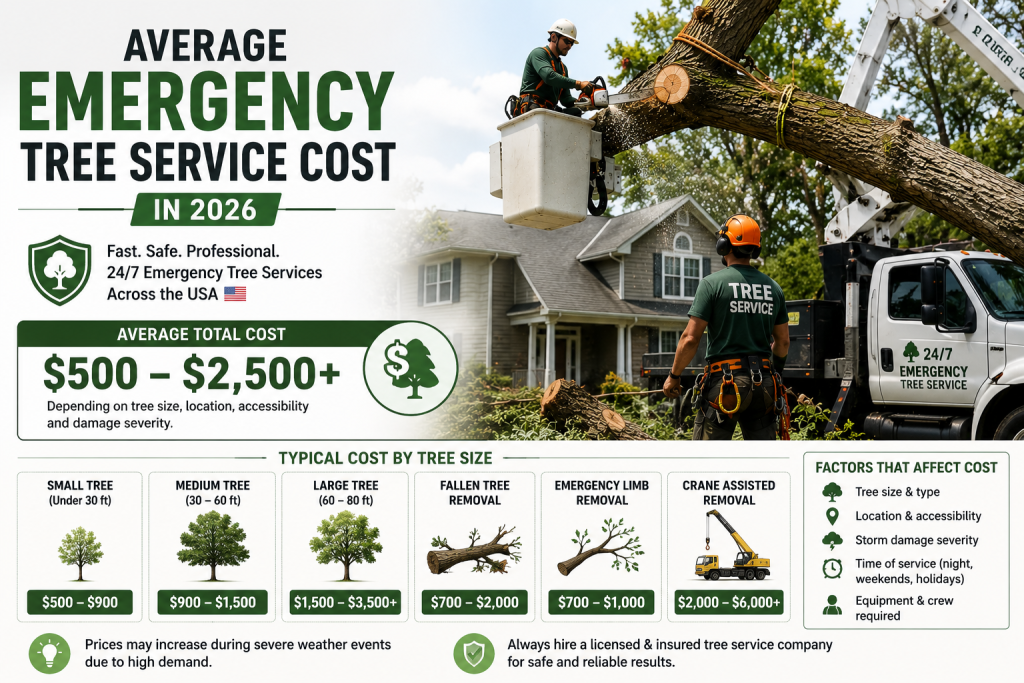
    Infographic showing the average emergency tree service cost in 2026, with professional arborists removing a storm-damaged tree using a bucket truck near a suburban US home, including estimated tree removal price ranges and key cost factors.

    Average Emergency Tree Service Cost in 2026

    The average Emergency Tree Service Cost in the United States ranges from $500 to $2,500, depending on the size of the tree, location, accessibility, and urgency.

    Typical price ranges include:

    ServiceAverage Cost
    Small emergency tree removal$500–$900
    Medium tree removal$900–$1,500
    Large tree removal$1,500–$3,500+
    Fallen tree removal$700–$2,000
    Emergency limb removal$300–$1,000
    Crane-assisted removal$2,000–$6,000+

    The final Emergency Tree Service Cost may increase during severe weather events when demand is extremely high.


    Factors That Affect Emergency Tree Service Cost

    Several factors influence the total Emergency Tree Service Cost.

    Tree Size

    Larger trees require more labor, equipment, and cleanup, resulting in higher costs.

    Tree Location

    Trees close to homes, power lines, fences, or swimming pools require extra care and specialized removal techniques.

    Storm Damage

    Broken or unstable trees are more dangerous to remove than healthy standing trees.

    Accessibility

    Limited yard access may require cranes or bucket trucks, increasing the Emergency Tree Service Cost.

    Time of Service

    Emergency calls during nights, weekends, or holidays often include additional service fees.


    Does Homeowners Insurance Cover Emergency Tree Service?

    Many homeowners insurance policies may help cover Emergency Tree Service Cost if the tree falls because of a covered event such as:

    • Windstorms
    • Lightning
    • Heavy snow
    • Ice storms

    Insurance often pays when a tree damages an insured structure like a home or garage. However, removal of trees that simply fall into the yard without causing damage may not always be covered.

    Always contact your insurance company before scheduling major emergency work.


    How to Save Money on Emergency Tree Service

    Although emergencies cannot always be avoided, homeowners can reduce the overall Emergency Tree Service Cost by following these tips:

    • Schedule regular tree inspections.
    • Remove hazardous trees before storm season.
    • Compare estimates from licensed companies.
    • Verify insurance and certifications.
    • Ask about cleanup costs before work begins.

    Preventive maintenance is often far less expensive than emergency removal.


    Why You Should Hire Professionals

    Emergency tree removal is one of the most dangerous landscaping jobs. Attempting to remove a damaged tree without proper equipment can result in serious injuries and costly property damage.

    Professional tree service companies provide:

    • 24/7 emergency response
    • Licensed and insured crews
    • Specialized safety equipment
    • Crane and bucket truck services
    • Complete debris removal

    Hiring experienced professionals ensures the job is completed safely and efficiently.


    Signs You Need Emergency Tree Service Immediately

    Call a professional immediately if you notice:

    • A tree leaning suddenly after a storm
    • Large cracked branches hanging overhead
    • A tree touching power lines
    • Roots lifting from the ground
    • A tree resting on your roof or vehicle

    Ignoring these warning signs can increase both safety risks and the overall Emergency Tree Service Cost due to worsening damage.


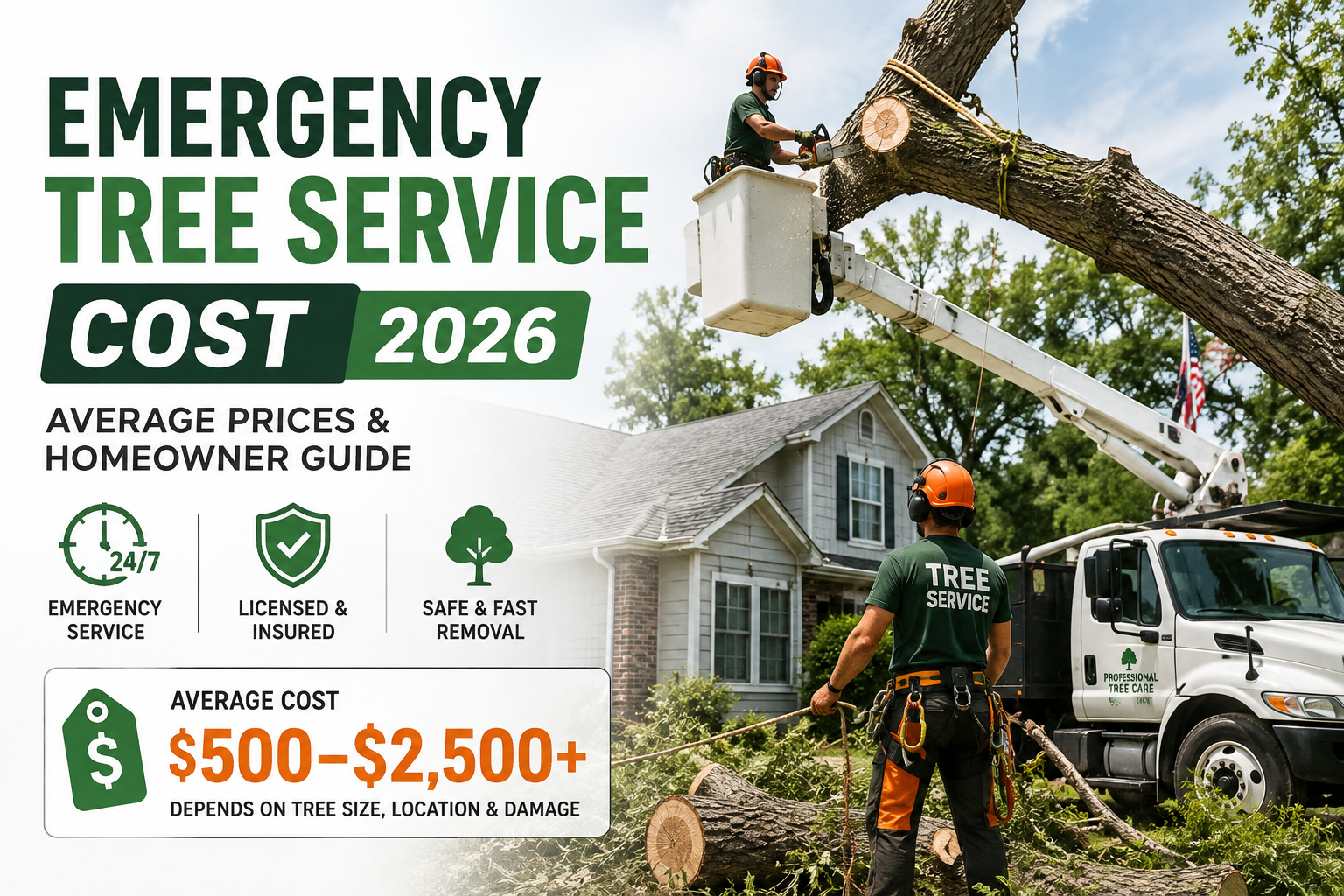
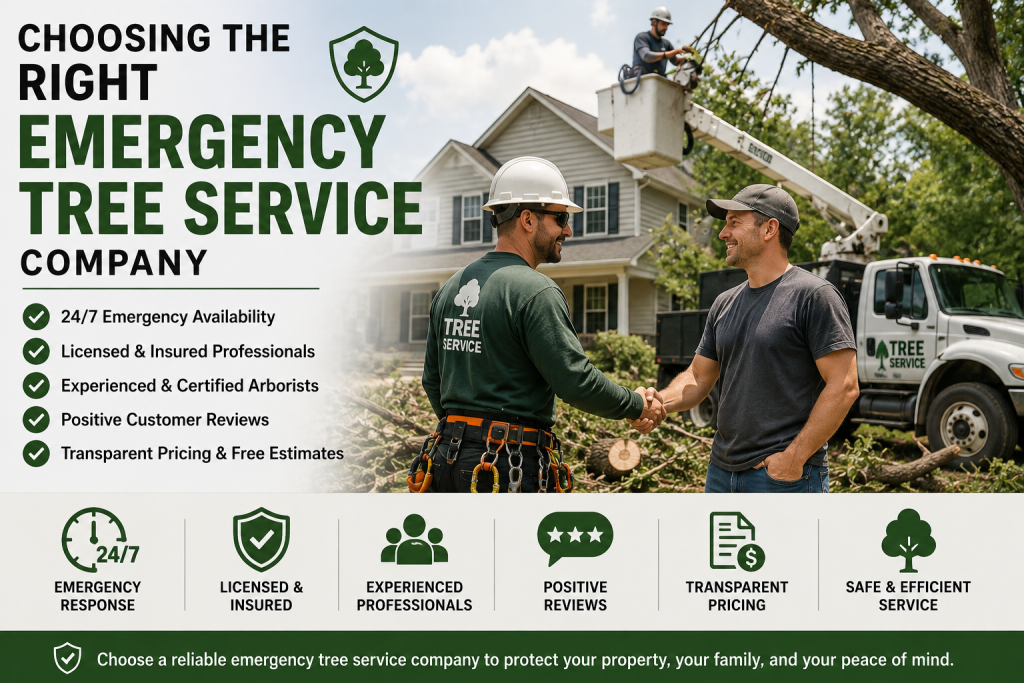
    Professional arborist shaking hands with a homeowner after discussing emergency tree removal services, with a bucket truck and tree crew in the background, illustrating how to choose the right emergency tree service company in the USA.

    Choosing the Right Emergency Tree Service Company

    Before hiring a contractor, look for:

    • Licensed and insured professionals
    • ISA Certified Arborists
    • Positive customer reviews
    • Transparent pricing
    • Written estimates
    • 24-hour emergency availability

    A reputable company will explain the work, provide a clear estimate, and prioritize safety.


    Conclusion

    Understanding Emergency Tree Service Cost allows homeowners to make informed decisions during stressful situations. While prices vary based on tree size, location, and urgency, hiring qualified professionals helps protect your family and property. Regular inspections, preventive maintenance, and quick action after storms can reduce long-term expenses and keep your landscape safe throughout 2026.


    Frequently Asked Questions

    1. What is the average Emergency Tree Service Cost?

    Most homeowners pay between $500 and $2,500, depending on the situation.

    2. Does insurance cover emergency tree removal?

    It often does if a covered storm causes damage to an insured structure.

    3. Why is emergency tree service more expensive?

    Emergency response requires immediate availability, specialized equipment, and additional safety precautions.

    4. Can I remove a fallen tree myself?

    Large or damaged trees should always be handled by trained professionals for safety reasons.

    5. How can I lower emergency tree removal costs?

    Regular tree maintenance and early removal of hazardous trees can help reduce future emergency expenses.

  • Fallen Tree on House: Complete Guide US Homeowners (2026)

    Fallen Tree on House: Complete Guide US Homeowners (2026)

    Fallen Tree on House: What to Do After a Tree Falls on Your Home in 2026

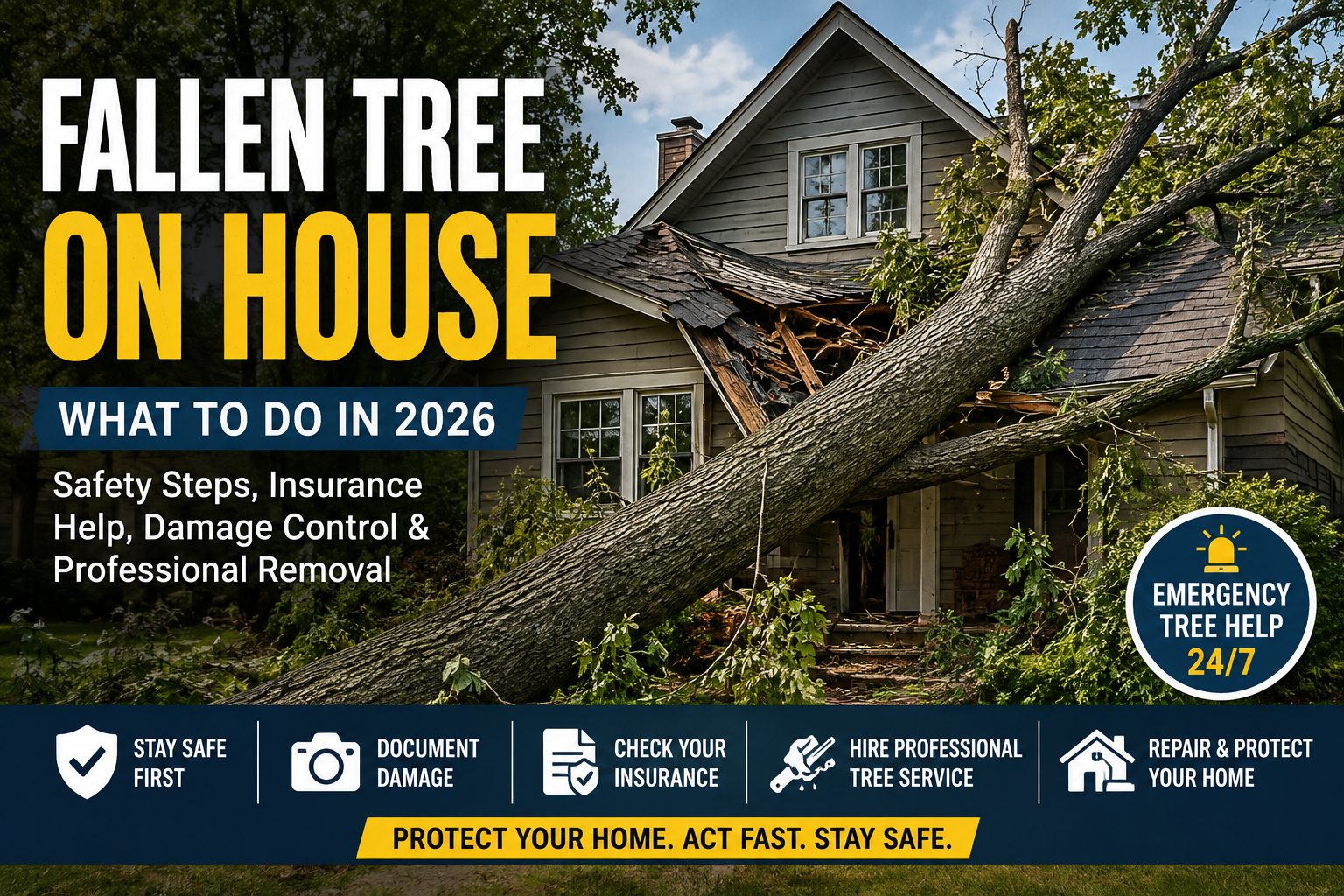
    A Fallen Tree on House can turn a normal day into a serious home emergency. Severe thunderstorms, hurricanes, tornadoes, high winds, heavy snow, and weakened trees can cause major property damage across the United States. If a tree falls on your home, knowing what to do next can protect your family, reduce additional damage, and make the insurance process easier.

    This guide explains the important steps U.S. homeowners should take after a Fallen Tree on House, including emergency safety, damage assessment, insurance, professional removal, and prevention.

    What to Do Immediately

    Safety should always be your first priority after a Fallen Tree on House. Do not rush outside to inspect the damage if the tree is still moving, power lines are nearby, or parts of the structure appear unstable.

    Move your family and pets to a safe location. Stay away from damaged areas, broken windows, sagging ceilings, and electrical wires.

    If you see downed power lines, sparks, fire, a gas leak, serious injuries, or an immediate structural danger, contact emergency services and stay away from the affected area.

    Never climb onto the tree or roof yourself. A large tree can remain under significant pressure even after it has fallen.

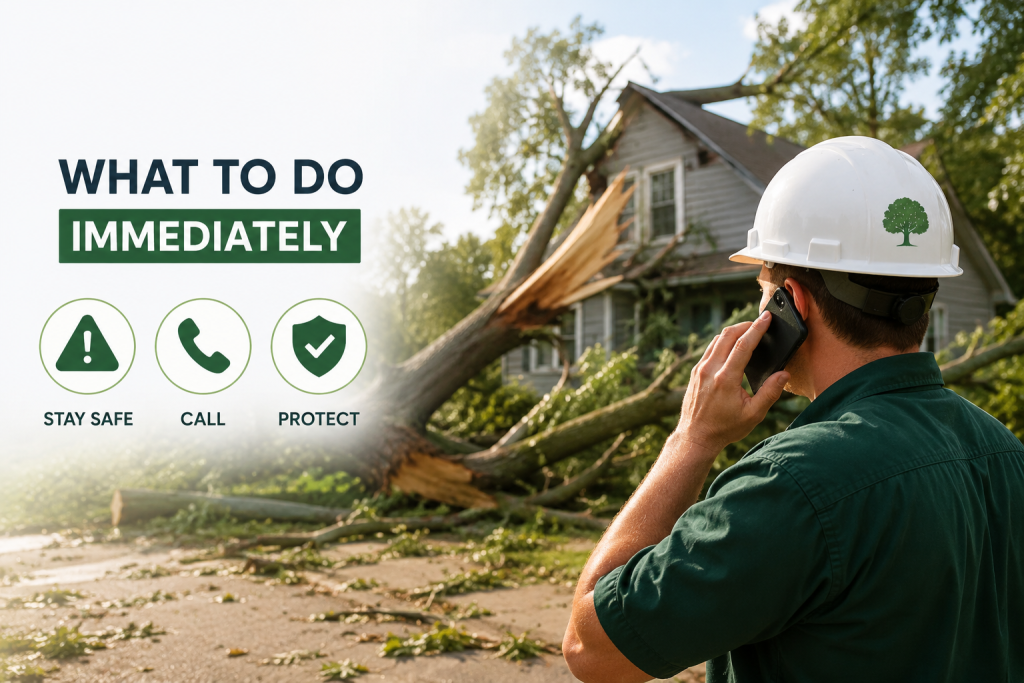
    Professional tree removal expert speaking on the phone while inspecting a large tree that has fallen onto a residential home after a severe storm, highlighting the immediate safety steps homeowners should take, including staying safe, calling emergency tree removal services, and protecting the property from further damage.

    Check for Visible Damage

    Once everyone is safe, look at the property from a secure location. A Fallen Tree on House can damage much more than the roof.

    Common types of damage include:

    • Broken shingles
    • Damaged roof decking
    • Cracked rafters
    • Broken windows
    • Damaged gutters
    • Siding damage
    • Ceiling damage
    • Structural problems
    • Damaged electrical systems
    • Water intrusion

    Some damage may not be visible immediately. For example, roof or structural damage can become worse after rain enters the home.

    If you suspect structural damage, have a qualified contractor or building professional inspect the property before entering or making major repairs.

    Document the Damage

    Before cleanup begins, take photographs and videos whenever it is safe. A Fallen Tree on House should be thoroughly documented for insurance and repair purposes.

    Take pictures of the entire property as well as close-up images of damaged areas. Photograph the tree, roof, broken windows, walls, branches, fences, vehicles, and other affected property.

    Keep receipts for emergency services, temporary repairs, tree removal, tarps, boarding, and other expenses related to the incident.

    Do not throw away damaged items unless necessary for safety. Your insurance company may need evidence of the loss.

    Contact Your Homeowners Insurance Company

    After a Fallen Tree on House, contact your homeowners insurance company as soon as reasonably possible. Coverage depends on your individual policy and the cause of the tree falling.

    For example, damage caused by certain covered storms may be eligible for coverage. However, exclusions, deductibles, policy limits, and maintenance-related issues can affect a claim.

    Ask your insurer:

    • Is the property damage covered?
    • Is emergency tree removal covered?
    • What is my deductible?
    • Are temporary repairs covered?
    • Do I need an adjuster inspection?
    • What documentation is required?

    If a neighbor’s tree caused the damage, do not automatically assume the neighbor is responsible. Liability can depend on the circumstances and applicable state law.

    Hire Professional Emergency Tree Removal

    Removing a Fallen Tree on House can be extremely dangerous. A tree may be resting on the roof, tangled in electrical wires, supported by unstable branches, or putting pressure on damaged parts of the home.

    Professional tree removal companies have specialized equipment and experience for handling dangerous trees.

    Depending on the situation, professionals may use cranes, ropes, bucket trucks, chainsaws, and other specialized equipment to safely dismantle and remove the tree.

    Homeowners should avoid attempting large-scale tree removal themselves. DIY removal can result in serious injuries, additional property damage, or contact with electrical lines.

    Protect Your Home From Further Damage

    After a Fallen Tree on House, temporary protection may be necessary to prevent additional damage.

    If the roof has been opened, a qualified professional may install a temporary tarp. Broken windows can also be boarded up to keep rain and debris outside.

    If water is entering the home, move furniture and valuable belongings away from the affected area when it is safe.

    Do not climb onto a damaged roof or enter an unstable part of the house simply to protect belongings.

    How Much Does Tree Removal Cost?

    The cost of removing a Fallen Tree on House varies significantly. Factors can include tree size, location, accessibility, roof damage, electrical hazards, required equipment, and emergency service availability.

    A small tree in an open yard may be relatively simple to remove, while a large mature tree resting on a roof can require specialized equipment and multiple workers.

    Homeowners should obtain professional estimates when possible and ask whether cleanup, hauling, stump removal, and emergency services are included.

    Can Insurance Pay for Tree Removal?

    A Fallen Tree on House may involve both property-damage coverage and tree-removal coverage, depending on the homeowners policy.

    Insurance policies can differ considerably, so homeowners should review their policy and speak directly with their insurance provider.

    If the tree damaged the home during a covered event, repairs to the structure may be covered subject to the policy’s terms, limits, and deductible.

    Professional arborist performing preventive tree pruning in a well-maintained residential yard to reduce future tree emergencies, improve tree health, and protect homes from storm-related branch and tree failure.

    Prevent Future Tree Emergencies

    Preventing another Fallen Tree on House starts with regular tree maintenance.

    Homeowners should watch for:

    • Dead or hanging branches
    • Cracks in major limbs
    • Leaning trunks
    • Root damage
    • Decay or cavities
    • Weak branch connections
    • Storm damage
    • Signs of disease or pests

    Professional tree inspections can identify hazards before they become emergencies. Regular pruning can also help reduce dangerous branches around roofs, driveways, power lines, and other structures.

    Final Thoughts

    A Fallen Tree on House requires a calm and organized response. Protect people first, stay away from electrical hazards, document the damage, contact your insurance company, and hire qualified professionals for dangerous tree removal.

    For U.S. homeowners, preparing before severe weather can make a major difference. Regular inspections, proper pruning, and understanding your homeowners insurance can help reduce the risk of expensive property damage in 2026.

    FAQs

    What should I do first after a tree falls?

    Get everyone to a safe location and check for immediate hazards.

    Does homeowners insurance cover fallen trees?

    Coverage depends on your policy and the cause of the tree damage.

    Can I remove a fallen tree myself?

    Large or unstable trees should be removed by trained professionals.

    Can a fallen tree damage my roof?

    Yes. It can damage shingles, framing, gutters, ceilings, and walls.

    How can I prevent trees from falling?

    Regular inspections, pruning, and professional tree maintenance can reduce risks.

  • Storm Damage Tree Removal: Complete  Guide 2026

    Storm Damage Tree Removal: Complete Guide 2026

    Storm Damage Tree Removal for U.S. Homeowners 2026

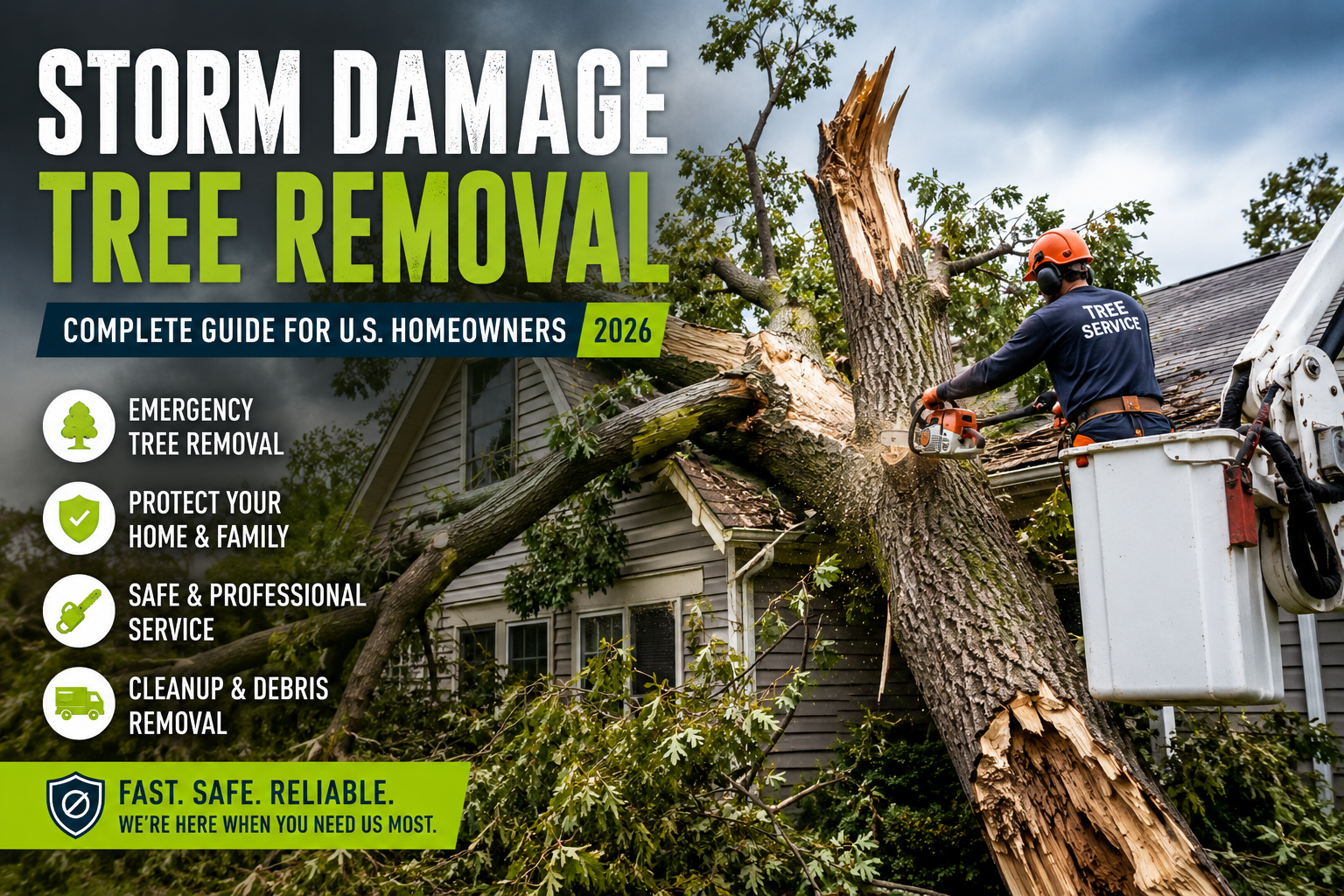
    Storms can turn a healthy-looking tree into a serious hazard in minutes. High winds, lightning, heavy rain, ice, and tornadoes can break limbs, split trunks, or uproot entire trees. When this happens, storm damage tree removal becomes an important step in protecting your home, family, vehicles, and property.

    What Is Storm Damage Tree Removal?

    Storm damage tree removal is the professional process of safely removing trees that have been damaged by severe weather. Unlike routine tree removal, storm-related work can involve unstable trunks, hanging branches, fallen trees, blocked driveways, and trees leaning toward buildings or power lines.

    A storm-damaged tree with broken branches near a residential property, illustrating the risks of unstable limbs, weakened tree structure, falling debris, and property damage.

    Why Storm-Damaged Trees Are Dangerous

    A damaged tree may look stable while remaining structurally weak. Large branches can fall without warning, and uprooted trees can shift or roll. Storm damage tree removal should be treated as urgent when a tree is resting on a home, blocking access, touching utility lines, or creating an immediate risk to people.

    Common signs that a tree needs professional attention include:

    • Split or cracked trunks
    • Large broken branches
    • Exposed or lifted roots
    • A tree leaning suddenly
    • Hanging limbs
    • Fallen trees blocking roads or driveways
    • Damage near roofs, fences, or utility lines

    When Should You Call a Tree Removal Professional?

    Homeowners should contact a qualified tree care professional as soon as it is safe to inspect the property. Storm damage tree removal may be necessary even when the tree has not completely fallen. A certified arborist or experienced tree service can assess structural damage and determine whether removal, pruning, or stabilization is appropriate.

    Never attempt to cut a storm-damaged tree yourself if it is under tension, leaning toward a structure, or close to power lines. These situations can be unpredictable and extremely dangerous.

    How the Storm Damage Tree Removal Process Works

    Professional storm damage tree removal generally begins with a safety assessment. The crew identifies hazards, checks the tree’s condition, and determines how it can be dismantled safely.

    The process may include:

    1. Inspecting the damaged tree and surrounding area
    2. Establishing a safe work zone
    3. Removing dangerous or hanging branches
    4. Cutting and lowering sections of the tree
    5. Removing the trunk and major debris
    6. Hauling away branches and wood
    7. Cleaning the affected area

    For severe storm damage tree removal, specialized equipment such as ropes, chainsaws, bucket trucks, or cranes may be required.

    How Much Does Storm Damage Tree Removal Cost in 2026?

    The cost of storm damage tree removal varies across the United States. Factors include tree size, location, accessibility, damage severity, equipment requirements, and whether the tree has fallen onto a structure.

    Simple debris removal may cost less than removing a large, unstable tree near a house. Emergency service, difficult access, crane work, and extensive cleanup can increase the total price.

    Before hiring a company, ask for a written estimate that clearly explains removal, cleanup, hauling, and any additional charges.

    Does Homeowners Insurance Cover Storm-Damaged Trees?

    Homeowners insurance may cover certain types of storm-related tree damage, but coverage depends on the policy and circumstances. Storm damage tree removal may be covered when a fallen tree damages a covered structure, such as a house or garage. Coverage for a tree that simply falls in an open yard can be different.

    Review your policy and contact your insurance provider before authorizing major work when circumstances allow. Take photographs of the damage and keep invoices and estimates for your records.

    How to Choose a Storm Tree Removal Company

    Look for a properly insured and experienced tree care company. Ask whether the crew has experience handling storm emergencies and whether the company provides written estimates.

    A reliable provider should explain the hazards, proposed removal method, cleanup process, and expected cost. Homeowners should also verify that the company is appropriately licensed or certified where required locally.

    Preventing future storm tree damage with professional tree care and pruning

    Preventing Future Storm Tree Damage

    Routine tree maintenance can reduce the risk of severe storm damage. Regular inspections, proper pruning, removal of dead branches, and attention to weak limbs can help identify problems before severe weather arrives.

    Homeowners should also monitor trees after major storms. A tree that survives one storm may develop structural problems that become dangerous during the next weather event.

    Final Thoughts

    Storm damage can create dangerous conditions quickly, but prompt professional action can reduce the risk to your property and family. Storm damage tree removal is often the safest solution when a tree is severely damaged, unstable, or threatening a structure.

    For U.S. homeowners, the best approach is to prioritize safety, stay away from damaged trees near power lines, document the damage, check insurance coverage, and hire qualified professionals for hazardous removal work. Acting quickly can help prevent additional property damage and make storm recovery easier.

    Frequently Asked Questions

    1. What is storm damage tree removal?

    Storm damage tree removal is the professional removal of trees that have been damaged, uprooted, split, or weakened by high winds, lightning, heavy rain, ice, or other severe weather. It helps protect homes, vehicles, utility lines, and people from further damage.

    2. How much does storm damage tree removal cost in 2026?

    The cost varies depending on the tree’s size, location, level of damage, accessibility, equipment needed, and cleanup requirements. Emergency removal and trees located near homes or power lines can cost more than straightforward tree removal.

    3. Does homeowners insurance cover storm-damaged tree removal?

    Homeowners insurance may cover tree removal when a fallen or damaged tree causes covered damage to a home or another insured structure. Coverage varies by policy, so homeowners should review their insurance policy and contact their insurance provider for specific details.

    4. Can I remove a storm-damaged tree myself?

    DIY removal can be extremely dangerous when a tree is leaning, split, uprooted, under tension, or located near power lines. It is safer to hire an experienced tree removal professional for hazardous storm-damaged trees.

    5. How soon should a storm-damaged tree be removed?

    A storm-damaged tree should be professionally inspected as soon as conditions are safe. Immediate attention is especially important when the tree is threatening a house.

  • Emergency Tree Services for US Homeowners :(2026 Guide)

    Emergency Tree Services for US Homeowners :(2026 Guide)

    Emergency Tree Services

    Storms, high winds, heavy snow, and fallen trees can create dangerous situations that require immediate attention. Emergency Tree Services help homeowners quickly remove hazardous trees, broken limbs, and storm debris to restore safety and prevent further property damage.

    In this 2026 guide, you’ll learn when to call Emergency Services, what these services include, average costs, and how to choose a reliable tree company in the United States.


    What Are Emergency Tree Services?

    Emergency Tree Services are professional tree care solutions available 24/7 to address urgent situations involving damaged, fallen, or hazardous trees. Unlike routine tree maintenance, emergency services focus on protecting people, homes, vehicles, power lines, and nearby structures from immediate danger.

    Professional crews use specialized equipment and safety procedures to remove dangerous trees as quickly and safely as possible.


    When Should You Call Emergency Tree Services?

    Knowing when to contact Emergency Services can prevent injuries and minimize property damage.

    Common situations include:

    • Trees that have fallen on homes or garages
    • Large branches blocking driveways or roads
    • Storm-damaged trees leaning dangerously
    • Trees touching power lines
    • Split or cracked tree trunks
    • Uprooted trees after severe weather
    • Trees threatening nearby buildings

    If a tree poses an immediate safety risk, contact Emergency Services without delay.


    Common Causes of Tree Emergencies

    Tree emergencies happen for many reasons, including:

    Severe Storms

    Thunderstorms, tornadoes, hurricanes, and strong winds can snap branches or uproot entire trees.

    Lightning Strikes

    Lightning can weaken tree structures, making them unstable and hazardous.

    Heavy Snow and Ice

    Snow and ice accumulation often causes large limbs to break unexpectedly.

    Disease and Decay

    Dead or decaying trees may collapse without warning, especially during storms.

    Root Damage

    Construction work or soil erosion can weaken root systems and increase the risk of tree failure.


    Emergency tree service professionals removing storm-damaged trees and clearing debris from a residential property

    Services Included in Emergency Services

    Professional Emergency Tree Services typically include:

    • Emergency tree removal
    • Fallen tree removal
    • Storm damage cleanup
    • Hazardous limb removal
    • Emergency tree trimming
    • Broken branch removal
    • Tree stabilization
    • Debris hauling and cleanup
    • Insurance claim assistance

    Many companies also offer 24/7 emergency response for urgent situations.


    Benefits of Hiring Professional Emergency Tree Services

    Choosing professional Emergency Tree Services provides several important advantages.

    Fast Response

    Many companies offer around-the-clock emergency service to respond quickly after storms.

    Improved Safety

    Certified professionals use specialized equipment to remove hazardous trees safely.

    Property Protection

    Experienced crews minimize additional damage during the removal process.

    Proper Equipment

    Emergency tree work often requires cranes, bucket trucks, chainsaws, and heavy-duty rigging equipment that homeowners typically do not have.

    Insurance Support

    Many tree service companies assist with documentation and photos needed for insurance claims.


    How Much Do Emergency Tree Services Cost?

    The cost of Emergency Tree Services depends on several factors:

    • Tree size
    • Tree location
    • Accessibility
    • Storm severity
    • Equipment required
    • Time of day
    • Urgency of the response

    Average Emergency Tree Service Costs (2026)

    • Small tree removal: $250–$600
    • Medium tree removal: $600–$1,200
    • Large tree removal: $1,200–$3,000+
    • Emergency storm response: Additional fees may apply for after-hours service

    Always request a written estimate whenever possible.


    What to Do Before Help Arrives

    While waiting for Emergency Tree Services, follow these safety tips:

    • Stay away from fallen trees.
    • Never touch trees in contact with power lines.
    • Keep children and pets away from the area.
    • Avoid walking beneath damaged limbs.
    • Contact your utility company if power lines are involved.
    • Take photos for insurance purposes if it is safe to do so.

    Your safety should always come first.


    How to Choose the Right Emergency Tree Service Company

    When hiring Emergency Tree Services, look for companies that offer:

    • 24/7 emergency response
    • Licensed and insured crews
    • Experienced arborists
    • Modern safety equipment
    • Positive customer reviews
    • Transparent pricing
    • Free or upfront estimates when available

    Choosing a trusted company ensures the job is completed safely and professionally.


    Can Insurance Cover Emergency Tree Services?

    Homeowners insurance may cover tree removal if the tree falls because of a covered event, such as:

    • Windstorms
    • Lightning
    • Ice storms
    • Falling trees damaging insured structures

    Coverage varies by policy, so contact your insurance provider to understand your benefits.


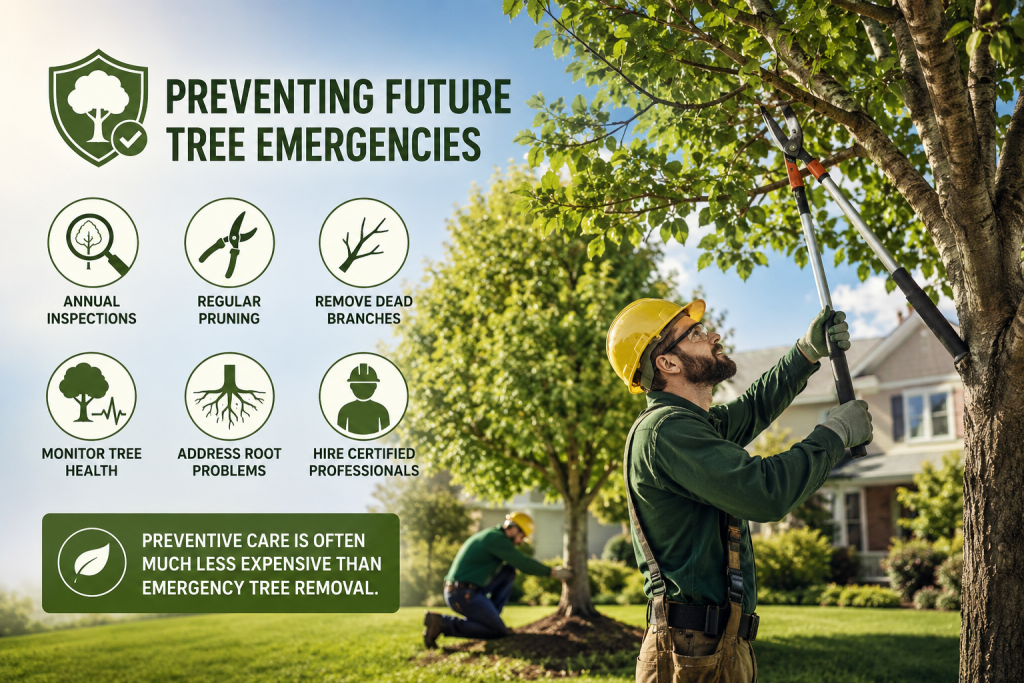
    Professional tree maintenance, including inspections, pruning, dead branch removal, root care, and health monitoring, can help homeowners prevent future tree emergencies.

    Preventing Future Tree Emergencies

    Routine tree maintenance can reduce the likelihood of emergencies.

    Helpful preventive measures include:

    • Annual tree inspections
    • Regular pruning
    • Removing dead or diseased branches
    • Monitoring tree health
    • Addressing root problems early
    • Hiring certified tree care professionals

    Preventive care is often much less expensive than emergency tree removal.


    Final Thoughts

    Emergency Tree Services are essential for protecting your home, family, and property after severe weather or unexpected tree failures. Whether you’re dealing with a fallen tree, broken limbs, or storm damage, professional emergency tree crews have the expertise and equipment to respond safely and efficiently.

    For US homeowners in 2026, choosing a licensed, insured, and experienced emergency tree service company provides peace of mind during stressful situations. Acting quickly can reduce property damage, improve safety, and help restore your landscape as soon as possible.


    Frequently Asked Questions (FAQs)

    1. What qualifies as a tree emergency?

    A tree emergency includes fallen trees, hanging branches, storm damage, trees on homes, or trees touching power lines.

    2. Are emergency tree services available 24/7?

    Yes. Many professional tree companies provide 24/7 emergency response for urgent situations.

    3. Does homeowners insurance cover emergency tree removal?

    In many cases, yes, if the tree damages an insured structure due to a covered event. Check your specific policy for details.

    4. Should I remove a fallen tree myself?

    No. Large or hazardous trees should only be handled by trained professionals with the proper equipment.

    5. How quickly can emergency tree services respond?

    Many companies respond within a few hours, depending on weather conditions, demand, and your location.

  • DIY vs Professional Stump Grinding: (2026 Guide)

    DIY vs Professional Stump Grinding: (2026 Guide)

    DIY vs Professional Stump Grinding

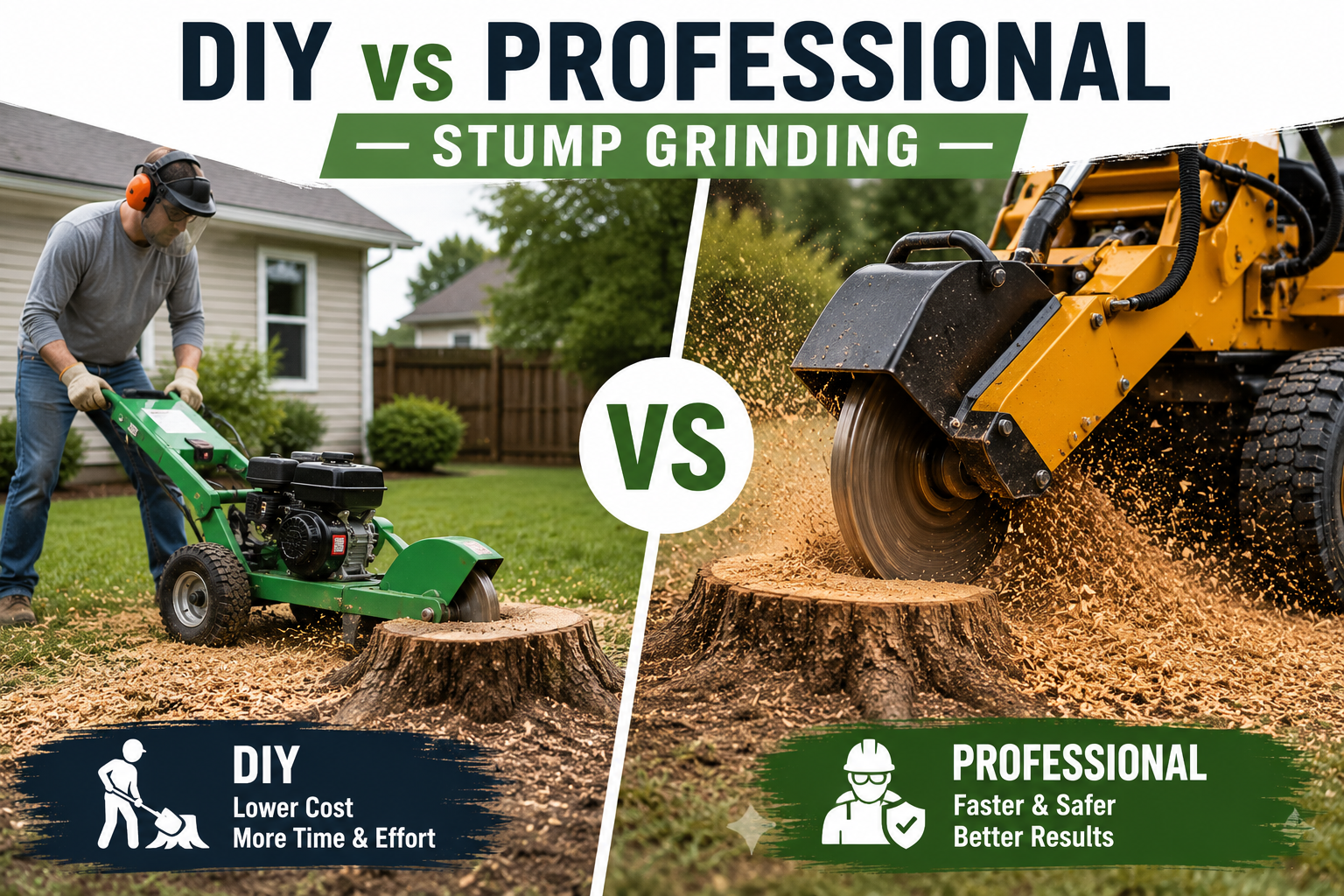
    After removing a tree, homeowners often wonder whether they should handle the remaining stump themselves or hire a professional. Understanding DIY vs Professional Stump Grinding is essential before making a decision. While renting a stump grinder may seem like a money-saving option, professional services often provide better results, improved safety, and faster completion.

    This 2026 guide explains DIY vs Professional Stump Grinding, including costs, equipment, safety concerns, and long-term value for homeowners across the United States.


    What Is Stump Grinding?

    Stump grinding is the process of removing a tree stump using a powerful grinding machine that cuts the wood into small chips. Unlike complete stump removal, grinding leaves the root system underground, where it naturally decomposes over time.

    When comparing DIY vs Professional Stump Grinding, it’s important to understand that both methods remove the visible stump, but they differ greatly in efficiency, safety, and overall results.


    DIY vs Professional Stump Grinding: What’s the Difference?

    The biggest difference between DIY vs Professional Stump Grinding is who performs the work and the equipment being used.

    DIY Stump Grinding

    DIY stump grinding involves renting a stump grinder from a local equipment rental company and completing the project yourself.

    Professional Stump Grinding

    Professional stump grinding is performed by trained tree service experts using commercial-grade equipment designed for faster, safer, and more effective stump removal.


    Pros of DIY Stump Grinding

    Many homeowners consider DIY because of the potential cost savings.

    Advantages

    • Lower upfront cost
    • Flexible work schedule
    • Suitable for small stumps
    • Opportunity to complete simple yard projects yourself

    For homeowners with landscaping experience, DIY may be practical for small and easily accessible stumps.


    Cons of DIY Stump Grinding

    Although DIY sounds appealing, it comes with several challenges.

    Disadvantages

    • Steep learning curve
    • Heavy equipment can be dangerous
    • Higher risk of personal injury
    • Possible damage to underground utilities
    • Equipment rental costs
    • Physical labor required
    • Longer completion time

    When evaluating DIY vs Professional Stump Grinding, safety should always be one of the biggest considerations.


    Benefits of Professional Stump Grinding

    Professional tree service companies bring experience and specialized equipment to every project.

    Advantages

    • Fast completion
    • Commercial-grade machinery
    • Experienced operators
    • Minimal lawn damage
    • Proper cleanup
    • Lower risk of accidents
    • Better final appearance

    For most homeowners, DIY vs Professional Stump Grinding becomes an easy decision when convenience and safety are priorities.


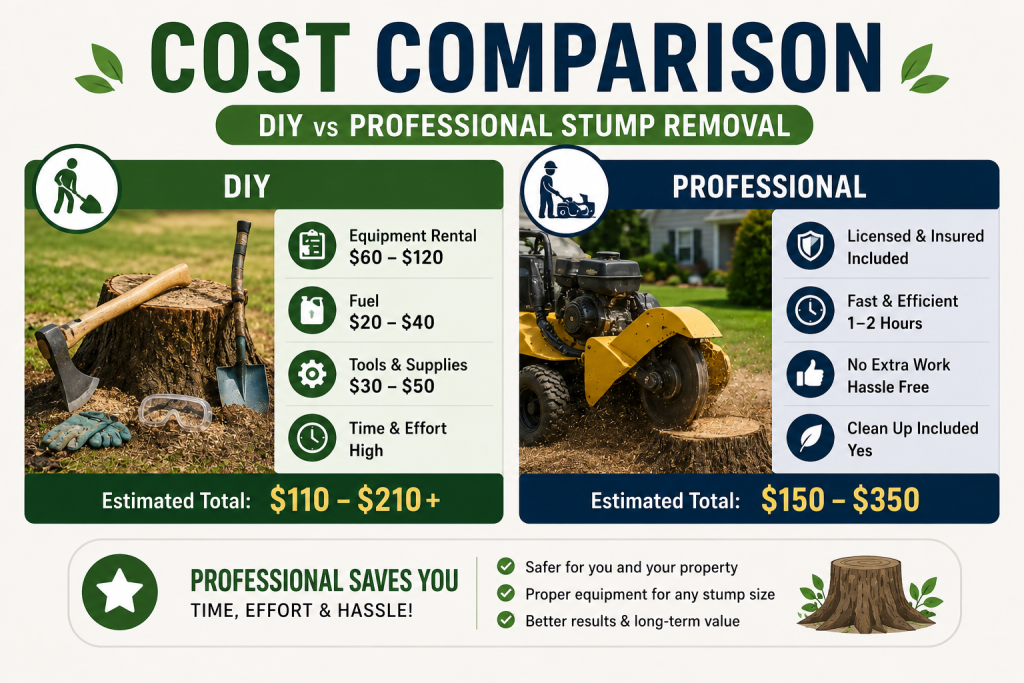
    A professional infographic comparing the cost of DIY vs. professional stump removal. The image highlights estimated expenses for equipment rental, fuel, tools, and labor while showing the advantages of hiring a professional, including licensed service, faster completion, hassle-free cleanup, and long-term value for homeowners.

    Cost Comparison

    One reason homeowners compare DIY vs Professional Stump Grinding is cost.

    DIY Costs

    • Equipment rental: $100–$300 per day
    • Fuel costs
    • Safety gear
    • Transportation fees
    • Potential repair charges

    Professional Costs

    • Small stump: $100–$200
    • Medium stump: $200–$400
    • Large stump: $400–$700+

    Although professional services may appear more expensive initially, they often provide better overall value by saving time and avoiding costly mistakes.


    Safety Considerations

    Safety is one of the most important factors when comparing DIY vs Professional Stump Grinding.

    Professional stump grinders are extremely powerful machines capable of throwing rocks, wood chips, and debris at high speeds. Improper use may result in:

    • Serious injuries
    • Property damage
    • Broken windows
    • Utility line damage
    • Equipment accidents

    Professional contractors are trained to operate these machines safely and follow industry best practices.


    Which Option Saves More Time?

    Time is another major difference in DIY vs Professional Stump Grinding.

    DIY

    • Equipment pickup
    • Learning how to operate the machine
    • Grinding
    • Cleanup
    • Equipment return

    This process may take an entire day or longer.

    Professional

    Most professional stump grinding jobs are completed within 30 minutes to 2 hours, depending on stump size and site conditions.


    When DIY Makes Sense

    DIY may be a reasonable choice if:

    • The stump is small.
    • The ground is level.
    • Equipment is easily accessible.
    • You have experience operating heavy machinery.
    • Safety risks are minimal.

    When You Should Hire a Professional

    Professional stump grinding is recommended when:

    • The stump is large.
    • Multiple stumps need removal.
    • The stump is close to buildings.
    • Underground utilities are nearby.
    • You want quick, clean results.
    • Safety is your top priority.

    For most residential properties, DIY vs Professional Stump Grinding usually favors hiring an experienced tree service company.


    A professional infographic showing essential tips before choosing a tree stump removal service. The image features a tree stump in a residential yard alongside a checklist with key factors including checking experience, verifying licenses and insurance, reading customer reviews, getting multiple quotes, and asking about available services. The green-themed design is ideal for landscaping and tree care websites targeting homeowners.

    Tips Before Choosing

    Before deciding between DIY vs Professional Stump Grinding, consider:

    • Your budget
    • Stump size
    • Tree species
    • Equipment availability
    • Time commitment
    • Physical effort
    • Safety concerns
    • Future landscaping plans

    Making the right choice depends on your experience level and the complexity of the project.


    Final Thoughts

    Choosing between DIY vs Professional Stump Grinding ultimately depends on your budget, experience, and project goals. While DIY may work well for small, uncomplicated jobs, professional stump grinding provides faster results, greater safety, and a cleaner finish.

    For most US homeowners in 2026, hiring a professional is the most reliable and cost-effective solution. Experienced tree service providers have the skills and equipment needed to complete the job efficiently while protecting your property and ensuring long-lasting results.


    Frequently Asked Questions (FAQs)

    Is DIY stump grinding cheaper than hiring a professional?

    DIY can have a lower upfront cost, but equipment rental, fuel, and potential repair expenses can reduce the savings.

    Is stump grinding dangerous?

    Yes. Stump grinders are powerful machines that require proper training and protective equipment to operate safely.

    How long does professional stump grinding take?

    Most residential stump grinding jobs take 30 minutes to 2 hours, depending on the stump size and accessibility.

    Can I rent a stump grinder?

    Yes. Many equipment rental companies across the US offer stump grinders for daily or hourly rental.

    Which option is best for large tree stumps?

    Professional stump grinding is the safest and most effective choice for large or difficult-to-access stumps.

  • Benefits of Removing Tree Stumps:  Guide(2026 )

    Benefits of Removing Tree Stumps: Guide(2026 )

    Benefits of Removing Tree Stumps

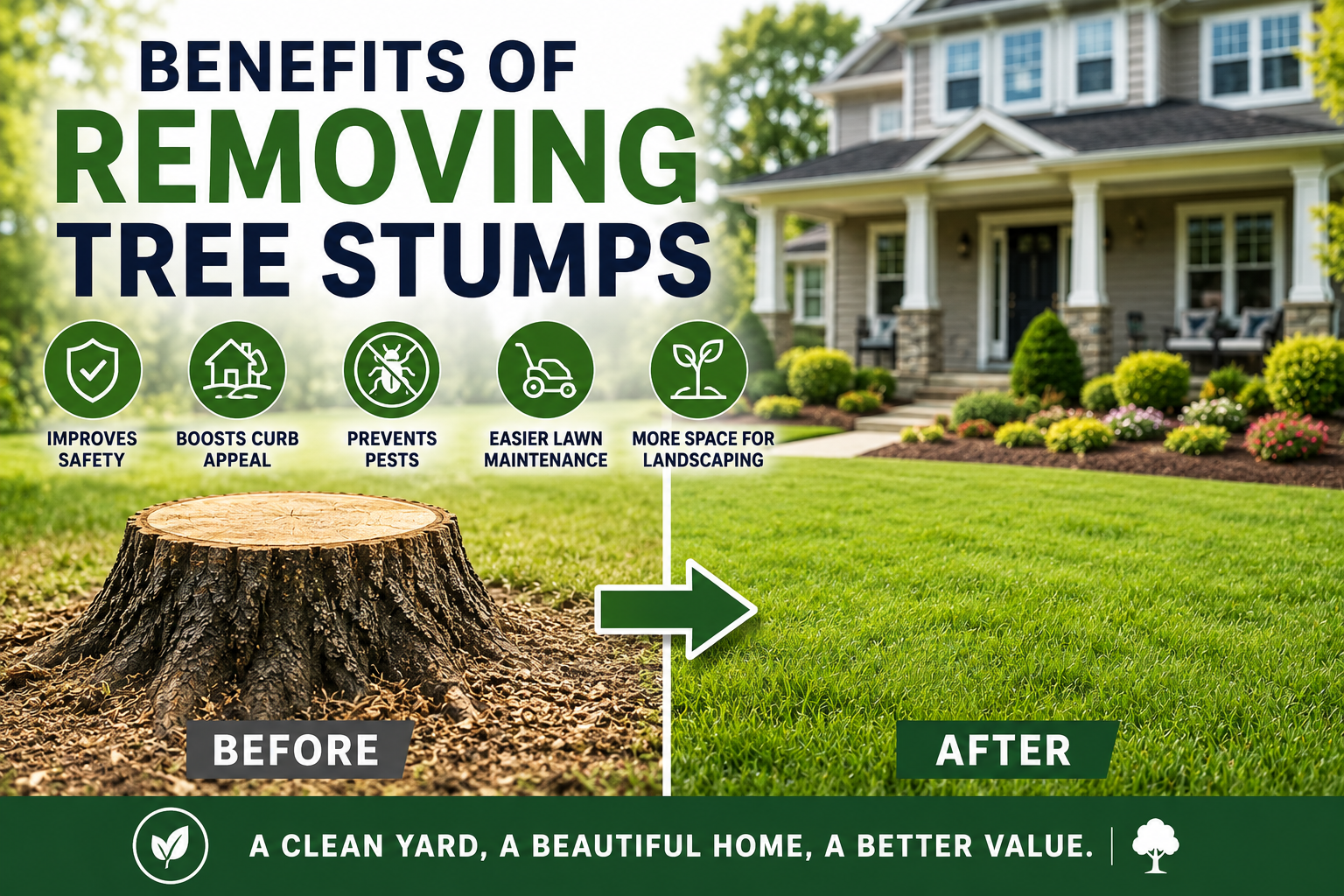
    After a tree is cut down, the remaining stump may seem harmless, but leaving it in your yard can lead to several problems over time. Understanding the Benefits of Removing Tree Stumps can help homeowners improve their property’s appearance, safety, and long-term value.

    Whether you choose stump grinding or complete stump removal, eliminating an old tree stump is a smart investment. In this 2026 guide, we’ll explore the biggest Benefits of Removing Tree Stumps and explain why professional stump removal is recommended for homeowners across the United States.


    Why Should You Remove a Tree Stump?

    Many homeowners postpone stump removal because it doesn’t seem urgent. However, an old stump can attract pests, create safety hazards, and interfere with future landscaping projects.

    Learning the Benefits of Removing Tree Stumps helps you avoid expensive problems while keeping your property clean and attractive.


    1. Improves Curb Appeal

    One of the biggest Benefits of Removing Tree Stumps is enhancing your home’s appearance.

    An old stump makes even a well-maintained yard look unfinished. Removing it creates a cleaner, more attractive landscape that leaves a better impression on visitors and potential buyers.

    A neat lawn also increases the visual appeal of your entire property.


    2. Prevents Pest Infestations

    Dead tree stumps attract unwanted insects, including:

    • Termites
    • Carpenter ants
    • Beetles
    • Wood-boring insects

    These pests may eventually spread to nearby healthy trees or even your home.

    Removing the stump eliminates a potential breeding ground and protects your landscape from costly pest damage.


    3. Eliminates Safety Hazards

    Tree stumps can become dangerous obstacles, especially in areas where children play or people frequently walk.

    Common hazards include:

    • Trips and falls
    • Lawn mower accidents
    • Damaged landscaping equipment
    • Hidden obstacles under tall grass

    Among the many Benefits of Removing Tree Stumps, improving safety is one of the most important for homeowners.


    4. Frees Up Valuable Yard Space

    Large stumps occupy usable space in your yard.

    After removal, you can:

    • Plant grass
    • Build a patio
    • Install a garden
    • Add outdoor seating
    • Create a playground
    • Expand landscaping

    Removing the stump allows you to fully utilize your outdoor living area.


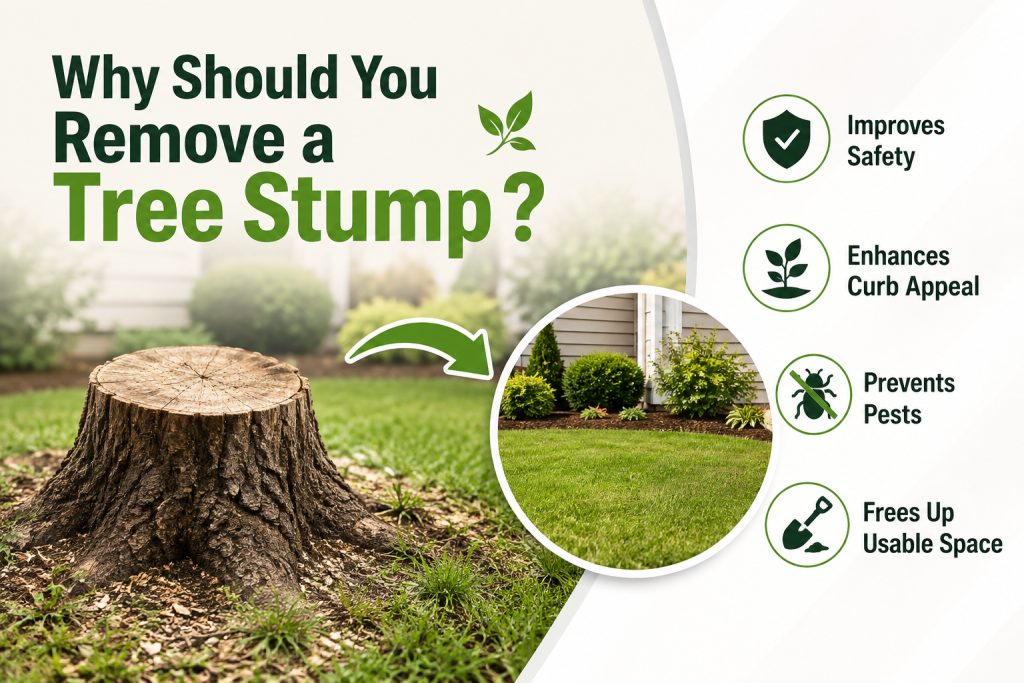
    Why should you remove a tree stump infographic showing a tree stump and the benefits of stump removal for safety, curb appeal, pest prevention, and usable yard space.

    5. Prevents New Tree Growth

    Some tree species continue producing new shoots from the remaining stump.

    These sprouts:

    • Consume nutrients
    • Require regular trimming
    • Make your yard look untidy
    • Increase maintenance costs

    Complete stump removal helps stop unwanted regrowth and keeps your landscape easier to maintain.


    6. Protects Nearby Plants

    Decaying stumps may develop fungi or diseases that spread to surrounding vegetation.

    Removing the stump helps:

    • Protect healthy trees
    • Reduce fungal growth
    • Improve overall landscape health
    • Prevent root-related problems

    Healthy landscapes begin with proper tree care and timely stump removal.


    7. Makes Lawn Maintenance Easier

    Mowing around a tree stump is inconvenient and time-consuming.

    Without the stump, homeowners can:

    • Mow faster
    • Edge more efficiently
    • Avoid equipment damage
    • Maintain a cleaner lawn

    This is one of the practical Benefits of Removing Tree Stumps that homeowners appreciate every week.


    8. Increases Property Value

    A clean, well-maintained yard adds value to residential properties.

    Potential buyers often view leftover stumps as unfinished work or future expenses.

    Removing them improves:

    • Property appearance
    • Buyer confidence
    • Overall landscaping quality
    • Marketability

    Professional stump removal is a relatively small investment that can enhance your home’s resale value.


    9. Reduces the Risk of Disease

    Old stumps naturally decay over time, creating an environment where fungi and diseases can thrive.

    Removing decaying wood helps protect nearby trees from:

    • Root diseases
    • Fungal infections
    • Insect-related damage

    Healthy trees contribute to a stronger and more attractive landscape.


    10. Supports Future Landscaping Projects

    If you’re planning to redesign your yard, removing the stump should be one of the first steps.

    A stump-free landscape makes it easier to:

    • Install irrigation systems
    • Build retaining walls
    • Lay sidewalks
    • Plant flower beds
    • Add decorative features

    Professional stump removal gives you a clean foundation for future improvements.


    Why Hire a Professional?

    Although some homeowners attempt DIY stump removal, professionals offer several advantages:

    • Commercial-grade equipment
    • Faster completion
    • Safe operation
    • Thorough cleanup
    • Minimal lawn damage
    • Proper disposal of debris

    Hiring experienced tree service professionals ensures the stump is removed efficiently and safely.


    Final Thoughts

    Understanding the Benefits of Removing Tree Stumps makes it clear why leaving an old stump behind is rarely the best option. From improving curb appeal and preventing pest infestations to increasing property value and making lawn maintenance easier, stump removal offers lasting advantages for homeowners.

    Benefits of Removing Tree Stumps Whether you’re preparing for landscaping, improving safety, or protecting your property, professional stump removal is a worthwhile investment in 2026. By removing unwanted stumps, you create a healthier, safer, and more attractive outdoor space for years to come.


    Frequently Asked Questions (FAQs)

    1. Why is removing a tree stump important?

    Removing a tree stump improves safety, prevents pests, enhances curb appeal, and creates more usable yard space.

    2. Do tree stumps attract termites?

    Yes. Dead and decaying stumps often attract termites, carpenter ants, beetles, and other wood-boring insects.

    3. Will a tree stump grow back?

    Some tree species can produce new shoots from the remaining stump if it is not completely removed or properly treated.

    4. Does stump removal increase property value?

    Yes. A clean, stump-free landscape improves curb appeal and makes a property more attractive to potential buyers.

    5. Is stump grinding better than leaving a stump?

    For most homeowners, stump grinding is a practical and affordable solution that removes the visible stump while improving the appearance and safety of the yard.

  • How Long Does Stump Grinding Take? Complete Guide 2026

    How Long Does Stump Grinding Take? Complete Guide 2026

    How Long Does Stump Grinding Take?

    If you’ve recently removed a tree, you’re probably wondering, How Long Does Stump Grinding Take? The answer depends on several factors, including the size of the stump, tree species, root system, and the equipment being used. In most cases, stump grinding is a quick and efficient process that can be completed in less than a few hours.

    This 2026 guide explains How Long Does Stump Grinding Take?, what affects the timeline, and how homeowners across the United States can prepare for a smooth and hassle-free stump grinding service.


    What Is Stump Grinding?

    Stump grinding is a tree service that removes the visible tree stump using a specialized grinding machine. Instead of digging out the entire root system, the machine grinds the stump into small wood chips several inches below ground level.

    Many homeowners ask, How Long Does Stump Grinding Take?, because they want to restore their lawn quickly without major excavation or damage.


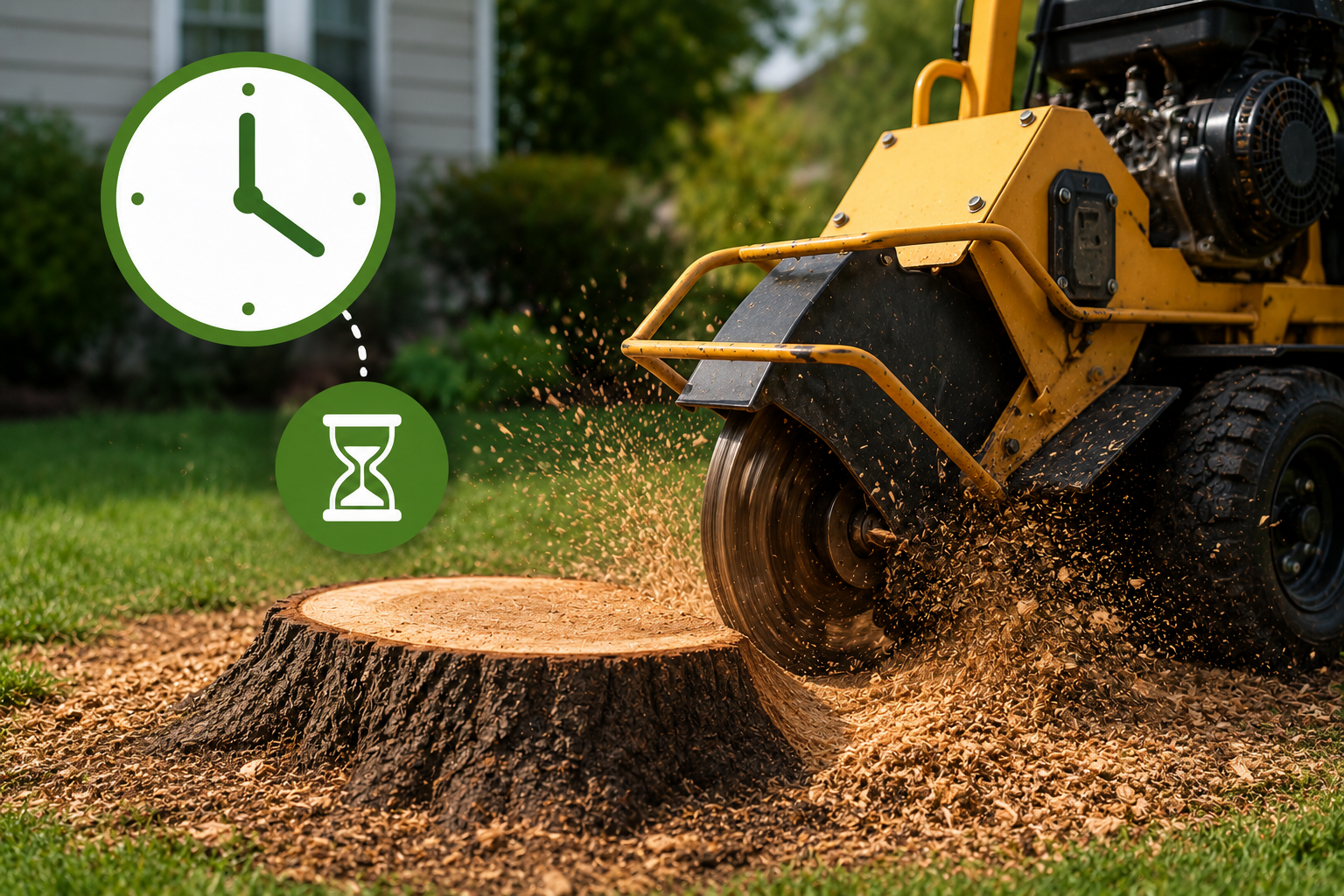
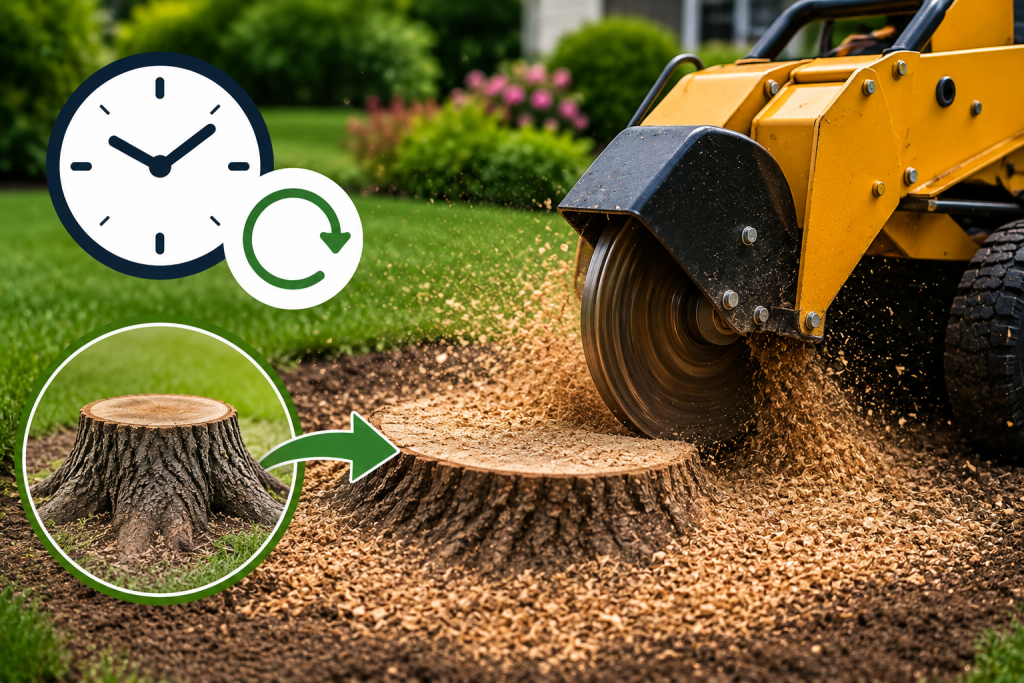
    How long does stump grinding take? Professional stump grinder removing a tree stump in a residential yard with wood chips, illustrating the stump grinding process for US homeowners.

    How Long Does Stump Grinding Take? Average Time

    The average answer to How Long Does Stump Grinding Take? is:

    • Small stump (under 12 inches): 15–30 minutes
    • Medium stump (12–24 inches): 30–60 minutes
    • Large stump (24–36 inches): 1–2 hours
    • Extra-large stump (over 36 inches): 2–4 hours

    For most residential properties in the US, a single stump grinding job is completed within 30 minutes to 2 hours.


    Factors That Affect How Long Stump Grinding Takes

    Several important factors determine How Long Does Stump Grinding Take?

    1. Stump Size

    The larger the stump diameter, the longer the grinding process. Wide hardwood stumps require more passes with the grinder.

    2. Tree Species

    Hardwood trees such as oak, maple, and hickory take longer to grind than softer species like pine or cedar.

    3. Root System

    Although stump grinding doesn’t remove the entire root system, large surface roots often require additional grinding time.

    4. Equipment Used

    Professional contractors use commercial stump grinders that work much faster than rental machines available to homeowners.

    5. Accessibility

    If the stump is located behind fences, near buildings, or on steep slopes, moving equipment into position can increase the total job time.

    6. Number of Stumps

    Naturally, grinding multiple stumps will take longer than grinding just one.


    How Long Does Stump Grinding Take Compared to Stump Removal?

    Homeowners often compare How Long Does Stump Grinding Take? with complete stump removal.

    ServiceAverage Time
    Stump Grinding30 minutes–2 hours
    Stump Removal2–6 hours or more

    Stump grinding is usually the faster, cleaner, and more affordable option for residential properties.


    What Happens After Stump Grinding?

    Once the grinding process is complete, the contractor will:

    • Remove excess wood chips (if requested)
    • Fill the hole with mulch or soil
    • Level the area
    • Clean up debris
    • Prepare the ground for grass or landscaping

    Most homeowners can begin restoring the area immediately after the service.


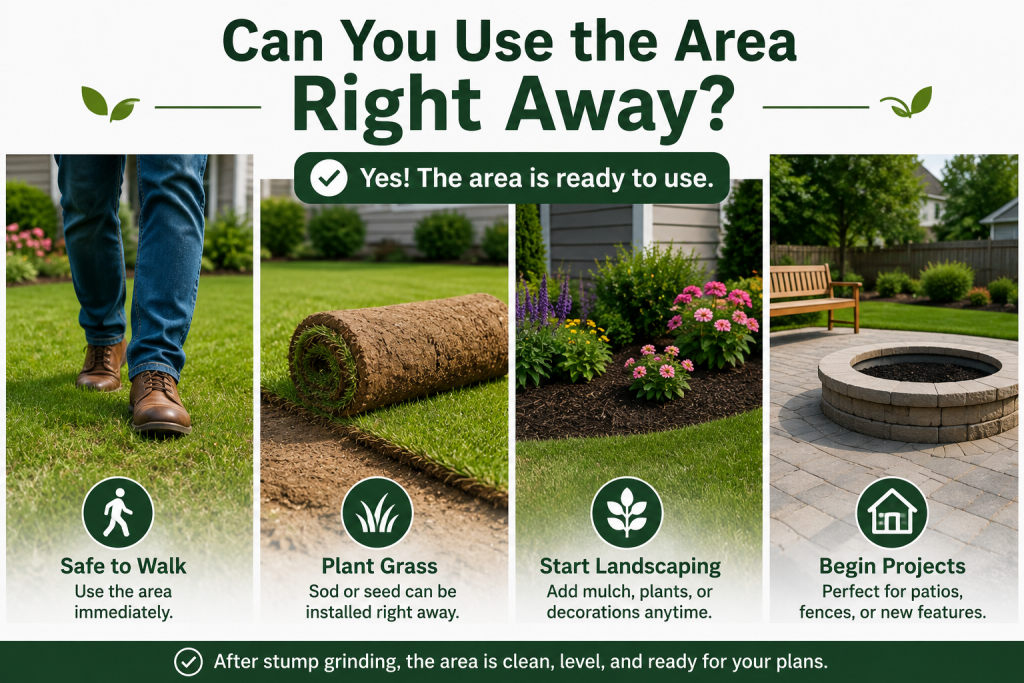
    A clean infographic illustrating that the area can be used shortly after stump grinding. It highlights activities such as walking on the lawn, planting grass, starting landscaping, and beginning outdoor projects, helping US homeowners understand what to expect after the stump grinding process.

    Can You Use the Area Right Away?

    Yes. One reason homeowners ask How Long Does Stump Grinding Take? is because they want to know when the yard can be used again.

    In most cases:

    • Walking on the area is safe immediately.
    • Sod or grass seed can be installed after leveling the ground.
    • Landscaping can begin within a day.
    • Construction projects may require additional soil preparation.

    Is DIY Stump Grinding Faster?

    Many homeowners rent stump grinders, but DIY jobs often take much longer.

    Professional services offer:

    • Commercial-grade equipment
    • Experienced operators
    • Faster completion
    • Better safety
    • More complete grinding

    Hiring professionals is usually the quickest and safest solution.


    Tips to Speed Up the Stump Grinding Process

    To reduce the total service time:

    • Clear rocks and debris around the stump.
    • Remove outdoor furniture nearby.
    • Mark underground utilities before work begins.
    • Provide easy equipment access.
    • Schedule service during favorable weather.

    These simple steps help contractors complete the job efficiently.


    Why Professional Stump Grinding Is Worth It

    Professional stump grinding offers several advantages:

    • Saves time
    • Improves curb appeal
    • Prevents pest infestations
    • Eliminates tripping hazards
    • Causes minimal lawn damage
    • Prepares the area for new landscaping

    For most US homeowners, professional stump grinding is a worthwhile investment that delivers fast and lasting results.


    Final Thoughts

    If you’ve been asking, How Long Does Stump Grinding Take?, the good news is that it’s one of the fastest tree care services available. Most residential stump grinding projects are completed within 30 minutes to 2 hours, depending on the stump’s size, tree species, and accessibility.

    Choosing a professional tree service ensures the work is completed safely, efficiently, and with minimal impact on your property. Whether you’re improving curb appeal or preparing for a landscaping project, stump grinding is a practical solution for homeowners across the United States in 2026.


    Frequently Asked Questions (FAQs)

    1. How long does stump grinding take for one stump?

    Most single stumps can be ground in 30 minutes to 2 hours, depending on size and location.

    2. Does stump grinding remove all the roots?

    No. It removes the visible stump, while most roots remain underground and naturally decompose.

    3. Can I plant grass after stump grinding?

    Yes. After adding soil and leveling the area, you can seed or sod the ground.

    4. Is stump grinding faster than stump removal?

    Yes. Stump grinding is generally much faster and causes less disruption to your yard.

    5. Does weather affect stump grinding time?

    Yes. Heavy rain, frozen ground, or poor site access can slightly increase the time required.

  • Stump Removal vs Grinding: Best Guide in 2026?

    Stump Removal vs Grinding: Best Guide in 2026?

    Stump Removal vs Grinding Guide for US Homeowners

    After a tree is removed, homeowners often face one important question: Should you choose stump removal vs grinding? While both methods eliminate the remaining tree stump, they work differently and offer unique benefits.

    Understanding the difference between stump removal vs grinding can help you make the best decision for your landscape, future construction plans, and budget. In this 2026 guide, we’ll explain how each method works, compare their pros and cons, and help US homeowners choose the right solution.


    What Is Stump Removal?

    Stump removal is the process of extracting the entire tree stump along with its root system from the ground. Contractors use heavy equipment to pull the stump and major roots out, leaving a large hole that must be filled afterward.

    This option completely eliminates the tree from your property, making the area ready for new landscaping or construction.

    Benefits of Stump Removal

    • Completely removes the stump and roots
    • Prevents future root growth
    • Ideal for new construction projects
    • Allows planting another tree in the same location
    • Eliminates hidden root-related issues

    Drawbacks

    • More expensive than grinding
    • Requires heavy machinery
    • Can disturb lawns, gardens, and nearby landscaping
    • Leaves a large hole that needs restoration

    What Is Stump Grinding?

    Stump grinding uses a specialized machine that grinds the tree stump into small wood chips. Instead of removing the roots, the stump is ground several inches below ground level.

    The remaining roots naturally decay underground over time.

    Benefits of Stump Grinding

    • Faster process
    • Lower cost
    • Minimal damage to your yard
    • Eco-friendly because mulch can be reused
    • Suitable for most residential properties

    Drawbacks

    • Roots remain underground
    • Not suitable if you plan to build over the area
    • Small root decay may take several years
    • Some tree species may produce new sprouts

    Stump Removal vs Grinding: Key Differences

    FeatureStump RemovalStump Grinding
    Removes Entire Stump✔ Yes✘ No
    Removes Roots✔ Mostly✘ No
    CostHigherLower
    Time RequiredLongerFaster
    Yard DamageModerate to HighMinimal
    Best for Construction✔ Yes✘ No
    Best for LandscapingSometimes✔ Yes

    Cost Comparison Stump Removal vs Grinding in the United States (2026)

    The cost depends on stump size, tree species, accessibility, and location.

    Average Stump Grinding Cost

    • Small stump: $100–$180
    • Medium stump: $180–$350
    • Large stump: $350–$600

    Average Stump Removal Cost

    • Small stump: $250–$500
    • Medium stump: $500–$900
    • Large stump: $900–$1,500+

    Although stump removal costs more upfront, it may save money if you’re preparing the area for future construction.


    Which Option Is Better?

    The answer depends on your long-term plans.

    Choose Stump Grinding If:

    • You want the most affordable solution.
    • You want minimal lawn damage.
    • You’re not planning construction.
    • You want quick cleanup.
    • You simply want the stump gone.

    Choose Stump Removal If:

    • You’re building a patio or driveway.
    • You’re installing a foundation or pool.
    • You want to plant another tree in the exact location.
    • You want all major roots removed.

    Environmental Impact

    Both methods are environmentally friendly when performed properly.

    Stump grinding often has a smaller environmental footprint because:

    • Existing roots naturally decompose.
    • Wood chips can be recycled into mulch.
    • Less soil disruption protects nearby plants.

    Stump removal vs Grinding creates more soil disturbance but is sometimes necessary for redevelopment projects.


    Can You Leave a Tree Stump?

    Some homeowners choose to leave old stumps, but doing so can lead to several problems Stump removal vs Grinding :

    • Insect infestations
    • Termites and carpenter ants
    • Fungal growth
    • Lawn mowing obstacles
    • Trip hazards
    • Reduced curb appeal

    Removing or grinding the stump improves both safety and property appearance.


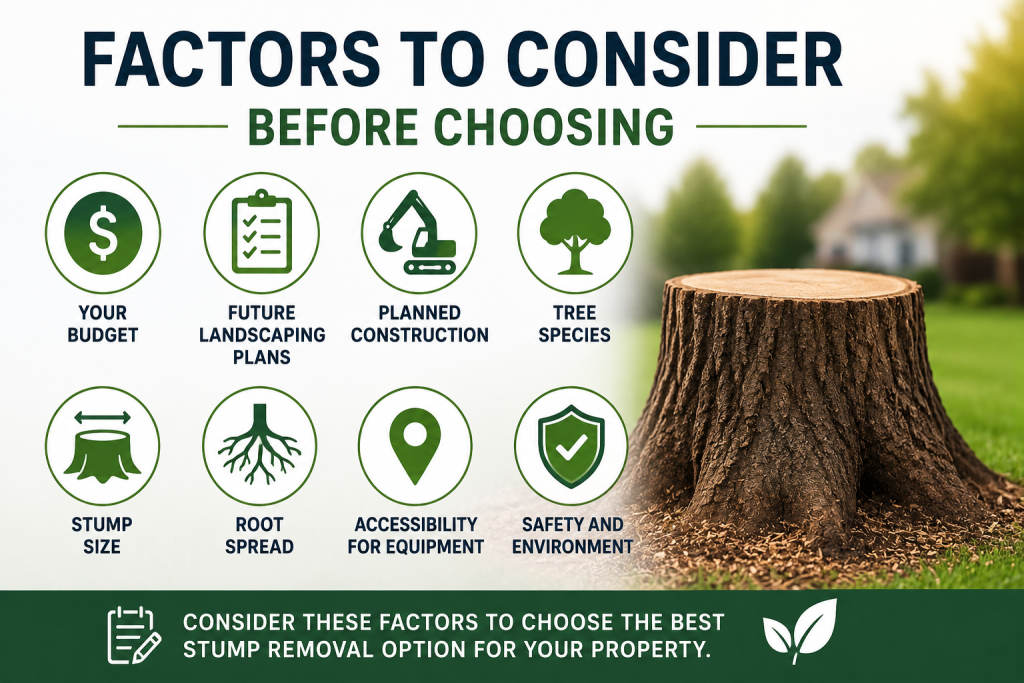
    A professional infographic highlighting the most important factors homeowners should evaluate before selecting stump removal or stump grinding. It includes icons representing budget, future landscaping, construction plans, tree species, stump size, root spread, equipment accessibility, and safety considerations for informed decision-making.

    Factors to Consider Before Choosing

    Before deciding between stump removal vs grinding, consider:

    • Your budget
    • Future landscaping plans
    • Planned construction
    • Tree species
    • Stump size
    • Root spread
    • Accessibility for equipment

    A professional tree service can inspect the site and recommend the most cost-effective option.


    Why Professional Service Matters:

    Although DIY stump grinders are available, professional contractors have the experience and equipment to complete the job safely.

    Hiring professionals helps:

    • Prevent underground utility damage
    • Avoid property damage
    • Complete the project faster
    • Ensure proper cleanup
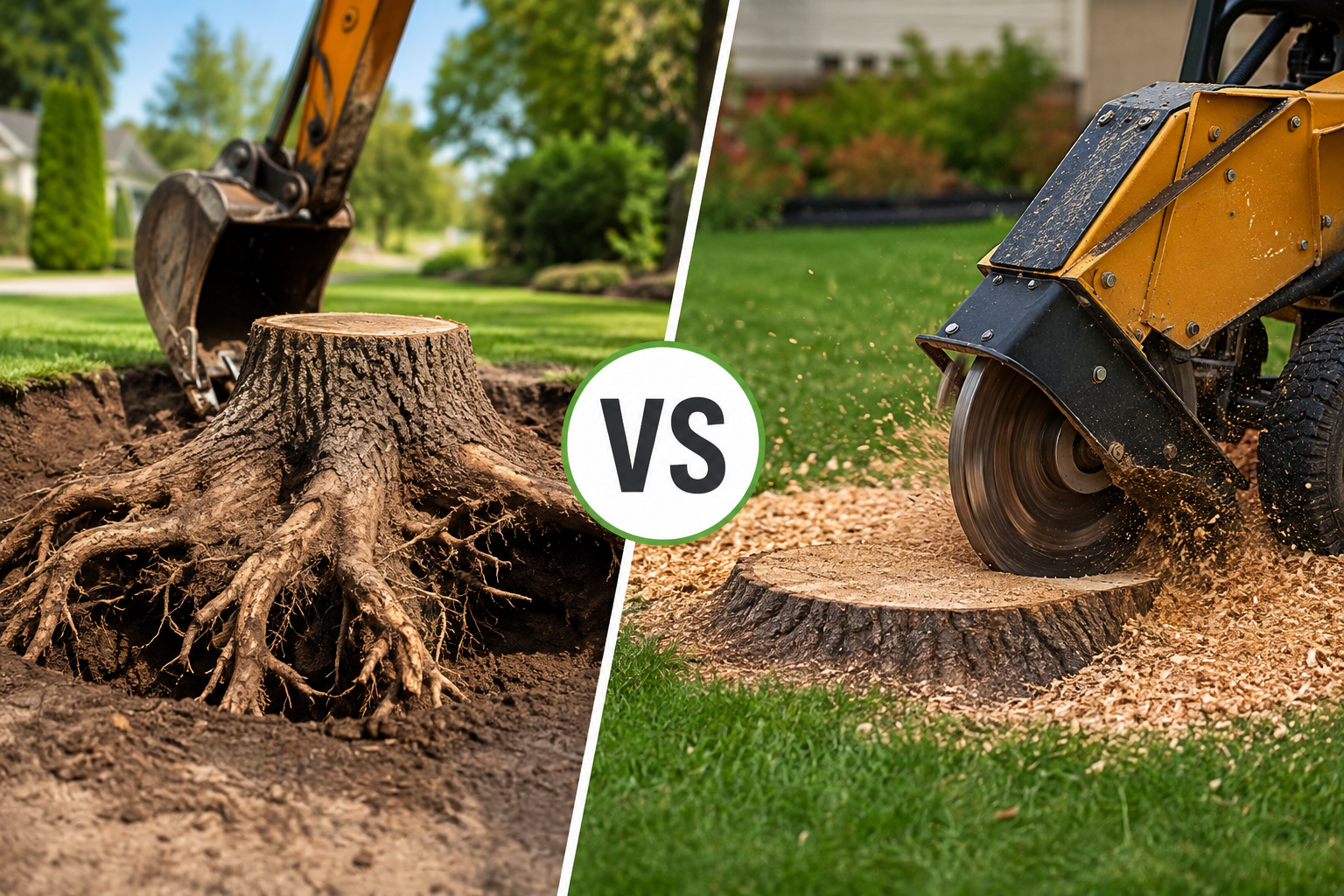
    • Improve overall safety

    For large or difficult stumps, professional removal is usually the safest investment.


    Final Thoughts

    When comparing stump removal vs grinding, neither method is universally better—it depends on your property’s needs.

    If you’re looking for an affordable, fast, and low-impact solution,

    stump grinding is the preferred choice for most US homeowners. However, if you’re planning construction, major landscaping, or want complete root removal, stump removal offers long-term benefits despite the higher cost.

    Consulting a qualified tree service professional in 2026 can help you choose the option that best fits your budget, property goals, and future plans.


    Frequently Asked Questions (FAQs)

    Is stump grinding better than stump removal?

    For most residential properties, stump grinding is the better choice because it is faster, less expensive, and causes minimal landscape disruption.

    Does stump grinding remove the roots?

    No. Stump grinding removes the visible stump, while most roots remain underground and naturally decompose over time.

    Can a tree grow back after stump grinding?

    Some tree species may produce new shoots, but most trees will not fully regrow after proper stump grinding.

    How long does stump removal take?

    Most stump removal projects are completed within a few hours, depending on stump size and site conditions.

    Which is cheaper: stump removal vs grinding?

    Stump grinding is generally the more affordable option and is the preferred choice for homeowners who do not need complete root removal.