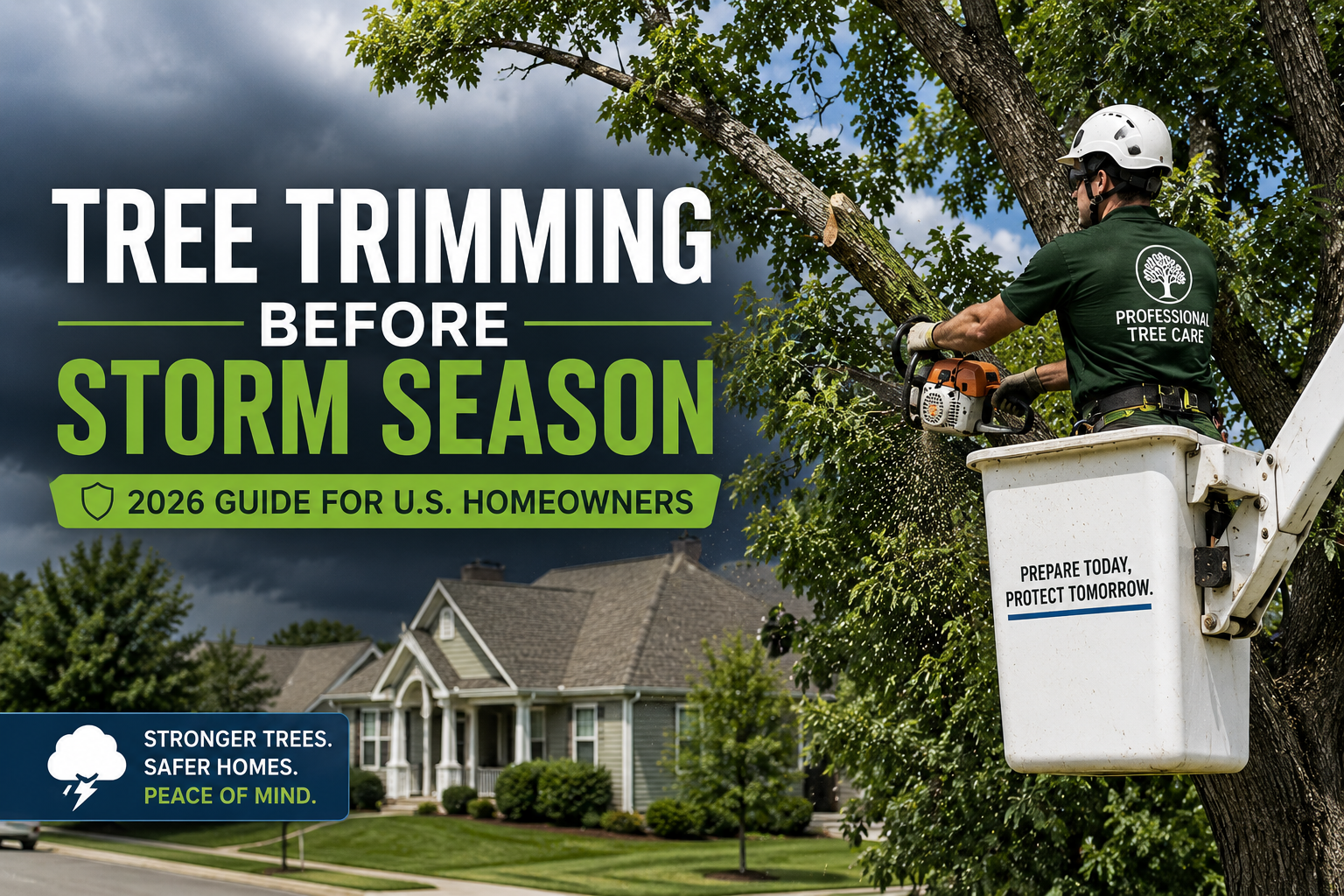
Tree Trimming Before Storm Season: Why It Matters in 2026
Tree Trimming Before Storm Season is one of the smartest ways to protect your home, family, and landscape from severe weather. Every year, strong winds, heavy rain, thunderstorms, hurricanes, and tornadoes cause thousands of trees and branches to fall across the United States.
Proper tree trimming reduces the risk of broken limbs, roof damage, power outages, and personal injuries. Whether you live in Texas, Florida, Georgia, or any storm-prone state, preparing your trees before severe weather arrives can save you thousands of dollars in repair costs.
This 2026 guide explains why Tree Trimming Before Storm Season should be part of every homeowner’s maintenance plan.
Why Tree Trimming Before Storm Season Is Important
Trees naturally develop weak, dead, or overgrown branches over time. During storms, these branches become dangerous because strong winds can easily snap them.
Professional tree trimming helps by:
- Removing dead or damaged limbs
- Reducing wind resistance
- Improving tree stability
- Preventing branches from hitting your home
- Protecting vehicles and outdoor structures
- Lowering the chance of power line interference
Healthy trees are much more likely to survive severe weather than neglected ones.
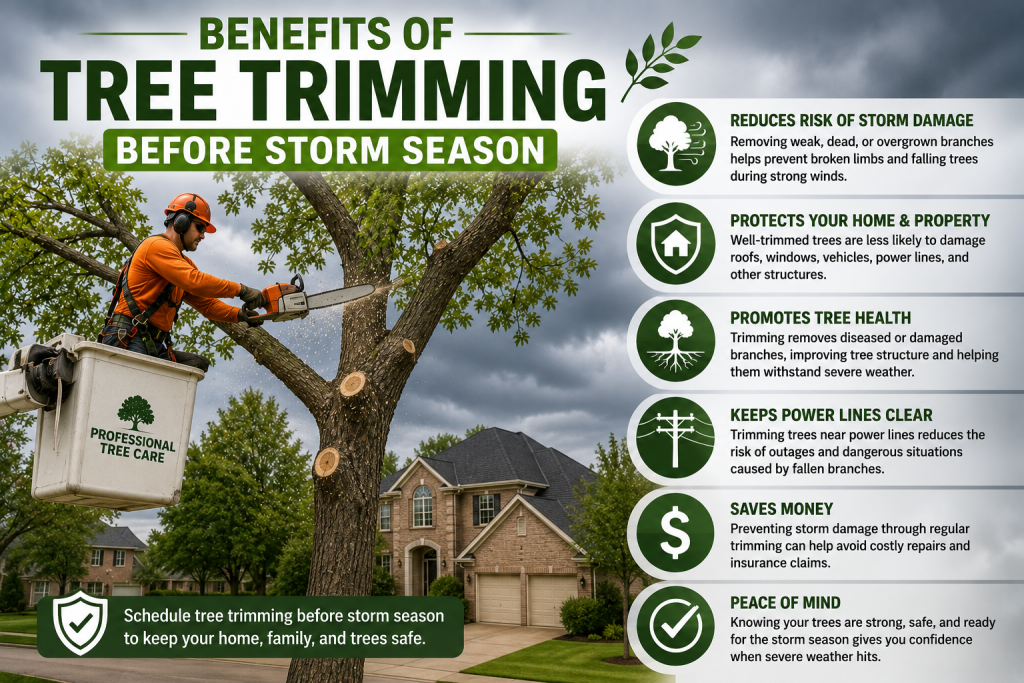
Benefits of Tree Trimming Before Storm Season
1. Protects Your Home
Large branches hanging over your roof can cause expensive damage during storms. Trimming these branches reduces the risk of broken shingles, damaged gutters, and structural problems.
2. Improves Tree Health
Removing diseased and dying branches allows trees to focus energy on healthy growth. This also reduces the spread of decay.
3. Reduces Safety Hazards
Weak limbs can fall without warning during high winds. Regular trimming helps keep your family, neighbors, and visitors safe.
4. Prevents Property Damage
Tree limbs often damage fences, sheds, patios, swimming pools, and vehicles during storms. Preventive trimming minimizes these risks.
5. Increases Tree Lifespan
Healthy maintenance keeps trees structurally strong and extends their life for many years.
When Should You Trim Trees Before Storm Season?
Timing depends on your region, but most arborists recommend trimming several weeks before severe weather begins.
General guidelines include:
- Spring: Prepare for summer thunderstorms.
- Early Summer: Ideal before hurricane season.
- Late Winter: Great for structural pruning on many tree species.
- Before Local Storm Seasons: Schedule inspections annually.
Avoid waiting until a storm warning has already been issued. Professional tree companies become extremely busy during emergency situations.
Signs Your Trees Need Trimming
Watch for these warning signs:
- Dead branches
- Broken limbs
- Branches touching your roof
- Limbs growing over driveways
- Cracked or split branches
- Trees leaning excessively
- Thick canopies blocking airflow
- Branches growing near power lines
If you notice any of these issues, schedule trimming before storm season arrives.
Trees That Often Need Storm Preparation
Some trees are more vulnerable during storms because of their size or branch structure.
Examples include:
- Oak trees
- Pine trees
- Maple trees
- Ash trees
- Bradford Pear trees
- Large ornamental trees
Mature trees with heavy canopies benefit the most from professional trimming.
Professional Tree Trimming vs DIY
Many homeowners consider trimming trees themselves. While small branches can often be handled safely, large trees require professional equipment and expertise.
Professional tree services offer:
- Proper pruning techniques
- Safety equipment
- Climbing experience
- Liability insurance
- Safe debris removal
DIY trimming without proper knowledge can damage trees and increase future storm risks.
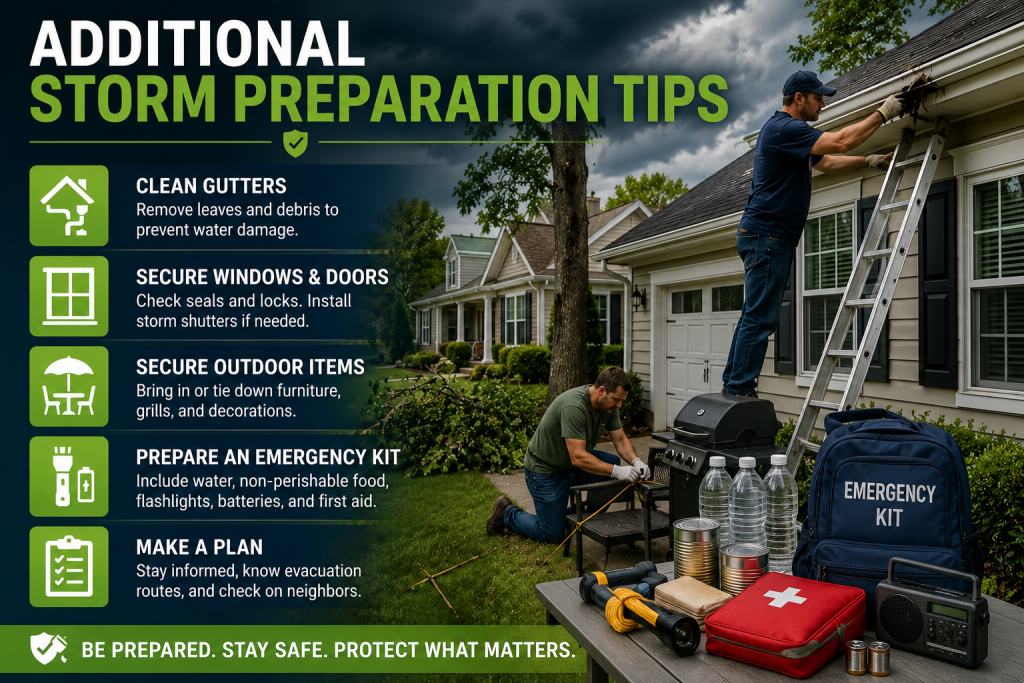
Additional Storm Preparation Tips
Tree trimming works best when combined with other preventive measures.
Consider these additional steps:
- Inspect trees every year.
- Remove dead trees immediately.
- Secure loose outdoor furniture.
- Check tree roots for signs of decay.
- Keep gutters clean.
- Monitor leaning trees after heavy rainfall.
A complete property inspection helps reduce storm-related damage.
Why Hire a Certified Tree Service?
Certified tree professionals understand how different tree species respond to trimming.
They know how to:
- Maintain proper tree balance
- Avoid over-pruning
- Improve structural strength
- Identify disease or decay
- Recommend tree removal when necessary
Hiring experienced professionals often saves homeowners money by preventing costly repairs later.
Conclusion
Tree Trimming Before Storm Season is one of the most effective ways to protect your home, landscape, and loved ones from severe weather. Preventive maintenance improves tree health, reduces safety hazards, and lowers the risk of expensive storm damage.
As storm seasons continue to bring unpredictable weather across the United States in 2026, scheduling professional tree trimming early is a smart investment. Healthy, properly maintained trees are stronger, safer, and far better prepared to withstand high winds and heavy rain.
If your property has overgrown or damaged trees, don’t wait until the next storm warning—plan your tree trimming before storm season begins.
Frequently Asked Questions (FAQs)
1. Why is tree trimming before storm season important?
It removes weak branches that could fall during high winds, helping protect your home and property.
2. When is the best time to trim trees before storms?
Late winter, spring, or several weeks before your area’s storm season is generally ideal.
3. Can tree trimming prevent storm damage?
While no method guarantees complete protection, proper trimming significantly reduces the risk of falling branches and tree failure.
4. Should I trim trees myself?
Small branches may be manageable, but large trees should be trimmed by professionals for safety and proper tree care.
5. How often should trees be trimmed?
Most mature trees benefit from trimming every 3–5 years, while fast-growing trees may require more frequent maintenance.
Leave a Reply